
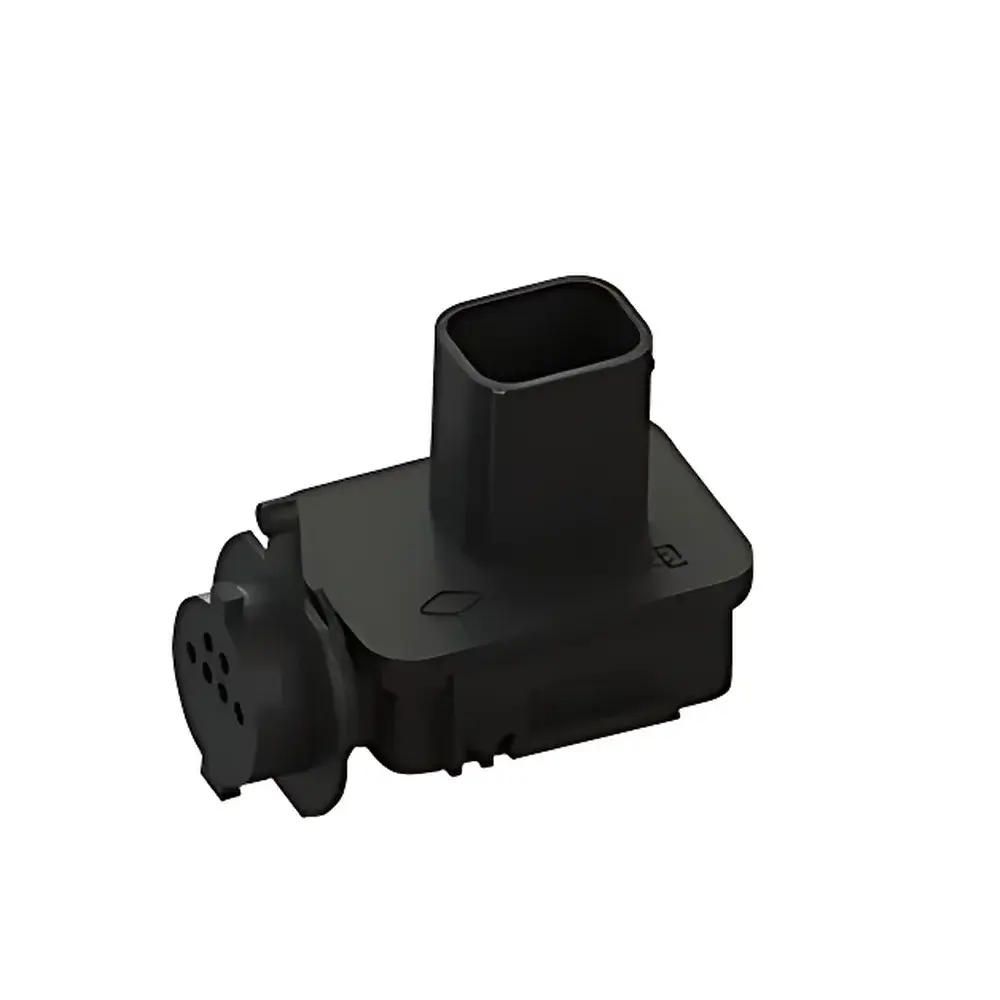
Cubic AQM-1020 Automotive Air Quality Sensor
| Brand | Cubic |
|---|---|
| Origin | Hubei, China |
| Manufacturer Type | Authorized Distributor |
| Origin Category | Domestic (China) |
| Model | AQM-1020 |
| Pricing | Available Upon Request |
| Sensing Principle | Metal Oxide Semiconductor (MOX) |
| Target Gases | CO, NO₂, NH₃ (optional) |
| Maximum Gas Flow Rate | ≤10 m/s |
| Operating Temperature | −40 °C to +85 °C |
| Storage Temperature | −40 °C to +120 °C |
| Relative Humidity Range | 0–99% RH (non-condensing) |
| Supply Voltage | 9–16.2 V DC (nominal 12 V DC) |
| Operating Current | ≤40 mA |
| Standby Current | ≤100 µA |
| Ingress Protection | IP6K7 |
| Communication Interface | LIN bus / PWM output |
Overview
The Cubic AQM-1020 Automotive Air Quality Sensor is a purpose-engineered, AEC-Q200 qualified gas sensing module designed for real-time in-vehicle air quality assessment and HVAC system integration. Built upon microelectromechanical systems (MEMS) fabrication technology and metal oxide semiconductor (MOX) sensing principles, the AQM-1020 detects redox-active gases—including carbon monoxide (CO), nitrogen dioxide (NO₂), and optionally ammonia (NH₃)—at the vehicle’s fresh-air intake duct. Its core function is to provide quantifiable air quality feedback to the vehicle’s electronic control unit (ECU), enabling closed-loop actuation of the recirculation flap or air-mix valve. This ensures optimal cabin air freshness while minimizing unnecessary recirculation and maintaining energy-efficient climate control performance under dynamic driving conditions.
Key Features
- MEMS-based MOX sensor chip with fully vertically integrated manufacturing—covering micro-hotplate design, functional metal oxide ink formulation, thin-film deposition, and hermetic wafer-level packaging.
- AEC-Q200 Grade 2 qualified circuit architecture, including automotive-grade transient voltage suppression, extended temperature range operation (−40 °C to +85 °C), and robust EMI/EMC resilience per ISO 11452 and ISO 7637 standards.
- Multi-gas detection capability: simultaneous monitoring of CO and NO₂ as standard; NH₃ detection available via optional calibration and firmware configuration.
- Low-power operation architecture supporting both active measurement mode (≤40 mA) and ultra-low-power standby (≤100 µA), compliant with OEM sleep-mode requirements for always-on cabin air monitoring.
- IP6K7-rated mechanical housing ensuring protection against dust ingress and high-pressure water jets—validated per ISO 20653 for under-hood and duct-mounted deployment scenarios.
- Dual-output communication interface: LIN 2.2A protocol for standardized vehicle network integration and configurable PWM signal for direct analog-like air quality index (AQI) representation without requiring LIN transceiver hardware.
Sample Compatibility & Compliance
The AQM-1020 is calibrated and validated for use in ambient intake air streams with flow velocities up to 10 m/s, typical of modern HVAC duct geometries and blower speeds. It operates reliably across full automotive environmental envelopes—including cold cranking, hot soak, and rapid thermal cycling. The sensor complies with key regulatory and industry frameworks: UN/ECE R100 (electromagnetic compatibility for electric vehicles), ISO 16750-4 (mechanical loads), and ISO 16750-2 (environmental conditions). While not a standalone emissions compliance device, its output supports OEM implementation of cabin air quality management strategies aligned with ISO 16000-23 (indoor air—determination of VOCs) and future EU UNECE WP.29 GRPE proposals on occupant health monitoring.
Software & Data Management
The AQM-1020 communicates raw resistance values and derived gas concentration estimates via LIN message frames defined in the Cubic LIN Application Layer Specification v1.3. OEMs may integrate these signals into existing vehicle diagnostic and telematics platforms using standard UDS (Unified Diagnostic Services) over LIN (ISO 14229-1). The module supports configurable diagnostic trouble codes (DTCs) per SAE J2012 and includes built-in self-test routines for heater continuity, sensor baseline drift compensation, and open-circuit detection. All calibration data—including temperature-compensated response curves and cross-sensitivity matrices—are stored in non-volatile memory with write-protection enabled. Firmware updates are performed via LIN bootloader (ISO 14229-1, routine control service 31h), supporting secure authentication and rollback protection for ASAM-compliant development workflows.
Applications
- Automotive HVAC systems: Real-time control of fresh-air/recirculation flap position based on detected outdoor pollutant load.
- Cabin air quality monitoring dashboards: Integration with infotainment systems to display localized AQI or “freshness score” metrics.
- Electric vehicle battery thermal management: Correlation of NO₂ levels with urban traffic congestion to inform pre-cooling/pre-heating strategies.
- Fleet telematics platforms: Aggregated air quality data from vehicle fleets used for urban pollution mapping and route optimization.
- Aftermarket retrofit modules: Compatible with CAN/LIN gateway adapters for integration into legacy vehicle platforms.
FAQ
What gases does the AQM-1020 detect by default, and how is NH₃ detection enabled?
The sensor natively detects CO and NO₂. NH₃ detection requires factory calibration with NH₃ reference gas and activation of an optional firmware feature key.
Is the AQM-1020 compatible with AUTOSAR-compliant ECUs?
Yes—the LIN interface adheres to AUTOSAR LIN TP (Transport Protocol) specifications and supports standard PDU mapping for seamless integration into AUTOSAR-based software architectures.
Does the module support automatic baseline correction during operation?
Yes—it implements adaptive baseline tracking using periodic zero-air exposure events triggered by HVAC mode transitions (e.g., switching from recirculation to fresh-air intake).
Can the AQM-1020 be mounted directly in the engine bay?
No—it is rated for IP6K7 but not designed for direct engine compartment mounting due to radiant heat exposure beyond its specified operating envelope; recommended installation location is within the HVAC air duct upstream of the evaporator core.
What traceability documentation is provided for production units?
Each unit ships with a Certificate of Conformance (CoC) listing individual serial number, calibration date, test report reference, and compliance statements against AEC-Q200 Rev D and ISO/TS 16949 requirements.







