
CUBIC INSTRUMENTS Gasboard-3500UV Online Biogas Monitoring System
| Brand | CUBIC INSTRUMENTS |
|---|---|
| Origin | Hubei, China |
| Manufacturer Type | Authorized Distributor |
| Product Category | Biogas Analyzer |
| Model | Gasboard-3500UV |
| Measurement Range | H₂S: 0–500 to 5000 ppm |
| CH₄ | 0–100% vol |
| CO₂ | 0–50% vol |
| O₂ | 0–25% vol |
| Resolution | H₂S: 1 ppm |
| CH₄ | 0.01% vol |
| CO₂ | 0.01% vol |
| O₂ | 0.01% vol |
| Response Time | T₉₀ < 60 s |
| Analytical Principle | UV Differential Optical Absorption Spectroscopy (UV-DOAS), Non-Dispersive Infrared (NDIR), Electrochemical Detection (ECD) |
Overview
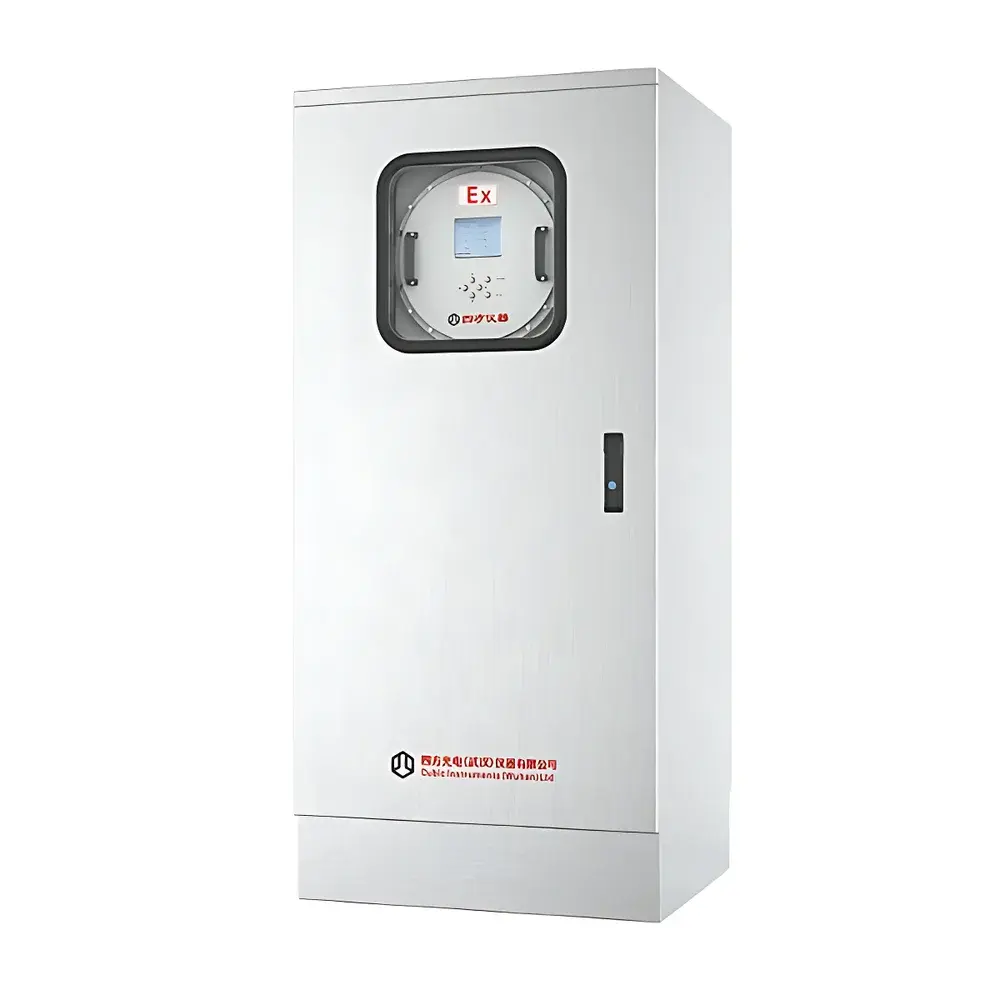
The CUBIC INSTRUMENTS Gasboard-3500UV Online Biogas Monitoring System is an engineered solution for continuous, real-time compositional analysis of raw and treated biogas in industrial anaerobic digestion environments. It integrates three complementary analytical technologies—UV Differential Optical Absorption Spectroscopy (UV-DOAS) for hydrogen sulfide (H₂S), Non-Dispersive Infrared (NDIR) spectroscopy for methane (CH₄) and carbon dioxide (CO₂), and electrochemical detection (ECD) for oxygen (O₂)—to deliver simultaneous, stable, and interference-resistant measurements. Unlike single-technology analyzers, the Gasboard-3500UV addresses the dynamic and corrosive nature of biogas streams by deploying dual-channel sampling capability: one upstream and one downstream of desulfurization units, enabling direct efficiency evaluation of H₂S removal systems. Its architecture supports long-term unattended operation in demanding field conditions—including variable humidity, trace condensables, and explosive atmospheres—without compromising measurement integrity or sensor longevity.
Key Features
- Multi-technology gas analysis platform combining UV-DOAS (H₂S), NDIR (CH₄/CO₂), and ECD (O₂) for cross-validated, matrix-resilient readings
- Dual independent sampling channels for concurrent pre- and post-desulfurization H₂S monitoring—critical for optimizing scrubber performance and preventing downstream corrosion
- High-stability UV-DOAS H₂S sensor with extended service life and minimal drift under continuous exposure to sulfur-containing gas matrices
- Modular sensor design enabling individual calibration, replacement, and maintenance without system shutdown
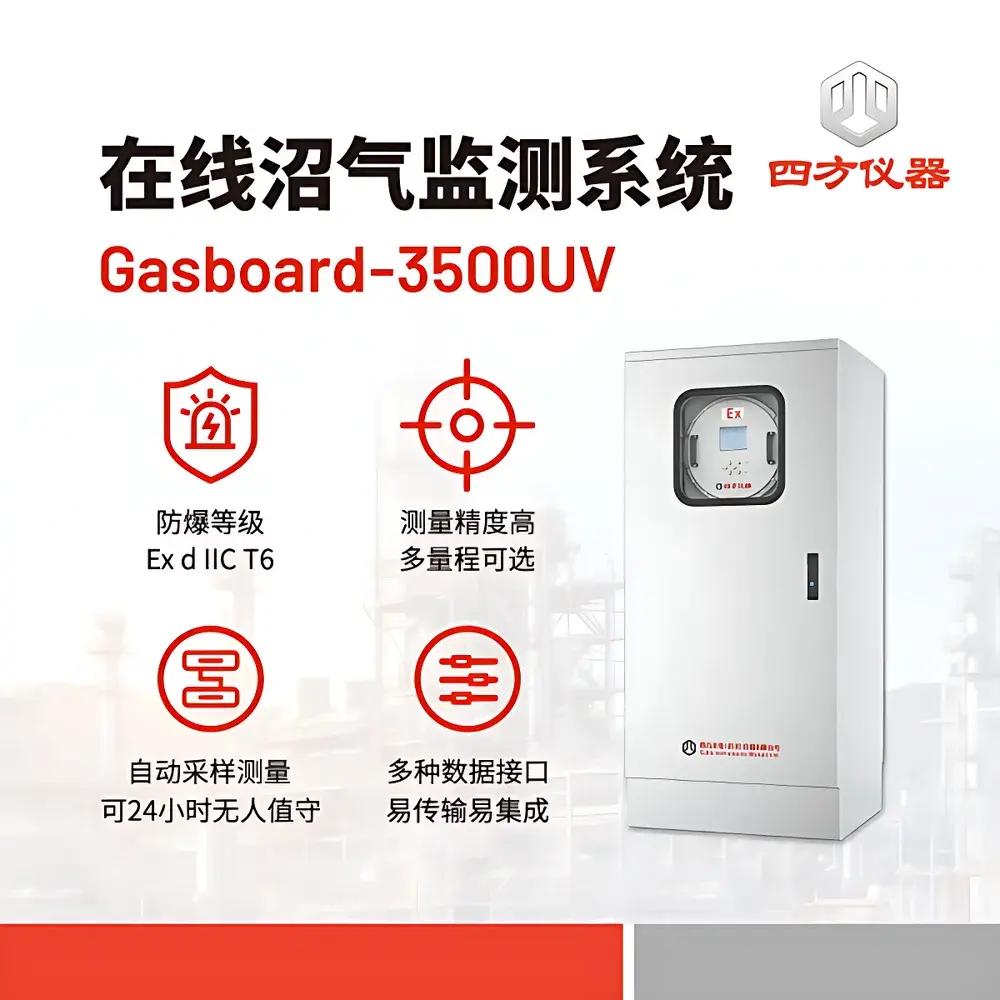
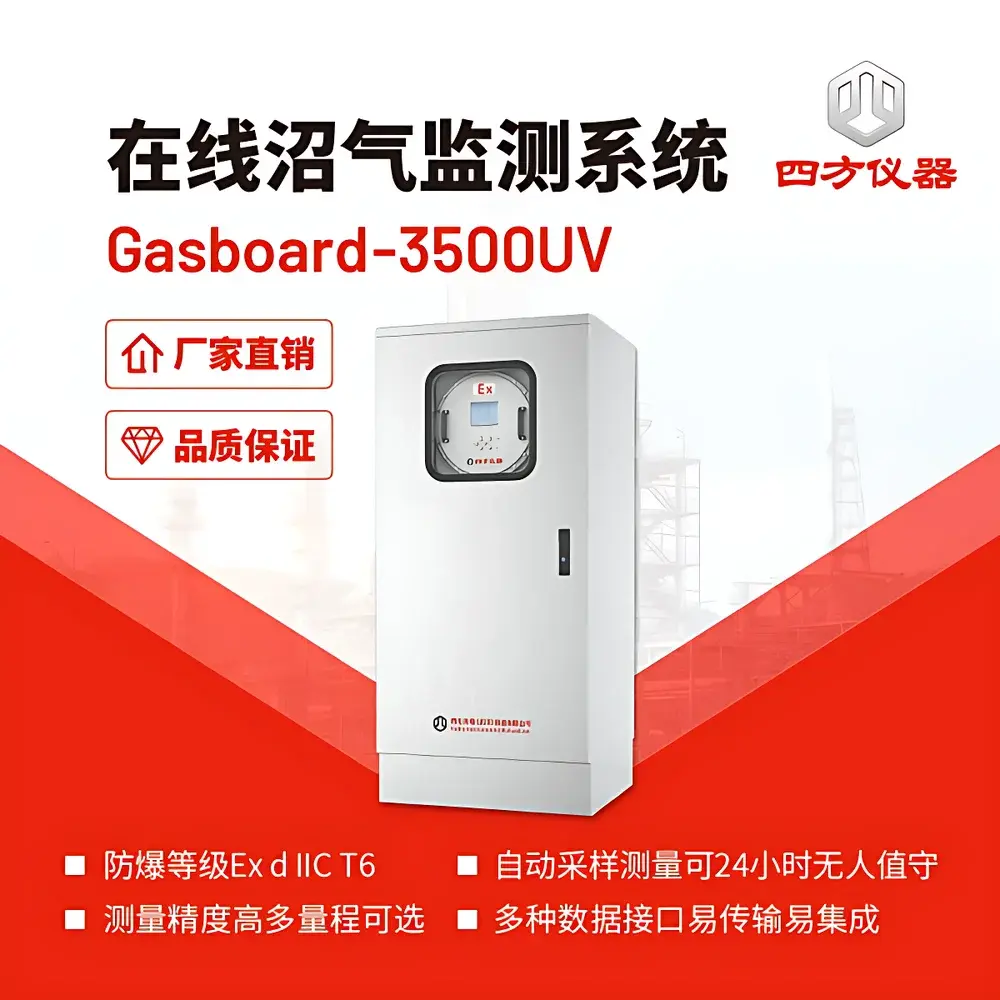
- Stainless steel floor-standing enclosure (IP65 rated) with optional Ex d IIC T6 / Ex tb IIIC T80°C Db explosion-proof certification for Zone 1/21 hazardous locations
- Configurable gas conditioning: includes gravity-based water trap (manual drain), coalescing gas/water separator (auto-drain), and optional heated sample lines, condensers, and low-pressure sampling pumps
- Flexible input configuration supporting 1–4 sampling points via customizable manifold integration
Sample Compatibility & Compliance
The Gasboard-3500UV is validated for use with untreated and partially cleaned biogas from anaerobic digesters, landfill wells, wastewater treatment plants, and agricultural waste facilities. It accommodates typical biogas impurities—including siloxanes, ammonia, and volatile organic compounds—within specified operating limits (0–95% RH non-condensing; −15°C to +45°C ambient; 80–120 kPa barometric pressure). The system meets mechanical and electrical safety requirements per IEC 60079-0 (explosive atmospheres), IEC 60529 (IP65 ingress protection), and EN 61000-6-2/-4 (EMC immunity/emission). While not certified to ISO 14001 or ISO 50001 out-of-the-box, its data output structure supports integration into environmental management systems compliant with ISO 14064 and energy monitoring frameworks aligned with ISO 50001. Optional analog (4–20 mA) and digital (RS232/485, Ethernet) interfaces enable seamless connectivity to SCADA, DCS, or cloud-based process control platforms.
Software & Data Management
The embedded firmware provides local display, alarm configuration (high/low setpoints per gas), relay-triggered event logging, and real-time trend visualization via a 7-inch color touchscreen HMI. All measurement data—including timestamped concentration values, sensor diagnostics, flow rate, and pressure—are stored internally with ≥30 days of buffer capacity. Data export is supported via USB mass storage or network transfer (CSV/JSON). For regulatory traceability, optional audit-trail functionality records user actions (e.g., calibration events, parameter changes) with timestamps and operator IDs—aligning with GLP and GMP documentation expectations. Remote access and firmware updates are available via secure HTTP(S) or Modbus TCP protocols, ensuring compatibility with enterprise-level asset management systems requiring FDA 21 CFR Part 11–compliant electronic records (when deployed with external validation and access controls).
Applications
- Real-time monitoring of biogas composition at inlet/outlet of amine, iron sponge, or biological desulfurization units
- Process optimization in biogas-to-electricity CHP plants, where CH₄ concentration directly affects combustion efficiency and NOₓ emissions
- Feedstock digestion control in municipal wastewater treatment plants and food waste digesters
- Quality assurance during biogas upgrading to biomethane (≥95% CH₄), verifying CO₂ removal efficiency and O₂ ingress limits (<1% vol)
- Landfill gas collection system performance assessment, including leachate-induced H₂S spikes and seasonal moisture effects
- Compliance reporting for environmental permits requiring continuous emission monitoring (CEM) of H₂S and CH₄
FAQ
What analytical methods does the Gasboard-3500UV employ for each gas?
It uses UV-DOAS for H₂S, NDIR for CH₄ and CO₂, and electrochemical detection for O₂.
Can the system measure H₂S across both low and high ranges simultaneously?
Yes—dual-channel configuration allows independent measurement of 0–500 ppm (upstream) and 0–5000 ppm (downstream) H₂S without manual range switching.
Is the analyzer suitable for installation in hazardous areas?
Yes—the analyzer module carries Ex d IIC T6 and Ex tb IIIC T80°C Db certifications, and the full cabinet can be configured for Zone 1/21 compliance.
What sample conditioning options are standard versus optional?
Standard: gravity water trap (manual drain) and coalescing gas/water separator (auto-drain). Optional: heated sample lines, refrigerated condensers, low-pressure sampling pumps, and multi-point manifolds.
How is calibration performed, and what is the recommended interval?
Zero/span calibration is executed via built-in solenoid valves using certified calibration gases; manufacturer recommends quarterly verification under continuous operation, with sensor-specific drift compensation algorithms active between calibrations.
Does the system support integration with third-party SCADA or MES platforms?
Yes—via native RS232/485 (Modbus RTU), Ethernet (Modbus TCP), or 4–20 mA analog outputs, with configurable scaling and alarm relay dry contacts.






