
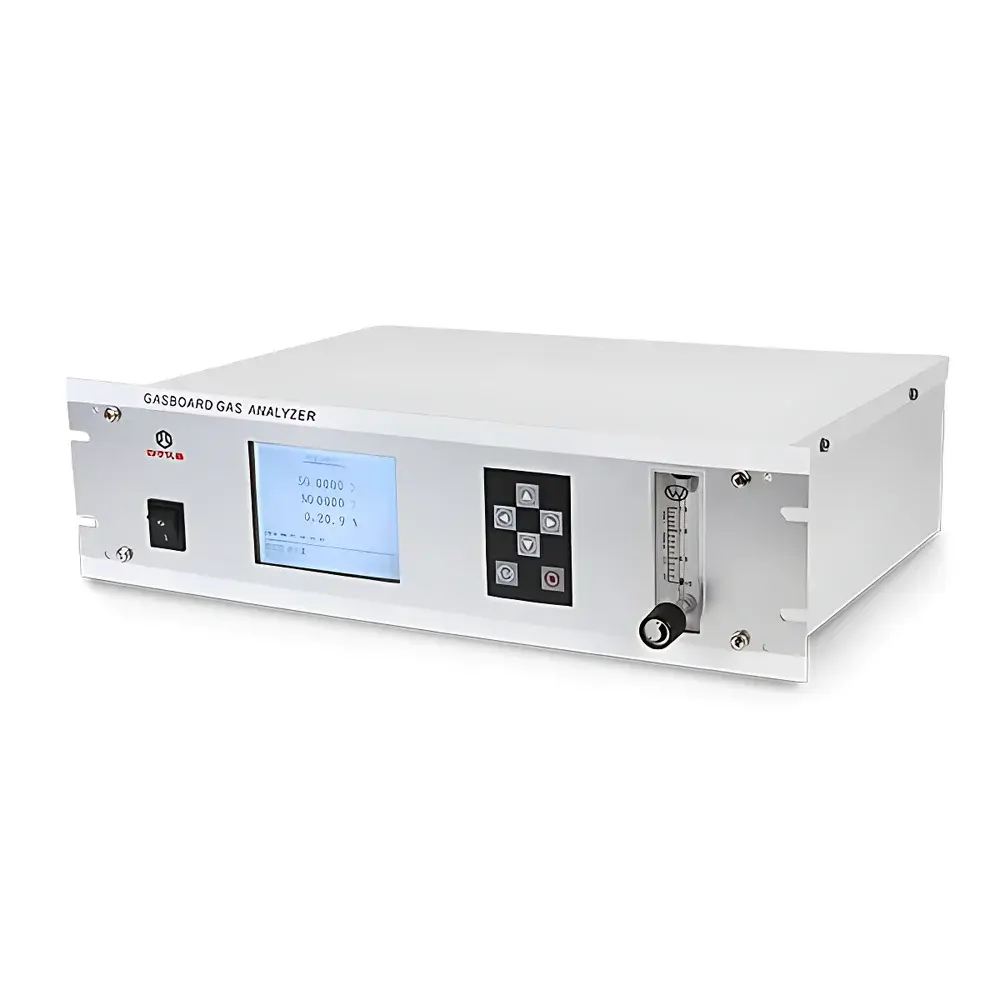
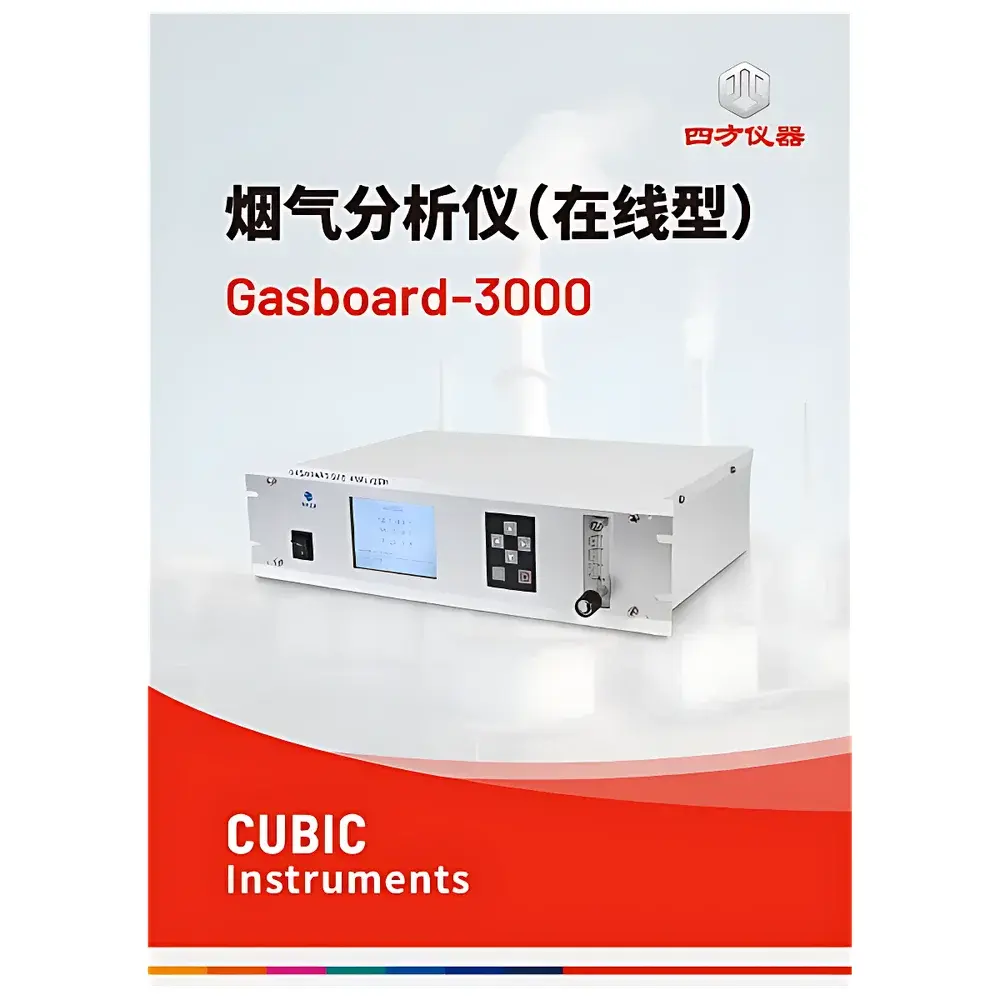
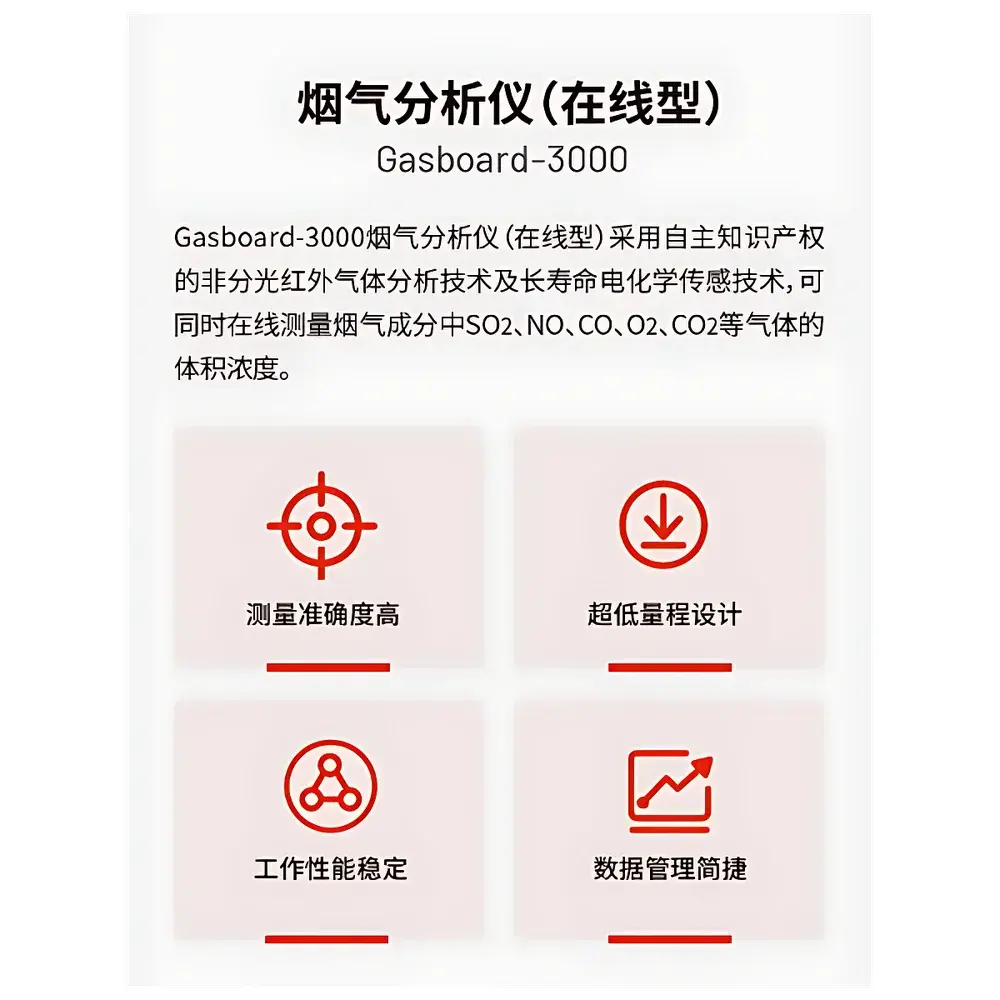
CUBIC INSTRUMENTS Gasboard-3000 Online Infrared Flue Gas Analyzer
| Brand | CUBIC INSTRUMENTS |
|---|---|
| Origin | Hubei, China |
| Manufacturer Type | Authorized Distributor |
| Product Category | Domestic |
| Model | Gasboard-3000 |
| Instrument Type | Multi-Gas Continuous Emission Monitoring (CEM) Analyzer |
| Measurement Accuracy | SO₂, NO, CO: ±1 ppm |
| CO₂, O₂ | ±0.01% |
| Repeatability | ≤1% for SO₂, NO, CO, CO₂, O₂ |
| Response Time | T₉₀ < 10 s (NDIR channels) |
| Stability | SO₂, NO, CO, CO₂: ≤±1% FS |
| O₂ | ≤±2% FS |
| Measured Gases | SO₂, NO, CO, CO₂, O₂ |
Overview
The CUBIC INSTRUMENTS Gasboard-3000 is a continuous emission monitoring (CEM)-grade online flue gas analyzer engineered for real-time, multi-component quantification of key combustion byproducts in industrial exhaust streams. It integrates dual-sensing architectures: non-dispersive infrared (NDIR) spectroscopy for SO₂, NO, CO, and CO₂ detection, and electrochemical detection (ECD) for O₂ measurement. This hybrid design ensures high selectivity and minimal cross-sensitivity across target analytes—critical for regulatory compliance in fixed-source emissions monitoring. The instrument operates under extractive sampling principles, accommodating hot/wet or conditioned sample gas streams from ducts, stacks, and process lines. Its architecture complies with fundamental requirements for continuous monitoring systems as referenced in EPA Method 6C, EN 15267-3, and ISO 12039, supporting long-term deployment in coal-fired power plants, cement kilns, waste incinerators, and industrial boilers.
Key Features
- Multi-analyte NDIR + ECD platform: Simultaneous measurement of SO₂, NO, CO, CO₂ (via broadband NDIR), and O₂ (via temperature-compensated electrochemical cell), eliminating need for separate analyzers.
- Cross-interference mitigation: Optical filtering and spectral deconvolution algorithms prevent signal overlap between SO₂ (7.3 µm), NO (5.3 µm), CO (4.6 µm), and CO₂ (4.26 µm); validated per ISO 12039 Annex D for inter-gas interference rejection.
- Water vapor immunity: NDIR channels employ water-resistant optical path design and algorithmic compensation, ensuring stable SO₂ and NO readings even in saturated sample gas (up to 100% RH).
- Robust wet-end construction: All gas-wetted components—including sample probe, filter housing, and internal flow path—are fabricated from 316L stainless steel and PTFE-lined tubing, resistant to acid condensates (e.g., H₂SO₄, HNO₃) and particulate abrasion.
- Flow-insensitive measurement: NDIR detectors maintain calibration integrity across 0.7–1.2 L/min sample flow rates without recalibration—enabling integration with variable-speed extractive pumps.
- Onboard diagnostics & auto-zero: Real-time sensor health monitoring (voltage, baseline drift, temperature), automatic air-based zero calibration via integrated zero-air pump, and fault logging compliant with IEC 61508 SIL 2 functional safety principles.
Sample Compatibility & Compliance
The Gasboard-3000 accepts extractive hot/wet or cooled/dried sample gas with the following specifications: particulate load < 5 mg/m³, dew point ≤ 50 °C, oil mist content < 0.1 mg/m³, and pressure range 2–50 kPa (gauge). It meets essential performance criteria for continuous emission monitoring systems under Chinese HJ 75-2017 and HJ 76-2017 standards. While not certified to EU MCERTS or US EPA PS-11/PS-15 out-of-the-box, its measurement uncertainty profile (±1% FS for NDIR gases, ±2% FS for O₂) aligns with Tier 2 accuracy requirements defined in EN 14181. For GLP/GMP-regulated environments, optional audit-trail firmware supports 21 CFR Part 11-compliant data logging when paired with CUBIC’s certified data acquisition software.
Software & Data Management
Data output is provided via isolated RS-485 (Modbus RTU), RS-232 (ASCII protocol), and analog 4–20 mA outputs (each channel individually configurable). The embedded LCD interface displays real-time concentrations, sensor status, alarm flags (e.g., flow low, zero failure), and diagnostic codes. Optional CUBIC DataLink™ software enables remote configuration, trend visualization, report generation (PDF/CSV), and integration with DCS/SCADA platforms via OPC UA or MQTT. All stored measurements include timestamp, sensor ID, and calibration history—supporting traceability for environmental audits. Firmware updates are performed via secure USB or OTA (over-the-air) using signed binary packages.
Applications
- Continuous monitoring of SO₂ and NOₓ in flue gas upstream/downstream of FGD (flue gas desulfurization) and SCR/SNCR (selective/non-selective catalytic reduction) systems.
- CO surveillance in coal pulverizing systems (e.g., mill inlet/outlet, coal silos) to prevent spontaneous combustion and ensure explosion safety per NFPA 85 guidelines.
- Combustion efficiency optimization via simultaneous O₂ and CO measurement in boiler control loops.
- Stack emission reporting for environmental permits (e.g., China’s “Blue Sky Defense Campaign”, EU IED Directive Annex IV monitoring obligations).
- Process validation in municipal solid waste incineration (MSWI) and hazardous waste treatment facilities where CO and O₂ co-monitoring informs afterburner residence time control.
FAQ
What gas sampling method does the Gasboard-3000 support?
It uses extractive sampling with heated probe and particle filtration. Hot/wet operation is standard; optional chiller-based dry-gas configuration available upon request.
Is factory calibration traceable to national standards?
Yes—each unit ships with NIST-traceable calibration certificates for SO₂, NO, CO, CO₂, and O₂, verified using certified reference gases (CRMs) per ISO 6141.
Can the analyzer operate unattended for extended periods?
Designed for 24/7 operation with mean time between failures (MTBF) > 8,000 hours. Auto-zero cycles occur every 24 hours; full verification recommended quarterly per HJ 75-2017.
Does it support remote firmware updates and diagnostics?
Yes—via secure HTTPS-enabled web interface or CUBIC DataLink™ desktop application with role-based access control (RBAC).
What maintenance intervals are recommended?
Filter replacement every 3 months; NDIR optical window cleaning every 6 months; electrochemical O₂ sensor replacement every 24 months (typical lifespan under continuous operation).
Related Products







