
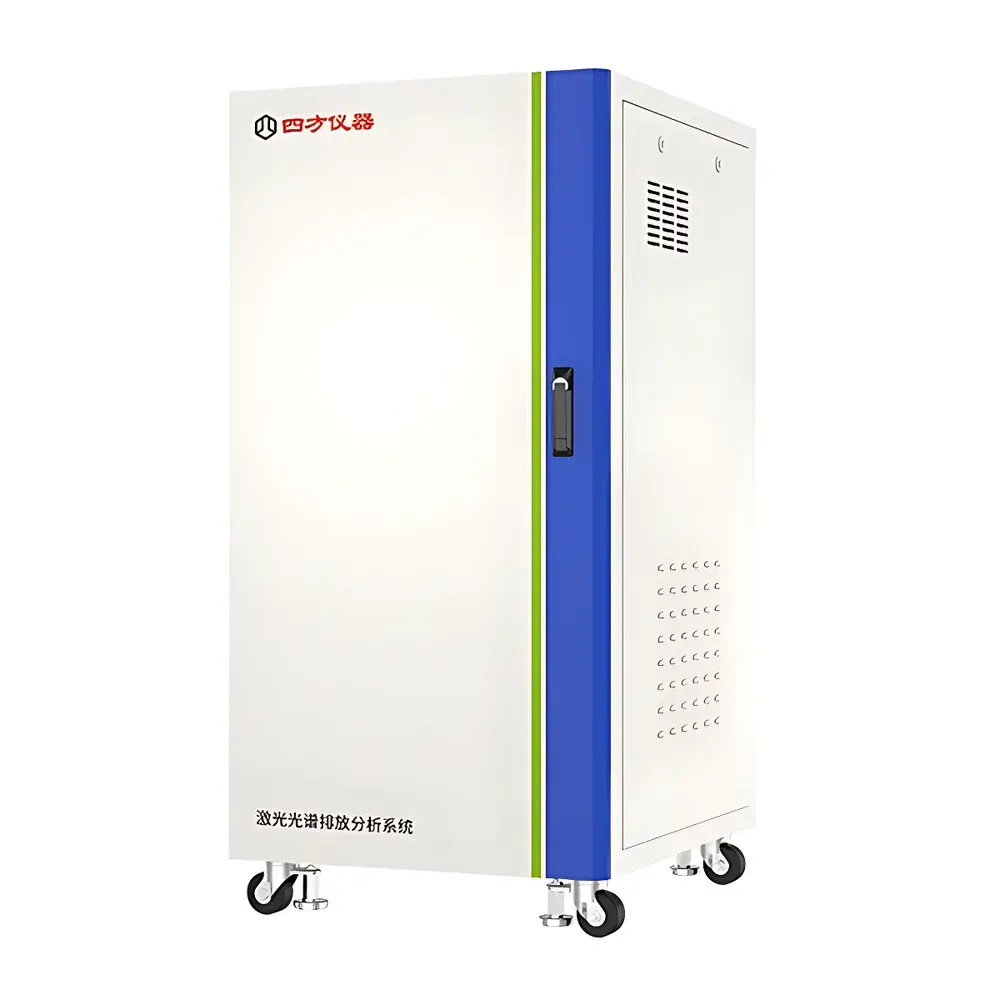
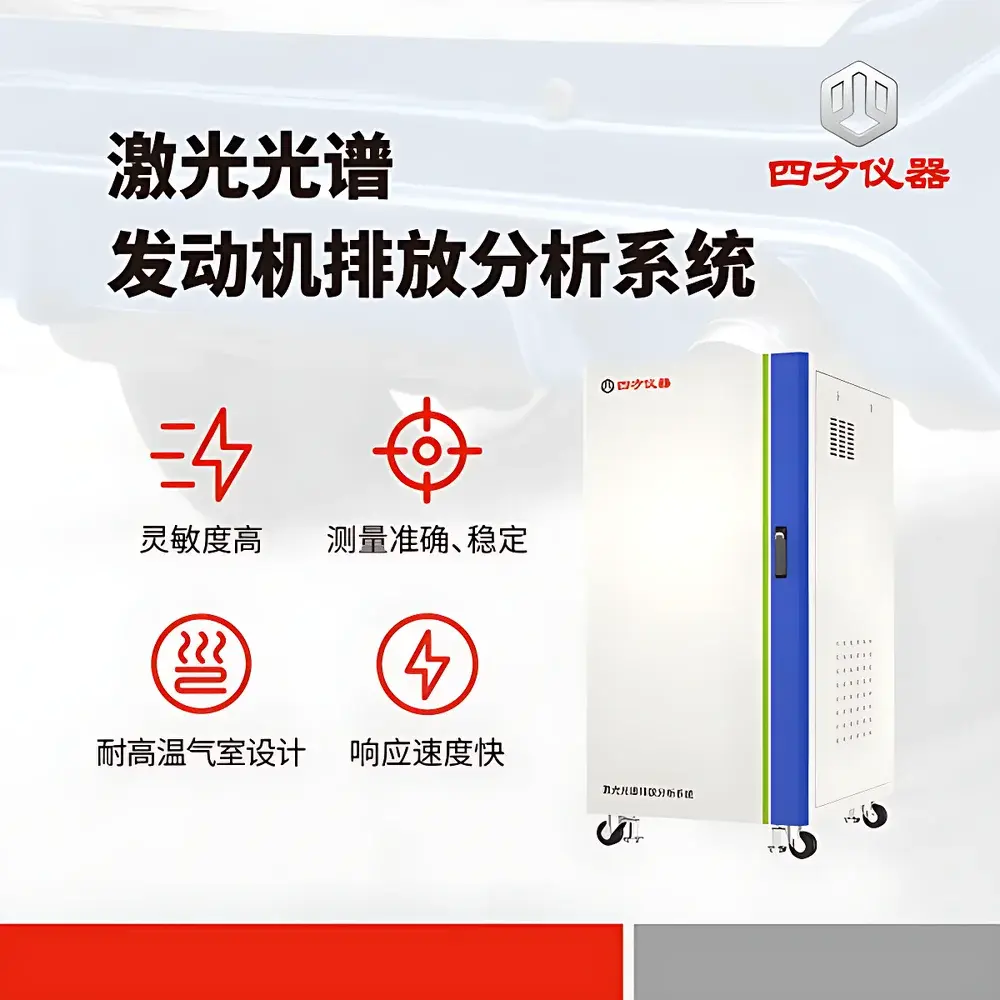
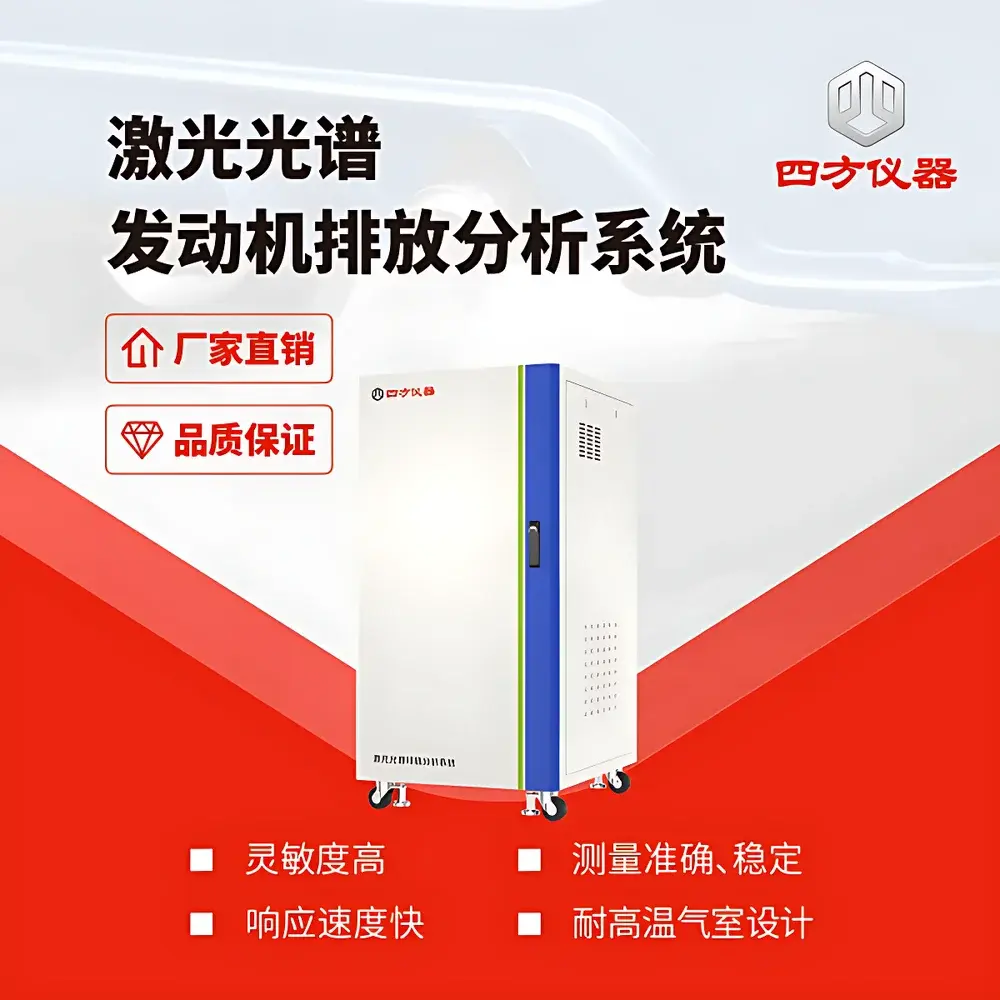
CUBIC INSTRUMENTS TDLAS-Based High-Temperature Automotive Exhaust Gas Analyzer for NH₃ and N₂O Monitoring
| Brand | CUBIC INSTRUMENTS |
|---|---|
| Origin | Hubei, China |
| Manufacturer Type | Authorized Distributor |
| Product Category | Domestic |
| Instrument Type | Online Fixed-Position Analyzer |
| Detection Principle | Tunable Diode Laser Absorption Spectroscopy (TDLAS) |
| Maximum Permissible Error | ≤±2.0% of Reading Span (RS) or ≤±0.3% of Full Scale (FS) |
| Measured Gases | NH₃, N₂O |
| Zero Drift | ≤±1% FS / 8 h |
| Span Drift | ≤±1% FS / 8 h |
| Repeatability | ≤±0.5% FS |
| Minimum Range | 0–50 ppm (NH₃), 0–100 ppm (N₂O) |
| Maximum Range | 0–2000 ppm (both) |
| Response Time (T₁₀–₉₀) | <2.5 s |
| Linearity | R² ≥ 0.998 |
| Operating Environment | 5–40 °C, ≤80% RH |
Overview
The CUBIC INSTRUMENTS TDLAS-Based High-Temperature Automotive Exhaust Gas Analyzer is an online, fixed-position emission monitoring system engineered for real-time, in-situ quantification of ammonia (NH₃) and nitrous oxide (N₂O) in hot, humid engine exhaust streams. It employs industry-proven tunable diode laser absorption spectroscopy (TDLAS), a non-contact, species-specific optical technique that measures gas concentration by analyzing wavelength-dependent attenuation of near-infrared laser light passing through the sample. Unlike extractive NDIR or electrochemical methods, TDLAS eliminates cross-sensitivity to water vapor, CO₂, and hydrocarbons—critical for accurate NH₃ measurement in diesel aftertreatment systems (e.g., SCR) and N₂O detection during low-temperature combustion modes. The analyzer operates continuously at up to 190 °C process gas temperature without external dilution or conditioning, thereby preserving thermodynamic integrity of reactive species and preventing NH₃ condensation or wall adsorption losses. Designed to meet the stringent metrological requirements of regulatory type-approval testing—including UN ECE R83, R49, R101, and upcoming EU Regulation (EU) 2022/2413 (Euro 7)—this system supports both certification laboratories and OEM powertrain development facilities conducting transient cycle testing (e.g., WLTC, RDE, FTP-75) under GLP-compliant workflows.
Key Features
- High-temperature TDLAS optical module with integrated thermally stabilized laser source and photodetector, enabling direct measurement of undiluted exhaust at up to 190 °C
- Patented high-reflectivity multi-pass gas cell with compact footprint (<150 mm optical path length), optimized for rapid gas exchange and sub-2.5-second T10–90 response
- Thermally isolated optical chamber with active temperature control to suppress thermal drift and maintain spectral baseline stability
- Real-time water vapor compensation algorithm embedded in firmware, validated against gravimetrically calibrated moisture references
- Modular hardware architecture supporting optional analog (4–20 mA) and digital (RS485 Modbus RTU, Ethernet TCP/IP) output interfaces for integration into centralized DAQ or SCADA platforms
- Front-panel OLED display with intuitive menu navigation, local calibration logging, and diagnostic status indicators per IEC 61508 SIL 2 functional safety guidelines
Sample Compatibility & Compliance
The analyzer is compatible with raw and diluted exhaust from light-duty and heavy-duty internal combustion engines, including gasoline direct injection (GDI), diesel compression ignition (CI), and dual-fuel natural gas platforms. It meets ISO 16183:2022 for NH₃ measurement in vehicle emissions testing and aligns with ASTM D7520–22 for N₂O quantification in mobile source exhaust. All measurement performance specifications—including repeatability (≤±0.5% FS), zero/span drift (≤±1% FS/8 h), and linearity (R² ≥ 0.998)—are verified per ISO 17025-accredited procedures using certified reference gases traceable to NIST SRMs. System design conforms to CE marking requirements under the EU Measuring Instruments Directive (MID 2014/32/EU) and electromagnetic compatibility (EMC) standards EN 61326-1:2013. Data integrity safeguards include audit-trail-enabled configuration logs and time-stamped calibration records compliant with FDA 21 CFR Part 11 and EU Annex 11 principles.
Software & Data Management
The embedded firmware supports continuous data acquisition at 10 Hz with onboard buffering (≥72 h at 1 Hz). Optional CUBICView™ PC software provides real-time spectral visualization, multi-gas overlay plots, and automated compliance reporting templates aligned with VDA 240-100 and SAE J2954 test protocols. All raw absorbance spectra and processed concentration values are exportable in CSV and HDF5 formats. Secure remote access is enabled via TLS 1.2-encrypted web interface, supporting role-based user permissions (admin/operator/viewer) and configurable alarm thresholds with email/SMS notification via SMTP or MQTT brokers. Calibration history, maintenance logs, and instrument diagnostics are archived with SHA-256 hash integrity verification for regulatory audit readiness.
Applications
- Regulatory type-approval testing for Euro 6d, US Tier 3, and Euro 7 emission standards
- OEM and tier-1 supplier R&D on SCR catalyst efficiency, ammonia slip mitigation, and N₂O formation mechanisms under cold-start and low-load conditions
- Engine dynamometer testing (steady-state and transient cycles) with synchronization to crank-angle-resolved combustion analysis
- Onboard diagnostic (OBD) strategy validation and fault mode simulation for NH₃ sensor redundancy systems
- Validation of portable emissions measurement systems (PEMS) and laboratory reference analyzers in inter-laboratory comparison studies
FAQ
Does this analyzer require sample conditioning (e.g., cooling, drying, filtering)?
No. The system is designed for direct hot-wet measurement and includes a heated sampling probe and TDLAS optical path rated to 190 °C. Integrated particulate filtration (5 µm stainless steel sinter) prevents optical contamination without altering gas-phase composition.
Can it be used for both NH₃ and N₂O simultaneously?
Yes. Dual-laser configuration enables concurrent, independent quantification of NH₃ (at 1531.8 nm) and N₂O (at 2203.4 nm) with no spectral interference or cross-talk.
Is factory calibration traceable to international standards?
All factory calibrations use NIST-traceable gas mixtures (NIST SRM 2629a for NH₃, SRM 1676b for N₂O) and are documented with full uncertainty budgets per ISO/IEC 17025:2017 Clause 7.6.3.
What maintenance intervals are recommended?
Optical window cleaning every 500 hours of operation; laser source replacement at 20,000 hours; annual full-system verification using span/zero gases and linearity check gases.
Does the system support integration with AVL, Horiba, or ETAS testbed controllers?
Yes. Native Modbus RTU and TCP/IP protocols enable seamless integration with major engine test automation platforms, including AVL PUMA, Horiba MEXA-1300 series, and ETAS INCA environments via standardized OPC UA or CAN FD gateways.







