
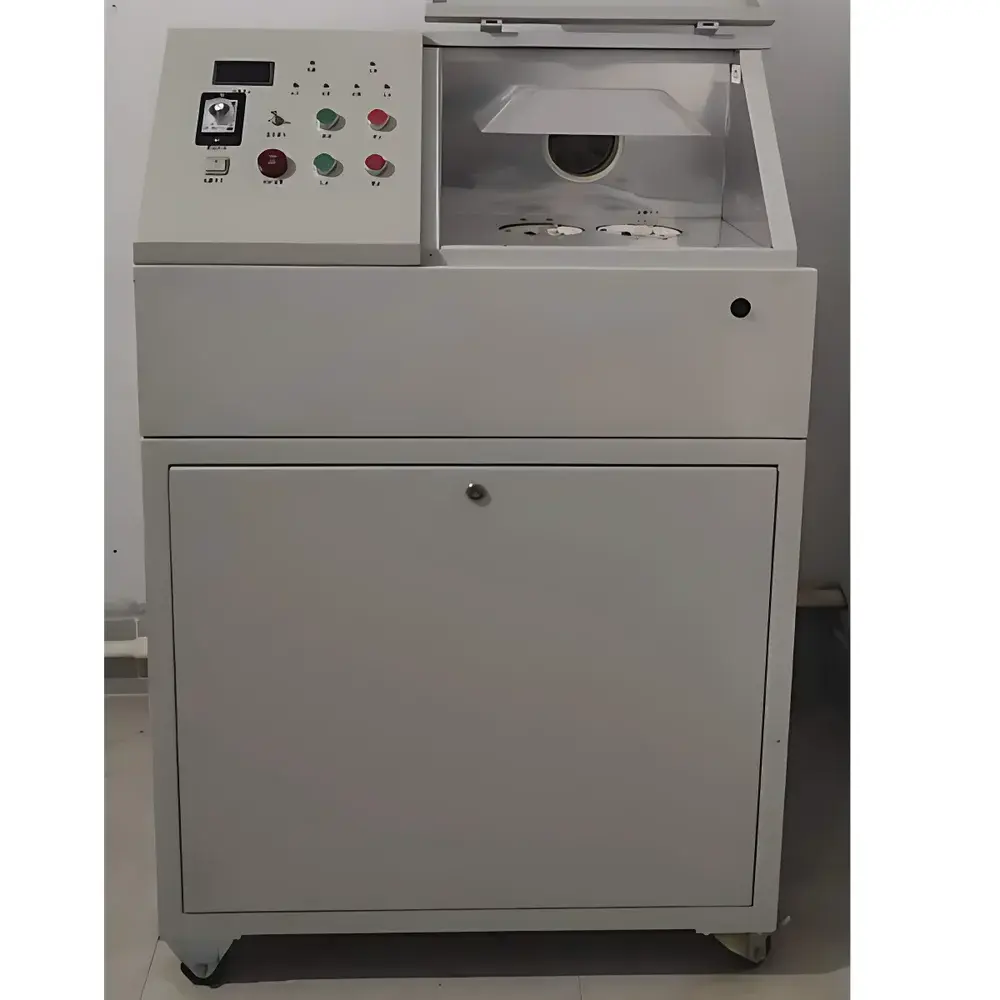
XQ Toptech-OX2.2 High-Frequency Fusion Machine for XRF Sample Preparation
| Brand | XQ Toptech |
|---|---|
| Origin | Liaoning, China |
| Manufacturer Type | Authorized Distributor |
| Country of Manufacture | China |
| Model | XQ Toptech-OX2.2 |
| Throughput | 8 samples/hour |
| Operating Temperature Range | 1100–1300 °C (pre-oxidation: 600–800 °C) |
| Dimensions (L×W×D) | 850×690×1210 mm |
| Heating Method | High-frequency induction |
| Crucible Material Compatibility | Pt–Au alloy crucibles |
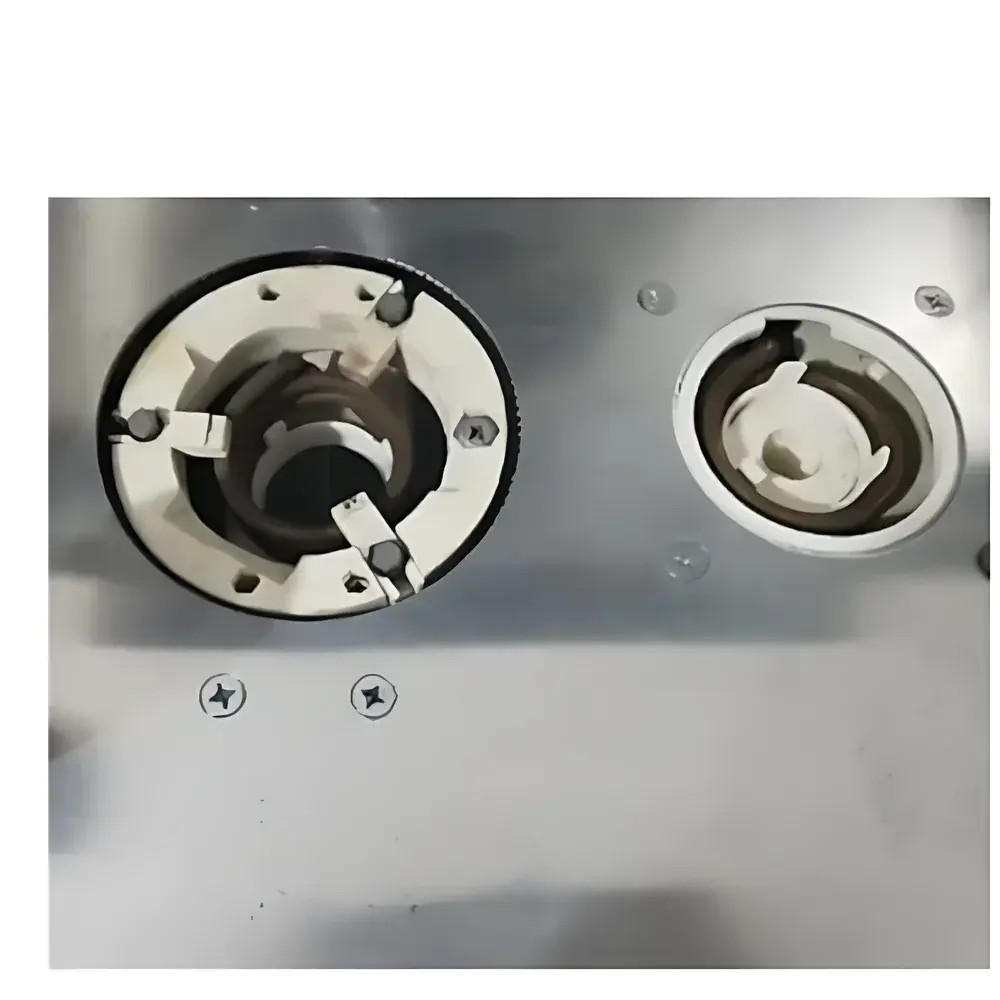
| Cooling System | Integrated air–water hybrid circulation with ceramic heat-resistant components |
| Control System | PLC-based programmable logic controller |
| Structural Design | Modular architecture |
| Compliance | Designed to support ISO 12847, ASTM E2462, and GLP-compliant XRF sample preparation workflows |
Overview
The XQ Toptech-OX2.2 High-Frequency Fusion Machine is a dedicated sample preparation instrument engineered for the reproducible, high-throughput production of homogeneous glass discs used in wavelength-dispersive (WDXRF) and energy-dispersive (EDXRF) X-ray fluorescence spectrometry. It employs high-frequency induction heating—rather than resistive or gas-fired methods—to rapidly and uniformly elevate Pt–Au alloy crucibles containing sample–flux mixtures to fusion temperatures between 1100 °C and 1300 °C. The process sequence is fully automated: pre-oxidation (600–800 °C), flux-assisted melting, dynamic homogenization via controlled crucible rotation, mold casting, controlled cooling, and automatic disc ejection. This thermally stable, non-contact heating mechanism eliminates thermal lag and hot-spot formation common in resistance-heated systems, ensuring consistent melt viscosity, complete dissolution of refractory phases (e.g., silicates, aluminosilicates, chromites), and minimal volatilization loss of volatile elements (e.g., S, Cl, P, Pb). The system is calibrated and validated for routine use in geochemical laboratories, cement QA/QC, metallurgical assay labs, and coal ash analysis facilities where trace-level accuracy and inter-laboratory comparability are mandated.
Key Features
- High-frequency induction heating (≥250 kHz) delivering rapid thermal ramp rates (>100 °C/min) and precise temperature stability (±5 °C at 1200 °C), enabling repeatable melt kinetics critical for stoichiometric glass formation.
- Ceramic-lined induction zone—domestically developed and first-of-its-kind in China—eliminates metallic shielding interference, reduces eddy-current losses, and extends component service life under sustained high-temperature operation.
- Modular mechanical architecture with tool-free access to crucible handling mechanisms, mold alignment stages, and cooling modules—reducing mean time to repair (MTTR) and supporting on-site maintenance without OEM dispatch.
- Integrated air–water hybrid cooling circuit featuring corrosion-resistant ceramic heat exchangers, enabling uninterrupted 8-hour shifts at full throughput (8 samples/hour) without thermal derating.
- PLC-based control system with password-protected recipe storage (up to 99 user-defined programs), real-time temperature logging (1 Hz sampling), and RS485/Modbus RTU interface for LIMS integration and remote monitoring.
Sample Compatibility & Compliance
The XQ Toptech-OX2.2 accommodates standard 32 mm or 40 mm Pt–Au alloy crucibles and supports common lithium tetraborate (Li₂B₄O₇), lithium metaborate (LiBO₂), and mixed-flux formulations (e.g., Li₂B₄O₇ + LiBO₂ + NH₄NO₃). It processes geological matrices including igneous/metamorphic rocks, soils, sediments, fly ash, slag, ores, and coal combustion residues. All operational parameters—including pre-oxidation dwell time, fusion ramp profile, rotation speed (0–30 rpm), casting pressure, and post-cast annealing—are configurable to meet method-specific requirements outlined in ISO 12847 (XRF fusion), ASTM E2462 (glass disc preparation), and USP (elemental impurities). The system supports audit-ready electronic records compliant with FDA 21 CFR Part 11 when paired with validated third-party data acquisition software.
Software & Data Management
The embedded HMI interface provides intuitive touch-screen navigation for program selection, manual override, and real-time status visualization (temperature curve, rotation phase, cooling stage). Raw thermal and motion logs are exportable in CSV format via USB port. Optional Ethernet connectivity enables secure OPC UA communication with laboratory information management systems (LIMS) for automated sample ID association, batch traceability, and electronic signature capture. Audit trails include operator ID, timestamped parameter changes, calibration events, and error codes—all retained for ≥12 months per GLP data retention guidelines.
Applications
- Geochemical exploration labs preparing fused beads for major oxide (SiO₂, Al₂O₃, Fe₂O₃, CaO, MgO, Na₂O, K₂O) and minor element (Ti, Mn, P) quantification.
- Cement and clinker manufacturing facilities performing daily QC of raw meal, kiln feed, and finished product according to EN 196-2 and ASTM C114.
- Power generation plants analyzing coal ash composition for slagging/fouling prediction and environmental reporting (EPA Method 6010D).
- Recycling and scrap metal processors verifying alloy grade consistency and detecting tramp elements (e.g., As, Sn, Sb) prior to remelting.
- Academic and government reference material producers developing certified glass standards traceable to NIST SRMs.
FAQ
What crucible types and sizes are supported?
Standard 32 mm and 40 mm Pt–Au (95% Pt / 5% Au) crucibles are compatible; custom crucible adapters available upon request.
Is pre-oxidation programmable independently from fusion temperature?
Yes—two-stage thermal programming allows independent setpoints and dwell times for oxidation (600–800 °C) and fusion (1100–1300 °C) phases.
Does the system meet regulatory requirements for pharmaceutical elemental impurity testing?
When operated with validated flux protocols and documented calibration records, it fulfills sample preparation prerequisites of ICH Q3D and USP , though final method validation remains the user’s responsibility.
Can the machine integrate with existing LIMS or ERP platforms?
Via optional Modbus TCP or OPC UA gateways, supporting bi-directional sample ID transfer, status polling, and event logging.
What maintenance intervals are recommended for long-term reliability?
Ceramic insulation inspection every 500 cycles; crucible holder alignment check every 1,000 cycles; water coolant replacement every 6 months or per conductivity threshold (<10 µS/cm).



