
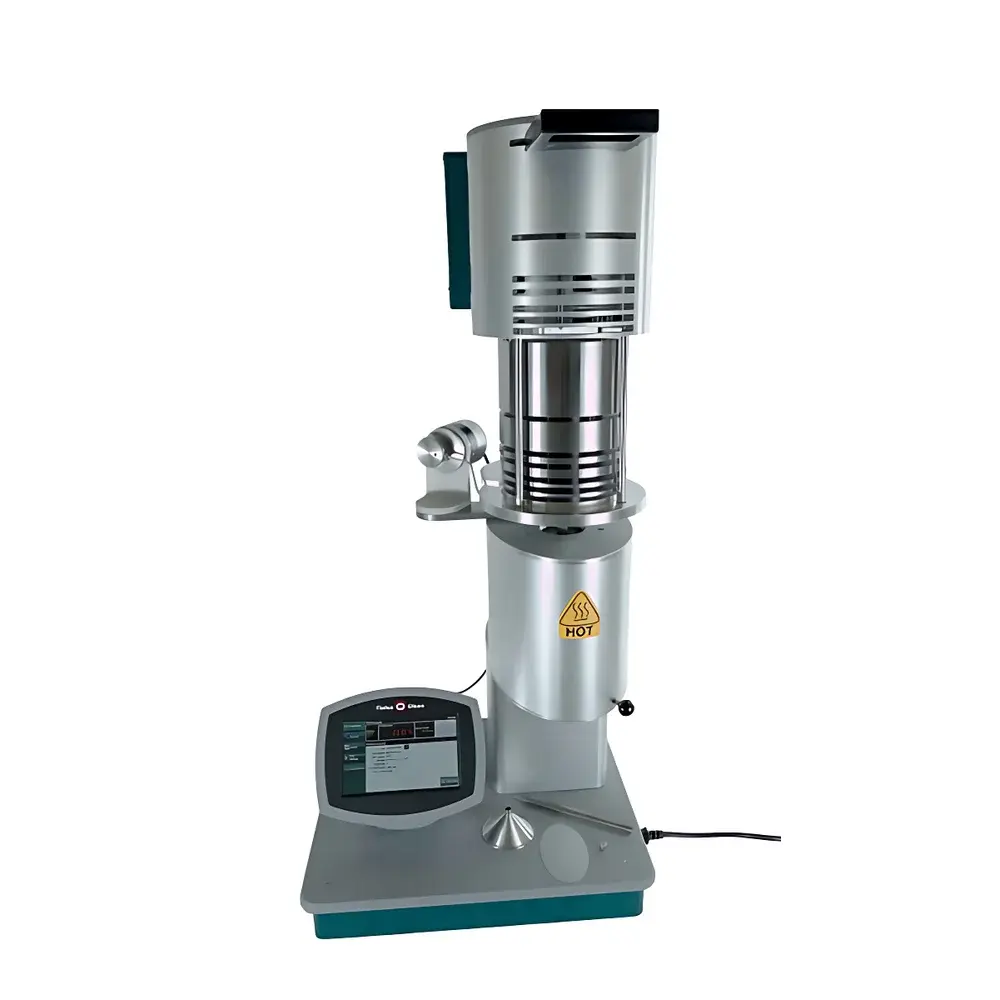
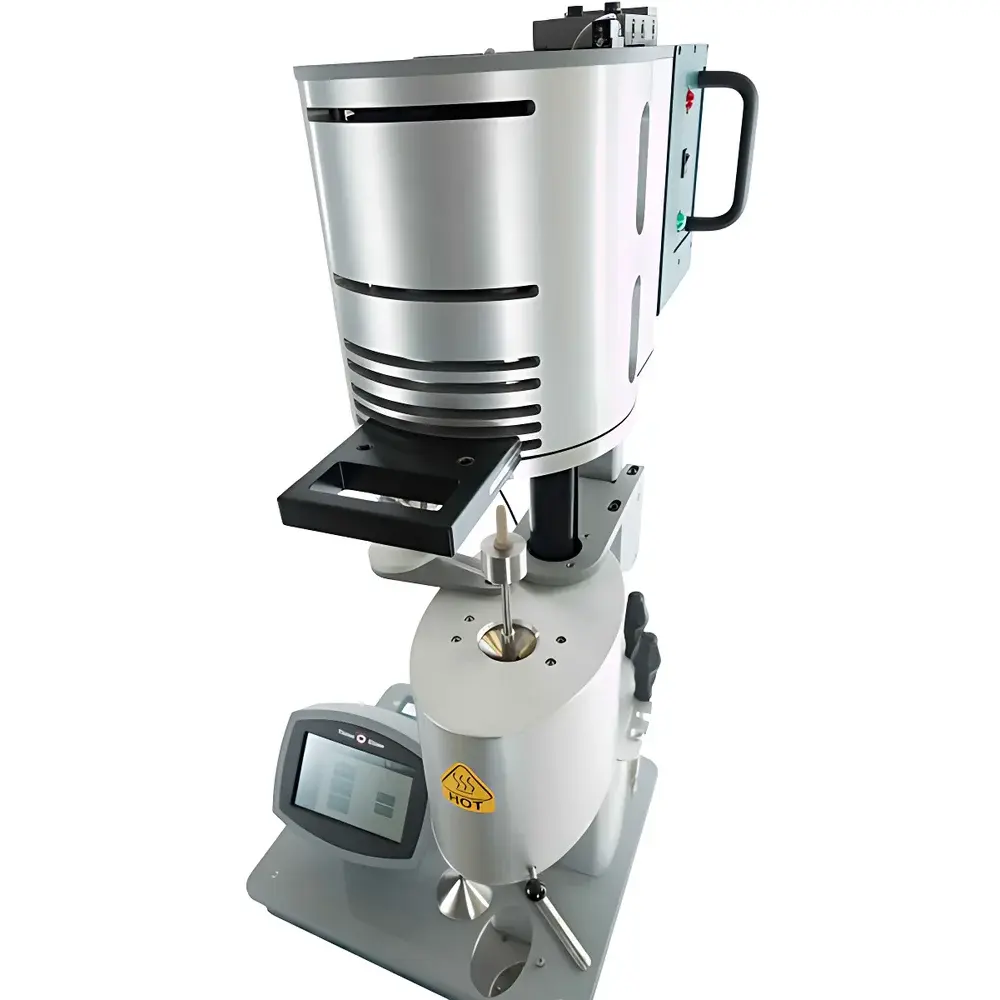
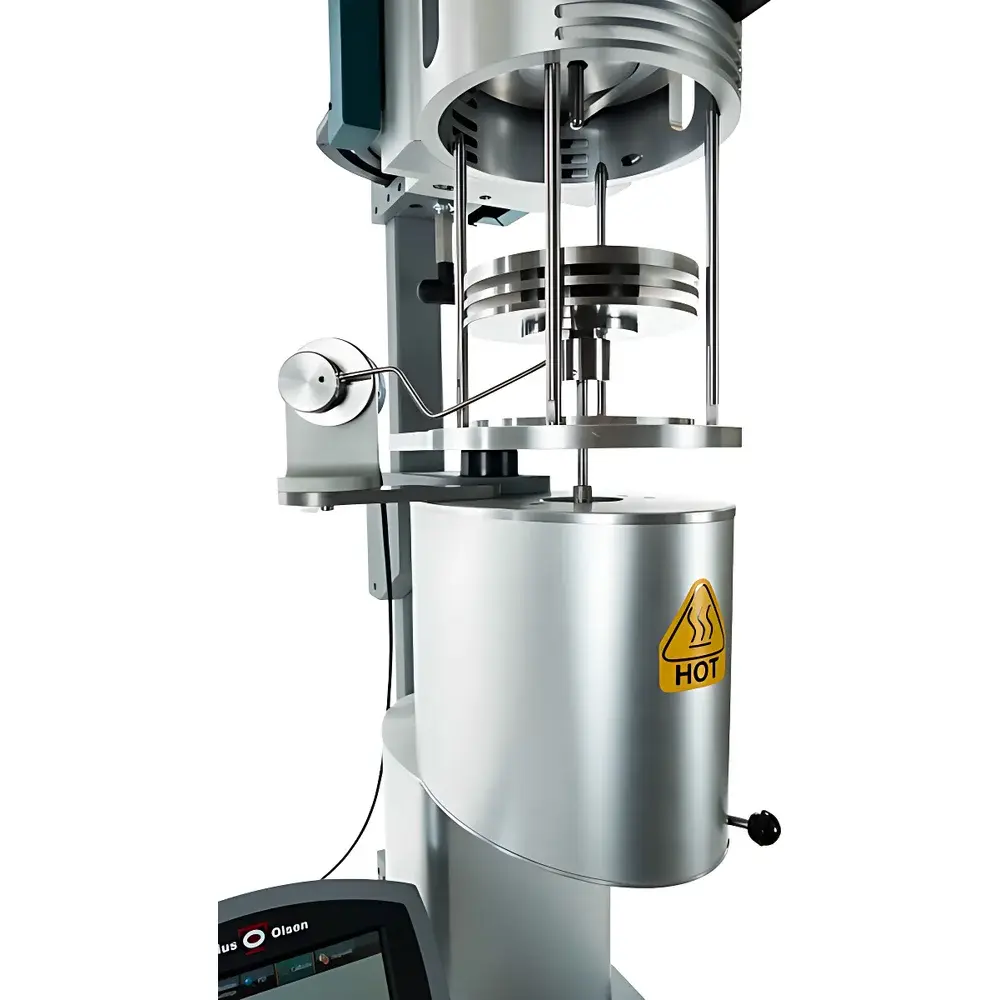
Tinius Olsen MP1200 Melt Flow Indexer
| Brand | Tinius Olsen |
|---|---|
| Origin | USA |
| Model | MP1200 |
| Heating Zones | 3-zone independent PID control with Pt100 sensors |
| Temperature Stability | ±0.1 °C |
| Temperature Uniformity | ±0.1 °C across furnace |
| Control Interface | 7-inch capacitive touchscreen |
| Data Interface | USB 2.0 |
| Die Release Mechanism | Drop-down die holder |
| Weight Loading | Manual or motorized weight lift option |
| Standard Die | 2.095 mm diameter × 8.000 mm length (ASTM D1238 / ISO 1133 compliant) |
| Sample Cutter | Optional manual or automatic |
| Mirror Viewport | Integrated stainless-steel mirror for real-time extrudate observation |
Overview
The Tinius Olsen MP1200 Melt Flow Indexer is a precision-engineered instrument designed to determine the melt mass-flow rate (MFR) and melt volume-flow rate (MVR) of thermoplastic polymers under standardized load and temperature conditions. It operates in strict accordance with ASTM D1238, ISO 1133-1 and -2, and GB/T 3682, delivering repeatable, traceable, and auditable results required for quality control, material specification verification, and R&D process validation in polymer compounding, extrusion, and injection molding environments. Unlike conventional two-zone melt indexers, the MP1200 employs a three-zone independently controlled heating system—each equipped with a calibrated Pt100 platinum resistance thermometer—enabling exceptional thermal stability (±0.1 °C) and axial uniformity (±0.1 °C across the full 150 mm furnace length). This architecture minimizes thermal gradients that can induce non-Newtonian flow artifacts, thereby improving inter-laboratory reproducibility and reducing measurement uncertainty in high-precision applications.
Key Features
- Three-zone PID-controlled furnace with individual Pt100 sensing per zone, ensuring stable and uniform thermal environment per ASTM D1238 Annex A requirements
- 7-inch industrial-grade capacitive touchscreen interface with intuitive, menu-driven navigation—mirroring the logic and workflow of Tinius Olsen’s Horizon software suite for seamless operator transition
- Drop-down die release mechanism enabling rapid, tool-free die removal and cleaning without disassembly or thermal cooldown
- Tapered, grooved weight design optimized for ergonomic handling, minimizing slippage and enhancing safety during manual loading/unloading
- Integrated stainless-steel viewport mirror positioned at optimal angle for direct visual confirmation of die exit, extrudate continuity, and flow initiation
- Dual weight-loading configurations: base model with manual weight placement; optional motorized weight lift for hands-free, programmable loading sequences
- USB 2.0 host port supporting direct connection to external PCs running Horizon software for advanced statistical process control (SPC), method synchronization, and audit-ready data export
Sample Compatibility & Compliance
The MP1200 accommodates standard test specimens of polyethylene (PE), polypropylene (PP), polycarbonate (PC), ABS, PET, and other thermoplastics requiring melt flow characterization per ISO 1133-1 (MFR) and ISO 1133-2 (MVR). It supports both single-point and multi-point testing protocols, including timed extrusion, automated cut interval triggering, and dwell-time calibration routines. All hardware components—including the standard L/D = 30 die (2.095 mm × 8.000 mm), piston assembly, and barrel—are manufactured to dimensional tolerances specified in ISO 1133 Annex B and ASTM D1238 Figure 1. The system meets GLP/GMP documentation requirements when used with Horizon software configured for 21 CFR Part 11-compliant electronic signatures, audit trails, and user access controls.
Software & Data Management
While the MP1200 operates autonomously via its onboard touchscreen, full integration with Tinius Olsen Horizon software unlocks comprehensive data governance capabilities. Horizon provides validated method templates aligned with ISO/IEC 17025 workflows, real-time SPC charting (X-bar/R, Cpk), batch-level trending, and customizable PDF/Excel report generation—including raw time-stamped extrusion mass logs, temperature profiles, and operator metadata. All test records are timestamped, digitally signed, and stored with immutable audit trails—supporting FDA-regulated environments and ISO 9001-certified quality systems. Firmware updates and calibration logs are version-controlled and exportable for internal review or third-party accreditation audits.
Applications
- Quality assurance of incoming resin lots against supplier specifications (e.g., PE HD/LD grades, PP homopolymer vs. copolymer)
- In-process monitoring of melt viscosity shifts during reactive extrusion or masterbatch dilution
- Correlation studies between MFR/MVR and mechanical properties (tensile strength, impact resistance) in formulation development
- Validation of thermal degradation effects after multiple extrusion passes or residence time exposure
- Supporting ISO 14001-compliant recycling stream characterization (e.g., post-consumer PET regrind MFR consistency)
- Academic research on shear-thinning behavior, activation energy modeling, and rheological fingerprinting of novel biopolymers
FAQ
Does the MP1200 comply with ASTM D1238 Condition E (2.16 kg @ 190 °C) and ISO 1133 Method A?
Yes—the MP1200 is factory-validated for all standard test conditions defined in ASTM D1238 and ISO 1133, including Condition E, and ships with NIST-traceable calibration certificates for temperature and load.
Can test methods be saved directly on the instrument without connecting to a PC?
Yes—up to 50 user-defined methods (including temperature setpoint, load, cut interval, dwell time) can be stored internally and recalled via touchscreen.
Is the die interchangeable with legacy Tinius Olsen models such as MP600?
Yes—the MP1200 uses identical die geometry and mounting interface as MP600 and MP900 series, ensuring backward compatibility with existing calibration standards and accessories.
What maintenance intervals are recommended for long-term accuracy?
Daily visual inspection of die orifice and piston; quarterly verification of temperature uniformity and load calibration using certified reference weights and thermocouple calibrators; annual full metrological recalibration per ISO/IEC 17025 accredited service provider.




