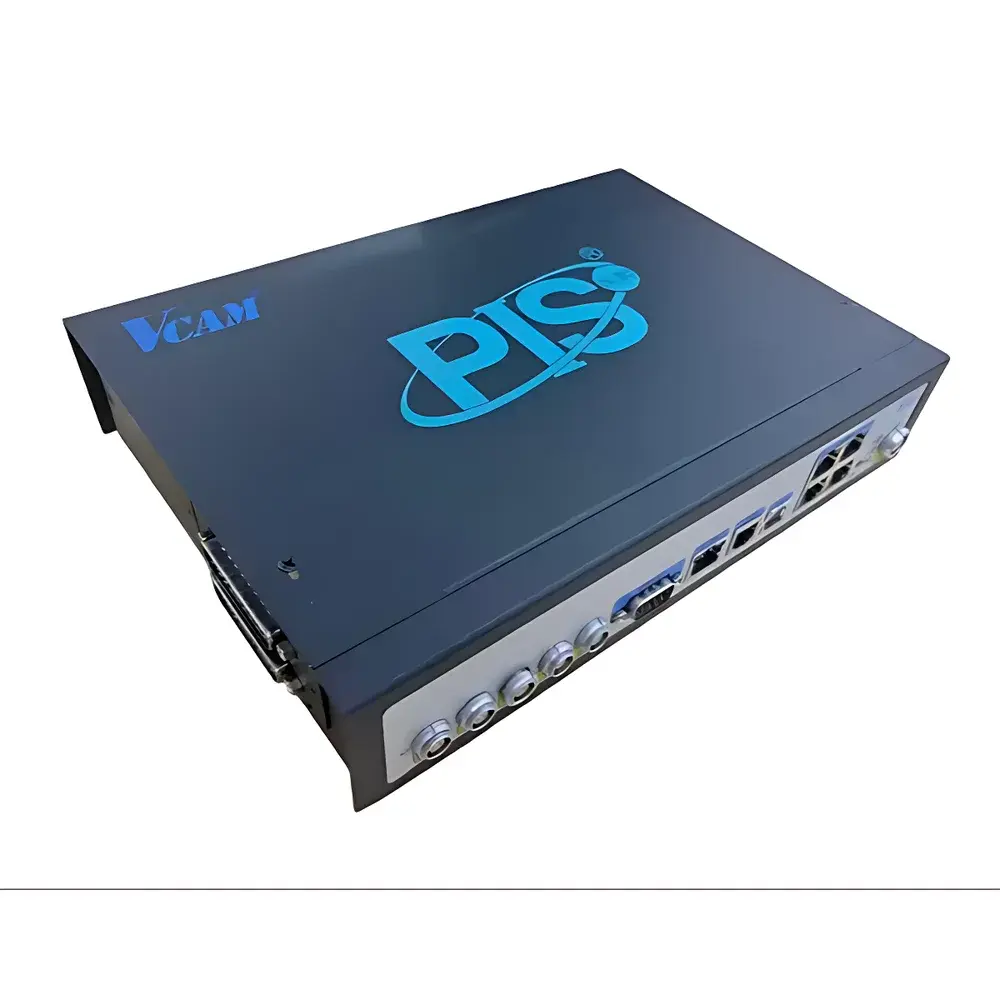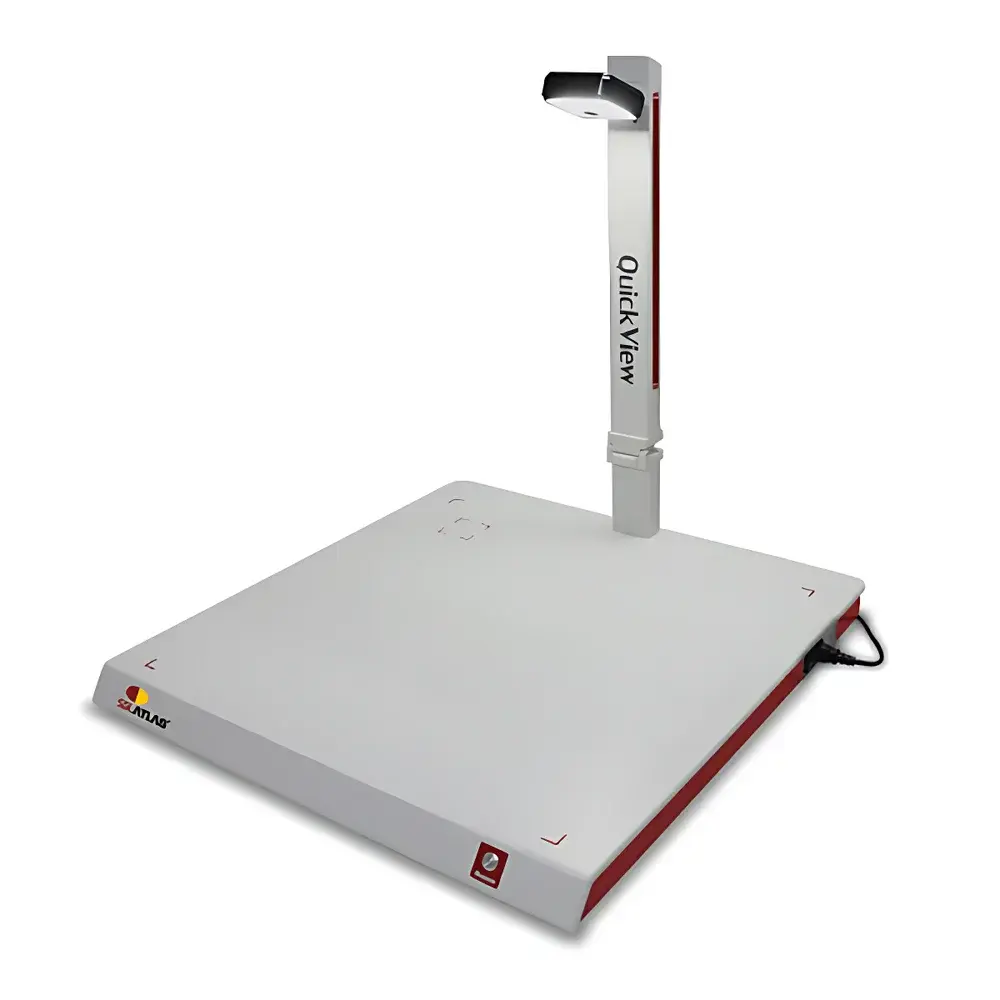
SDLATLAS M222QV QuickView Fabric Shrinkage Analyzer
| Brand | SDLATLAS |
|---|---|
| Origin | Guangdong, China |
| Manufacturer Type | Manufacturer |
| Regional Classification | Domestic (China) |
| Model | M222QV |
| Pricing | Upon Request |
Overview
The SDLATLAS M222QV QuickView Fabric Shrinkage Analyzer is a precision digital optical measurement system engineered for objective, repeatable, and standards-compliant evaluation of dimensional stability in woven and knitted textiles. Unlike manual tape-based methods—prone to operator variability, parallax error, and inconsistent point placement—the M222QV employs high-resolution digital imaging and geometric computer vision algorithms to quantify shrinkage in warp, weft, and bias (45° diagonal) directions simultaneously. The instrument operates on the principle of fiducial point displacement analysis: pre-test reference markers (either printed, stitched, or digitally overlaid) are imaged before and after standardized laundering or steaming cycles; sub-pixel image registration and Euclidean distance computation yield absolute dimensional change values expressed as percentage shrinkage or expansion. This metrological approach ensures traceability, inter-laboratory reproducibility, and full alignment with the physical definitions embedded in ISO 5077 and AATCC 135.
Key Features
- 650 × 650 mm active imaging field-of-view, accommodating full-scale garment panels, swatches, and multi-specimen arrays without repositioning
- High-definition industrial camera with global shutter and programmable LED illumination, enabling consistent contrast capture across diverse fabric colors, textures, and surface reflectivity—including black, metallic, patterned, and highly absorbent substrates
- Sub-millimeter spatial resolution: ±1 mm positional accuracy between any two fiducial points under standard calibration conditions, validated per ISO/IEC 17025 traceable procedures
- Automated geometric correction for lens distortion, perspective skew, and sample tilt—eliminating manual correction steps required by legacy systems
- Real-time image acquisition and on-device computation: results generated within 8 seconds post-image capture, supporting high-throughput lab workflows
- Integrated barcode/QR code generation engine: each test report embeds machine-readable metadata—including test standard (e.g., ISO 6330:2012, Method 2A), cycle parameters, specimen ID, and operator timestamp—for audit-ready documentation
Sample Compatibility & Compliance
The M222QV supports all common textile forms: flat-cut fabrics, cut-and-sewn garments, nonwovens, technical textiles (e.g., geotextiles, medical gowns), and elastic blends. Its marker-agnostic imaging algorithm accommodates inkjet-printed grids, embroidered cross-stitches, laser-etched marks, or even natural weave intersections when enhanced via contrast optimization. The system is fully compliant with dimensional stability testing requirements specified in ISO 6330, ISO 5077, ISO 3005, ISO 3759, AATCC Test Method 135, AATCC 179, AATCC 187, and BS EN ISO 3759. All software-generated reports include embedded compliance statements and can be configured to meet GLP documentation requirements, including electronic signatures, version-controlled templates, and immutable audit trails per FDA 21 CFR Part 11 readiness guidelines.
Software & Data Management
The proprietary QuickView Analysis Suite (v4.2+) runs on Windows 10/11 x64 platforms and features a modular architecture with role-based access control. It includes customizable template editors for defining specimen layouts, marker configurations, and reporting formats (PDF, CSV, XML). Measurement data—including raw images, coordinate matrices, shrinkage vectors, and statistical summaries (mean, SD, CV%)—are stored in an encrypted SQLite database with automatic daily backup scheduling. Export functions support direct export to Microsoft Excel (.xlsx) with formula-preserving cell formatting, enabling seamless integration into LIMS environments or statistical process control (SPC) dashboards. All software updates, calibration logs, and user activity records are time-stamped and retained for ≥15 months to satisfy internal quality audits and external accreditation reviews (e.g., CNAS, UKAS, A2LA).
Applications
- Pre-production validation of fabric lot consistency prior to cutting and sewing
- Post-laundering evaluation of ready-to-wear garments per ISO 3759 labeling requirements
- R&D assessment of finishing treatments (resin application, sanforization, heat-setting) on dimensional behavior
- Supplier qualification testing against contractual shrinkage limits (e.g., ≤3% warp, ≤2.5% weft)
- Root-cause analysis of distortion failures in stretch denim or bi-stretch knits
- Supporting sustainability initiatives by quantifying dimensional stability across multiple wash cycles (ISO 15797 extended durability protocols)
FAQ
Does the M222QV require physical markers on the fabric?
Yes—fiducial markers must be applied prior to pre-test imaging. These may be permanent (embroidery, screen printing) or temporary (washable ink, adhesive dots), provided they remain stable through the conditioning cycle.
Can the system measure shrinkage in curved or three-dimensional garments?
It measures planar deformation only. For 3D garments, flat-lay positioning on the imaging stage is required; contour-induced measurement error is mitigated via built-in perspective compensation algorithms.
Is the software compatible with networked laboratory environments?
Yes—the QuickView Suite supports centralized license management, shared database deployment via SQL Server, and secure remote access through TLS-encrypted client connections.
What calibration frequency is recommended?
Annual factory recalibration is advised; users may perform daily verification using the included NIST-traceable grid calibration target and automated diagnostic routine.
Does the system support multilingual user interfaces?
English and Simplified Chinese UIs are pre-installed; additional languages (German, French, Japanese) are available upon request and validated per ISO/IEC 17025 translation protocols.