
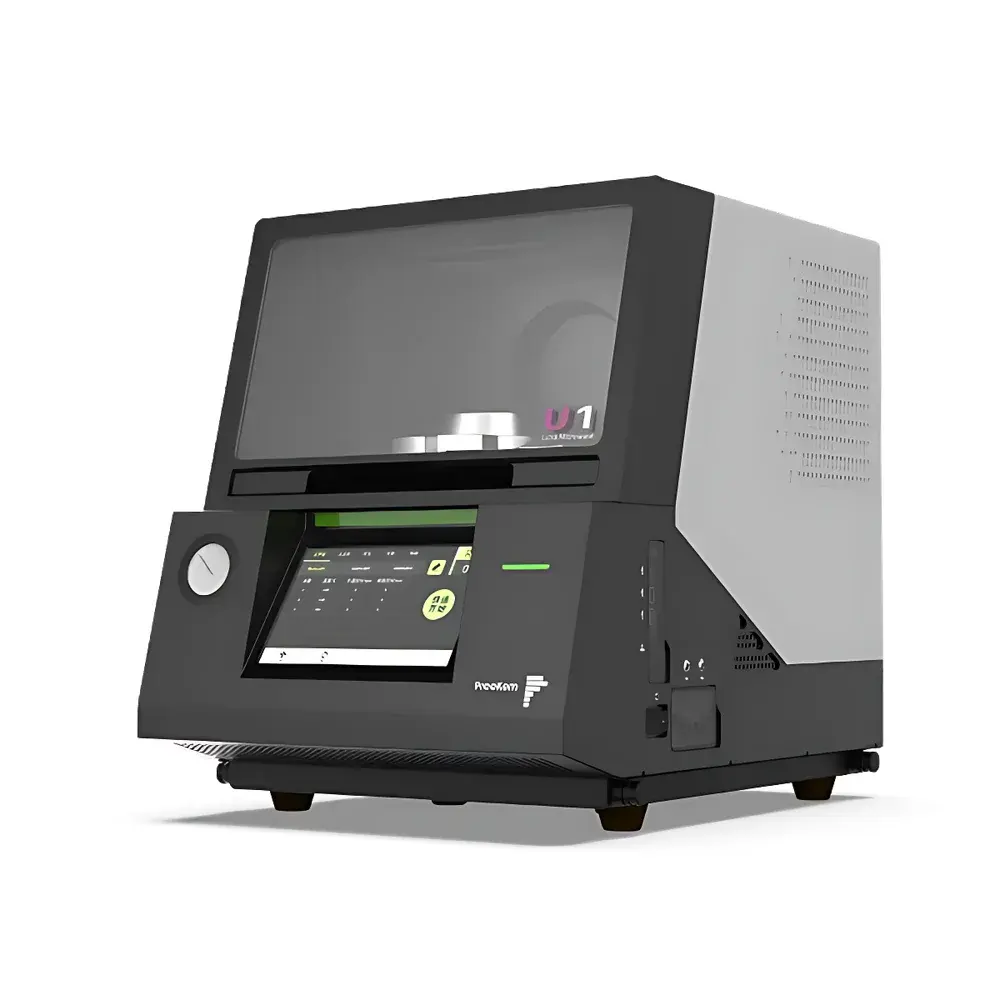
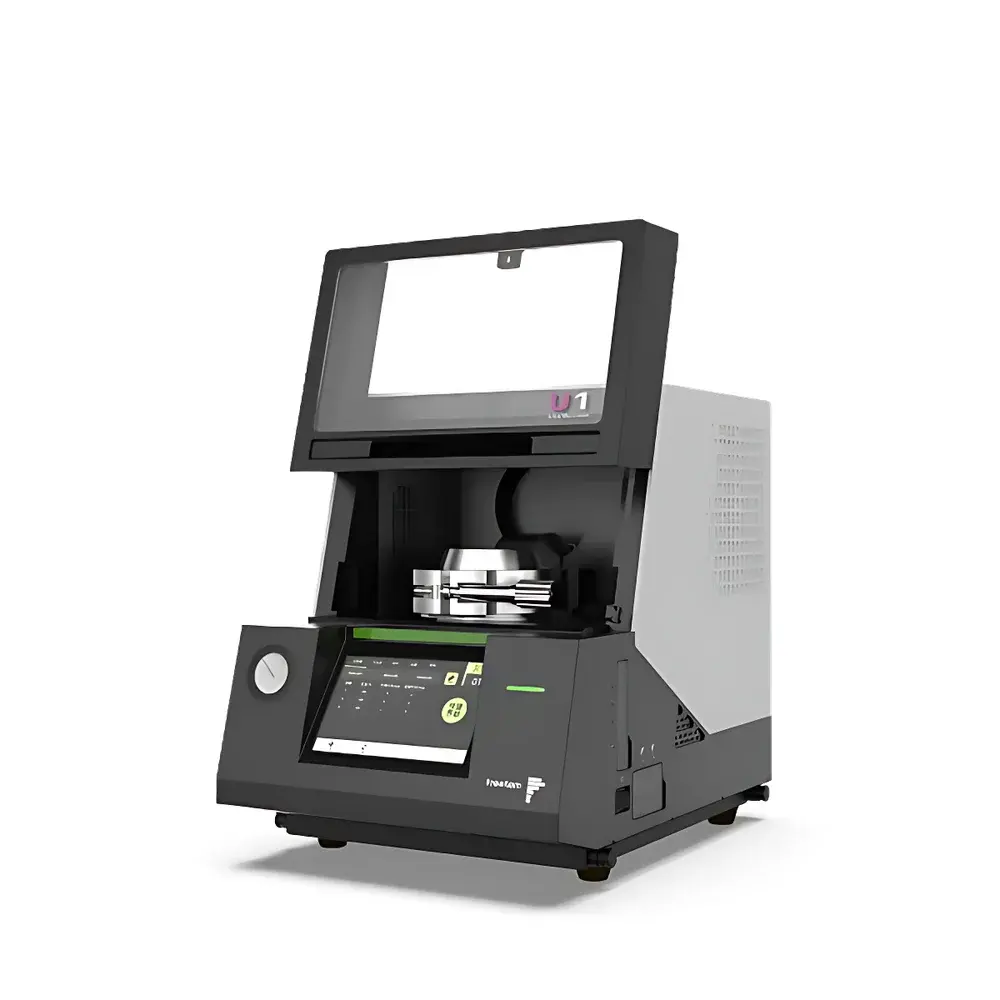
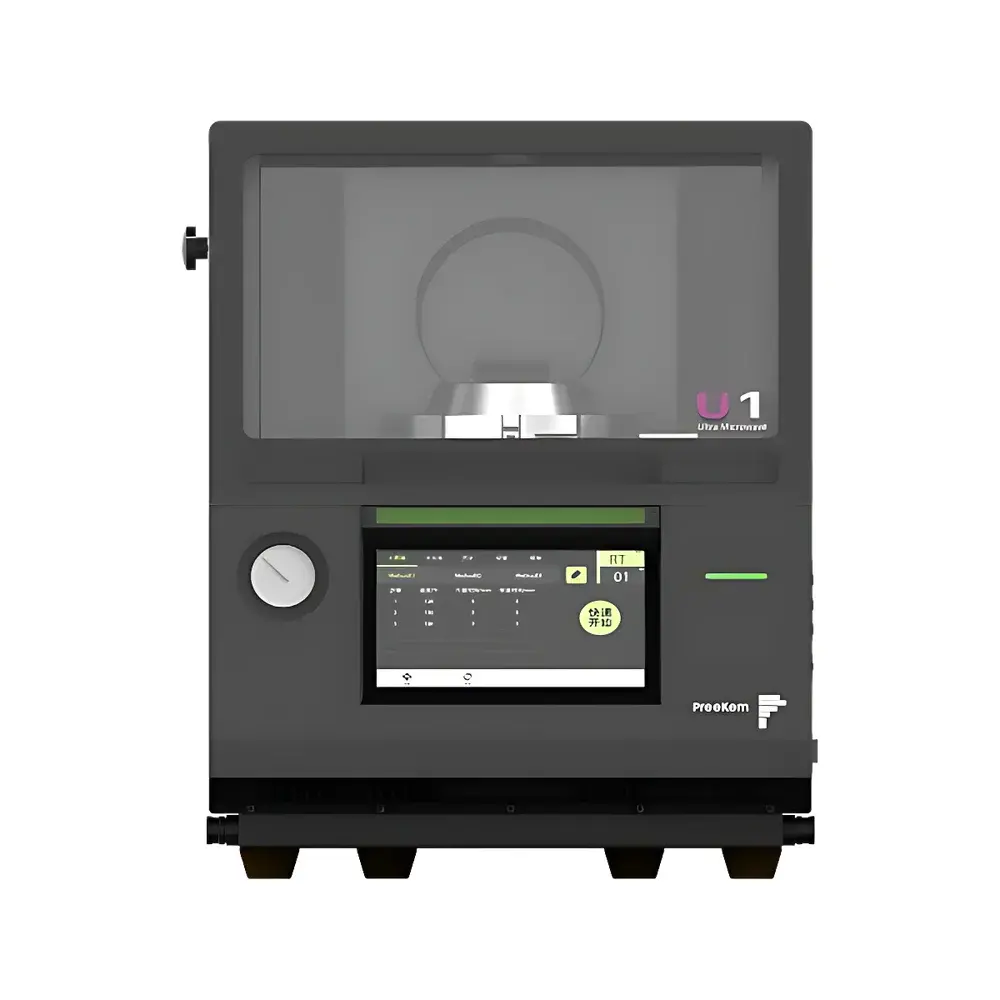
PreeKem Yitao U1 Pre-pressurized Ultra Microwave Digestion System
| Brand | PreeKem |
|---|---|
| Origin | Shanghai, China |
| Manufacturer Type | Direct Manufacturer |
| Country of Origin | Domestic (China) |
| Model | U1 |
| Price | Upon Request |
| Cavity Class | Industrial-Grade |
| Sample Capacity | 40 positions |
| Max Temperature | 300 °C |
| Max Pressure | 200 bar |
| Cavity Volume | 1.2 L |
| Vessel Compatibility | Standard borosilicate glass or fused quartz test tubes |
| Acid Consumption Reduction | Up to 70% vs conventional digestion |
| Typical Acid Volume | 2–3 mL for 0.5 g sample |
| Cooling System | Integrated industrial-grade water-cooling module + high-speed centrifugal blower with water-level and flow-rate alarms |
| Optional Cooling | Nitrogen-assisted rapid cooling |
| Safety Features | Triple pressure protection + multi-point temperature monitoring |
| Method Library | Pre-installed standardized digestion protocols |
| Experimental Flexibility | Single-batch multi-variable parameter programming |
Overview
The PreeKem Yitao U1 Pre-pressurized Ultra Microwave Digestion System is an industrial-grade, compact benchtop microwave reaction platform engineered for high-efficiency, low-acid sample preparation in analytical laboratories. Unlike conventional closed-vessel microwave digesters that rely on proprietary thick-walled quartz or TFM-lined vessels, the U1 employs a pre-pressurization strategy combined with precise microwave power modulation to enable safe, controlled digestion in standard borosilicate glass or fused quartz test tubes—eliminating the need for specialized, high-cost consumables. Its 1.2 L cavity operates under rigorously monitored conditions up to 300 °C and 200 bar, making it suitable for demanding applications including trace metal analysis in environmental, food, pharmaceutical, and geological matrices. The system leverages magnetron-driven 2450 MHz microwave energy with dynamic power regulation (0–1600 W), ensuring uniform field distribution and reproducible thermal profiles across all 40 sample positions. Designed for GLP-compliant workflows, the U1 integrates real-time pressure and temperature telemetry at multiple spatial points within the cavity and individual vessel zones—enabling process validation and audit-ready data capture.
Key Features
- Industrial-grade 1.2 L stainless-steel microwave cavity with reinforced shielding and electromagnetic leakage <0.5 mW/cm² at 5 cm (per IEC 61000-4-3)
- Triple redundant pressure protection: (1) mechanical rupture disc, (2) electronic pressure cut-off at 210 bar, and (3) cavity overpressure venting with passive thermal dump
- Multi-point temperature monitoring: infrared pyrometry (non-contact, ±1.5 °C accuracy) + fiber-optic probes (contact, ±0.5 °C) + cavity ambient thermistor
- Integrated water-cooling module with dual-flow sensors and automatic shutdown on low level or insufficient flow—compliant with ISO 17025 cooling stability requirements
- Optional nitrogen-assisted rapid cooling: reduces post-digestion cooldown time by ≥60% compared to water-only mode, minimizing analyte volatility losses
- Single-batch multi-variable method programming: independent ramp/hold parameters per sample group within one run—ideal for method development and matrix-matched calibration
- No dedicated digestion vessels required: validated compatibility with 16–20 mL standard glass or quartz test tubes (e.g., Kimax, Pyrex, Supelco), significantly lowering consumable cost and waste generation
Sample Compatibility & Compliance
The U1 supports solid, semi-solid, and liquid samples across diverse regulatory domains—including EPA Method 3052, ASTM D5511, ISO 11885, and USP . Its low-acid protocol (2–3 mL HNO₃/HF/HCl per 0.5 g sample) meets green chemistry principles outlined in ACS GCI Protocol #9 and reduces hazardous waste volume by ≥70% versus conventional hot-block or open-vessel digestion. All pressure and temperature control systems are calibrated traceable to NIST standards, and full audit trails—including operator ID, method version, timestamped sensor logs, and deviation alerts—are retained for ≥36 months. The system architecture satisfies FDA 21 CFR Part 11 requirements for electronic records and signatures when deployed with validated software configurations.
Software & Data Management
The U1 is operated via PreeKem’s Digisys™ Control Suite v4.2—a Windows-based application supporting method import/export in XML format, remote monitoring via Ethernet/Wi-Fi, and automated report generation compliant with ISO/IEC 17025 clause 7.8.2. Software features include real-time graphing of pressure/temperature/power curves, customizable pass/fail thresholds per parameter, and export of raw sensor data in CSV and .tdms formats for third-party statistical analysis (e.g., JMP, Minitab). Audit trail records are write-once, digitally signed, and resistant to post-hoc modification—meeting GLP/GMP documentation integrity standards.
Applications
- Trace element quantification (As, Cd, Pb, Hg, Cr, Ni) in soils, sediments, and sludge per EPA 6010D and 6020B
- Digestion of biological tissues (liver, muscle, plant material) for ICP-MS and ICP-OES analysis
- Pharmaceutical excipient screening and residual catalyst determination (e.g., Pd, Pt, Rh) in API intermediates
- Food safety testing: heavy metals in infant formula, spices, and seafood per EU Commission Regulation (EU) No 1881/2006
- Recycling stream analysis: Li, Co, Ni recovery from spent lithium-ion battery cathodes
FAQ
Can the U1 be used with standard laboratory glassware without modification?
Yes—the U1 is specifically designed for direct use with commercially available borosilicate or fused quartz test tubes (16–20 mL capacity). No vessel retrofitting, custom liners, or proprietary caps are required.
Is method validation support available for regulatory submissions?
PreeKem provides IQ/OQ documentation templates aligned with ISO/IEC 17025 and USP , including pressure transducer calibration certificates, temperature uniformity mapping reports, and inter-laboratory precision studies.
Does the system comply with electromagnetic compatibility (EMC) directives for laboratory installation?
Yes—the U1 meets EN 61326-1:2013 (industrial environment) and FCC Part 18 Class B emission limits, with full EMC test reports available upon request.
What maintenance intervals are recommended for the water-cooling module?
Coolant replacement every 6 months; water-level sensor calibration annually; blower filter cleaning every 200 operational hours—maintenance logs are auto-recorded in the system database.
Related Products



