
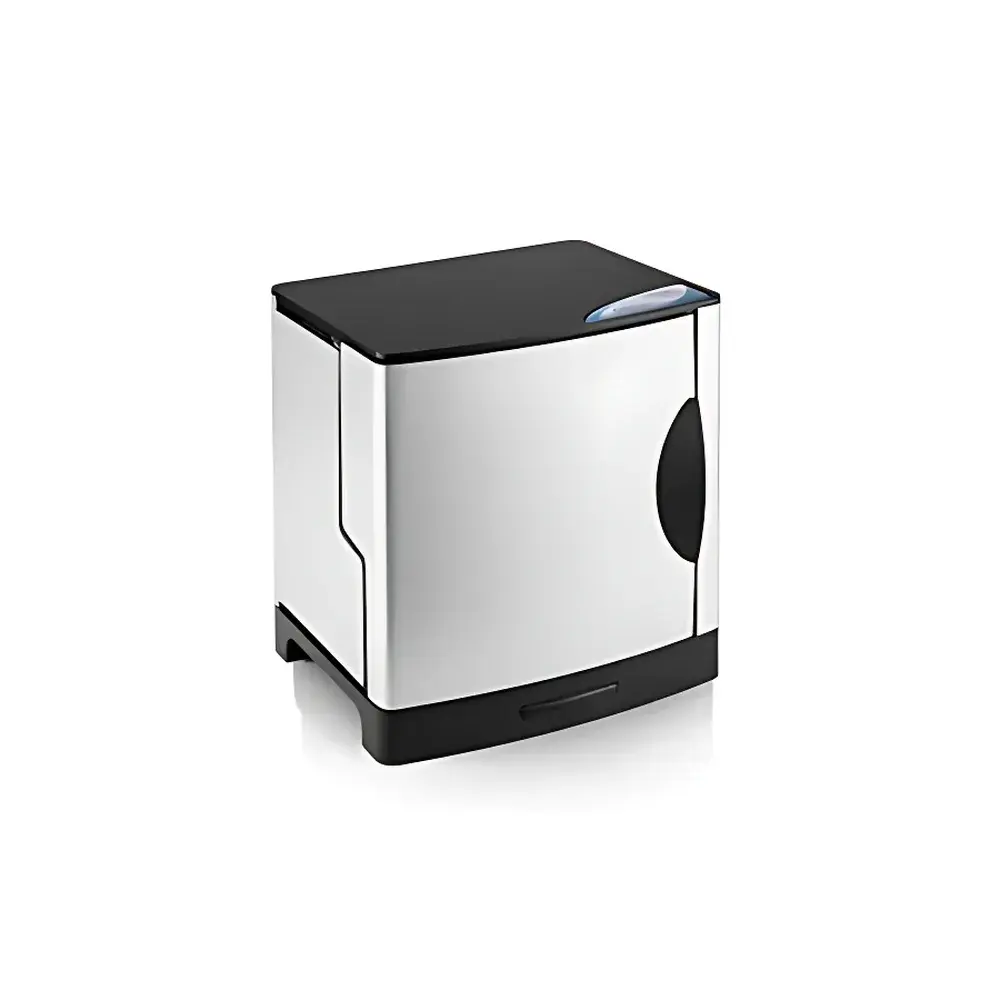
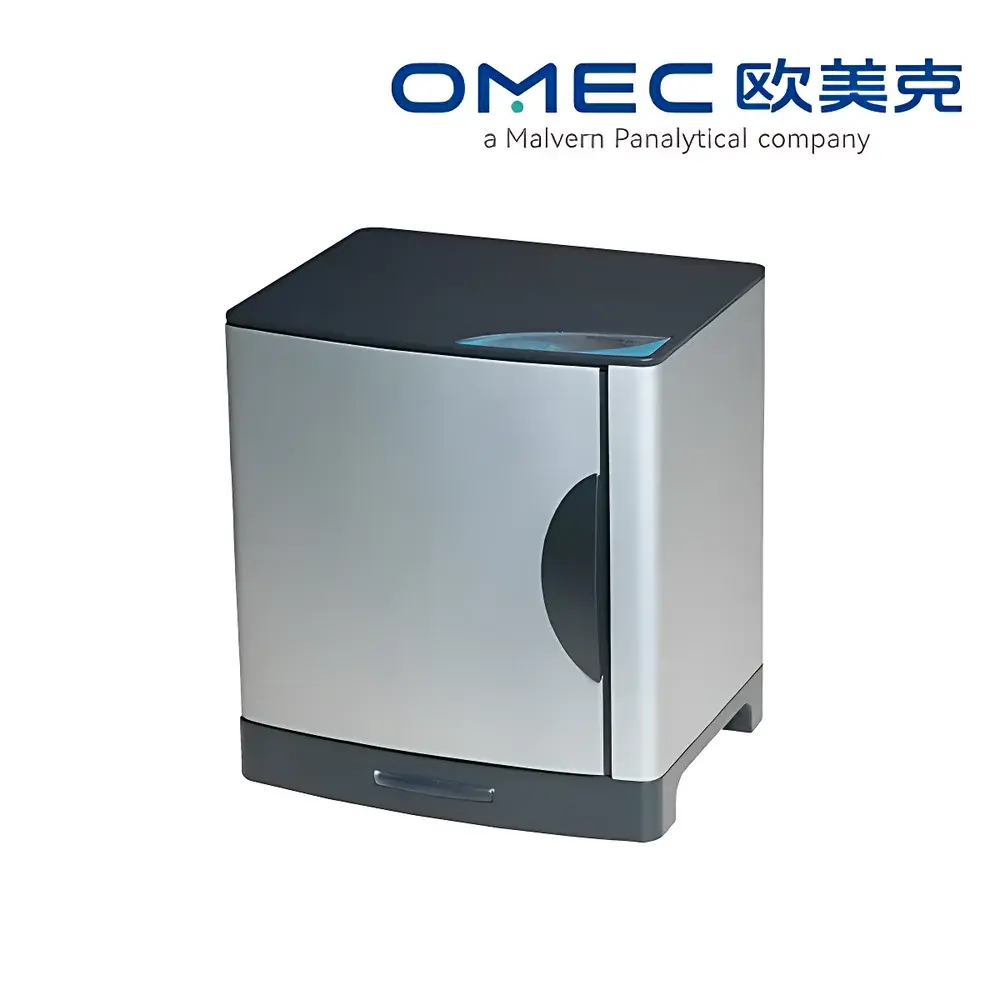
OMECK DS-1000 Dynamic Image-Based Particle Analyzer
| Brand | OMECK |
|---|---|
| Origin | Guangdong, China |
| Manufacturer Type | Original Equipment Manufacturer (OEM) |
| Product Category | Domestic |
| Model | DS-1000 |
| Pricing | Upon Request |
| Application Field | General Particle Characterization |
| Instrument Type | Dynamic |
| Lens Count | Lensless Imaging System |
| Measurement Range | 1.4–1400 µm |
| Dispersion Method | Wet Dispersion |
| Image Resolution | 2 Megapixels |
| Primary Measured Parameter | Equivalent Projected Area Diameter (D<sub>EA</sub>) |
Overview
The OMECK DS-1000 Dynamic Image-Based Particle Analyzer is an industrial-grade, lensless dynamic imaging instrument engineered for real-time, in-line or at-line morphological characterization of particulate systems. Unlike conventional static image analyzers requiring sample fixation or vacuum drying, the DS-1000 operates under continuous wet dispersion flow—enabling high-throughput, statistically robust analysis of particles in suspension. Its core measurement principle relies on high-speed digital imaging coupled with proprietary background subtraction and edge-detection algorithms to extract geometric descriptors—including equivalent projected area diameter (DEA), circularity, aspect ratio, convexity, and solidity—from each particle silhouette in motion. Designed in collaboration with Malvern Panalytical, the system integrates seamlessly into existing particle sizing workflows, particularly as a complementary module for laser diffraction instruments (e.g., Mastersizer series), where it delivers orthogonal morphological context to intensity-weighted size distributions.
Key Features
- Lensless optical architecture eliminates mechanical focusing, alignment, and calibration routines—reducing operator dependency and minimizing downtime.
- Real-time dispersion assessment via proprietary Dispersity Index (DI), a dimensionless metric quantifying agglomerate fraction and spatial heterogeneity within the dispersed phase.
- Automated anomaly detection: identifies oversized particles, agglomerates, fibrous contaminants, or irregular fragments exceeding user-defined thresholds in both size and shape domains.
- Modular integration capability: functions as a standalone analyzer or as an inline imaging accessory synchronized with laser diffraction systems via TTL-triggered acquisition and shared dispersion loops.
- Robust fluidic design compatible with aqueous media, alcohols, and low-viscosity organic solvents; sample window materials resist chemical erosion and mechanical abrasion.
- On-the-fly image capture and processing: acquires ≥30 frames per second at 2 MP resolution, with sub-pixel edge localization accuracy optimized for particles ≥1.4 µm.
Sample Compatibility & Compliance
The DS-1000 supports wet-dispersed samples across pharmaceutical powders, battery cathode/anode slurries, ceramic suspensions, pigment dispersions, and food-grade particulates. It complies with ISO 13322-1:2020 (Particle size analysis — Image analysis methods — Part 1: Static image analysis) for measurement methodology and reporting conventions. While not intrinsically 21 CFR Part 11 compliant, its software architecture supports audit-trail-enabling configurations when deployed in validated environments (e.g., GLP/GMP laboratories), including timestamped image archives, operator ID logging, and parameter change history. All hardware components meet IP54 ingress protection standards for laboratory use.
Software & Data Management
The DS-1000 Control Suite provides a Windows-based interface with dual operational modes: manual acquisition and event-driven triggering (e.g., DI threshold breach, particle count surge). Raw images and derived metrics are stored in HDF5 format, ensuring metadata integrity and compatibility with third-party analysis tools (e.g., Python/Pandas, MATLAB). The software generates standardized reports per ISO 9276-2, including cumulative D10/D50/D90 values, shape distribution histograms, and scatter plots of circularity vs. DEA. Dispersity Index trend graphs enable time-series monitoring of dispersion stability during sonication, surfactant titration, or pH adjustment—facilitating DOE-driven optimization of dispersion protocols.
Applications
- Pharmaceutical formulation development: detecting oversized excipient aggregates in suspension-based oral liquids or inhalable dry powder blends.
- Battery material QC: verifying primary particle integrity and absence of micron-scale agglomerates in NMC, LFP, or graphite slurries prior to coating.
- Quality release testing: supplementing laser diffraction data with shape-sensitive metrics to distinguish between milled vs. crystallized API batches.
- Process troubleshooting: diagnosing nozzle clogging root causes in spray drying or wet granulation by correlating abnormal particle morphology with upstream process deviations.
- Regulatory documentation: generating orthogonal evidence for particle-related CQAs in ICH Q5C and Q5E submissions.
FAQ
How does the DS-1000 achieve focus-free imaging without lenses?
It employs a coherent LED illumination source and a high-contrast micro-structured sample window that projects particle silhouettes directly onto a CMOS sensor via shadowgraphy principles—eliminating depth-of-field constraints inherent to lens-based optics.
Can the DS-1000 be used with non-aqueous dispersants?
Yes; the fluidic path and quartz observation window are chemically resistant to common organic solvents including ethanol, isopropanol, and acetone—provided viscosity remains below 20 cP and refractive index contrast with particles is sufficient for silhouette detection.
What is the minimum detectable particle concentration?
Optimal performance is achieved at 0.01–0.1% v/v solids loading; lower concentrations reduce statistical confidence, while higher loadings increase overlap artifacts—both are flagged in real time by the software’s particle density monitor.
Does the system support automated pass/fail decision logic?
Yes; users can define rule-based acceptance criteria (e.g., “circularity > 0.8 AND DEA < 10 µm”) and configure the software to trigger alerts, halt acquisition, or export flagged images to designated network folders.
Is calibration required before each measurement?
No routine calibration is needed due to the lensless design; however, a single pixel-to-micron scaling verification using NIST-traceable spherical standards is recommended annually or after major hardware service.



