
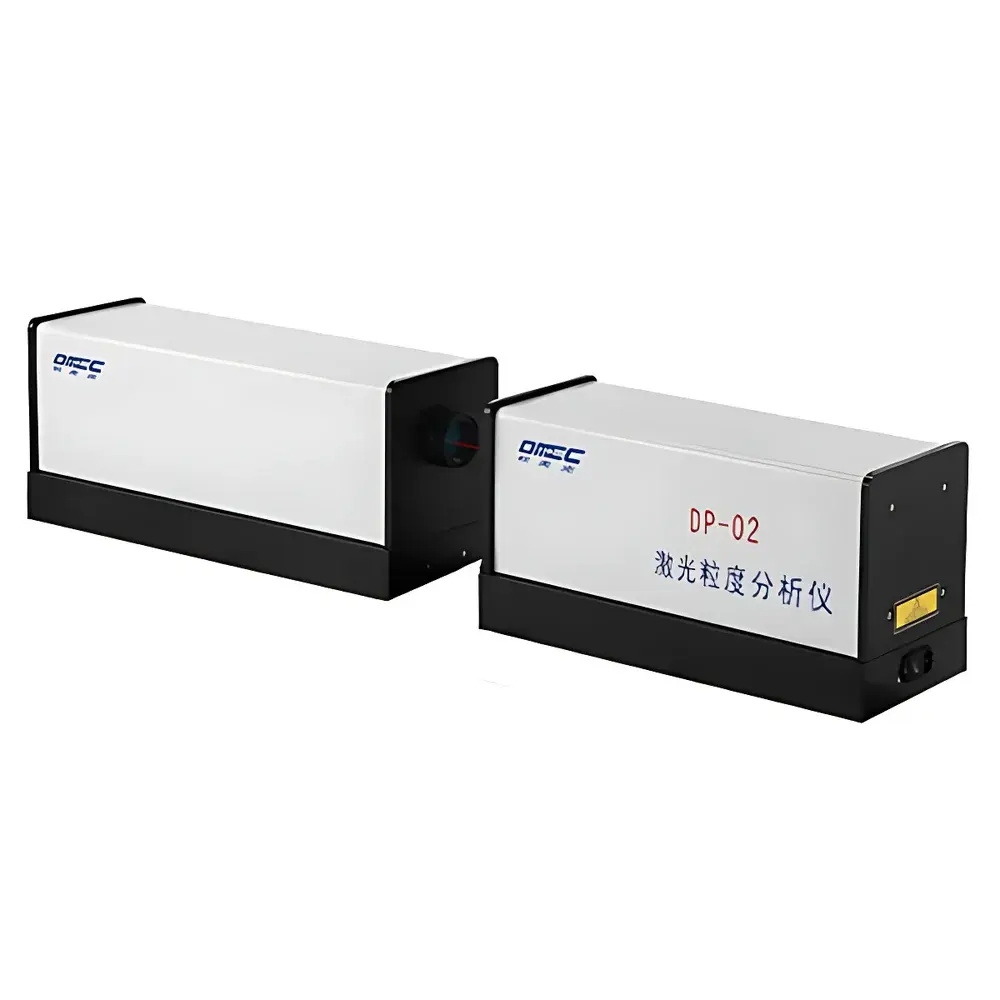
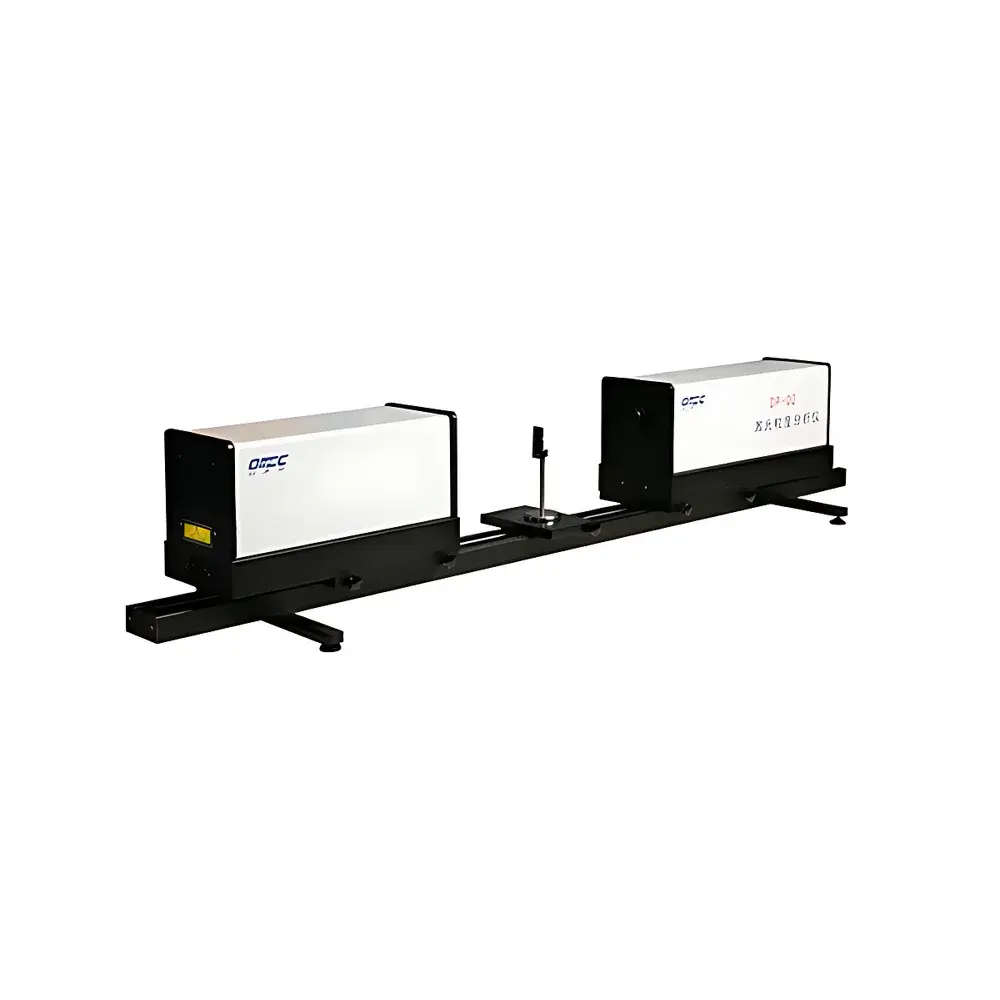
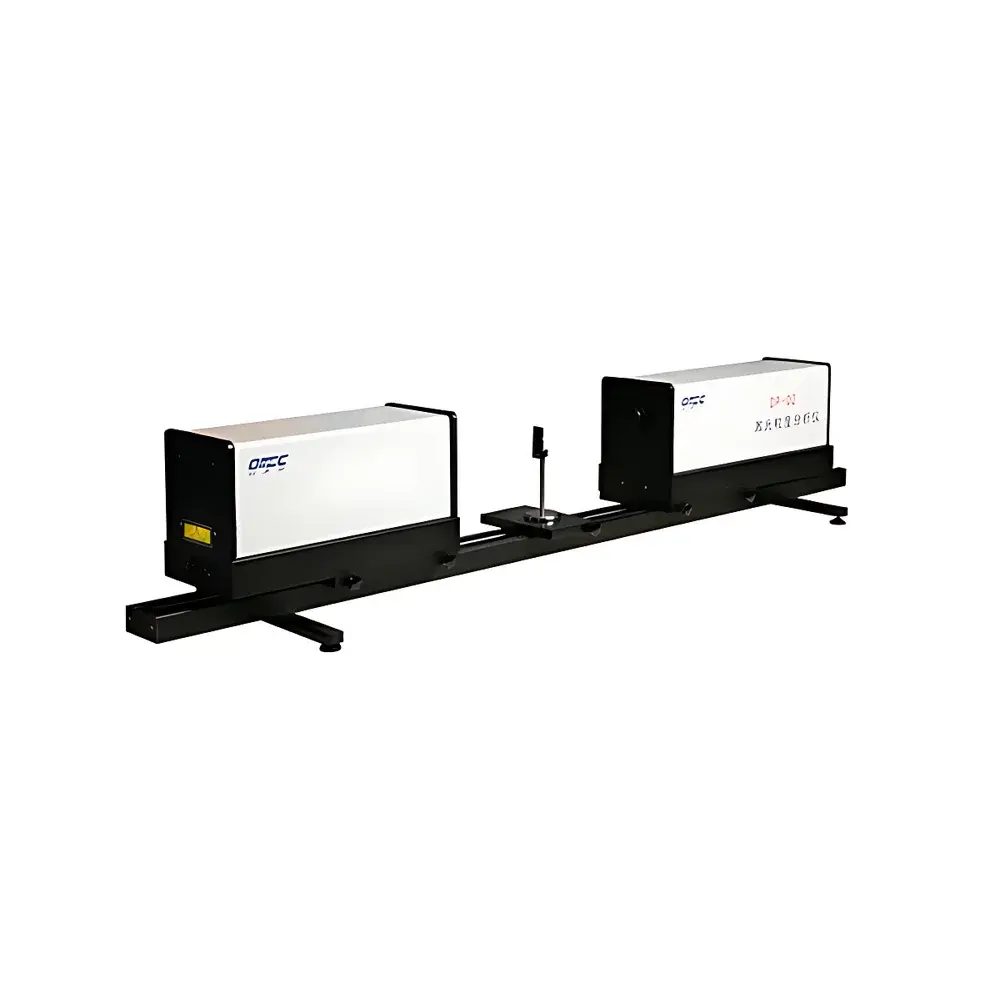
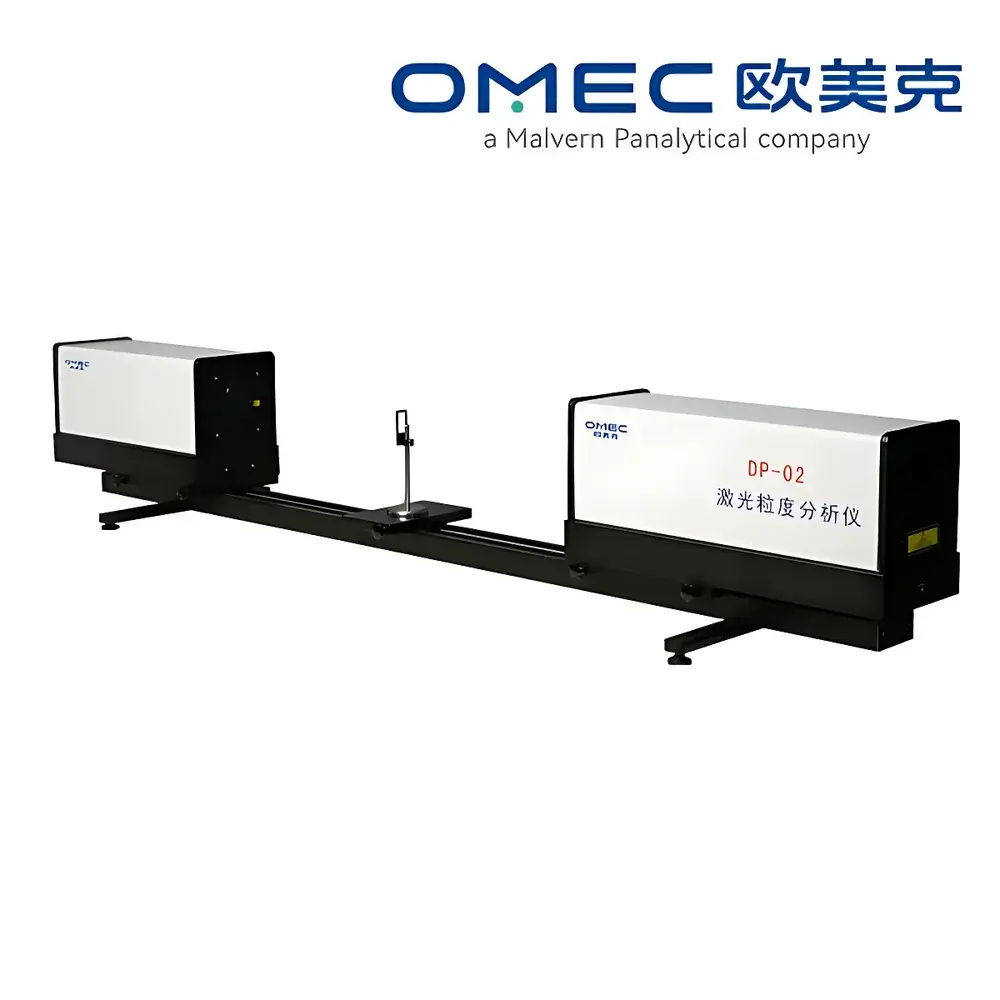
OMEC DP-02 Spray Laser Particle Size Analyzer
| Brand | OMEC |
|---|---|
| Origin | Guangdong, China |
| Manufacturer Type | Manufacturer |
| Product Category | Domestic |
| Model | DP-02 |
| Dispersion Method | Wet Dispersion |
| Instrument Type | Laboratory Laser Particle Size Analyzer |
| Measurement Range | 1–1500 µm |
| Repeatability | <3% |
| Measurement Time | 1–2 minutes |
Overview
The OMEC DP-02 Spray Laser Particle Size Analyzer is an engineered solution for in-situ, real-time characterization of droplet and aerosolized powder size distributions—specifically designed for spray processes such as nozzle atomization, inhaler delivery, agricultural spraying, fuel injection, and industrial coating applications. Unlike conventional laser diffraction instruments optimized for static suspensions or dry powders, the DP-02 employs a collimated parallel-beam optical architecture with an open, variable-distance measurement zone. This design enables non-intrusive, line-of-sight interrogation of dynamic spray plumes without flow interruption or sampling bias. The system operates on Mie scattering theory, using angular intensity distribution of scattered He-Ne laser light (λ = 632.8 nm, power = 2 mW, spectral purity ≤0.1 nm) to reconstruct particle size distributions across a broad dynamic range. Its Fourier-transform-based detection system integrates 486 independent photodetector elements, ensuring high-resolution capture of forward- and wide-angle scattering signals essential for accurate sub-micron to coarse particle quantification.
Key Features
- Open-path, modular optical configuration: Source and detector can be mounted on shared linear rails, independent stages, or custom mechanical supports—enabling rapid reconfiguration for benchtop, inline, or field-deployable setups.
- Integrated auto-alignment mechanism combined with optional rail-mounted or handheld auxiliary collimation tools—reducing setup time to under 90 seconds while maintaining optical axis stability within ±0.05°.
- Thermally stabilized, monolithic He-Ne laser module: Minimizes thermal drift and mechanical misalignment effects, delivering long-term beam pointing stability (<0.1 mrad/h) and intensity consistency (RSD <0.3% over 8 h).
- Optional millisecond-level sampling mode (down to 0.1 ms exposure per frame), synchronized via TTL trigger input—supporting transient spray event capture, pulsation analysis, and cycle-resolved statistics.
- Dual-mode alignment interface: Combines manual fine-tuning micrometers with intelligent auto-centering algorithms that optimize signal-to-noise ratio by dynamically adjusting detector position relative to the primary beam centroid.
- UV-grade 67 mm protective lens shield (optional): Installed upstream of the Fourier lens to prevent liquid residue accumulation; chemically resistant, cleanable with isopropanol, and replaceable without recalibration.
- Built-in NIST-traceable calibration verification using certified polystyrene microsphere reference disks (e.g., 10 µm, 50 µm, 100 µm)—accessible via software-initiated routine validation protocols.
Sample Compatibility & Compliance
The DP-02 accommodates aqueous and organic solvent-based sprays, emulsions, and low-concentration particulate aerosols without dilution or extraction. It complies with core principles of ISO 13320:2020 (Laser Diffraction Particle Size Analysis), ASTM E799-22 (Standard Practice for Determining Data Criteria and Processing for Liquid Drop Size Analysis), and supports GLP/GMP-aligned workflows through audit-trail-enabled software logging. All measurement parameters—including exposure duration, number of acquisitions, and trigger delay—are timestamped, user-annotated, and stored with metadata (operator ID, instrument serial, environmental conditions). Optional FDA 21 CFR Part 11 compliance packages include electronic signature enforcement, role-based access control, and immutable raw data archiving.
Software & Data Management
OMEC’s proprietary SprayScan v4.2 software provides dual inversion models (General Distribution and Single-Peak Distribution), configurable binning strategies (logarithmic, linear, or user-defined intervals), and multi-dimensional result export (Excel, PDF, Word, CSV). Users may toggle between volume-, surface-area-, and number-based distributions; define custom percentile thresholds (e.g., D10, D50, D90, Dv0.1); and generate comparative trend reports across batches, nozzles, or process conditions. All graphical outputs—including cumulative curves, differential histograms, and 3D temporal heatmaps—are fully exportable via right-click context menus. Raw scatter pattern images and detector voltage arrays are preserved in HDF5 format for third-party algorithm validation or advanced Mie modeling.
Applications
- Pharmaceutical pressurized metered-dose inhalers (pMDIs) and dry powder inhalers (DPIs) — verifying aerodynamic particle size distribution (APSD) per USP & Ph. Eur. guidelines.
- Automotive and aerospace fuel injector development — characterizing Sauter mean diameter (SMD) and droplet velocity correlations under varying pressure and temperature regimes.
- Agricultural spray nozzle certification — evaluating drift potential via VMD and relative span factor (RSF) in accordance with ASABE S572.1.
- Industrial spray drying and coating R&D — monitoring real-time droplet shrinkage kinetics and agglomeration onset during thermal processing.
- Fire suppression system validation — quantifying water mist droplet spectra for optimal heat absorption and surface coverage efficiency.
FAQ
What is the minimum detectable droplet size under standard operating conditions?
The validated lower limit is 1 µm (Dv10) for stable, monodisperse sprays; performance below 0.5 µm requires optional high-sensitivity detector upgrade and controlled humidity environment (<40% RH).
Can the DP-02 operate continuously during production-line spray testing?
Yes—its sealed optical path, passive cooling design, and industrial-grade I/O (RS-485, Ethernet/IP, analog 4–20 mA output) support unattended 24/7 operation with remote diagnostics and scheduled self-check routines.
Is sample preparation required prior to measurement?
No. The DP-02 performs direct, non-contact measurement of free-falling or impinging sprays; no dilution, filtration, or carrier gas introduction is needed.
How does the system handle optical obscuration from high-concentration sprays?
Real-time attenuation compensation algorithms adjust inversion weighting based on total scattered energy loss; users may also enable dynamic range extension via automatic gain switching across detector rings.
Does the software support automated pass/fail decision logic against predefined specification limits?
Yes—customizable acceptance criteria (e.g., “Dv50 must be 25±3 µm AND Span <1.8”) can be embedded into test templates, triggering visual alerts and auto-generated deviation reports upon failure.



