
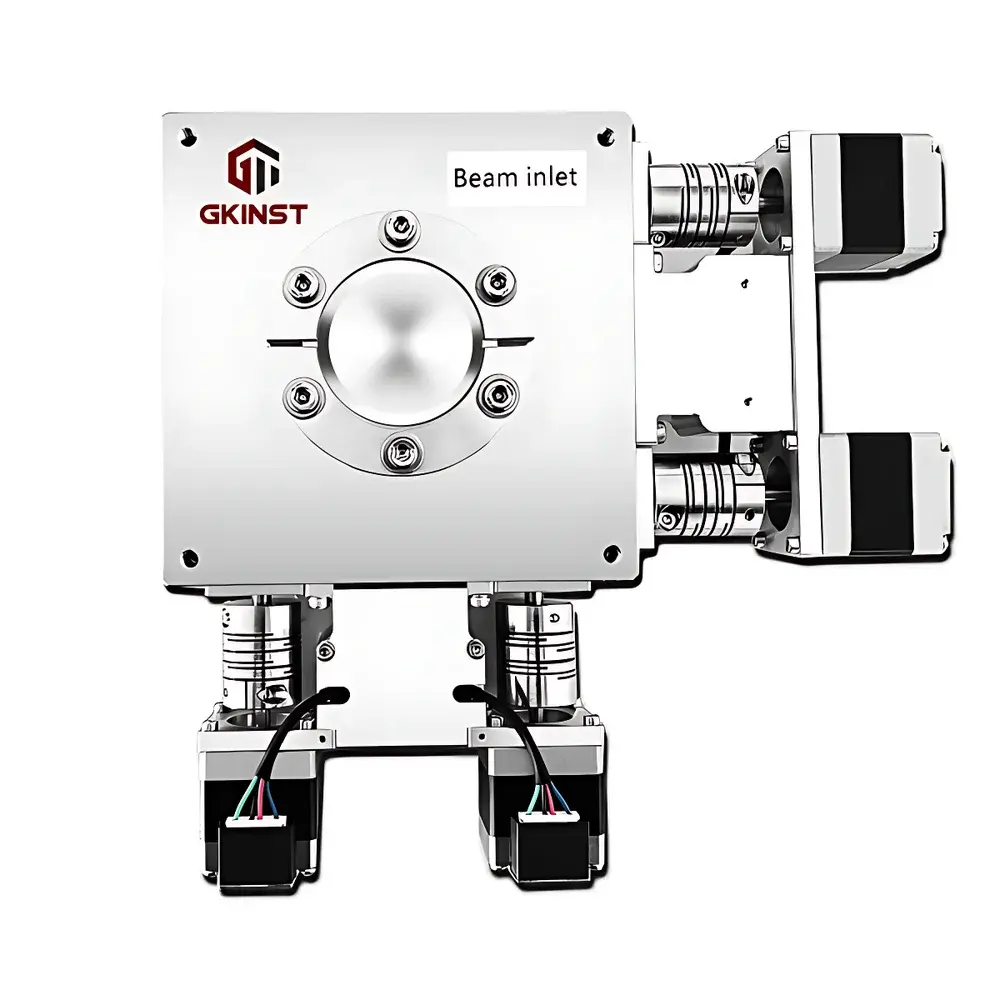
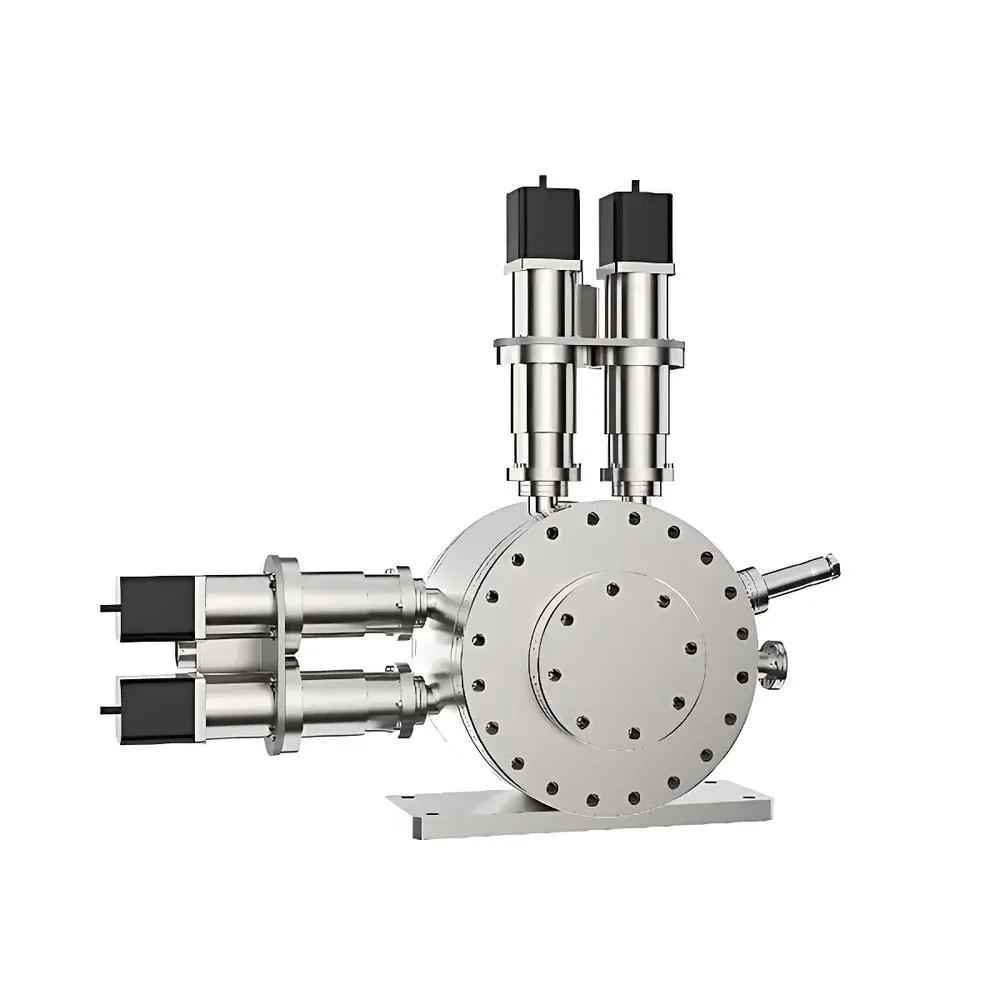
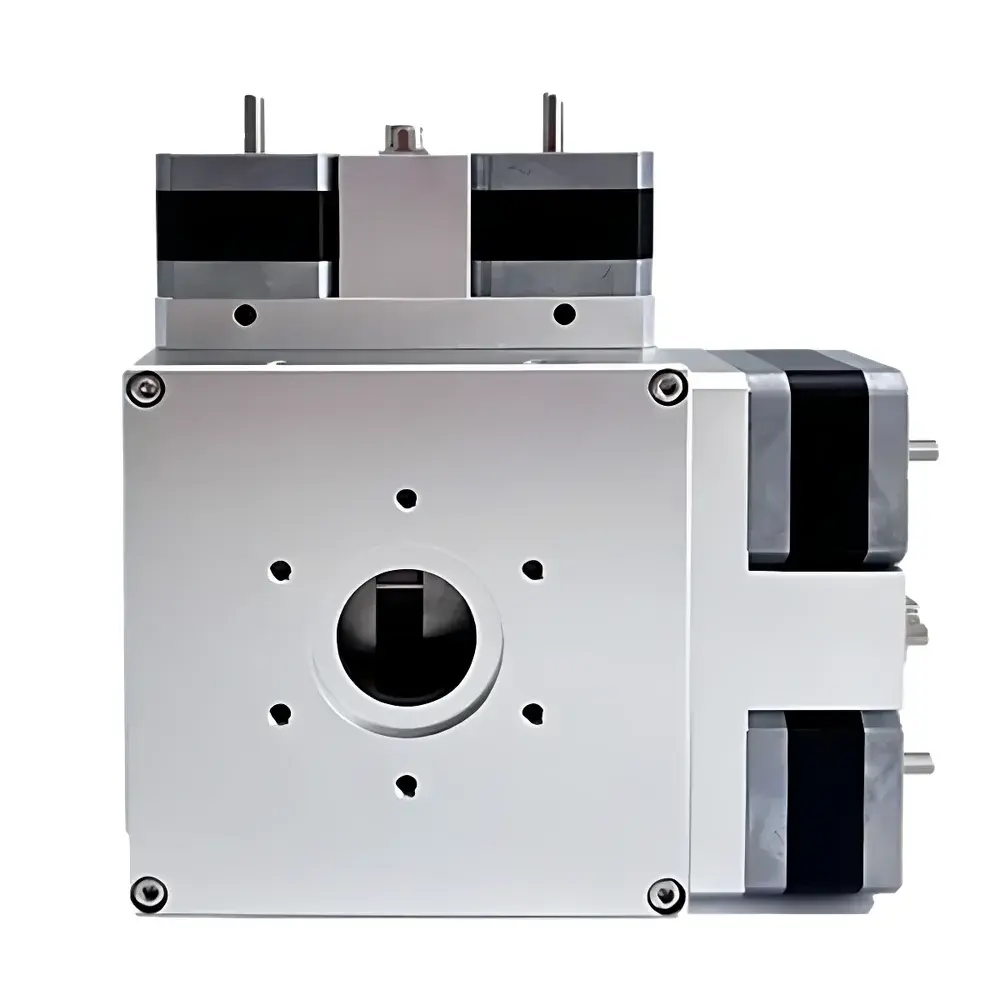
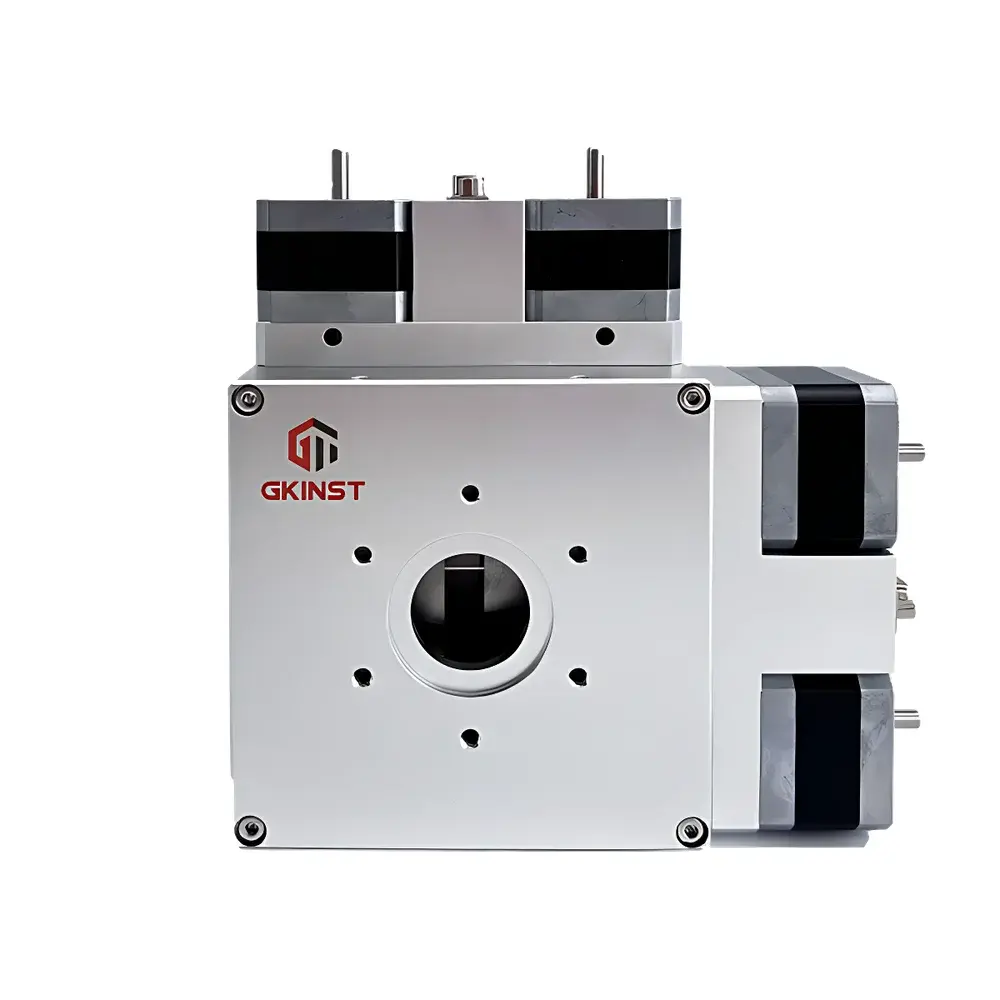
GKInst AIR-SL-A30 / HV-SL-A30 / UHV-SL-A30 High-Precision X-ray Slit Collimator System
| Brand | GKInst (Anhui GK Instrument Co., Ltd.) |
|---|---|
| Origin | Anhui, China |
| Model | AIR-SL-A30 / HV-SL-A30 / UHV-SL-A30 |
| Max Aperture | 30 mm × 30 mm |
| Resolution | 1 µm |
| Repeatability | 1 µm |
| Positioning Accuracy | ±2 µm |
| Blade Material | Tungsten Carbide (2 mm thick) |
| Housing Material | Anodized Aluminum (AIR/HV) / Stainless Steel (UHV) |
| Weight | 3.8 kg / 4.0 kg / 26 kg |
| Motor | Bipolar Stepper Motor |
| Vacuum Compatibility | Up to 10⁻⁵ mbar (AIR), 10⁻⁹ mbar (UHV), customizable to 10⁻⁶ mbar or lower |
| Flange Options | KF, CF (standard CF100), custom |
| Encoder Options | Absolute or Incremental (optional) |
| Customizable Aperture Shape | Rectangular, elliptical, or user-defined profiles |
| Optional Blade Materials | GaAs, Si, Cu, Ge |
Overview
The GKInst AIR-SL-A30, HV-SL-A30, and UHV-SL-A30 series are high-precision, motorized X-ray slit collimators engineered for rigorous beam conditioning in synchrotron radiation facilities, laboratory-scale X-ray scattering (SAXS/WAXS), X-ray diffraction (XRD), and laser-based optical alignment systems. These collimators operate on the principle of mechanical beam definition via four independently actuated, ultra-flat tungsten carbide blades—arranged in orthogonal pairs—to form a dynamically adjustable rectangular aperture. Unlike passive collimation optics, this active slit system enables real-time, sub-micrometer control over beam height, width, and aspect ratio, thereby optimizing signal-to-noise ratio, minimizing parasitic scatter, and ensuring spatial coherence essential for quantitative intensity calibration and detector dynamic range management. Each variant is architecturally optimized for its operational environment: the AIR-SL-A30 for atmospheric or purged enclosures; the HV-SL-A30 for high-vacuum chambers (≤10⁻⁵ mbar); and the UHV-SL-A30 for ultra-high-vacuum applications (≤10⁻⁹ mbar), featuring all-metal sealing, low-outgassing stainless steel construction, and UHV-rated linear viewports.
Key Features
- Sub-micrometer resolution and repeatability (1 µm) across full aperture range (up to 30 mm × 30 mm), validated under ISO 9283 compliant motion testing protocols.
- Tungsten carbide blades (2 mm thickness) with surface roughness <50 nm Ra, precision-ground to minimize edge diffraction and suppress stray X-ray scatter—critical for low-background SAXS measurements.
- Bipolar stepper motor drive with optional absolute or incremental encoder feedback, enabling closed-loop positional verification and traceable motion logging per GLP/GMP requirements.
- Modular mechanical interface: standard CF100 flange on UHV models; KF40/KF50 options available for HV/AIR variants; custom flange geometry and mounting hole patterns supported.
- Thermally stable anodized aluminum housing (AIR/HV) or 316L stainless steel body (UHV), designed for long-term dimensional stability under thermal cycling between 15–35 °C ambient conditions.
- Embedded firmware supports RS-485 (Modbus RTU) and USB-CDC communication protocols, compatible with LabVIEW, Python (PySerial), and EPICS IOC integration for automated beamline control.
Sample Compatibility & Compliance
These slit collimators are not sample-contacting components but serve as critical beam-shaping elements upstream of detectors, monochromators, or sample stages. They are fully compatible with incident photon energies from 0.1 keV (soft X-rays) to 100 keV (hard X-rays), provided appropriate blade material selection (e.g., Si or Ge for low-energy absorption optimization). All models comply with ISO 14644-1 Class 5 cleanroom assembly standards. UHV-SL-A30 units meet ASTM E576-22 specifications for vacuum component outgassing rates (<1×10⁻¹² Pa·m³/s·cm²) and are certified for use in facilities adhering to USP Analytical Instrument Qualification frameworks. Full documentation—including FAT/SAT reports, material certifications (EN 10204 3.1), and vacuum leak test records—is provided upon request to support FDA 21 CFR Part 11 and EU Annex 11 audit readiness.
Software & Data Management
GKInst provides the open-source SlitControl SDK, a cross-platform C++/Python API supporting deterministic motion sequencing, position logging with timestamped metadata (including system temperature and motor current), and synchronization with external triggers (TTL input/output). Data exports conform to HDF5 format with NeXus-compatible attributes, ensuring seamless ingestion into DAWN, PyFAI, or GSAS-II workflows. Audit trails record every aperture change—including operator ID, timestamp, pre/post-position values, and confirmation checksums—enabling full traceability required under ISO/IEC 17025 and ICH GCP guidelines. Firmware updates are digitally signed and delivered via secure HTTPS, with rollback capability retained for regulatory continuity.
Applications
- Synchrotron beamline front-end conditioning: defining primary beam size prior to monochromator or focusing optics to prevent thermal load-induced distortion.
- Lab-based SAXS instruments: reducing parasitic scatter from air paths and chamber walls to achieve <0.1% background contribution in q-range 0.001–5 nm⁻¹ measurements.
- XRD stress analysis: generating highly collimated beams (<0.1° divergence) for precise lattice strain mapping in polycrystalline metal samples.
- Time-resolved X-ray imaging: synchronized aperture modulation during pump-probe experiments to gate exposure duration at millisecond-to-microsecond scales.
- Calibration reference setups: serving as NIST-traceable aperture standards for beam profile metrology using knife-edge scanning or CCD-based intensity mapping.
FAQ
What vacuum levels are supported by each model, and how is UHV integrity verified?
The AIR-SL-A30 operates at ambient pressure or inert gas purge; HV-SL-A30 is rated to 10⁻⁵ mbar (helium leak rate ≤1×10⁻⁹ mbar·L/s); UHV-SL-A30 achieves ≤10⁻⁹ mbar after bakeout (150 °C, 24 h), verified via residual gas analysis (RGA) and helium mass spectrometry per ISO 20483.
Can blade materials be substituted for specific X-ray energy ranges?
Yes—standard tungsten carbide is optimal for >5 keV photons; optional blades in single-crystal silicon (for <2 keV), copper (for 2–8 keV), or germanium (for 9–15 keV) are available with identical mechanical tolerances and thermal expansion matching.
Is position feedback mandatory for GLP-compliant operation?
While open-loop operation is functional, GLP and ISO/IEC 17025 compliance require encoder-based position verification. Absolute encoders provide power-loss immunity; incremental encoders require homing but offer higher resolution (0.1 µm interpolated).
How is thermal drift compensated during extended measurements?
Each unit includes dual-point internal temperature sensing (±0.2 °C accuracy). Firmware applies empirically derived thermal expansion coefficients for Al or SS housings, adjusting nominal positions in real time to maintain aperture fidelity within ±0.5 µm over 8-hour continuous operation.
Are CAD models and mounting templates available for system integration?
Yes—STEP AP242 and IGES files, along with detailed GD&T drawings (ASME Y14.5-2018), flange bolt circle templates, and cable routing guides, are supplied with every order and accessible via GKInst’s secure customer portal.
Related Products





