
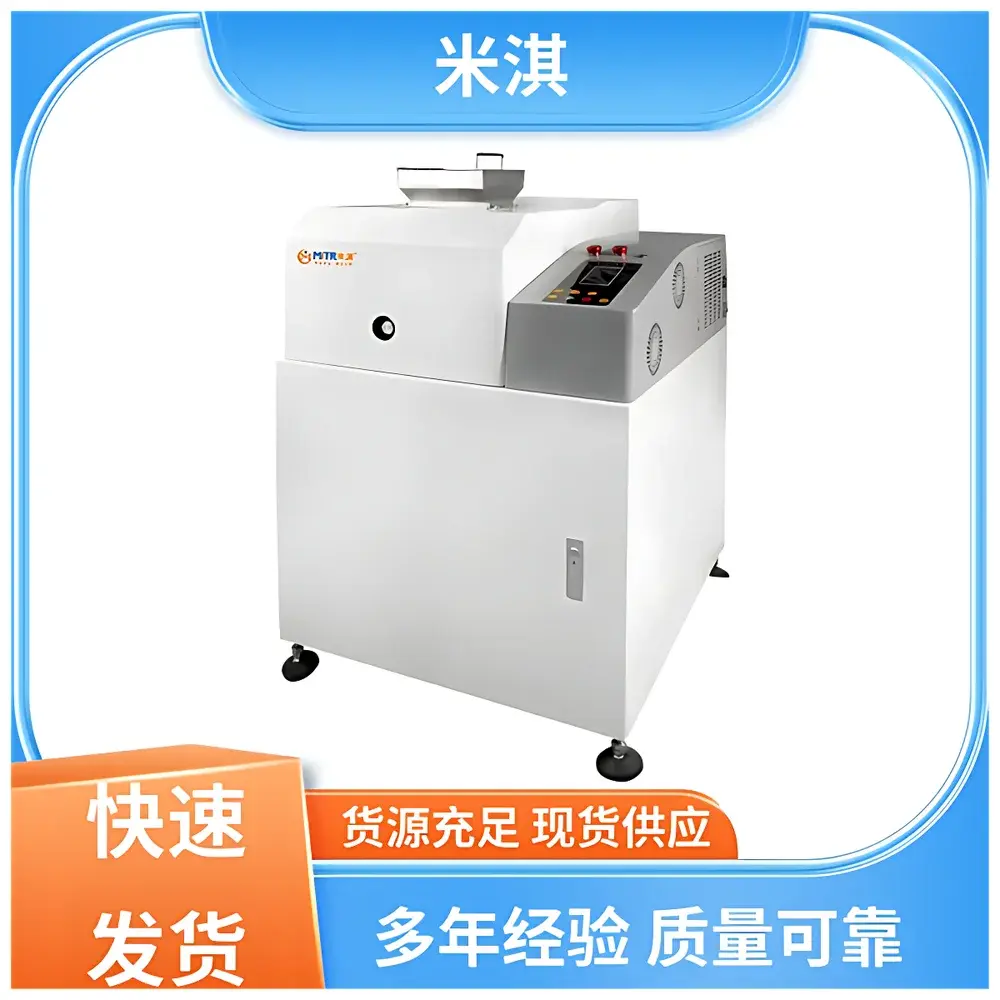
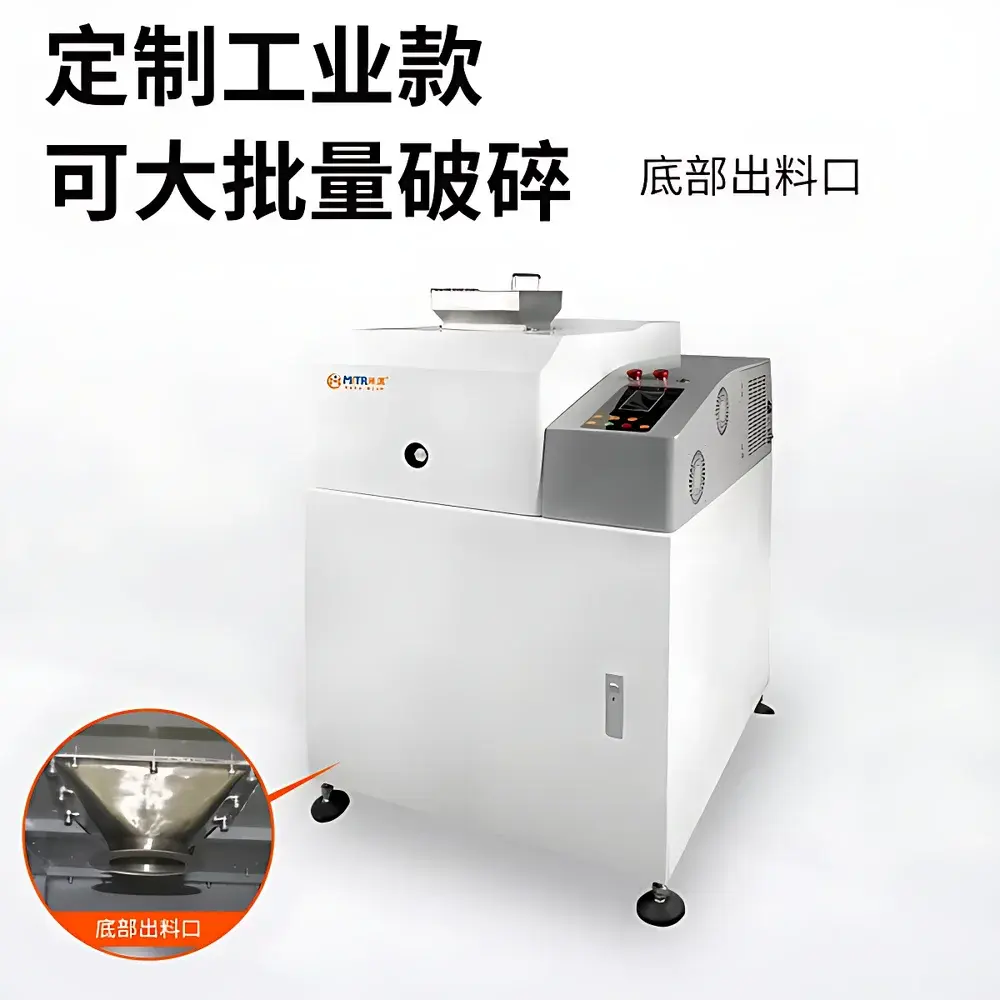
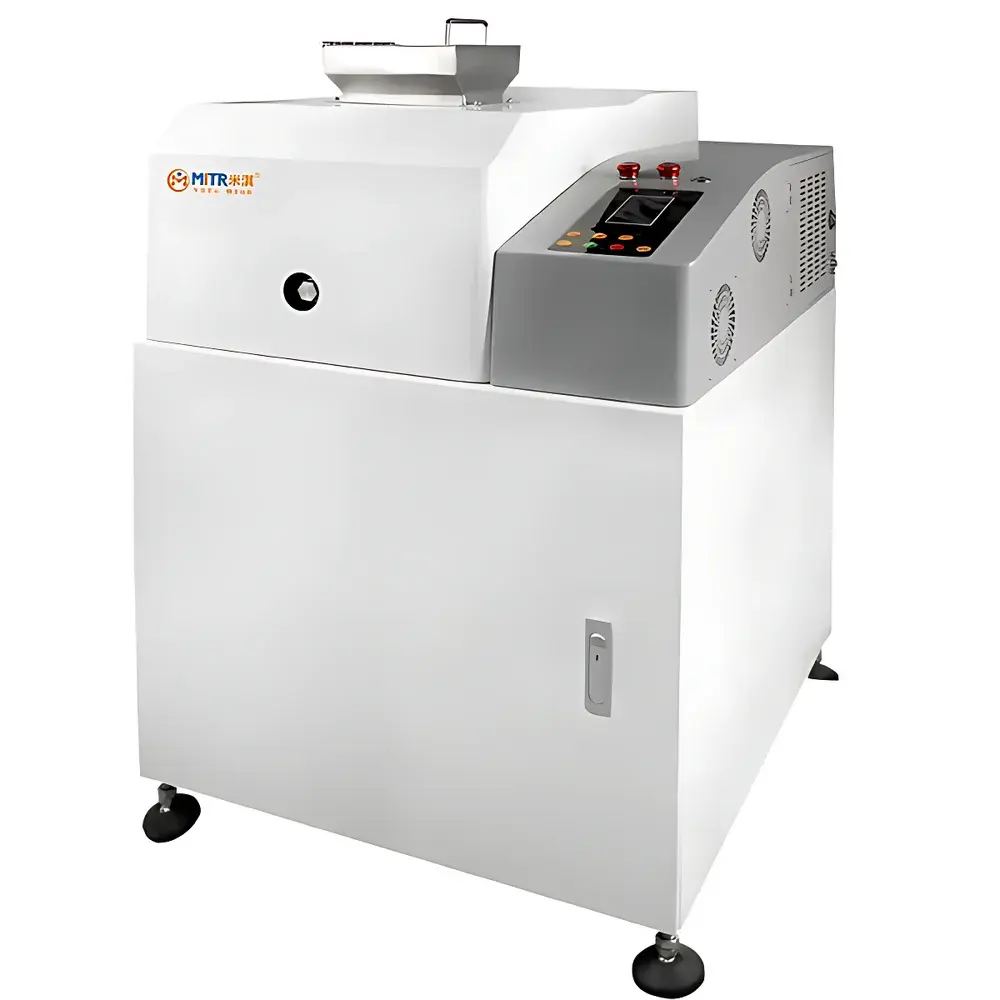
MITR MT-ZY10 Industrial Jaw Crusher
| Brand | MITR |
|---|---|
| Origin | Hunan, China |
| Manufacturer Type | Direct Manufacturer |
| Equipment Type | Jaw Crusher |
| Sample Applicability | Hard and Brittle Materials |
| Feed Size | ≤ 80 mm |
| Discharge Size | 1–13 mm (adjustable) |
| Throughput Capacity | 300–500 kg/h |
| Motor Power | 2.2 kW (380 V) |
| Weight | 230 kg |
| Dimensions (W×D×H) | 71 × 83 × 116 cm |
| Jaw Plate Materials | Zirconia (MT-ZY10), Alumina (MT-ZY10-A), Manganese Steel (MT-ZM10) |
| Max. Crushing Hardness | Zirconia ≤ Mohs 7.5, Alumina ≤ Mohs 5.0, Manganese Steel ≤ Mohs 7.0 |
| Electrical Supply | 380 V AC, 3-phase |
| Sealed Design | Yes |
| Dust Extraction | Integrated Air-Blow System |
| Compliance | Designed for GLP-compliant sample preparation workflows |
Overview
The MITR MT-ZY10 Industrial Jaw Crusher is a robust, laboratory-scale primary crushing instrument engineered for reproducible size reduction of hard, brittle, and moderately abrasive solid samples prior to downstream analysis. Based on the classic toggle-jaw principle—where a movable jaw oscillates against a fixed jaw under eccentric shaft-driven motion—the device applies compressive and bending forces to fracture feed material through controlled mechanical stress. This mechanism ensures consistent particle liberation without excessive heat generation or contamination, making it suitable for high-purity applications in metallurgy, geology, ceramics, environmental monitoring, and advanced materials R&D. Unlike rotary grinders or impact mills, jaw crushers preserve crystalline integrity and minimize amorphization, supporting subsequent XRD, SEM-EDS, or chemical assay protocols requiring representative bulk fragmentation.
Key Features
- Adjustable discharge gap (1–13 mm) with real-time digital gap display for precise control over final particle size distribution.
- Modular jaw plate system: Interchangeable liners fabricated from zirconia (MT-ZY10), alumina (MT-ZY10-A), or manganese steel (MT-ZM10), each selected to match sample hardness (Mohs scale) and contamination sensitivity.
- Hermetically sealed crushing chamber with integrated air-blow dust extraction—prevents cross-contamination, eliminates airborne particulate exposure, and meets ISO 14644-1 Class 8 cleanroom-compatible handling requirements.
- Low-noise structural design incorporating vibration-damping mounts and acoustic shielding, compliant with ISO 4871 noise emission standards for laboratory environments.
- Industrial-grade 2.2 kW three-phase motor (380 V) delivering stable torque across variable load conditions; overload protection and thermal cut-off included.
- Feed hopper aperture: 180 × 180 mm, accommodating irregularly shaped specimens up to 80 mm in maximum dimension.
Sample Compatibility & Compliance
The MT-ZY10 accepts dry, non-fibrous, non-sticky solids including ores, slag, refractory bricks, sintered ceramics, geological cores, and composite powders. It is unsuitable for elastomers, polymers, or highly ductile metals. Jaw plate selection follows ASTM C778 and ISO 6506-1 guidelines for hardness-matched wear resistance. All models are CE-marked for machinery safety (2006/42/EC) and designed to support GLP and ISO/IEC 17025 quality systems—full audit trails for jaw gap settings, operating duration, and batch identification can be logged via optional RS-485 interface. No lubricants contact the sample path; all internal surfaces are accessible for cleaning validation per USP <1058> Analytical Instrument Qualification.
Software & Data Management
While the base unit operates via front-panel controls, optional firmware upgrade enables serial communication (RS-485/Modbus RTU) for integration into centralized LIMS or MES platforms. Gap calibration data, runtime logs, and maintenance alerts (e.g., jaw wear threshold detection) are exportable as CSV. The system supports 21 CFR Part 11-compliant electronic signatures when paired with validated third-party software—ensuring traceability for regulated pharmaceutical or environmental testing labs.
Applications
- Preparation of homogenized feedstock for X-ray fluorescence (XRF) pellet pressing and fusion bead analysis.
- Reduction of metallurgical slags and ferroalloys prior to acid digestion and ICP-OES quantification.
- Size conditioning of ceramic green bodies and sintered oxides before BET surface area measurement.
- Fragmentation of contaminated soil aggregates for TCLP leaching studies (EPA Method 1311).
- Routine comminution of geological drill core segments for geochemical assay submission (ASTM D5744).
- High-integrity sample splitting in certified reference material (CRM) production facilities.
FAQ
What is the recommended maintenance interval for jaw plates?
Jaw plate replacement frequency depends on cumulative throughput and material abrasivity; zirconia liners typically last ≥ 800 hours under standard ore processing, while manganese steel requires inspection every 400 hours. Visual wear assessment and gap deviation > ±0.3 mm trigger replacement.
Can the crusher handle wet or frozen samples?
No. The MT-ZY10 is strictly for dry, free-flowing feed. Moisture content above 1% may cause clogging and uneven crushing; frozen samples risk mechanical shock damage to the toggle mechanism.
Is there a CE Declaration of Conformity available?
Yes—certification documentation, including EC Type Examination Report and Risk Assessment File, is supplied with each unit and accessible upon request for audit purposes.
How is particle size distribution verified post-crushing?
Users are advised to perform sieve analysis per ISO 9276-2 using standardized test sieves (ISO 3310-1); MITR provides optional calibrated sieve sets and digital sieve shaker compatibility.
Does the unit support ATEX-certified operation?
Standard configuration is not ATEX-rated; however, explosion-proof motor and intrinsically safe control variants are available under custom order (ATEX Zone 22 / IECEx).



