
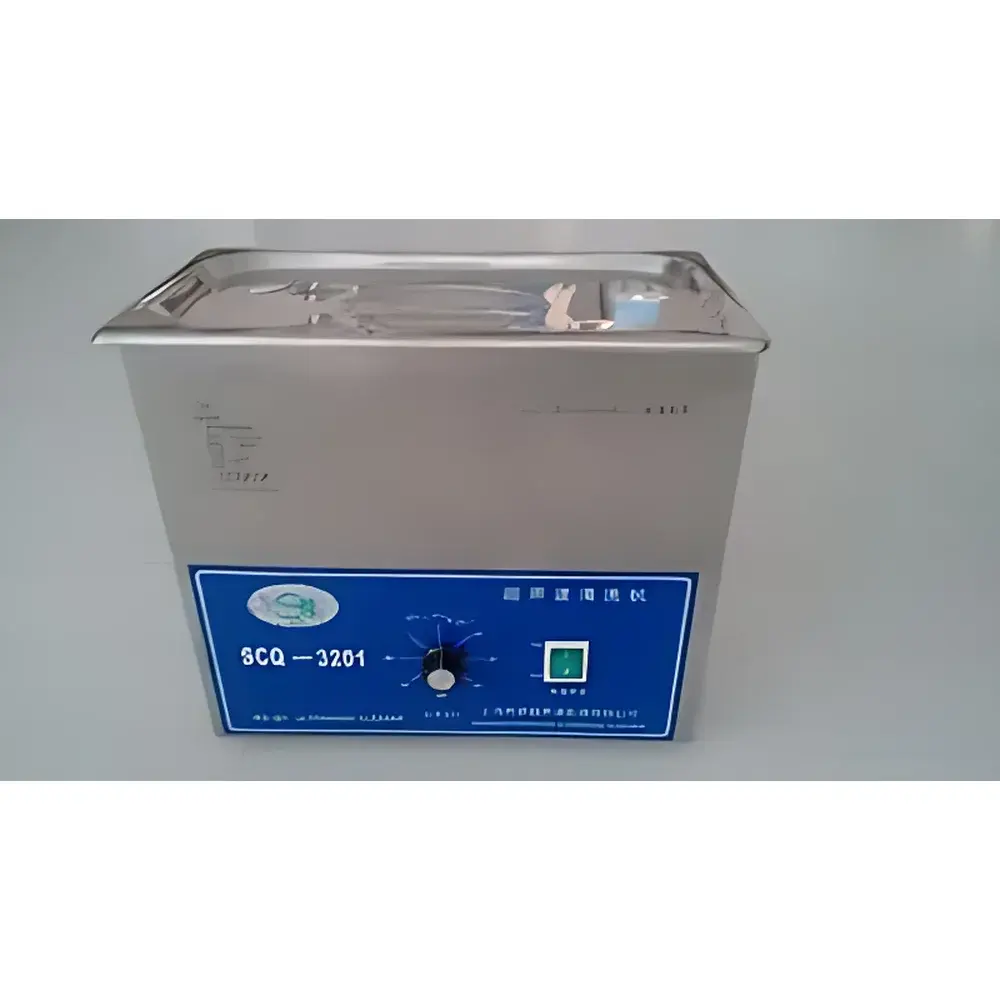
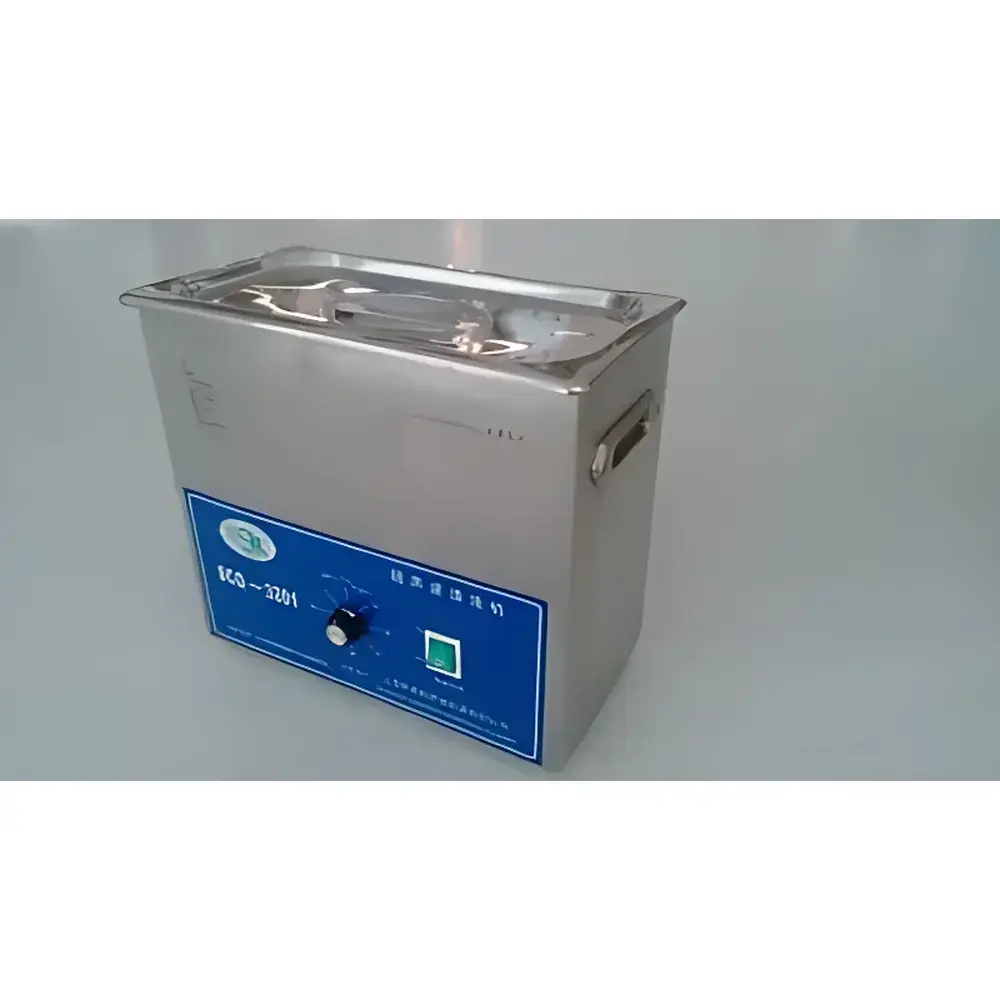
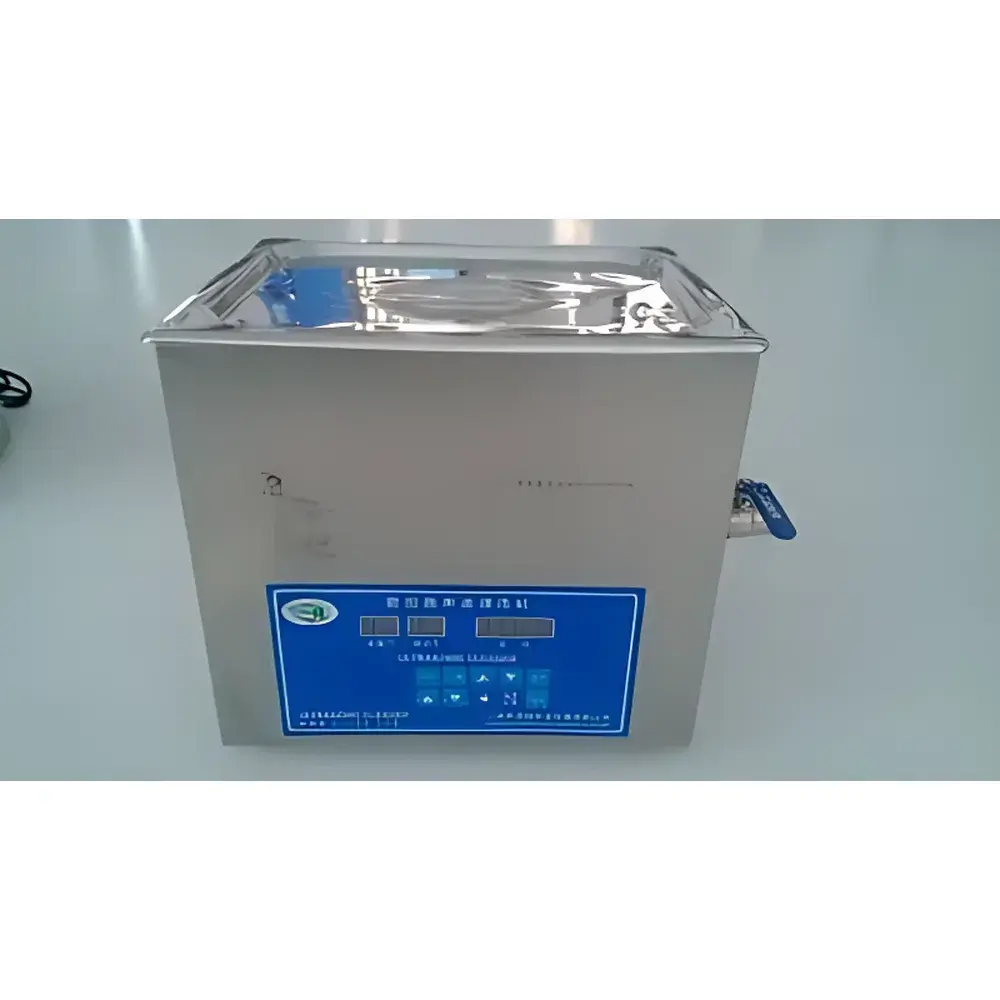
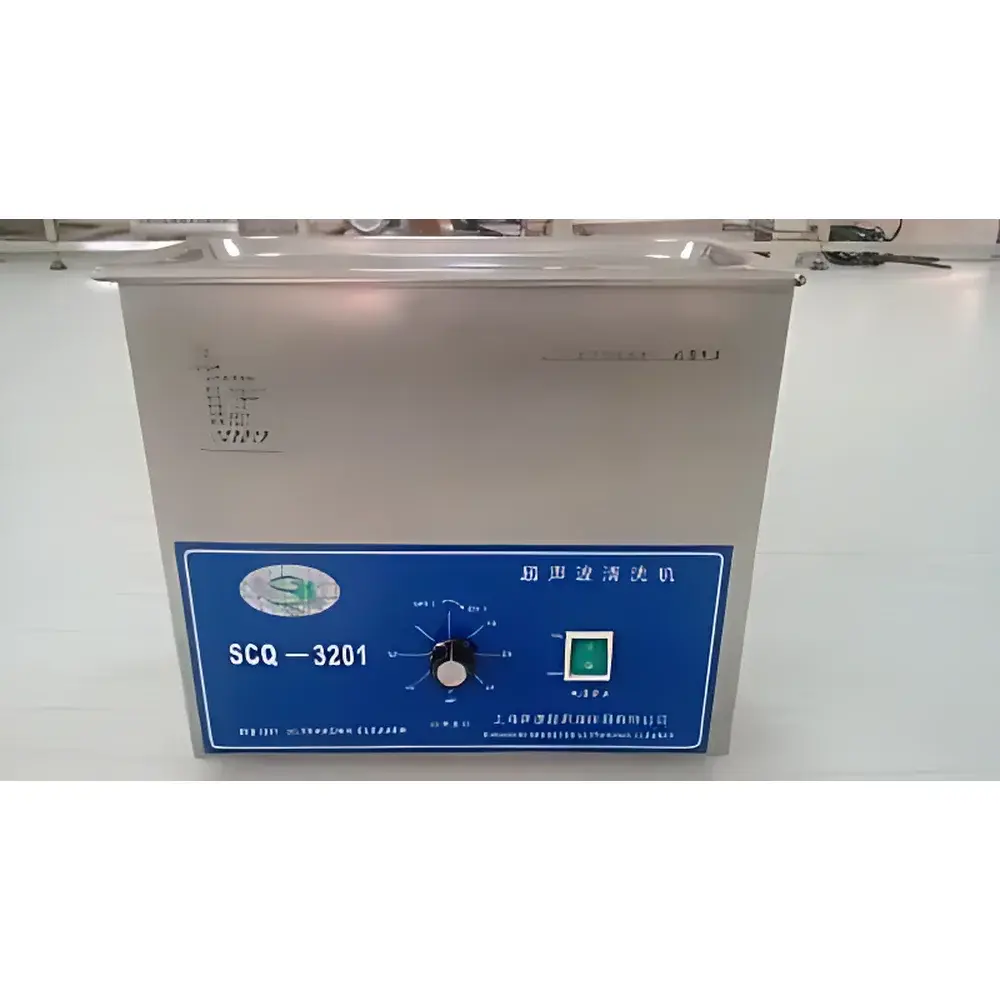
SyCen SCQ-250B2 Benchtop Digital Ultrasonic Cleaner with Heating Function
| Brand | SyCen (sycs) |
|---|---|
| Origin | Shanghai, China |
| Model | SCQ-250B2 |
| Tank Capacity | 5 L |
| Internal Tank Dimensions | 300 × 150 × 100 mm |
| Ultrasonic Frequency Options | 25 / 28 / 40 / 60 / 80 / 100 kHz |
| Ultrasonic Power Output | 180 W |
| Power Adjustment | Fixed |
| Heating Power | 600 W |
| Temperature Range | Ambient to 80 °C |
| Timer Range | 1–600 min |
| Sound-Dampening Lid | Included |
| Manual Fill/Drain | Yes |
| Construction | Full 304 Stainless Steel Tank and Lid |
| Input Power | 220 VAC, 50 Hz |
Overview
The SyCen SCQ-250B2 is a benchtop digital ultrasonic cleaner engineered for precision cleaning, degassing, disinfection, emulsification, homogenization, solvent extraction, and particle dispersion in regulated laboratory, clinical, and industrial environments. It operates on the principle of cavitation—high-frequency sound waves (25–100 kHz) generate microscopic vacuum bubbles in liquid media; their rapid collapse produces localized high-pressure shockwaves and transient temperatures exceeding 5,000 K, effectively dislodging contaminants from surfaces without mechanical abrasion. Unlike immersion-only units, the SCQ-250B2 integrates digitally controlled heating (up to 80 °C) and programmable timing, enabling thermally assisted cleaning protocols critical for removing organic residues, biofilms, or viscous solvents. Its fixed 180 W ultrasonic output ensures consistent energy delivery across the tank volume, while the selectable frequency options allow users to optimize cleaning efficacy based on part geometry, material hardness, and soil type—lower frequencies (e.g., 25–40 kHz) for robust macro-contaminant removal, higher frequencies (e.g., 60–100 kHz) for delicate substrates and fine particulate detachment.
Key Features
- Full 304 stainless steel construction—including tank, lid, and integrated mesh basket—for corrosion resistance, long-term durability, and compliance with ISO 13485 cleanroom-grade surface requirements.
- Digital microprocessor control panel with LED display for precise setting and real-time monitoring of temperature (±1 °C accuracy) and timer (1–600 min, 1-min increments).
- Thermally insulated heating system (600 W) enables stable temperature maintenance during extended cycles, supporting applications such as enzymatic decontamination or accelerated solvent-based extraction.
- Sound-dampening lid reduces ambient noise to ≤55 dB(A) at 1 m distance—meeting OSHA 29 CFR 1910.95 workplace exposure guidelines for continuous operation.
- Manual fill-and-drain interface facilitates solvent compatibility management and prevents cross-contamination between aqueous and organic cleaning baths.
- Optimized transducer mounting configuration ensures uniform cavitation distribution across the 5 L working volume (300 × 150 × 100 mm), validated per ASTM E1755-00 standard test methods for ultrasonic cleaner performance verification.
Sample Compatibility & Compliance
The SCQ-250B2 accommodates a broad range of sample types—including glassware (vials, cuvettes, pipettes), metallic components (PCBs, surgical instruments, watch gears), polymers (lens housings, dental prostheses), and porous materials (ceramic filters, sintered metal parts). Its non-contact cleaning mechanism preserves dimensional integrity and surface finish, making it suitable for ISO/IEC 17025-accredited laboratories performing QC/QA on calibration standards or reference materials. The unit complies with IEC 61000-6-3 (EMC emissions) and IEC 61000-6-2 (immunity), and its stainless steel wetted surfaces meet USP extractables testing criteria when operated with USP-grade water or ethanol. While not FDA 510(k)-cleared as a medical device, it supports GLP/GMP-aligned cleaning validation protocols when paired with documented SOPs and traceable calibration records.
Software & Data Management
The SCQ-250B2 operates via embedded firmware with no external PC dependency—ideal for ISO 13485 or GxP environments where software qualification burdens must be minimized. All operational parameters (temperature setpoint, duration, frequency selection) are stored in non-volatile memory and recalled at power-up. Though lacking network connectivity or audit-trail logging, its deterministic control architecture ensures repeatable process execution—critical for method transfer between labs or routine maintenance workflows. Users may document cycle parameters manually in lab notebooks or integrate into broader LIMS platforms via time-stamped operator logs and post-cycle visual inspection checklists.
Applications
- Removal of flux residues, solder paste, and oxidation films from printed circuit boards prior to AOI inspection (IPC-J-STD-001 compliant).
- Decontamination of reusable surgical instruments and dental tools between sterilization cycles (per AAMI ST79:2017 Annex B recommendations).
- Extraction of active pharmaceutical ingredients (APIs) from botanical matrices using ethanol or methanol baths under controlled thermal conditions.
- Dispersion of nanomaterials (e.g., TiO₂, SiO₂ nanoparticles) in aqueous or organic carriers for rheological or optical characterization.
- Pre-analytical preparation of environmental samples—e.g., leaching heavy metals from soil particulates or disaggregating microbial biofilms from filtration membranes.
- Routine cleaning of HPLC autosampler vials, GC liners, and ICP-MS nebulizer tips to prevent carryover and baseline drift.
FAQ
Is the SCQ-250B2 suitable for use with flammable solvents?
Yes—provided the unit is operated in a ventilated fume hood and the selected solvent’s flash point exceeds the maximum bath temperature (80 °C); never exceed 70% of the solvent’s flash point for safety margin.
Can frequency be changed during an active cycle?
No—frequency selection is a pre-cycle hardware configuration; users must power down, select desired frequency via dip-switch bank (located beneath rear panel), then restart.
Does the unit support automatic drain functionality?
No—it features manual drain valve only; automated drainage requires external pump integration via optional accessory kit (Part No. SCQ-DRAIN-KIT-01).
What is the expected service life of the transducers under continuous operation?
Rated for ≥10,000 hours at nominal load; recommended preventive maintenance includes quarterly inspection of transducer bonding integrity and annual replacement of O-rings in lid sealing assembly.
Is calibration documentation provided with shipment?
Each unit ships with a Factory Calibration Certificate verifying temperature sensor accuracy (NIST-traceable RTD) and timer deviation (< ±0.5% over 600 min), valid for 12 months from date of manufacture.



