
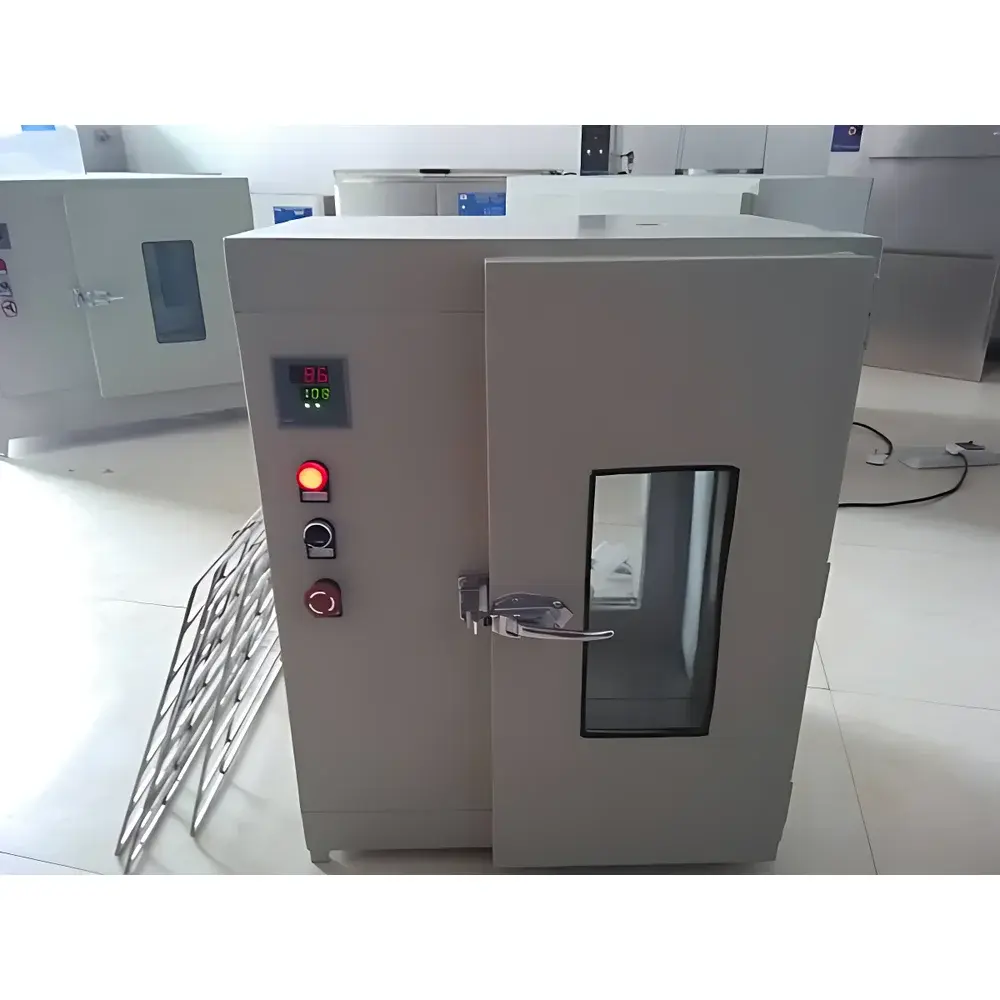
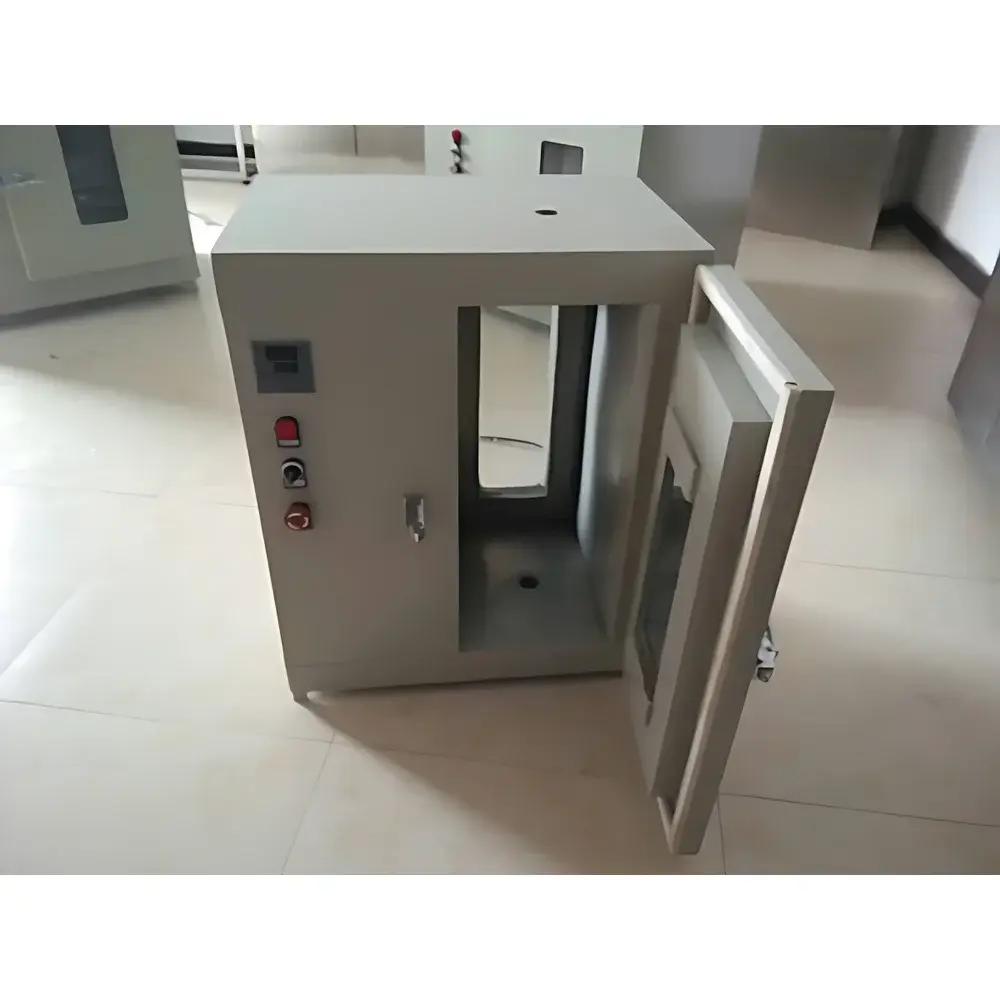
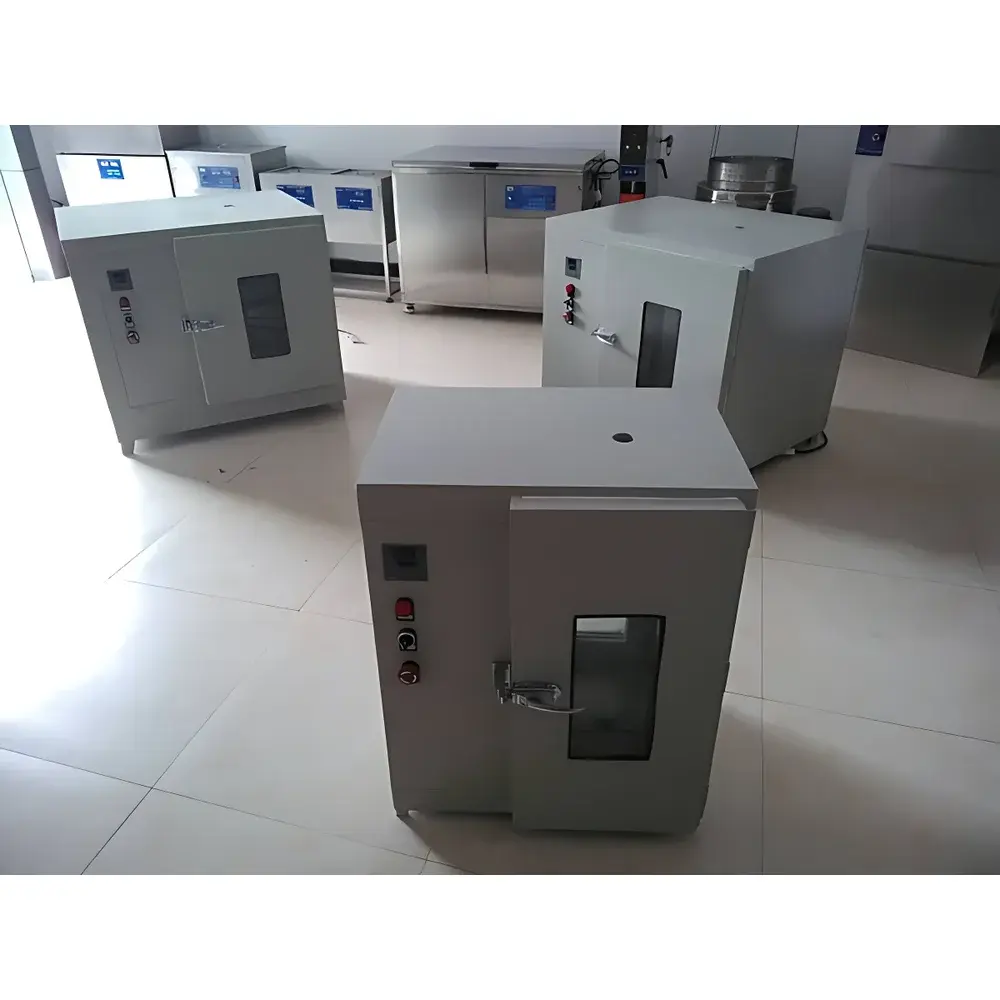
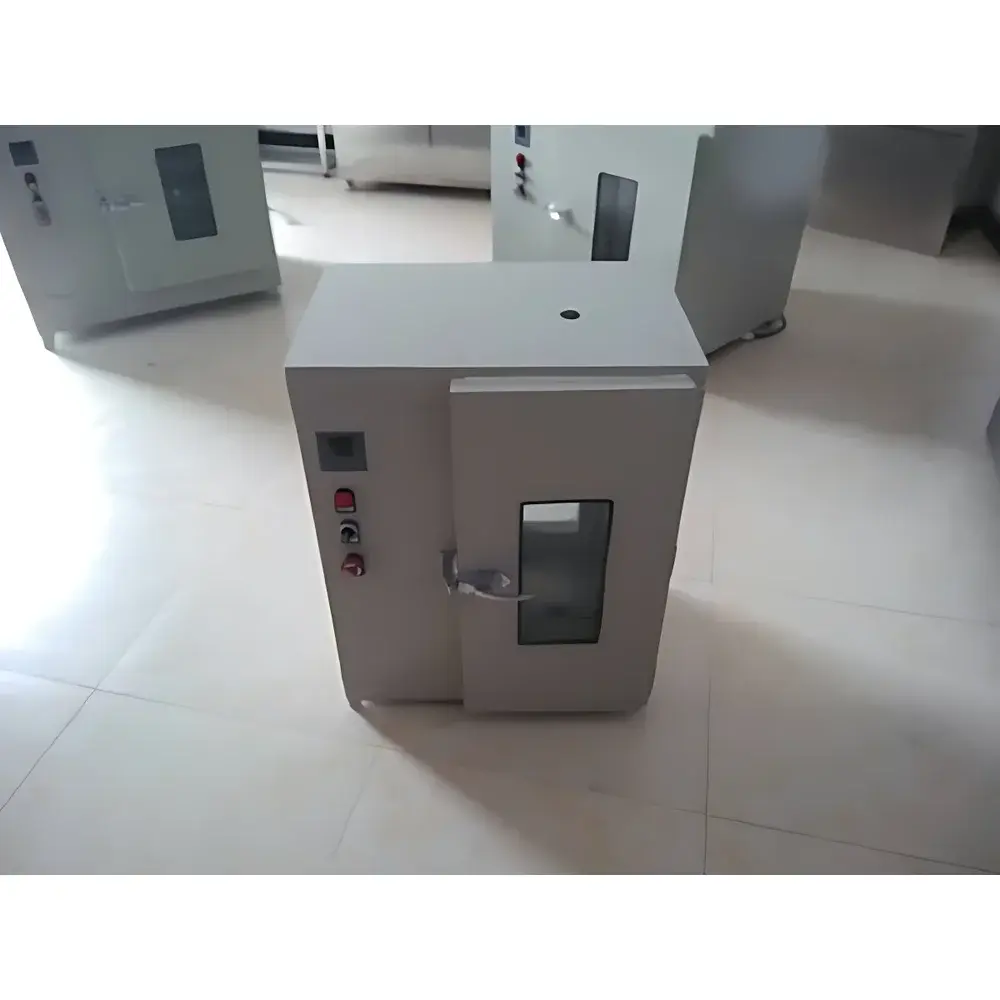
SYCS SCQ-Series Non-Standard Electrically Heated Constant-Temperature Drying Oven
| Brand | SYCS |
|---|---|
| Origin | Shanghai, China |
| Manufacturer Type | Authorized Distributor |
| Country of Origin | China |
| Model | SCQ-Series (Custom Configuration) |
| Instrument Type | General-Purpose Forced-Air Drying Oven |
| Temperature Range | Ambient to 300 °C |
| Temperature Uniformity | ±1.0 °C |
| External Dimensions | 600 × 420 × 720 mm (W × D × H) |
| Internal Chamber Dimensions | 280 × 300 × 600 mm (W × D × H) |
| Chamber Material | 304 Stainless Steel (2.0 mm thickness, rated for ≤300 °C) |
| Heating Method | Forced-Air Convection with Horizontal Airflow Distribution |
| Rated Power | 2000 W |
| Power Supply | 220 V AC, 50 Hz |
| Viewing Window | Rear-mounted tempered glass observation port |
| Adjustable Shelving | Three-tier stainless steel shelves with height-adjustable supports |
| Control System | Analog pointer-type temperature indicator with mechanical thermostat |
Overview
The SYCS SCQ-Series Non-Standard Electrically Heated Constant-Temperature Drying Oven is a robust, laboratory-grade forced-air convection oven engineered for precise thermal processing of non-volatile samples under controlled ambient-to-300 °C conditions. Designed in accordance with fundamental principles of convective heat transfer, the unit maintains uniform thermal distribution across its internal chamber via a horizontally oriented, tangential air circulation system—ensuring consistent drying kinetics, solvent evaporation, and thermal stabilization of solid and semi-solid specimens. Its architecture prioritizes operational reliability over extended service life, with structural integrity verified through static load testing and thermal cycling validation at maximum operating temperature. Unlike vacuum or inert-atmosphere ovens, the SCQ-Series operates under ambient atmospheric pressure and is not intended for flammable, pyrophoric, or oxygen-sensitive materials unless integrated with external safety interlocks.
Key Features
- Forced-air convection system with axial fan and directional ducting ensures ±1.0 °C temperature uniformity across the full working volume (per ISO 14644-3 Class 5 environmental validation methodology)
- Chamber constructed from 2.0 mm thick 304 stainless steel—electropolished and passivated—providing corrosion resistance, thermal stability up to 300 °C, and compatibility with aqueous and mild organic cleaning agents
- Three independently adjustable stainless steel shelving tiers allow vertical reconfiguration to accommodate irregularly shaped or stacked samples without compromising airflow
- Rear-mounted tempered glass observation window (120 × 180 mm) enables real-time visual monitoring while minimizing thermal leakage and maintaining chamber integrity
- Analog pointer-type temperature controller with calibrated bimetallic sensing element offers stable setpoint maintenance without software dependency—ideal for GLP-compliant environments requiring audit-trail simplicity
- Front-access hinged door with high-density silicone gasket ensures minimal heat loss during routine loading/unloading cycles
- 220 V / 50 Hz single-phase input with built-in thermal cut-off fuse (rated at 250 °C) and overcurrent protection per IEC 61000-4-5 surge immunity standards
Sample Compatibility & Compliance
The SCQ-Series is validated for use with non-hazardous solid and granular materials including filter papers, ceramic crucibles, polymer films, metal powders, pharmaceutical excipients, and biological tissue substrates post-fixation. It complies with general-purpose laboratory equipment requirements under GB/T 23792–2009 (Chinese National Standard for Laboratory Ovens) and meets mechanical safety provisions outlined in EN 61010-1:2010/AC:2011. While not certified to UL 61010-1 or FDA 21 CFR Part 11, its analog control architecture inherently satisfies traceability requirements for basic QC workflows where electronic data capture is not mandated. The unit is unsuitable for volatile solvents, live cell cultures, or materials requiring oxygen-free or moisture-controlled atmospheres.
Software & Data Management
This model operates without embedded firmware or digital connectivity. Temperature setpoint and real-time indication are managed exclusively via the analog pointer meter, eliminating cybersecurity risks, software obsolescence, or calibration drift associated with microprocessor-based controllers. For laboratories requiring documented thermal profiles, external Class A RTD loggers (e.g., Omega OM-DAQPRO-5300) may be installed inside the chamber using the rear observation port’s cable gland interface. All recorded data remain under full user ownership and can be exported in CSV format for integration into LIMS or paper-based SOP archives—fully compliant with ALCOA+ principles when paired with defined procedural controls.
Applications
- Drying of gravimetric samples prior to ash content analysis (ASTM D2974, ISO 1171)
- Moisture loss determination in pharmaceutical raw materials (USP <921> Loss on Drying)
- Curing of epoxy-coated substrates and printed circuit board laminates
- Thermal conditioning of reference standards and calibration weights
- Pre-heating of glassware and stainless-steel components before aseptic handling
- Stabilization of hygroscopic chemicals prior to volumetric analysis
- Post-sterilization drying of reusable surgical instruments (non-critical category only)
FAQ
What is the maximum continuous operating temperature?
The chamber is rated for uninterrupted operation at 300 °C, provided ambient room temperature remains below 35 °C and ventilation clearance exceeds 150 mm on all sides.
Can this oven be used for sterilization?
No. It lacks HEPA filtration, steam generation, or validated microbial lethality protocols required for sterilization (e.g., ISO 17665). It is suitable only for drying or thermal conditioning.
Is the temperature controller programmable?
No. It features a fixed-setpoint analog thermostat. For ramp-soak profiling, an external PID controller with relay output must be interfaced.
Does the unit include calibration documentation?
Factory calibration certificate (traceable to NIM, China) is supplied with each unit, covering chamber uniformity and sensor accuracy at 100 °C, 200 °C, and 300 °C.
What maintenance is required?
Quarterly inspection of fan motor bearings, annual verification of door gasket compression force, and biannual cleaning of air intake grilles using isopropyl alcohol and lint-free wipes.



