
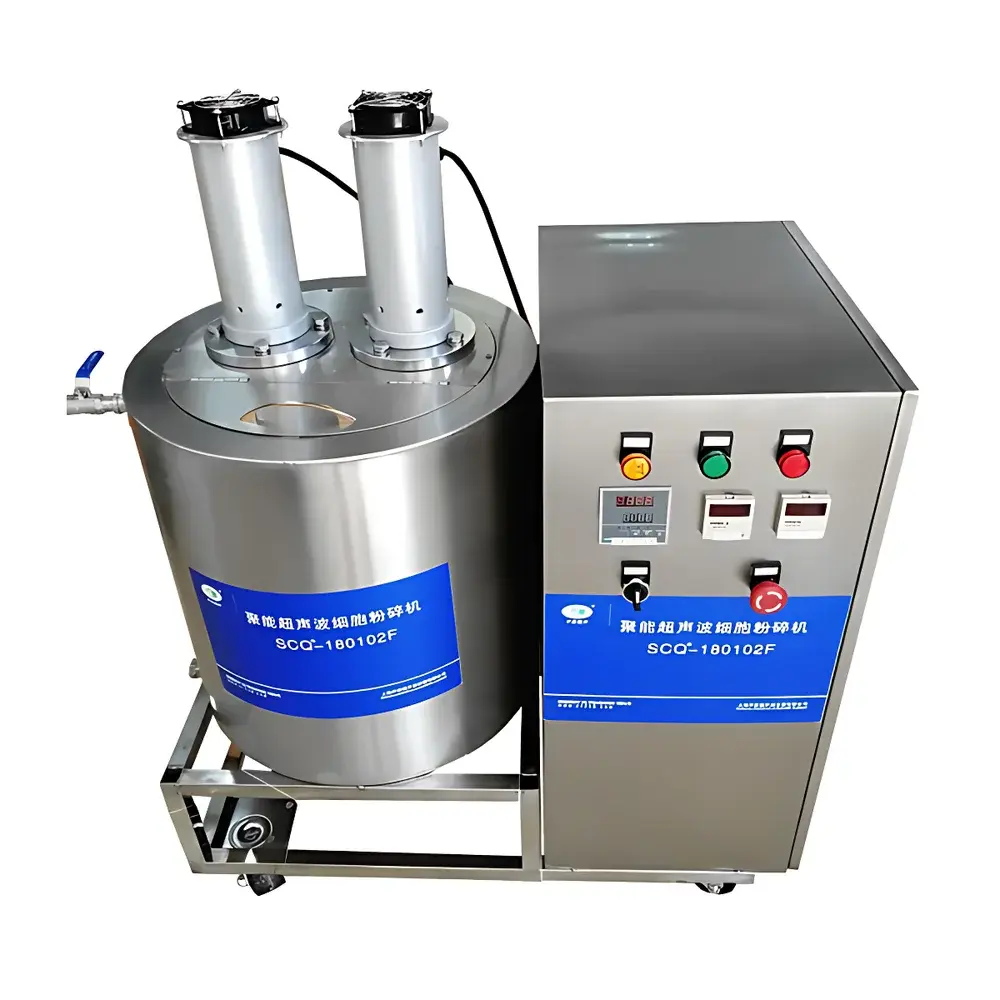
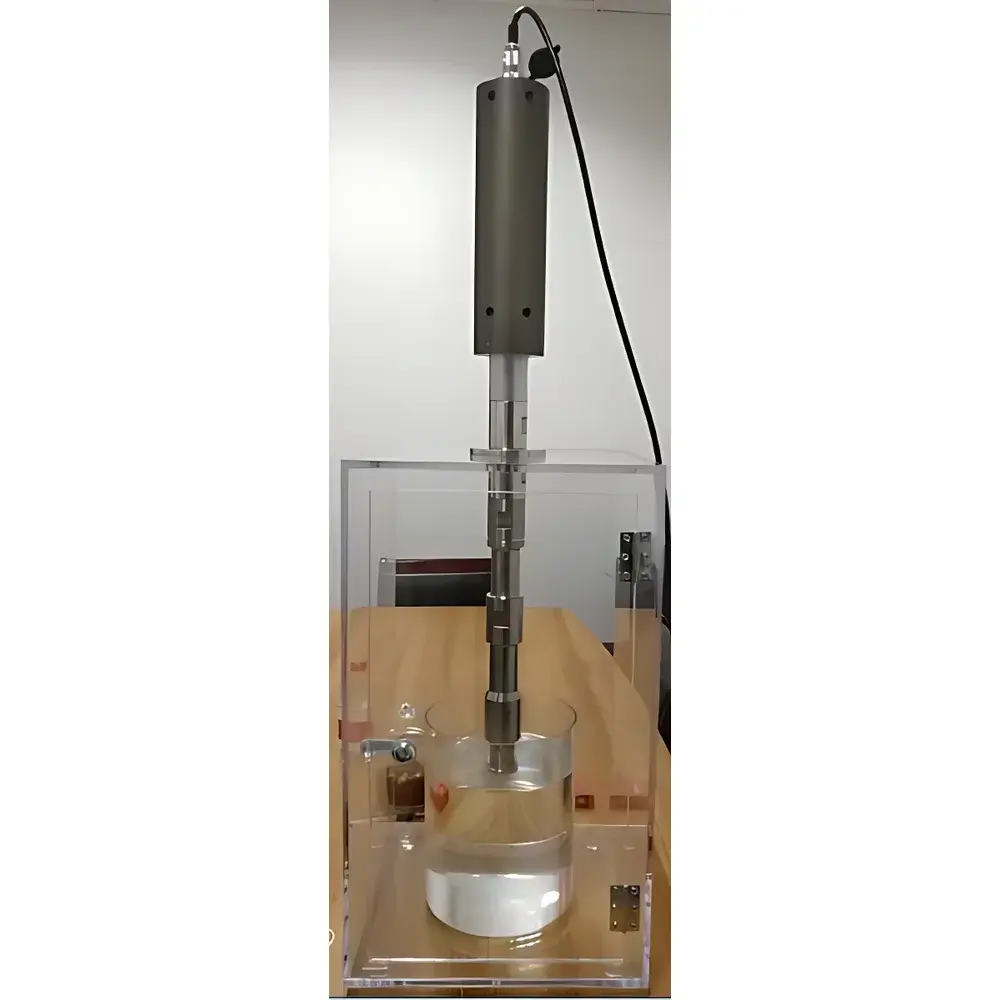
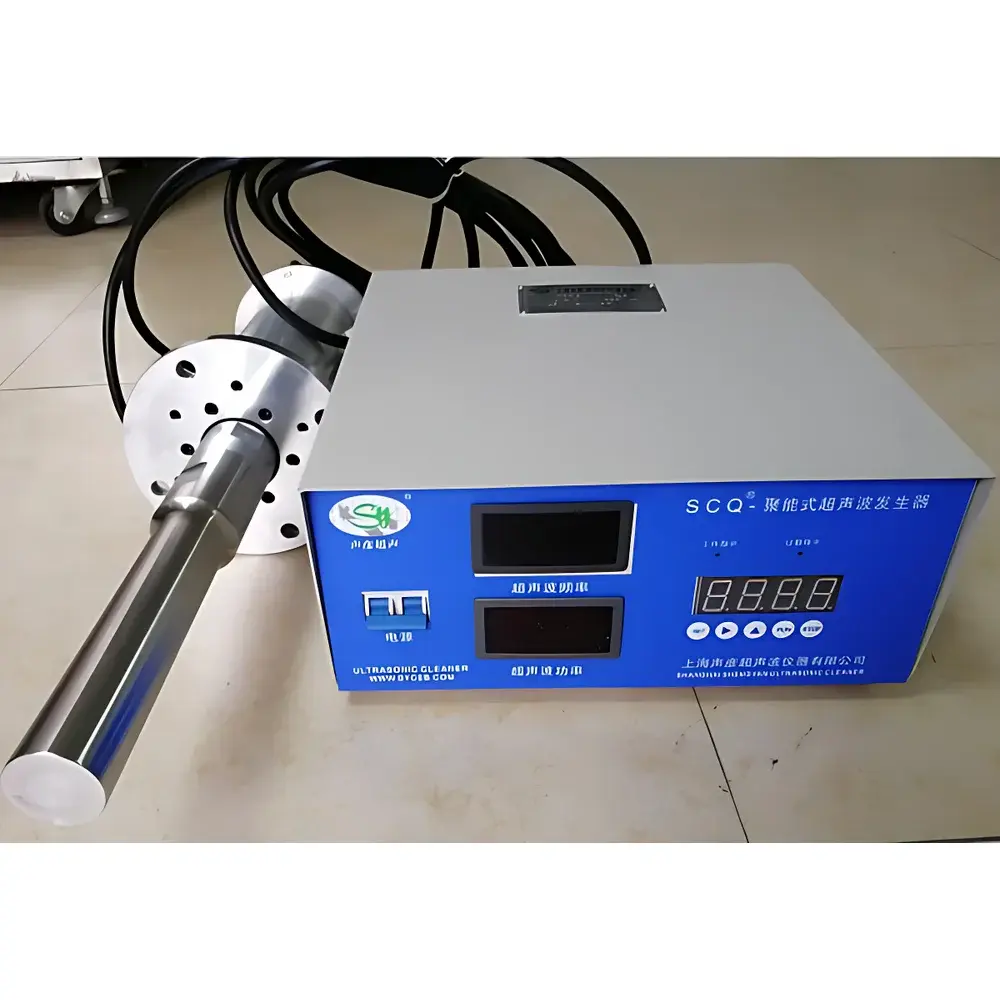
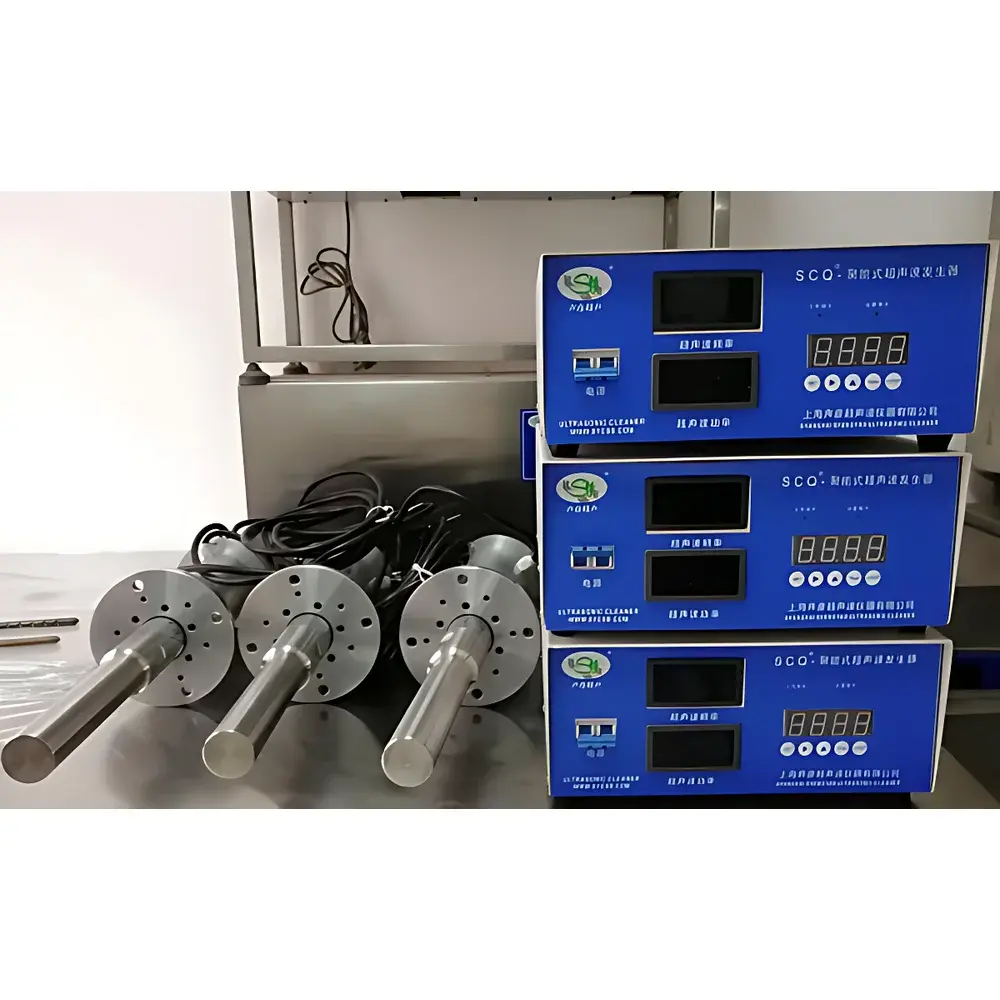
Shengyan Sycs SCQ-2000F High-Power Ultrasonic Extractor
| Brand | Shengyan Sycs |
|---|---|
| Origin | Shanghai, China |
| Model | SCQ-2000F |
| Ultrasonic Power | 2000 W |
| Ultrasonic Frequency | 20 kHz |
| Maximum Heating Power | 1000 W |
| Temperature Range | Ambient to 80 °C |
| Tank Capacity | 30 L |
| Probe Diameter (Tip) | Φ25 mm |
| Processing Volume | 0.5–2000 mL |
| Timer Range | 0–600 min |
| Duty Cycle | 0.1–99.9% |
| Input Voltage | 220/110 V, 50/60 Hz |
| Main Unit Dimensions (W×D×H) | 400 × 280 × 220 mm |
| Net Weight | 11 kg |
| Unit + Transducer Weight | 15.6 kg |
Overview
The Shengyan Sycs SCQ-2000F High-Power Ultrasonic Extractor is an engineered solution for laboratory-scale solid-liquid extraction of bioactive compounds from botanical matrices—including traditional Chinese medicinal herbs, plant roots, leaves, and barks. It operates on the principle of high-intensity ultrasonic cavitation: acoustic energy at 20 kHz generates transient microbubbles in the solvent medium, whose rapid collapse produces localized shockwaves, microstreaming, and shear forces. These physical effects disrupt cell walls and enhance mass transfer across interfacial boundaries—significantly accelerating solvent penetration and solute release without thermal degradation when operated below critical temperature thresholds. Unlike conventional maceration or Soxhlet extraction, this system delivers reproducible kinetics and higher yield per unit time while maintaining compatibility with heat-sensitive phytochemicals such as flavonoids, alkaloids, and polysaccharides. Its integrated heating module (up to 80 °C) allows controlled synergistic thermosonic operation, enabling method optimization across diverse solvent systems (e.g., ethanol–water, methanol, glycerol–water).
Key Features
- 2000 W programmable ultrasonic output with digital duty cycle control (0.1–99.9%), permitting precise modulation of cavitation intensity for delicate or recalcitrant samples.
- Stainless-steel 30 L tank with corrosion-resistant interior, designed for batch processing and equipped with a removable Φ25 mm titanium alloy probe for direct immersion sonication of viscous or particulate suspensions.
- Independent temperature regulation via PID-controlled heating element (max. 1000 W), with real-time feedback from a Pt100 sensor and ±0.5 °C accuracy across the ambient-to-80 °C range.
- Digital timer with 1-second resolution and up to 600-minute duration, supporting unattended operation and multi-step sequential protocols (e.g., pre-soak → sonicate → hold → cool).
- Robust industrial-grade power supply compatible with both 220 V/50 Hz (CN/EU standard) and 110 V/60 Hz (US standard), housed in an EMI-shielded aluminum chassis with IP20-rated enclosure.
- Front-panel interface with LED display and tactile membrane keys; no proprietary software required for basic operation—ideal for GLP-compliant environments where firmware simplicity and auditability are prioritized.
Sample Compatibility & Compliance
The SCQ-2000F accommodates heterogeneous herbal preparations—including dried powder, granules, sliced rhizomes, and aqueous slurries—with effective volume ranges from 0.5 mL (micro-extraction using probe tip only) to full 30 L tank capacity (for maceration-assisted bulk extraction). Solvent compatibility includes water, alcohols (ethanol, methanol), acetone, ethyl acetate, and mixtures thereof. All wetted parts comply with ISO 8502-2 for stainless steel passivation and meet USP Class VI biocompatibility requirements for pharmaceutical research use. While not certified to IEC 61000-6-3 (EMC) or UL 61010-1 out-of-the-box, the system conforms to general safety practices outlined in ISO/IEC 17025:2017 for testing laboratories and supports documentation traceability required under GMP Annex 11 and FDA 21 CFR Part 11 when paired with external electronic lab notebook (ELN) systems.
Software & Data Management
The SCQ-2000F operates as a standalone instrument with embedded firmware—no driver installation or cloud dependency. All operational parameters (time, power, temperature, duty cycle) are logged internally with timestamping and stored in non-volatile memory for up to 1000 cycles. Data export is supported via USB-A port (FAT32 formatted flash drive), generating CSV-formatted logs compliant with LIMS ingestion standards. Optional RS-485 Modbus RTU interface enables integration into centralized facility monitoring systems (e.g., LabArchives, DeltaV, or custom SCADA). Audit trails include operator ID entry (via numeric keypad), session start/end stamps, and parameter-change history—meeting minimum ALCOA+ data integrity criteria for regulated herbal product development workflows.
Applications
- Accelerated extraction of active constituents (e.g., ginsenosides from Panax ginseng, berberine from Coptis chinensis, artemisinin precursors from Artemisia annua) under standardized conditions aligned with Chinese Pharmacopoeia (ChP) General Chapter 2201.
- Preparative-scale isolation of polysaccharide–protein complexes from fungal mycelia and algal biomass for nutraceutical formulation studies.
- Method development for green extraction process validation per ISO 17025-accredited laboratories conducting AOAC Official Method validation for herbal adulterant screening.
- Comparative study of ultrasound-assisted vs. microwave-assisted extraction efficiency using response surface methodology (RSM) and ANOVA statistical analysis.
- Stability-indicating protocol development for herbal tinctures and fluid extracts under ICH Q1A(R2) long-term and accelerated storage conditions.
FAQ
Is the SCQ-2000F suitable for continuous-flow extraction?
No—it is configured exclusively for batch-mode operation. Continuous processing requires integration with external peristaltic pumps and flow cells, which is not supported by factory firmware.
Can the Φ25 mm probe be replaced with smaller-diameter tips for micro-volume applications?
Yes—standardized 1/2″ threaded titanium probes (Φ3, Φ6, Φ10, and Φ15 mm) are available as optional accessories and mechanically compatible with the transducer housing.
Does the system include calibration certificates for temperature or power output?
Factory calibration reports for temperature sensor (Pt100) and ultrasonic power meter (via calorimetric verification) are provided upon request and may be issued with NIST-traceable references for an additional fee.
What maintenance is required for long-term reliability?
Monthly inspection of probe thread integrity, quarterly cleaning of tank ultrasonic reflectors with citric acid solution, and annual transducer impedance verification using an LCR meter are recommended per the maintenance schedule in the technical manual.
Is remote monitoring or IoT connectivity supported?
Not natively—but the RS-485 Modbus interface permits third-party integration with industrial IoT gateways (e.g., Siemens Desigo CC, Ignition SCADA) for real-time telemetry and alarm forwarding via MQTT or OPC UA.



