
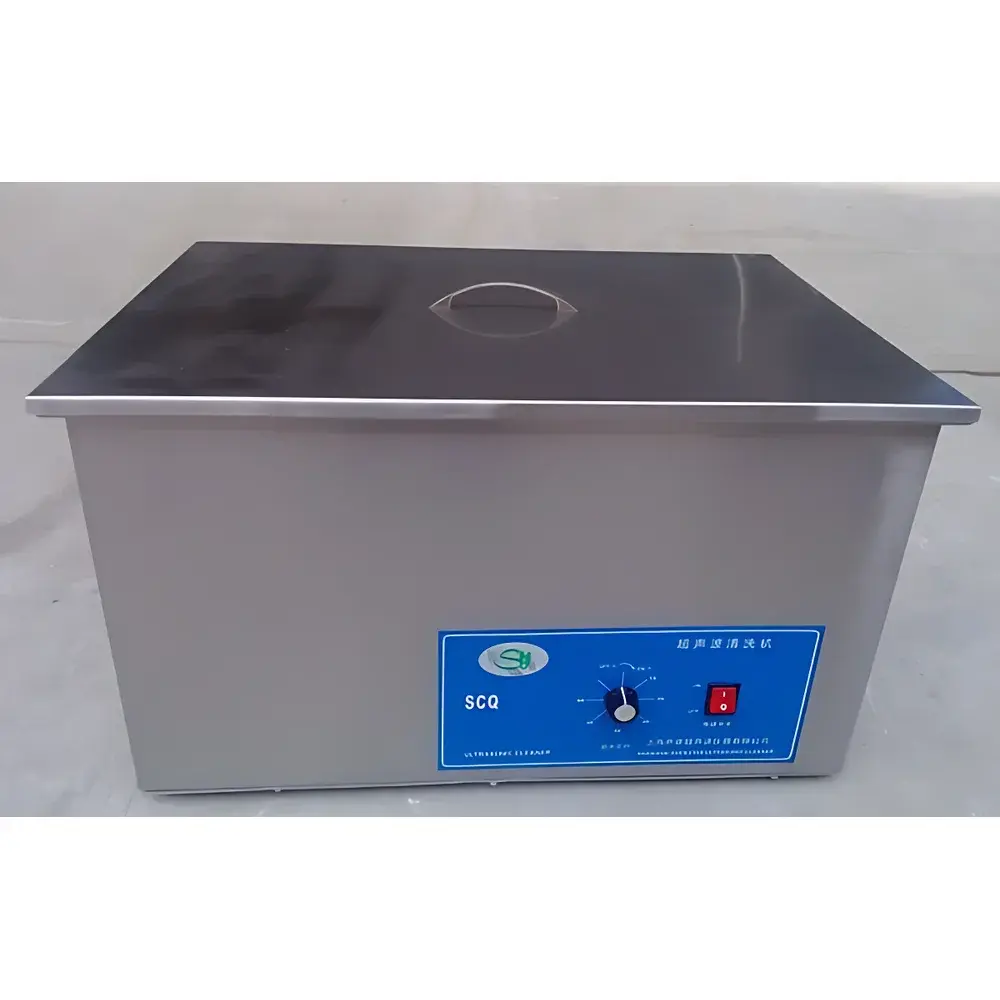
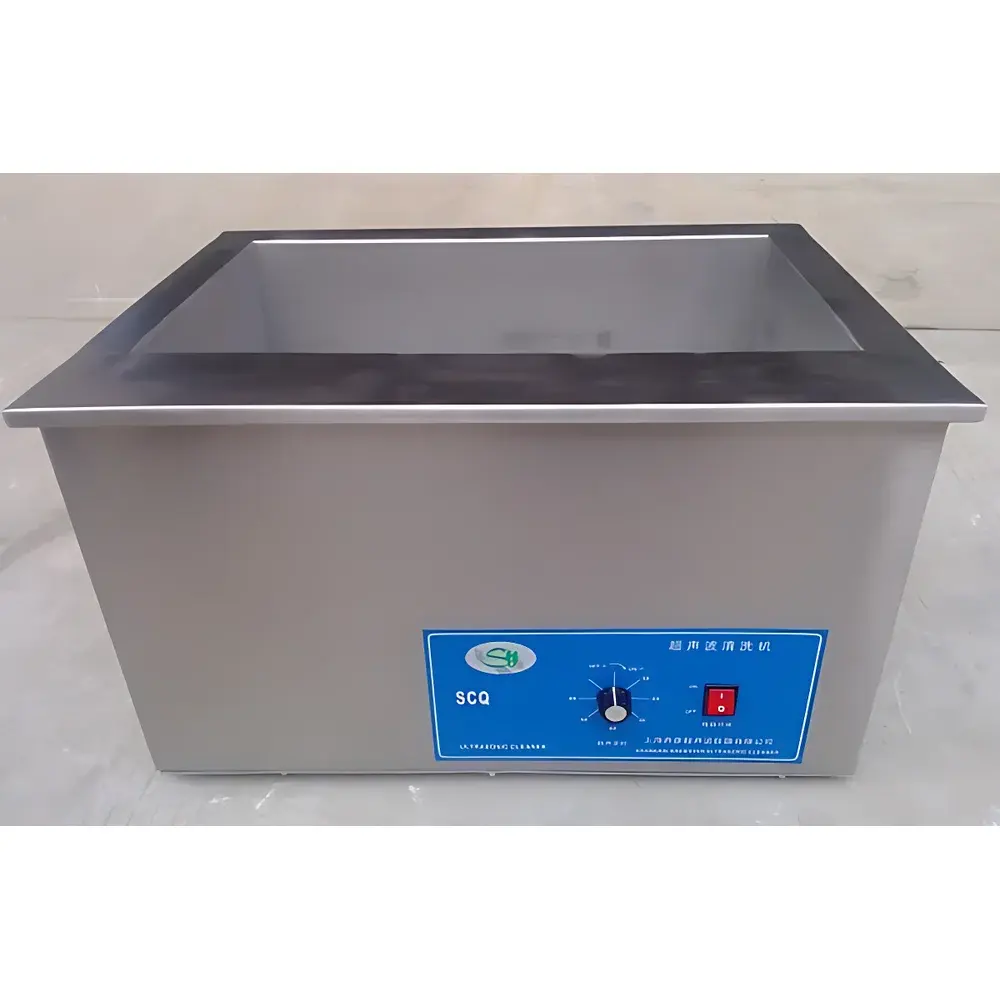
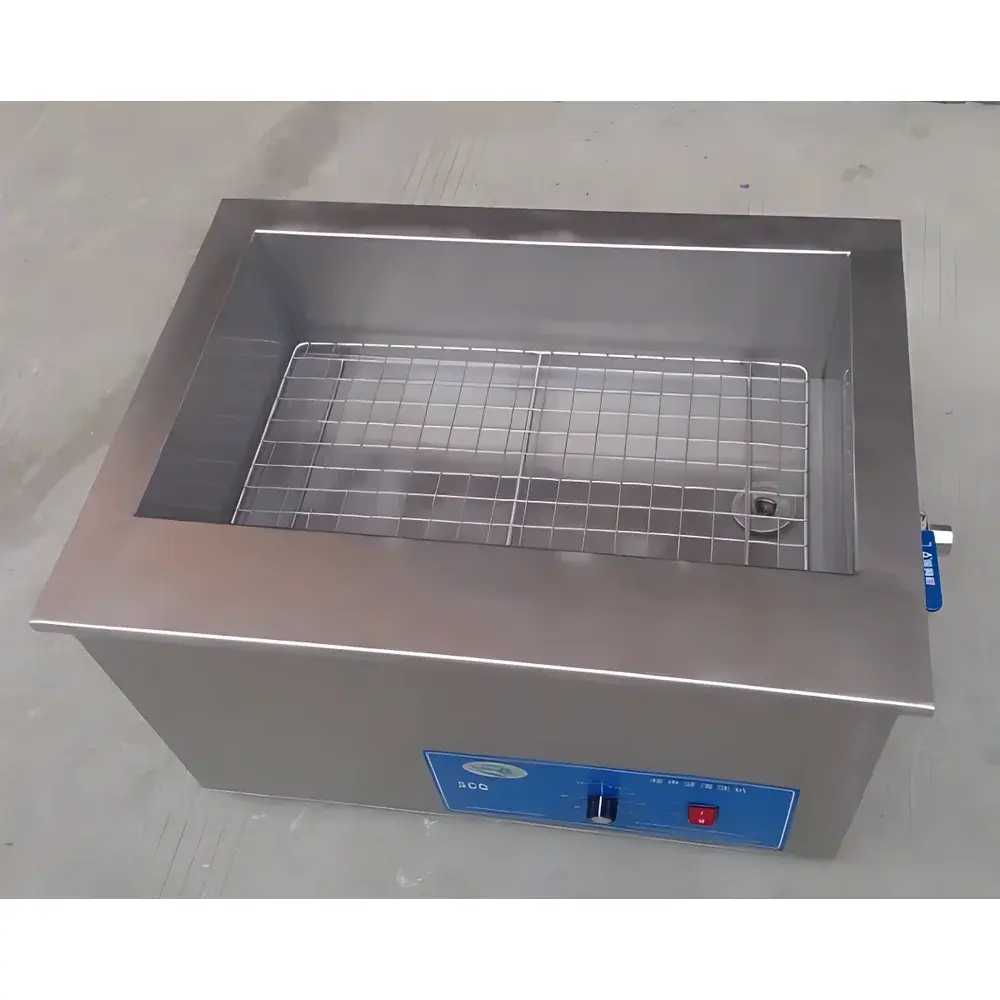
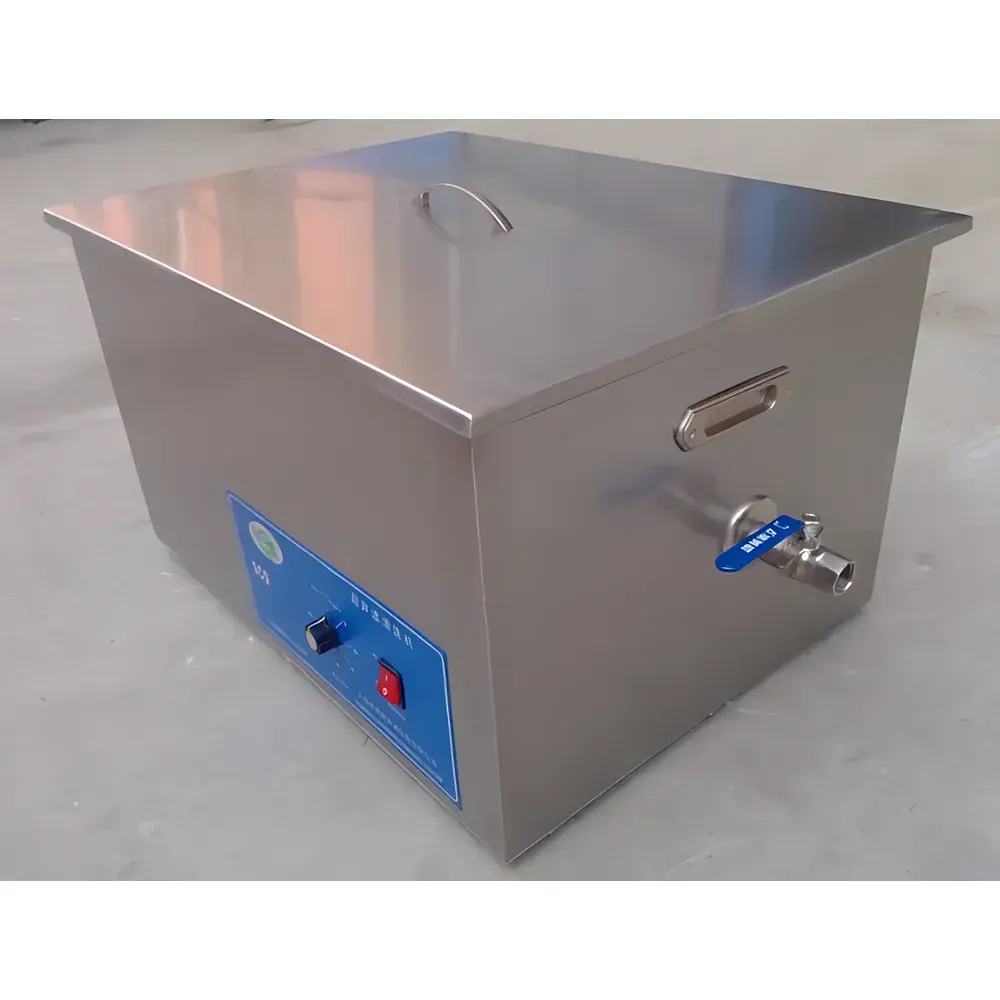
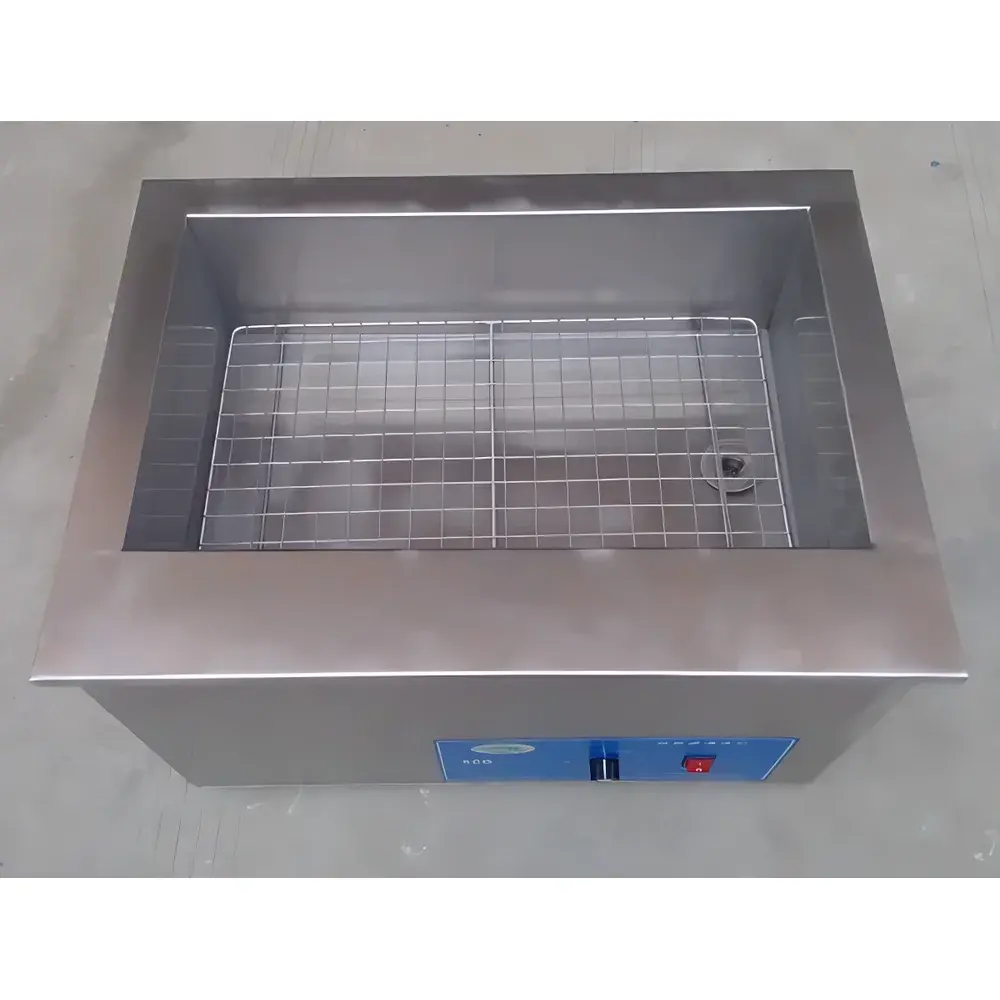
SYC Sycs SCQ-E1800 78L Medical-Grade Ultrasonic Cleaner
| Brand | SYC Sycs |
|---|---|
| Origin | Shanghai, China |
| Model | SCQ-E1800 |
| Capacity | 78 L |
| Ultrasonic Frequency Options | 25 / 28 / 40 / 60 / 80 / 100 kHz |
| Ultrasonic Power Output | 1800 W (adjustable 10–100%) |
| Heating Power | 1500 W |
| Temperature Range | Ambient to 80 °C (max. 100 °C per spec) |
| Timer Range | 1–600 min |
| Lid | Sound-dampening cover included |
| Drain | Manual valve |
| Internal Tank Dimensions | 650 × 400 × 300 mm |
| Construction Material | Full SUS304 stainless steel tank and basket |
| Safety Features | Overload protection, overheat protection, auto dry-run alarm (for tanks ≥10 L) |
| Compliance | Designed for ISO 15883-1, ASTM F3127, and EN ISO 15883-4-compliant cleaning workflows in healthcare settings |
Overview
The SYC Sycs SCQ-E1800 is a high-capacity, medical-grade ultrasonic cleaner engineered for rigorous decontamination of critical surgical instruments, endoscopic accessories, laboratory glassware, and diagnostic devices in hospital central sterile supply departments (CSSD), operating rooms, endoscopy units, clinical laboratories, and pharmaceutical R&D facilities. Utilizing high-intensity piezoelectric transducers operating across a broad frequency spectrum (25–100 kHz), the system delivers controlled cavitation energy optimized for removal of organic residues—including blood, tissue, biofilm, and proteinaceous contaminants—without mechanical abrasion or surface damage. Its 78-liter working volume supports batch processing of large instrument trays, rigid endoscopes, anesthesia equipment, and volumetric labware, while integrated thermal regulation and programmable timing enable reproducible adherence to validated cleaning protocols aligned with AAMI ST79, ISO 15883, and USP guidelines.
Key Features
- Full SUS304 stainless steel construction throughout—tank, basket, and lid—ensuring long-term corrosion resistance under repeated exposure to enzymatic detergents, alkaline solutions, and thermal cycling (SUS201/SUS202 alternatives are excluded per design specification)
- Multi-frequency ultrasonic generation (25 / 28 / 40 / 60 / 80 / 100 kHz) with independent power modulation (10–100% in 1% increments), enabling process optimization for diverse load types—from delicate ophthalmic tools to heavily soiled orthopedic sets
- Dual-zone thermal control: 1500 W heating element with ±1 °C stability across 0–80 °C (extendable to 100 °C for specific validation cycles), supporting pre-wash soak, enzymatic activation, and final rinse temperature control
- Programmable digital timer (1–600 minutes) with automatic shutdown and audible alert; memory retention for up to 10 user-defined cleaning profiles
- Integrated sound-dampening lid with ergonomic latch mechanism reduces ambient noise to ≤65 dB(A) at 1 m distance, meeting occupational safety thresholds per OSHA 29 CFR 1910.95
- Fail-safe engineering: Dry-run detection with visual/audible alarm, overtemperature cutoff, and current-limiting circuitry compliant with IEC 61000-4-5 surge immunity standards
Sample Compatibility & Compliance
The SCQ-E1800 accommodates standard instrument trays (up to 600 × 350 mm), rigid endoscopes (≤120 cm length), multi-piece laparoscopic sets, stainless steel cannulas, glass vials, Petri dishes, and microcentrifuge tubes. All wetted surfaces comply with ISO 8536-4 (glass containers) and ISO 719 (hydrolytic resistance). The unit is designed to support cleaning validation per AAMI TIR30 and EN ISO 15883-4, including documentation of time/temperature/power parameters required for FDA 21 CFR Part 820 and EU MDR Annex I conformity. Optional traceability modules support GLP/GMP audit trails with timestamped event logs exportable via USB.
Software & Data Management
While the base SCQ-E1800 operates via intuitive membrane keypad interface, optional firmware upgrade enables RS485 Modbus RTU communication for integration into facility-wide sterilization management systems (e.g., Getinge e-Service, Steris Connect). Real-time parameter logging—including actual power output (%), bath temperature (°C), elapsed time (min), and fault codes—is retained for ≥30 days onboard and exportable as CSV. Audit trail functionality meets ALCOA+ principles (Attributable, Legible, Contemporaneous, Original, Accurate) and satisfies requirements for electronic records under 21 CFR Part 11 when paired with authorized user authentication.
Applications
- Hospital CSSD: Pre-cleaning of surgical packs prior to steam sterilization; reprocessing of reusable laryngoscopes, bronchoscopes, and cystoscopes per AAMI ST91
- Endoscopy Units: Removal of dried mucosal debris from biopsy forceps, snares, and cytology brushes using 40 kHz mode with neutral-pH enzymatic solution
- Clinical Labs: Decontamination of hematology analyzers’ sample probes, centrifuge buckets, and PCR tube racks without solvent exposure
- Pharmaceutical QA/QC: Cleaning of dissolution apparatus vessels, HPLC vials, and filter housings to meet USP environmental monitoring standards
- Research Facilities: Preparation of electron microscopy grids, electrophoresis combs, and microfluidic chips requiring particulate-free surfaces
FAQ
What frequency should be selected for cleaning delicate ophthalmic instruments?
For precision optics and fine-tipped instruments, 80–100 kHz is recommended to minimize cavitation bubble collapse energy while maintaining effective particle dislodgement.
Is the SCQ-E1800 suitable for use with enzymatic detergents?
Yes—its SUS304 tank and sealed transducer array are chemically resistant to all major medical-grade enzymatic, alkaline, and low-foaming detergents approved under AAMI ST35.
Can the unit be validated for ISO 15883-1 compliance?
The SCQ-E1800 provides full parameter traceability and meets mechanical requirements of Clause 6.3 (Cleaning Performance) and Annex B (Test Methods); IQ/OQ/PQ documentation templates are available upon request.
Does it support continuous operation during extended cleaning cycles?
Rated for Class II duty cycle (intermittent 8-hr operation with 15-min cooldown intervals); continuous 24/7 operation requires optional cooling fan retrofit and external chiller integration.
How is water quality managed for critical applications?
The system includes inlet filtration (5 µm) and is compatible with deionized or purified water feed lines; conductivity monitoring port available as add-on for USP water quality verification.



