
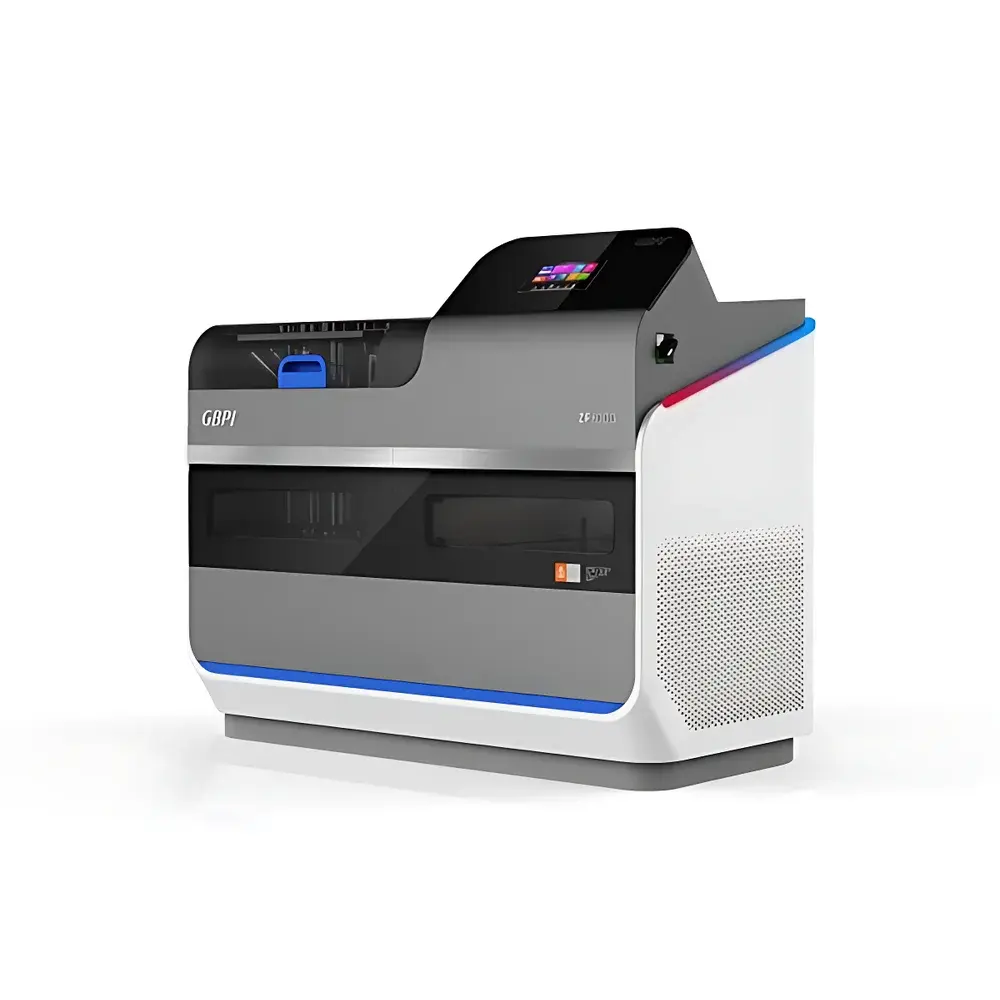
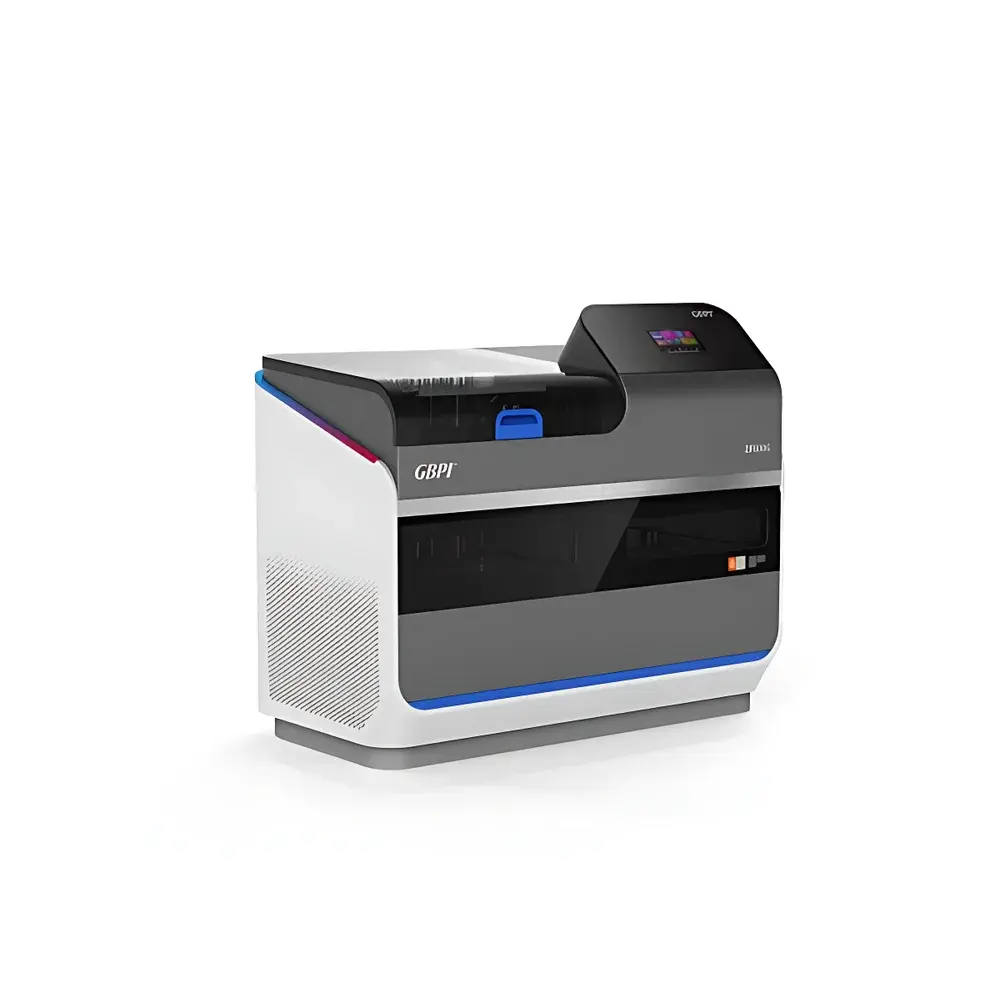
GBPI GF-1800 Total Migration and Non-Volatile Residue Analyzer
| Brand | GBPI |
|---|---|
| Origin | Guangdong, China |
| Manufacturer Type | Manufacturer |
| Country of Origin | China |
| Model | GF-1800 |
| Pricing | Upon Request |
Overview
The GBPI GF-1800 Total Migration and Non-Volatile Residue Analyzer is an automated, gravimetric measurement system engineered for regulatory-compliant determination of total migration (TM) and non-volatile residue (NVR) in food contact materials (FCMs) and pharmaceutical packaging components. It operates on the principle of controlled solvent evaporation followed by precision gravimetric quantification of residual solids—fully aligned with standardized protocols for extractable residue analysis. The instrument implements a sequential thermal process: sample immersion in specified food simulants (e.g., 3% acetic acid, 10% ethanol, or olive oil under defined time/temperature conditions), quantitative transfer of the simulant into pre-weighed evaporation dishes, water-bath evaporation, controlled drying in a heated chamber, and iterative desiccation to constant mass under stabilized environmental conditions. The final mass difference—corrected against blank simulant controls—is used to calculate total migration per unit surface area (mg/dm²), as defined in ISO 10993-12, FDA 21 CFR §170–189, and EU Regulation (EC) No. 10/2011 Annex I.
Key Features
- Independent dual-chamber architecture: Separated heating (68.3–117.9 °C) and cooling (<27.5 °C) zones enable concurrent evaporation and conditioning—reducing cycle time by up to 40% versus single-chamber systems.
- Integrated water-bath evaporation module with auto-fill, level sensing, temperature regulation (68.3–100 °C), and overheat/dry-run protection—ensuring reproducible solvent removal without manual intervention.
- Hermetically sealed solvent recovery system: All evaporation occurs within a closed-loop chamber; vapors are condensed and collected, eliminating atmospheric release and complying with OSHA PEL and EU Directive 2004/37/EC occupational exposure limits.
- Nitrogen purging capability (optional integrated generator): Enables inert-atmosphere evaporation for oxygen-sensitive or thermally labile simulants—critical for testing epoxy-phenolic coatings or polyolefin laminates.
- Negative-pressure test chamber: Maintains consistent sub-atmospheric pressure during evaporation to suppress boiling point elevation and improve residue uniformity across dish surfaces.
- Eighteen independent test stations: Each station supports autonomous control of evaporation timing, temperature ramping, and gravimetric endpoint detection—enabling parallel analysis of heterogeneous samples (e.g., PET trays, aluminum foil laminates, rubber gaskets) with fully isolated data streams.
- ARM-based embedded control system with 10.1″ capacitive touchscreen: Eliminates external PC dependency; supports method-driven workflows, real-time weight trending, and automatic endpoint validation per ASTM D129-18 criteria (mass change ≤0.1 mg over 2.5 h).
Sample Compatibility & Compliance
The GF-1800 accommodates diverse FCM substrates including polyethylene (PE), polypropylene (PP), polystyrene (PS), polyethylene terephthalate (PET), epoxy-phenolic coated tinplate, natural rubber sealing gaskets, cellulose-based molded fiber containers, and PVC-based internal lacquers. It meets all mandatory requirements of Chinese national standards GB 31604.1–2015 (General principles), GB 31604.8–2016 (Total migration in aqueous/organic simulants), GB/T 5009.156–2016 (Evaporation residue for food packaging), and YBB series pharmaceutical packaging standards (YBB00342002–2015, YBB00102005–2015). Instrument design adheres to ISO/IEC 17025:2017 clause 6.4 (environmental monitoring) and supports full traceability for GLP/GMP audits.
Software & Data Management
The embedded software complies with Annex 11 of the EU GMP Guidelines and FDA 21 CFR Part 11 for computerized systems. Access requires role-based authentication (Administrator, Analyst, Reviewer, Observer) with granular permission assignment—e.g., Administrators may configure audit trail retention policies (minimum 10 years), while Analysts execute predefined methods only. Comprehensive audit trails log all user actions—including method edits, weight entry modifications, and calibration events—with immutable timestamps and operator IDs. Real-time dashboards display live mass curves per station, residual mass vs. time, and TM calculation progress. Reports export natively to PDF (with digital signature support) and XLSX formats; raw gravimetric datasets include metadata on ambient RH/temperature at each weighing event.
Applications
- Food packaging compliance: Quantifying migration from plastic containers, cling films, and laminated pouches into food simulants per EU Regulation 10/2011.
- Pharmaceutical primary packaging: Validating extractables from rubber stoppers, aluminum closures, and polymer-coated vials per USP and Ph. Eur. 3.2.1.
- Coating performance evaluation: Measuring residual volatiles in epoxy-phenolic can linings after retort processing (GB/T 23949–2009).
- Raw material qualification: Screening migration behavior of recycled PE/PP resins prior to food-grade certification.
- Method development labs: Supporting optimization of simulant selection, contact time, and temperature profiles per ISO 21647:2021.
FAQ
What regulatory standards does the GF-1800 directly support?
It is validated for GB 31604.1–2015, GB 31604.8–2016, GB/T 5009.156–2016, YBB00342002–2015, and aligns with ISO 10993-12 and EU 10/2011 Annex I testing parameters.
Can the system handle high-boiling-point simulants like olive oil?
Yes—its heated chamber reaches 117.9 °C with nitrogen purge option, enabling complete solvent removal from lipid-based simulants without charring.
Is external vacuum required for operation?
No—the integrated vacuum pump (optional accessory) maintains chamber pressure; standard configuration uses passive negative-pressure control via calibrated venting.
How is environmental stability ensured during gravimetric measurement?
Each weighing event occurs inside a temperature- and humidity-controlled chamber (±1 °C, ±3% RH), decoupled from ambient lab fluctuations.
Does the software support electronic signatures per 21 CFR Part 11?
Yes—role-based login, biometric-ready authentication interface, and cryptographic hash logging of all critical data entries fulfill Part 11 Subpart B requirements.
Related Products




