
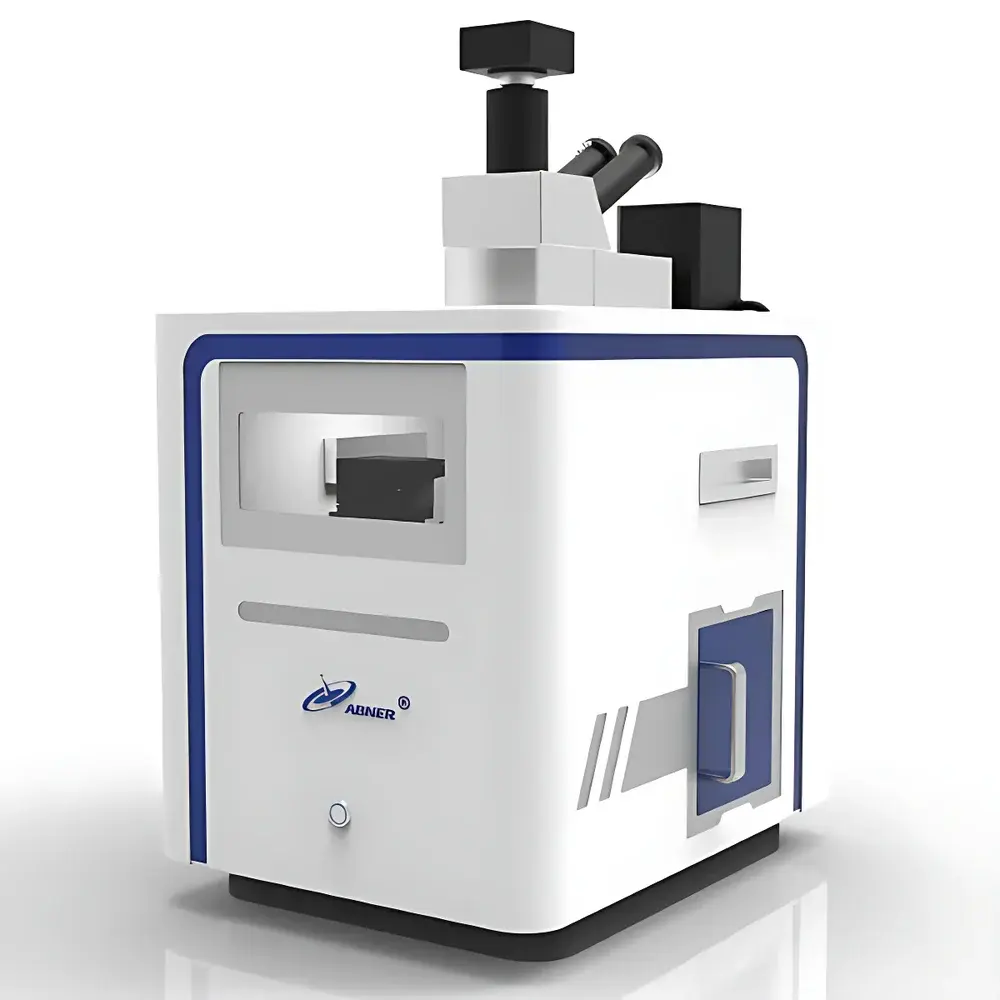
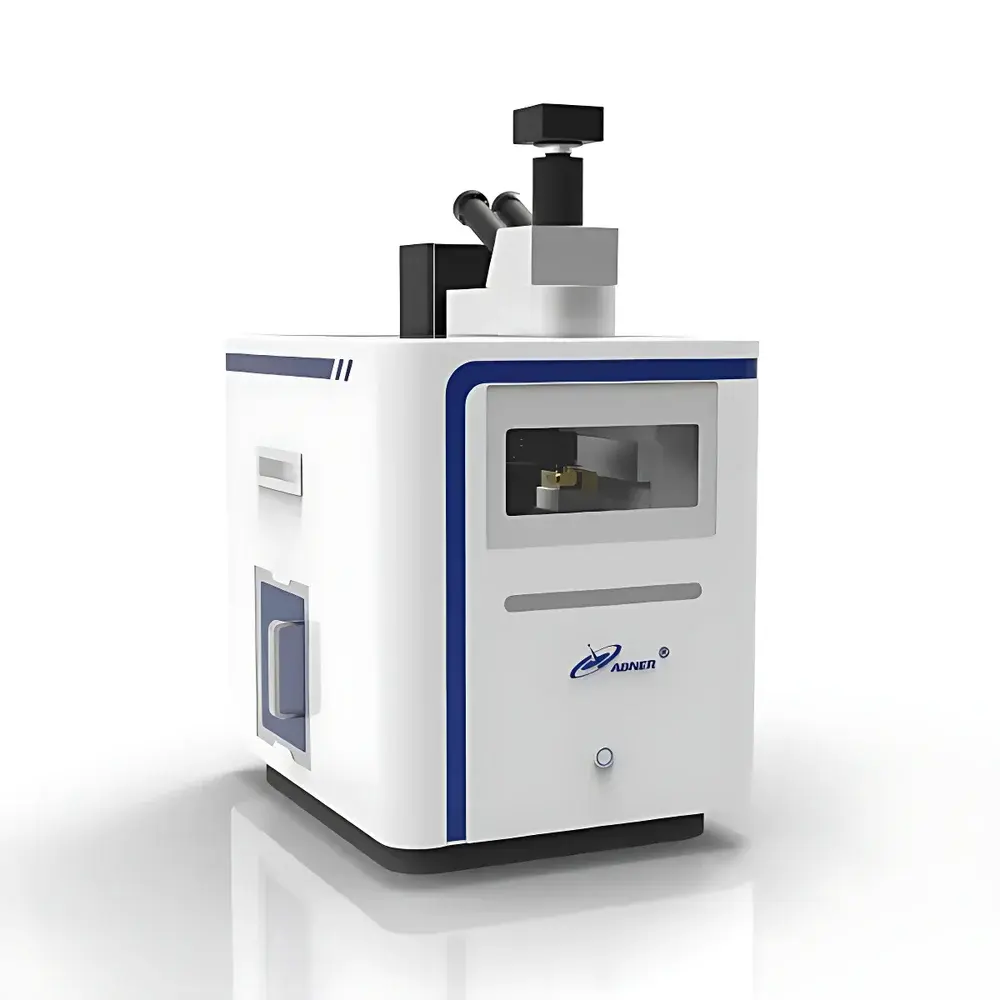
Abner Auto-2D Material Transfer Stage
| Brand | Abner |
|---|---|
| Origin | Jiangsu, China |
| Product Type | Motorized Translation Stage |
| Model | Auto-2D Material Transfer Stage |
| Axes | X-Y-Z-θ (4-axis motorized) |
| Positioning Repeatability | < ±100 nm |
| Vacuum Suction | Integrated with programmable pressure control |
| Heating Range | RT to 250 °C (±0.5 °C stability) |
| Imaging | Long-working-distance microscope (brightfield/darkfield) |
| Control Interface | RS-232, USB, TTL trigger |
| Software | Recipe-based automation with parameter logging and audit trail |
Overview
The Abner Auto-2D Material Transfer Stage is a purpose-built, high-precision automation platform engineered for deterministic transfer of atomically thin two-dimensional (2D) materials—including graphene, transition metal dichalcogenides (TMDs), hexagonal boron nitride (hBN), black phosphorus, and related van der Waals heterostructures. Unlike generic translation stages, this system integrates synchronized multi-axis motion control, real-time optical feedback, vacuum-assisted handling, and in situ thermal regulation into a unified architecture compliant with cleanroom-compatible laboratory workflows. Its core operational principle relies on coordinated XYZ linear displacement and θ rotational actuation—enabling sub-micron alignment accuracy and controlled mechanical release under programmable vacuum and temperature profiles. Designed specifically for reproducible van der Waals assembly, the stage supports both manual intervention and fully automated execution of standardized transfer protocols, making it suitable for academic research labs, shared instrumentation facilities, and pre-pilot device fabrication environments where traceability, repeatability, and process documentation are critical.
Key Features
- Four-degree-of-freedom motorized motion: Independent X-Y translation stages coupled with Z-axis vertical lift and high-resolution θ-rotational stage (0–60°, resolution ≤ 0.01°), all driven by closed-loop stepper or servo motors with encoder feedback.
- Dual-platform architecture: Separate substrate holder (e.g., Si/SiO₂ wafers, quartz slides) and stamp carrier (PDMS or polymer film-mounted glass slide), each independently controllable for asynchronous or synchronized movement.
- Vacuum handling system: Onboard vacuum generator with adjustable suction pressure (10–80 kPa range) and rapid-release solenoid valves; compatible with soft elastomeric stamps and rigid carriers.
- In situ heating module: Peltier- or cartridge-heated stage with PID-controlled thermal regulation (RT to 250 °C, ±0.5 °C stability over 1 h), enabling polymer-assisted transfer (e.g., PMMA, PC) and annealing-integrated workflows.
- Optical alignment subsystem: Modular long-working-distance (≥20 mm) stereo microscope with selectable brightfield/darkfield illumination, 5–50× magnification, and HDMI/USB3 output for live imaging and frame capture.
- Automation-ready software suite: Windows-based GUI supporting recipe creation, step-by-step protocol execution, real-time parameter logging (position, vacuum status, temperature, timestamp), and exportable CSV reports compliant with GLP documentation requirements.
- Expandable I/O interface: Standard RS-232 serial port, USB 2.0 host connection, and opto-isolated TTL trigger lines for synchronization with external equipment (e.g., environmental chambers, laser sources, or AFM systems).
Sample Compatibility & Compliance
The Auto-2D Transfer Stage accommodates substrates up to 4-inch diameter wafers and standard microscope slides (25 × 75 mm). It supports common 2D material growth substrates (Cu/Ni foils, sapphire, SiC) and target receiver substrates including Si/SiO₂, quartz, PET, and flexible polymers. All motion components utilize low-outgassing, non-magnetic materials appropriate for inert-atmosphere glovebox integration (optional N₂/Ar purge ports available). The system conforms to IEC 61000-6-3 (EMC emission standards) and meets CE safety directives. Software audit trails—including user login, parameter changes, and execution timestamps—support compliance with FDA 21 CFR Part 11 when deployed in regulated R&D environments requiring electronic record integrity.
Software & Data Management
Control is executed via Abner’s proprietary TransferControl™ software, built on a modular .NET framework with role-based access control. Each transfer protocol is stored as a versioned recipe file containing motion sequences, vacuum setpoints, thermal ramp profiles, and imaging triggers. All operational data—including absolute stage coordinates, vacuum pressure logs, heater duty cycles, and operator annotations—are time-stamped and written to local SQLite databases with optional network backup. Export functions generate ISO/IEC 17025-aligned calibration reports and raw data packages for third-party analysis. Remote monitoring via VNC or TeamViewer is supported without compromising local security policies.
Applications
- Van der Waals heterostructure fabrication: Precise stacking of graphene/hBN/MoS₂ layers with controlled interlayer twist angles for moiré physics studies.
- FET and photodetector prototyping: Deterministic placement of 2D channels onto pre-patterned electrode arrays using microscale visual registration.
- Quantum transport experiments: Transfer of exfoliated flakes onto cryogenic-compatible chips with minimal contamination and strain-induced doping.
- Materials education platforms: Standardized lab modules for undergraduate nanofabrication courses, emphasizing process documentation and error quantification.
- Process development for scalable 2D electronics: Reproducible transfer across wafer batches under defined thermal-vacuum conditions for statistical yield analysis.
FAQ
Does the system support inert-atmosphere operation?
Yes—optional gas purge fittings and sealed chamber adapters enable integration into N₂- or Ar-filled gloveboxes.
Can the rotation stage achieve sub-degree angular precision for moiré engineering?
The θ-stage delivers ≤0.01° resolution and < ±0.05° repeatability over full 0–60° range, validated via laser interferometry.
Is the software compatible with LabVIEW or Python scripting?
A documented DLL API and SCPI-like ASCII command set over RS-232/USB allow custom automation via LabVIEW, MATLAB, or Python (pySerial/pyVISA).
What maintenance is required for long-term vacuum performance?
The diaphragm vacuum pump requires annual filter replacement; O-rings and suction pads are field-replaceable consumables with documented service intervals.
How is positional accuracy verified and calibrated?
Each unit ships with NIST-traceable calibration certificate; users may perform in-house verification using standard gauge blocks and optical encoders per ISO 230-2 Annex C protocols.



