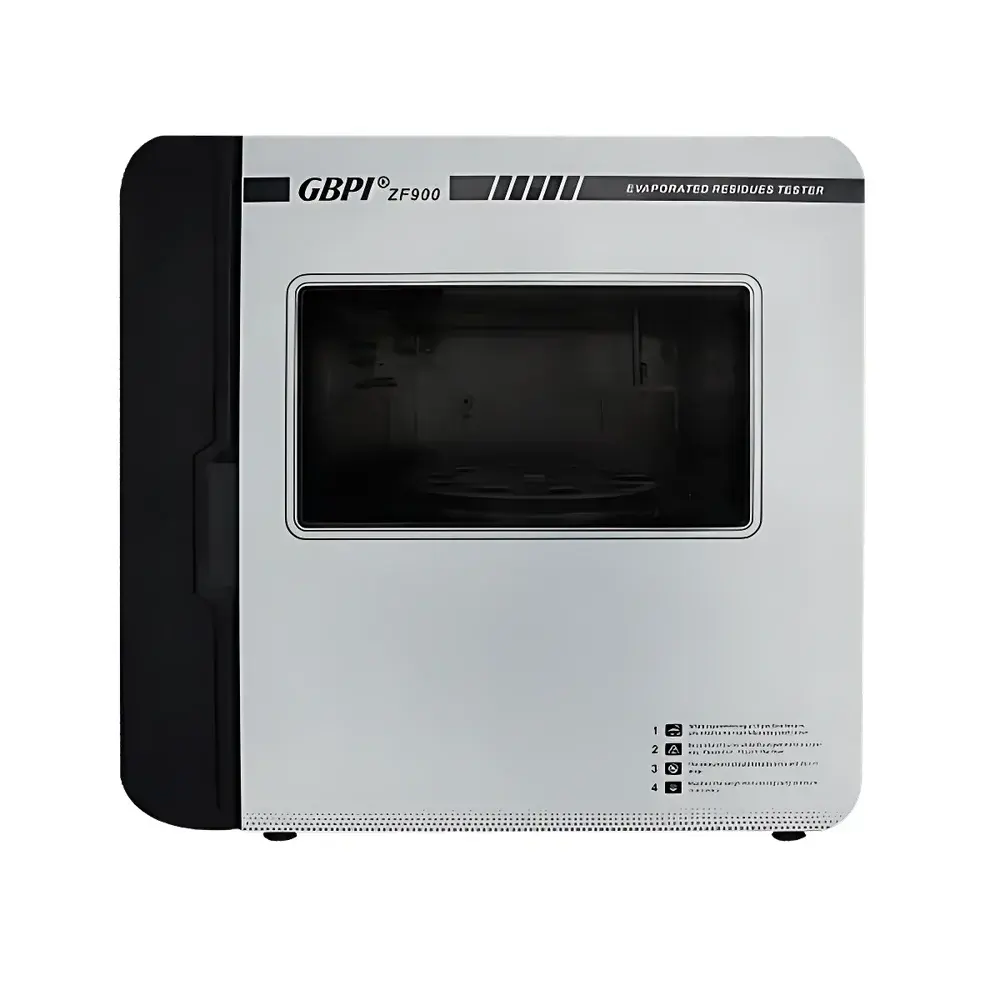
GBPI ZF3600E Total Migration & Non-Volatile Residue Analyzer
| Brand | GBPI |
|---|---|
| Origin | Guangdong, China |
| Manufacturer Type | Manufacturer |
| Country of Origin | China |
| Model | ZF3600E |
| Pricing | Upon Request |
| Measurement Range | 0–80 g |
| Balance Resolution | 0.01 mg |
| Balance Capacity | 0–220 g |
| Constant-Weight Tolerance | 0.3 mg (user-configurable) |
| Water Bath Temp Range | Ambient to 100 °C |
| Drying Chamber Temp Range | Ambient to 125 °C |
| Temperature Control Accuracy | ±0.5 °C |
| Sample Positions | 36 |
| Evaporating Dish Volume | 50 mL or 100 mL (selectable) |
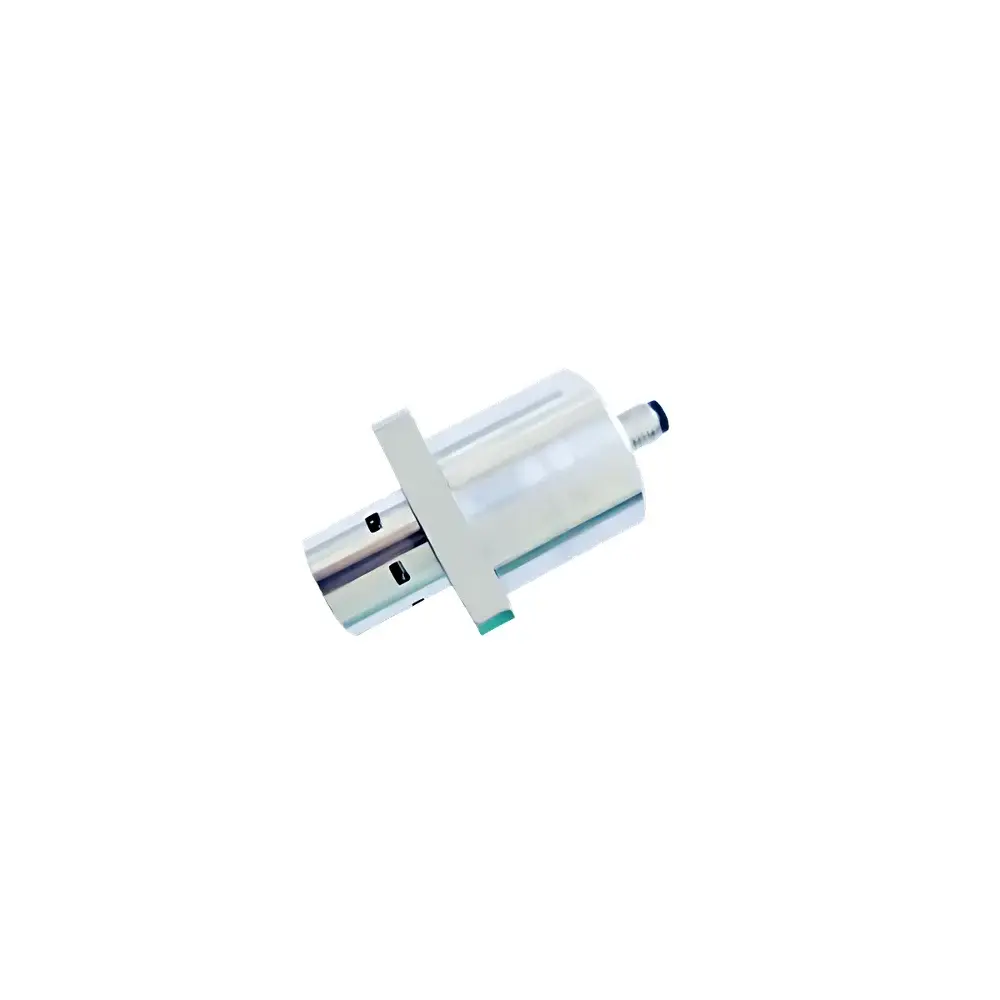
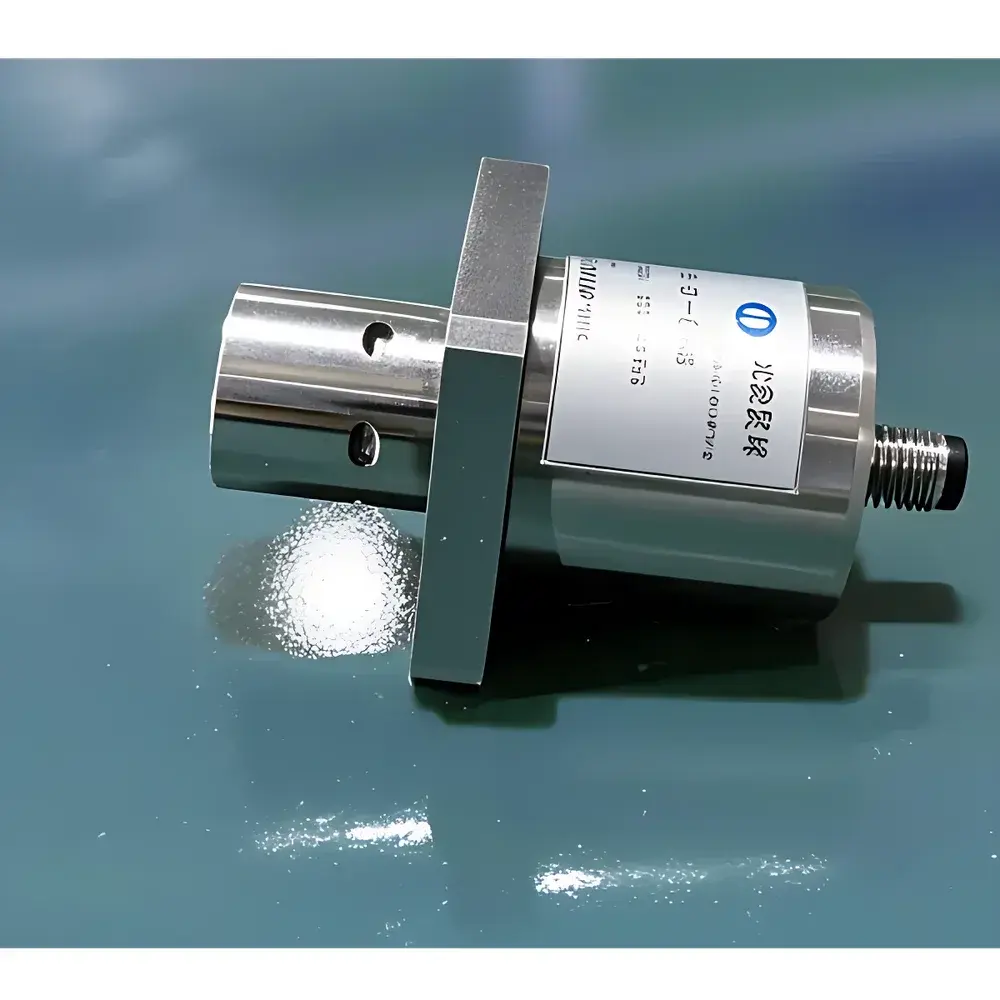
| Pneumatic Interface | Φ8 mm |
| Dimensions (L×W×H) | 1200 × 850 × 1335 mm |
| Power Supply | 220 V, 50 Hz |
| Rated Power | 7000 W |
| OS | Windows 10 Pro 64-bit |
Overview
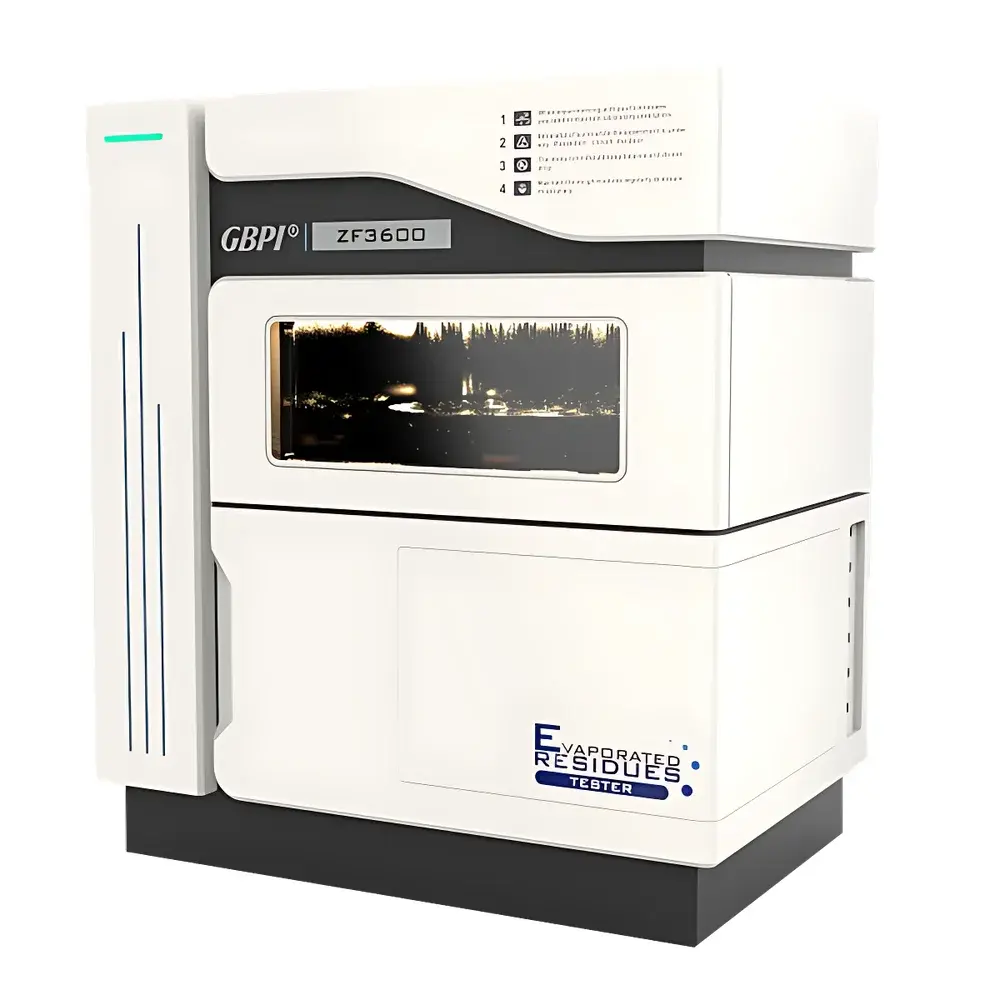
The GBPI ZF3600E Total Migration & Non-Volatile Residue Analyzer is an integrated, fully automated laboratory instrument engineered for precise quantification of non-volatile residues—commonly referred to as total migration—in food contact materials, pharmaceutical packaging, purified water, tobacco-related substrates, and chemical reagents. It operates on the gravimetric principle: a defined volume of extract solution is transferred into pre-weighed evaporating dishes; residual solvent is removed via controlled water-bath evaporation below the boiling point of the extraction medium, followed by drying in a temperature-stabilized chamber at 105 °C, cooling in a humidity- and temperature-regulated environment, and repeated high-precision weighing until constant mass is achieved. This sequence conforms strictly to standardized thermogravimetric protocols used in regulatory compliance testing, ensuring traceable, reproducible results aligned with pharmacopeial and food safety requirements.
Key Features
- Integrated dual-chamber architecture: independent water bath evaporation zone and thermostatically controlled drying chamber, both sealed and isolated from ambient lab conditions to eliminate environmental interference.
- Automated liquid handling system with pneumatic valves and sub-0.1 mL residual volume control, eliminating manual dispensing and operator-induced variability.
- Three high-accuracy imported analytical balances (0.01 mg resolution, 220 g capacity), each housed within a vibration-damped, water-jacketed enclosure to maintain thermal stability during weighing cycles.
- Real-time liquid level monitoring and auto-fill/drain functionality for water bath maintenance, coupled with electromagnetic temperature regulation for ±0.5 °C accuracy across all thermal zones.
- 36 parallel test positions with individually addressable evaporating dishes (50 mL or 100 mL options), enabling high-throughput screening without cross-contamination or data coupling.
- Recirculating chiller system with large-capacity coolant reservoir, achieving chamber cooldown to ambient temperature within ≤30 minutes; solvent recovery efficiency exceeds 90% via dedicated condensate collection.
- Human-centered interface with full-view tempered glass observation window, ergonomic height (1.2 m), and intuitive one-touch operation workflow.
Sample Compatibility & Compliance
The ZF3600E accommodates aqueous extracts (e.g., purified water per ChP 2020 Vol. II), organic solvents (including n-hexane, ethanol, acetic acid, chloroform), and solid matrices such as pharmaceutical powders, plastic films, coated papers, and rubber components. Its operational parameters satisfy the procedural requirements of multiple international standards: USP (Water Determination), EP 9.0 (Purified Water), ChP 2020 Vol. IV (Extractables and Loss on Drying), GB 31604.8–2016 (Food Contact Materials), EN 1186–3:2002 Method A, Korean MOHW Chapter IV Section 2–8, GB/T 9740–2008 (Cigarette Paper), and GB 8538–2016 (Drinking Water Quality). All thermal and gravimetric sequences are programmable to match specific monograph instructions, supporting method validation under GLP and GMP frameworks.
Software & Data Management
The instrument runs on a purpose-built Windows 10 Pro 64-bit platform compliant with Annex 11 and FDA 21 CFR Part 11 requirements. Its modular GUI supports role-based access control (administrator, analyst, reviewer), configurable audit trails (system events, user actions, result modifications), electronic signatures, and timestamped metadata logging for every weighing cycle, temperature setpoint change, and dish status transition. Test reports are exportable in PDF, CSV, and XML formats; customizable templates allow inclusion of instrument ID, calibration certificates, environmental logs, and raw weight/time series. Remote connectivity enables secure cloud-based data synchronization and integration into enterprise LIMS environments via standard API protocols.
Applications
- Regulatory testing of total migration from plastic, paper, and composite food packaging per EU 10/2011 and national equivalents.
- Non-volatile residue assessment in pharmaceutical primary packaging (e.g., blister foils, vial stoppers) per USP and ICH Q5C.
- Determination of dissolved solids in purified water, process water, and dialysis solutions per pharmacopeial specifications.
- Quantification of extractables from medical device polymers during biocompatibility evaluation (ISO 10993–12).
- Moisture content and loss-on-drying analysis for APIs and excipients per ChP and USP general chapters.
- Quality control of tobacco industry adhesives and filter papers under GB/T 9740–2008.
FAQ
What standards does the ZF3600E support for total migration testing?
It supports GB 31604.8–2016, EN 1186–3:2002 Method A, USP , EP 9.0, ChP 2020, and Korean MOHW Chapter IV.
Can the system handle volatile organic solvents safely?
Yes—integrated solvent recovery, sealed chamber design, and explosion-proof pneumatic controls ensure safe operation with n-hexane, chloroform, and other Class II/III solvents.
Is the balance calibration traceable to national metrology institutes?
All three balances are factory-calibrated with NIST-traceable weights; internal recalibration routines and external verification ports support ISO/IEC 17025-compliant maintenance.
Does the software meet FDA 21 CFR Part 11 requirements?
Yes—full audit trail, electronic signature capability, user authentication, and immutable data storage are implemented per Part 11 Subpart B.
How is environmental interference minimized during weighing?
Balances operate inside thermally isolated, water-jacketed enclosures; chamber humidity is actively regulated, and weighing occurs only after thermal equilibration confirmed by embedded sensors.