
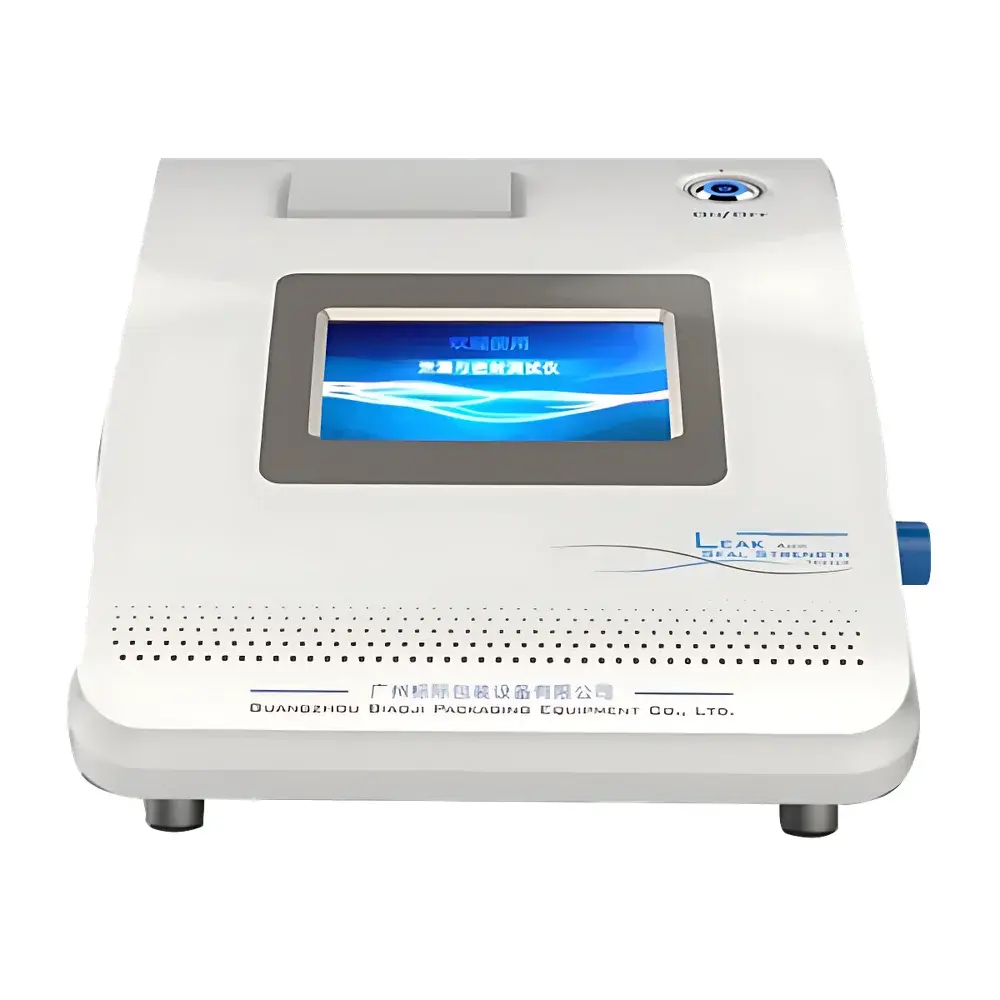
GBPI GB-DK1 Headspace Oxygen Analyzer
| Brand | GBPI |
|---|---|
| Model | GB-DK1 |
| Measurement Principle | Fluorescence-based Optical O₂ Detection & NDIR CO₂ Detection (optional) |
| Gas Types | O₂ (standard), CO₂ (optional) |
| O₂ Range | 0–25% vol |
| CO₂ Range | 0–100% vol |
| O₂ Accuracy | ±0.2% vol |
| CO₂ Accuracy | ±2% vol |
| Minimum Sample Volume | ≥3 mL (at 101.3 kPa) |
| Dimensions | 350 × 330 × 200 mm (L×W×H) |
| Power Supply | 220 VAC ±10%, 50 Hz / 120 VAC ±10%, 60 Hz |
| Net Weight | 5 kg |
| Compliance | Designed per GMP Annex 11 (Computerized Systems), supports ALCOA+ data integrity principles |
| Operating Environment | Production line, warehouse, QC lab |
Overview
The GBPI GB-DK1 Headspace Oxygen Analyzer is a dedicated benchtop instrument engineered for precise, non-destructive (via controlled puncture) quantification of residual oxygen (O₂) and optionally carbon dioxide (CO₂) in the headspace of sealed packaging containers. It employs dual-sensor detection architecture: fluorescence-quenching optical sensing for O₂—offering high selectivity, long-term stability, and immunity to flow rate or pressure fluctuations—and non-dispersive infrared (NDIR) absorption for CO₂ when configured. This measurement principle aligns with ASTM F2714–22 (“Standard Practice for Determining Headspace Oxygen Content in Flexible Packaging”) and supports critical quality control workflows in regulated pharmaceutical and food manufacturing environments. The analyzer is explicitly designed for routine use across operational settings—including inline QC stations, cold chain logistics hubs, and GLP-compliant analytical laboratories—where rapid, repeatable headspace gas profiling informs shelf-life modeling, package integrity verification, and modified atmosphere packaging (MAP/CAP) validation.
Key Features
- Fluorescence-based O₂ sensor with ±0.2% vol accuracy and drift <0.1% vol/month, ensuring metrological reliability over extended calibration intervals.
- Optional NDIR CO₂ module (0–100% vol range, ±2% vol accuracy) enables dual-gas analysis without cross-interference, supporting MAP formulation optimization and spoilage mechanism studies.
- Integrated ARM-based embedded control system with 7-inch capacitive touchscreen interface—no external PC required; firmware supports over-the-air updates and secure boot authentication.
- Puncture-safe sampling probe with retractable needle guard and integrated silicone seal cap minimizes operator exposure and prevents accidental needlestick injuries during high-throughput testing.
- Configurable user access levels (Administrator, Operator, Reviewer, Auditor) compliant with FDA 21 CFR Part 11 and EU Annex 11 requirements for electronic records and signatures.
- Audit trail functionality logs all system events—including method edits, result deletions, user logins, and calibration actions—with immutable timestamps and user attribution.
Sample Compatibility & Compliance
The GB-DK1 accommodates a broad range of rigid and flexible packaging formats: aluminum foil-laminated pouches, PET/PE trays, glass vials (e.g., lyophilized drug products), pre-filled syringes, IV bags, ampoules, and metal cans. Sampling is performed via sterile, single-use stainless-steel needles (included) compatible with ISO 8536-4 (infusion containers) and USP (plastic packaging systems). All firmware and software modules are validated per GAMP 5 guidelines and support 21 CFR Part 11 compliance through role-based electronic signatures, audit trail retention ≥15 years, and encrypted local database storage. Instrument qualification documentation (IQ/OQ/PQ protocols) is provided upon request.
Software & Data Management
The onboard analytical software provides full lifecycle data governance: customizable report templates (PDF export with embedded metadata), configurable pass/fail thresholds per product specification, and direct integration with laboratory information management systems (LIMS) via TCP/IP or RS-232. Raw sensor output (mV signal vs. time), calculated gas concentrations, environmental conditions (ambient T/P), and operator annotations are stored in a tamper-evident SQLite database. Data export supports CSV and XML formats for statistical process control (SPC) platforms such as Minitab or JMP. Optional cloud synchronization (with on-premise gateway) enables centralized fleet monitoring and trend analysis across multiple production sites.
Applications
- Pharmaceutical packaging: Residual O₂ quantification in lyophilized vials (USP ), pre-filled syringes, and barrier-coated blister packs to assess oxidation risk and validate stopper crimp integrity.
- Food industry: MAP validation for meat, cheese, and ready-to-eat meals—correlating headspace O₂ with microbial growth kinetics per ISO 22000 and HACCP plans.
- Biologics & vaccines: Headspace analysis of cryopreserved formulations in glass vials to prevent protein aggregation driven by oxidative stress.
- Medical device packaging: Verification of sterilization efficacy (e.g., EO residue purge cycles) via O₂ depletion monitoring in Tyvek®-sealed trays.
- Regulatory submissions: Generation of auditable headspace data packages for ANDA, BLA, or CE Mark technical files under ICH Q5C and ISO 11607-2.
FAQ
What sample volume is required for a valid O₂ measurement?
A minimum of 3 mL of headspace gas at standard atmospheric pressure (101.3 kPa) is required. For low-volume containers (e.g., 2-mL vials), optional micro-sampling adapters reduce dead volume and improve recovery efficiency.
Can the instrument be used for continuous monitoring on a packaging line?
No—the GB-DK1 is a discrete sampling instrument intended for spot-checking or batch release testing. For real-time inline monitoring, consult GBPI’s OEM-integrated OEM-HPX series.
Is calibration traceable to NIST standards?
Yes—factory calibration uses NIST-traceable certified gas mixtures (O₂ in N₂, CO₂ in air), and users receive a calibration certificate with uncertainty budget per ISO/IEC 17025.
Does the system support multi-language UI?
English and Simplified Chinese interfaces are pre-installed; additional languages (German, Spanish, Japanese) are available via firmware update.
How often must the O₂ sensor be replaced?
Under typical usage (≤50 tests/day), the fluorescence sensor maintains performance for ≥24 months; GBPI recommends annual verification using certified reference gases.




