Banagee Cryogenic Vacuum-Insulated Flexible Metal Hose – DN10 to DN100
| Brand | Banagee |
|---|---|
| Origin | Sichuan, China |
| Manufacturer Type | Authorized Distributor |
| Origin Category | Domestic (China) |
| Model Range | DN10–DN100 |
| Price Range | USD 28–72 (FOB) |
| Nominal Diameter | DN10–DN100 |
| Inner Tube OD | Φ10–Φ100 mm |
| Outer Tube OD | Φ34–Φ185 mm |
| Design Temperature | −270 °C |
| Operating Temperature Range | −270 °C to +150 °C |
| Working Pressure | Up to 3.2 MPa (customizable per application) |
| Insulation Type | High-Vacuum Multilayer Insulation (MLI) |
| Jacket Pressure | < 0.004 Pa |
| Leak Rate | < 2 × 10⁻¹⁰ Pa·L/s |
| Test Standards | Q/XLT001–2008, ASTM F2796 (cryogenic hose qualification), ISO 21028-1 (safety requirements for cryogenic equipment) |
| Materials | SUS304 stainless steel inner/outer tubes |
| Sealing Material | PTFE or FKM (fluoroelastomer) |
| Bend Radius | ≥5× nominal diameter |
| Flex Life | >100,000 cycles at rated bending radius |
| Media Compatibility | LN₂, LO₂, LAr, LH₂, LHe |
| Ambient Operating Temp | −30 °C to +50 °C |
| Outer Sheath | UV-resistant PU or PVC jacket |
Overview
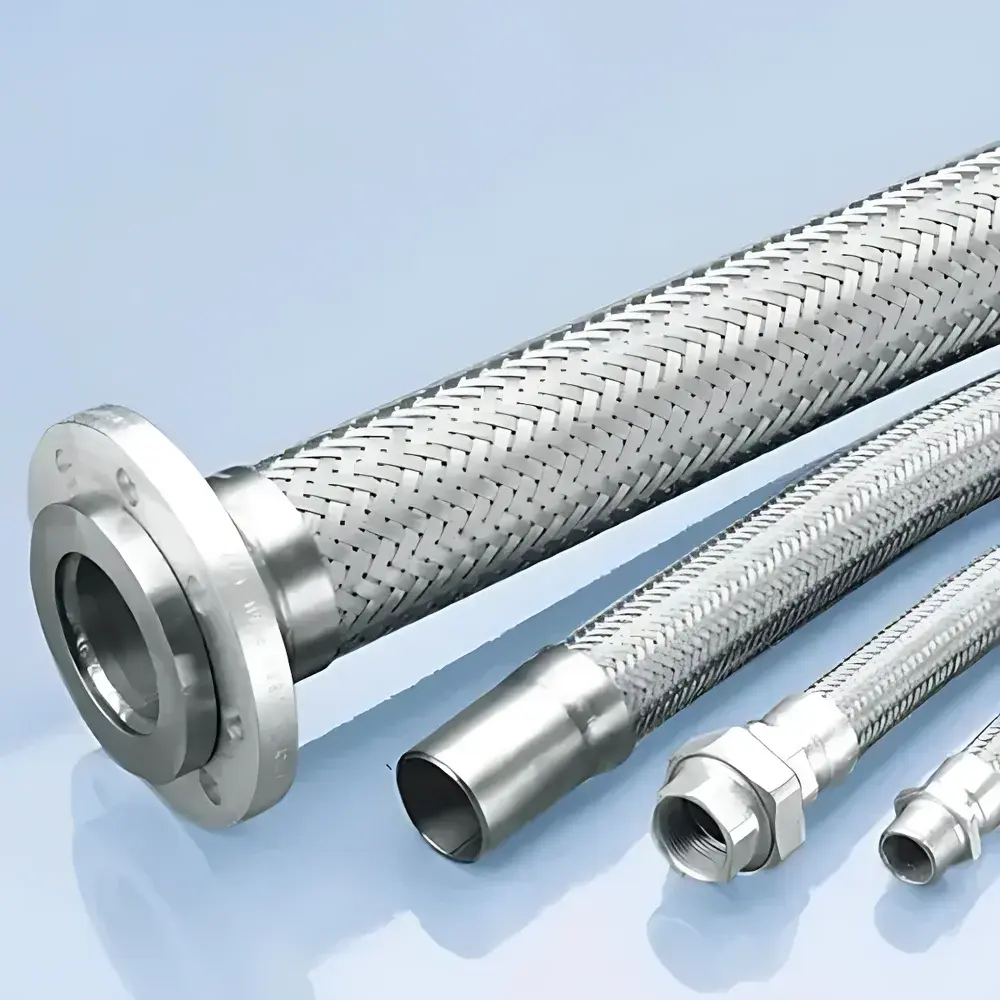
The Banagee Cryogenic Vacuum-Insulated Flexible Metal Hose (DN10–DN100) is an engineered solution for the safe, efficient, and repeatable transfer of cryogenic liquids—including liquid nitrogen (LN₂), liquid oxygen (LO₂), liquid argon (LAr), liquid hydrogen (LH₂), and liquid helium (LHe)—at temperatures as low as −270 °C. Unlike conventional insulated hoses, this system integrates a corrugated SUS304 stainless steel inner tube with high-vacuum multilayer insulation (MLI) and a reinforced braided outer structure, enabling reliable performance under extreme thermal gradients and dynamic mechanical stress. Its design follows fundamental principles of cryogenic fluid dynamics and vacuum physics: the high-vacuum annular space (<0.004 Pa) minimizes conductive and convective heat ingress, while the reflective MLI layers suppress radiative heat transfer—resulting in a typical daily boil-off rate below 2%. This architecture ensures high thermal efficiency, long service life, and compliance with internationally recognized cryogenic handling protocols.
Key Features
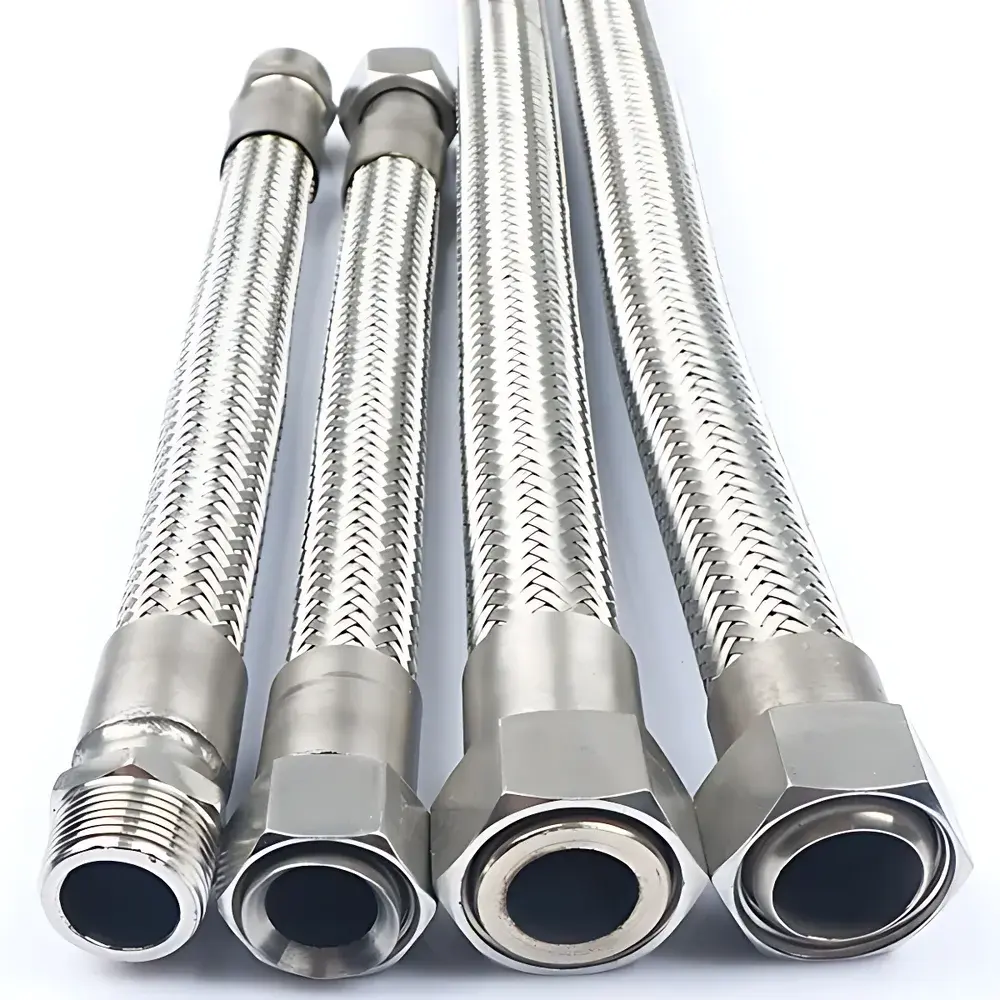
- Vacuum-Insulated Corrugated Core: Seamless SUS304 inner tube with precision-formed U- or Ω-type corrugations provides fatigue resistance, pressure containment, and low-temperature ductility down to −270 °C.
- High-Vacuum Multilayer Insulation (MLI): 10–25 reflective aluminum-coated polyester or nickel foil layers within an evacuated annulus reduce radial heat flux to <0.5 W/m² at −196 °C ambient delta-T.
- Dynamic Flexibility & Mechanical Robustness: Minimum bend radius of 5× DN enables routing in confined or non-linear spaces; validated for >100,000 flex cycles without loss of vacuum integrity or leakage.
- Wide-Temperature Sealing System: PTFE or FKM (Viton®-grade) gaskets and ferrules maintain leak-tight sealing across −200 °C to +150 °C, conforming to ASTM F2594 (cryogenic elastomer testing).
- Environmental Protection: UV-stabilized polyurethane (PU) or PVC outer sheath resists abrasion, ozone exposure, and incidental moisture—suitable for both indoor laboratory and outdoor mobile refueling applications.
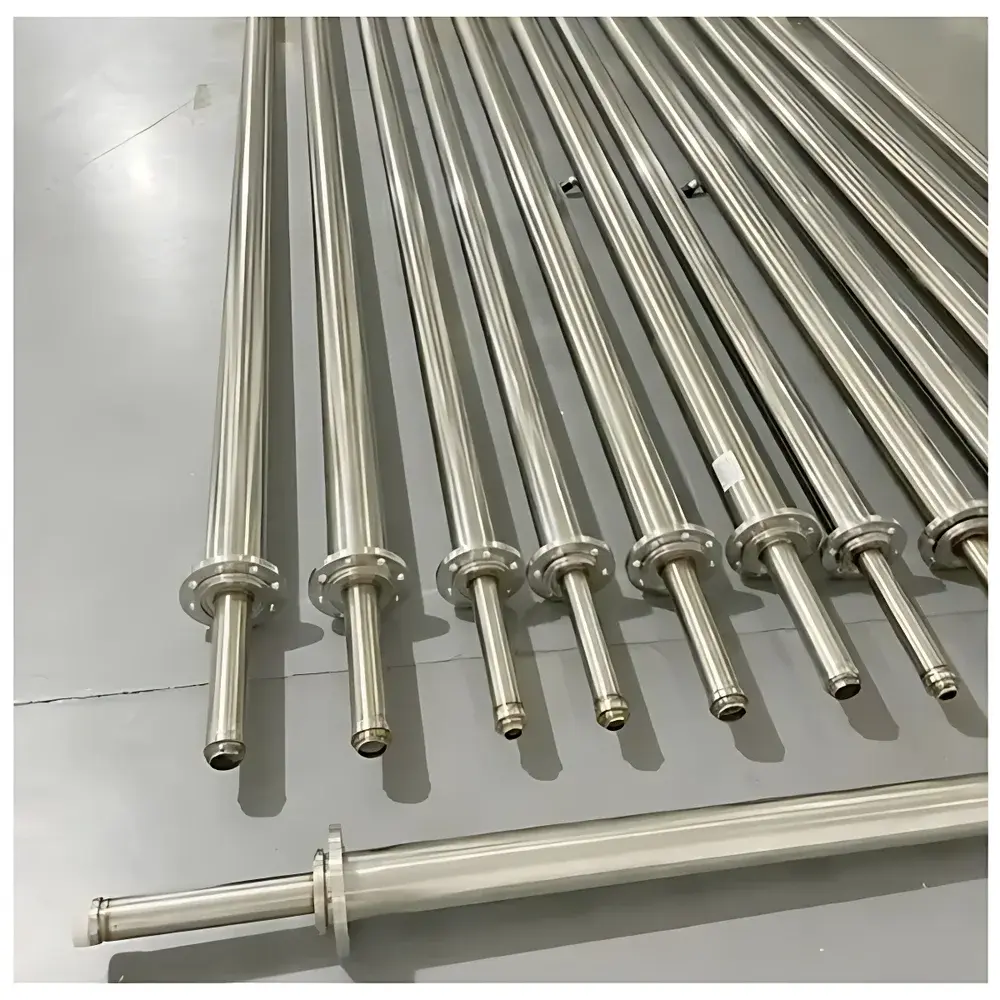
- Modular Connection Interface: Standardized DIN 259/2999 or ISO 11557 flanged ends, tri-clamp (DIN 11851), or camlock-compatible terminations support rapid installation and tool-free disconnection.
Sample Compatibility & Compliance
This hose system is certified for continuous service with all common cryogens listed in ISO 20765-1 and CGA G-4.1. It meets structural and safety requirements defined in EN 13445-3 (unfired pressure vessels), ASME B31.3 (process piping), and the Chinese industry standard Q/XLT001–2008 for low-temperature flexible piping assemblies. Each production batch undergoes helium mass spectrometry leak testing (leak rate <2×10⁻¹⁰ Pa·L/s), high-pressure hydrostatic proof testing (1.5× MAWP), and vacuum hold-down validation at <0.004 Pa for ≥72 hours. Documentation includes full traceability of material certifications (EN 10204 3.1), vacuum test reports, and dimensional inspection records—supporting GLP, GMP, and FDA-regulated facility audits.
Software & Data Management
While the hose itself is a passive component, Banagee provides optional digital asset tagging (QR-coded serial plates) and integration-ready documentation packages compatible with enterprise CMMS platforms (e.g., IBM Maximo, SAP EAM). Vacuum integrity logs, maintenance history templates, and calibration interval recommendations are delivered in ISO 15489-compliant PDF/A format. For users operating under 21 CFR Part 11, electronic records include embedded digital signatures and audit trails for vacuum certification events.
Applications
- Mobile cryogenic refueling of LN₂ dewars on laboratory transport carts and automated guided vehicles (AGVs)
- Temporary interconnection between stationary storage tanks and portable cryo-coolers or MRI magnet fill systems
- Flexible feed lines in superconducting magnet test stands requiring repeated angular repositioning
- Process piping in pharmaceutical lyophilization suites where thermal contraction compensation and cleanability are critical
- Field-deployable liquefied gas transfer for aerospace ground support equipment (GSE)
- Research-scale quantum computing infrastructure requiring ultra-low heat leak interconnects
FAQ
What is the maximum allowable working pressure for DN50 configuration?
The standard rating is 3.2 MPa; however, custom designs up to 6.4 MPa are available upon engineering review and hydrostatic validation.
Can this hose be used for liquid helium (LHe) at 4.2 K?
Yes—its −270 °C design temperature and vacuum integrity specifications meet ISO 21028-1 requirements for helium service, including zero-loss vapor margin verification.
Is the outer jacket resistant to ozone generated near cryogenic compressors?
The PU variant exhibits superior ozone resistance per ASTM D1149; PVC versions require supplemental shielding in high-ozone environments.
How often should vacuum integrity be verified in routine operation?
Annual verification is recommended; however, facilities operating under ISO/IEC 17025 or CAP accreditation may require semi-annual checks with calibrated residual gas analyzers.
Are custom lengths and termination combinations available?
Yes—standard lengths range from 0.5 m to 15 m; non-standard flange pairings (e.g., ANSI B16.5 Class 300 + DIN 2501) and hybrid connectors (e.g., VCR + CGA-580) are supported under engineering release.