
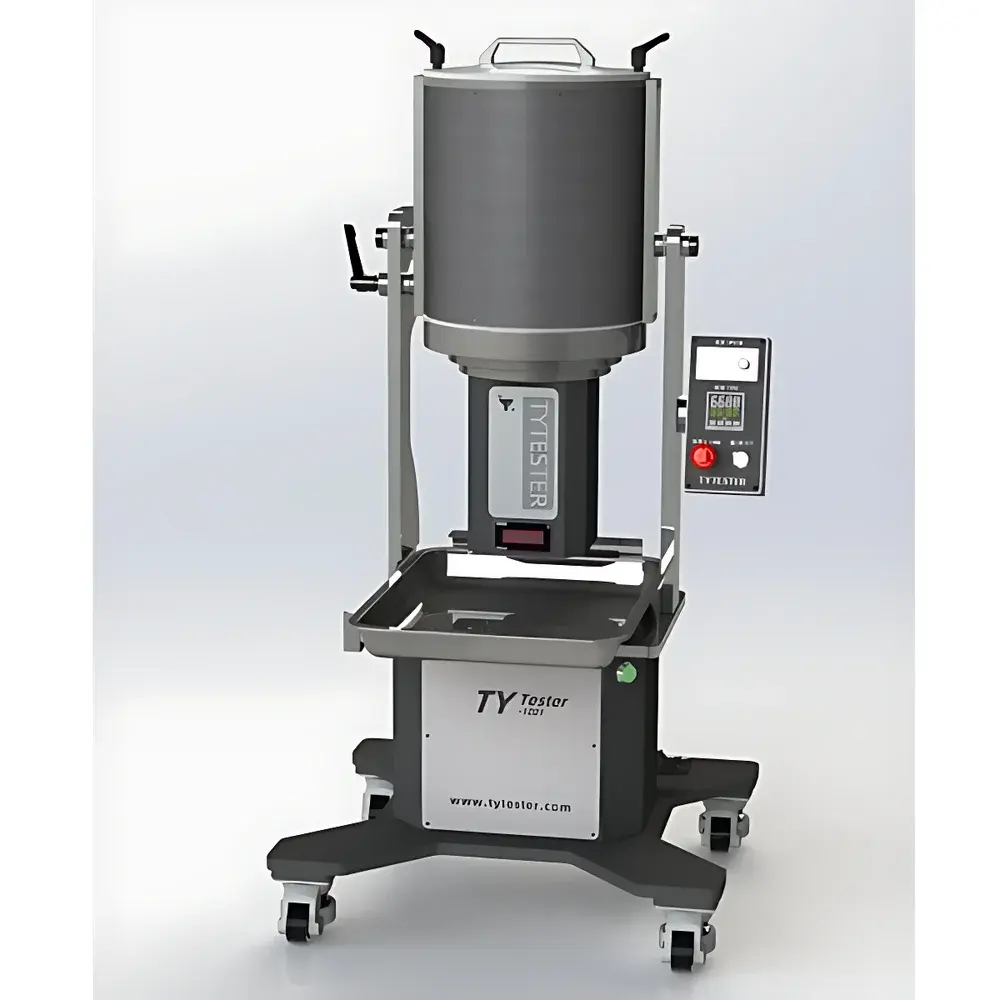
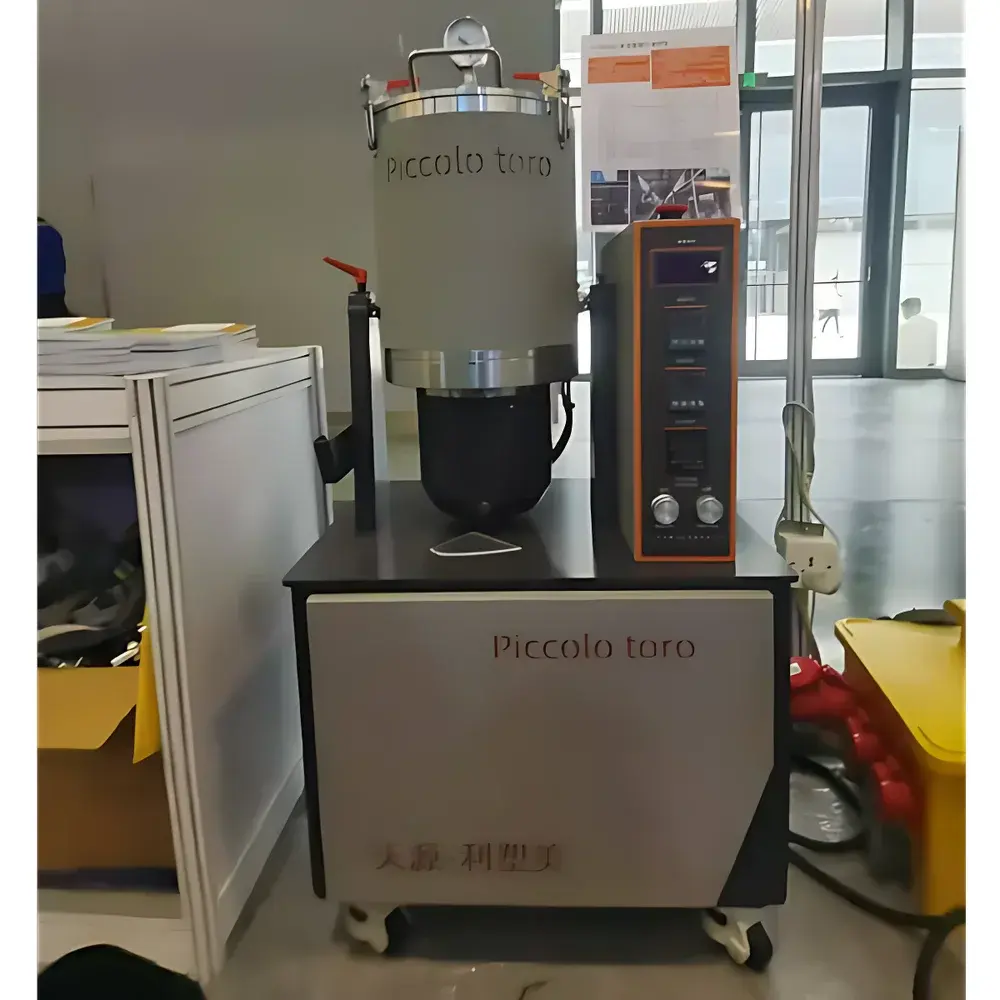
Lishumei TY-HSM3 High-Shear Vacuum Mixing and Drying Laboratory Mixer
| Brand | Lishumei |
|---|---|
| Origin | Jiangsu, China |
| Manufacturer Type | Authorized Distributor |
| Country of Origin | China |
| Model | TY-HSM3 |
| Price Range | USD 2,800 – 4,900 |
| Max Batch Capacity | 3 kg |
| Vessel Material | 304 Stainless Steel |
| Drive | 0–2000 rpm Variable-Frequency Control |
| Motor Power | 0.75 kW (Jiemekang) |
| Heating Options | Electric (1 kW, RT+10°C to 400°C) |
| Vacuum Capability | Optional Integrated Negative-Pressure System |
| Tilt Angle | 0–120° Adjustable |
| Dimensions (W×D×H) | 586 × 400 × 730 mm |
| Voltage | 220 V ±10%, 50 Hz |
| Sample Form | Powder, Granules, Additives, Pigments, Color Masterbatches, Thermoplastics |
Overview
The Lishumei TY-HSM3 is a benchtop high-shear vacuum mixing and drying laboratory mixer engineered for precise, reproducible blending and thermal conditioning of thermoplastic compounds, pigment dispersions, polymer masterbatches, and functional powder formulations. It operates on the principle of controlled mechanical shear coupled with convective heat transfer and optional vacuum-assisted moisture removal. The unit integrates dual-motion agitation—high-speed radial impellers generate intense turbulent flow, while an optional low-speed helical or paddle-type agitator provides gentle, uniform material turnover—enabling both rapid homogenization and thermally sensitive processing within a single vessel. Its modular architecture supports process scalability from R&D formulation development to pre-production batch validation under controlled thermal and atmospheric conditions.
Key Features
- Two-stage agitation system: Standard high-speed impeller (0–2000 rpm, VFD-controlled) for rapid dispersion; optional low-speed 3D paddle assembly for shear-sensitive materials requiring uniform thermal exposure and minimal degradation.
- Integrated tilt mechanism (0–120° adjustable) facilitating complete discharge, residue-free cleaning, and enhanced gravitational distribution during heating cycles.
- Multi-mode thermal management: Selectable heating interfaces include resistive electric heating (1 kW, up to 400°C), water-based circulating thermostat (up to 120°C), and oil-based circulating thermostat (up to 300°C)—each independently controllable via PID-regulated digital interface.
- Optional vacuum integration: Configurable negative-pressure module (≤ -0.098 MPa) enables simultaneous mixing and low-temperature drying, critical for moisture-sensitive polymers, hygroscopic additives, or volatile solvent-based formulations.
- 304 stainless steel mixing chamber with polished interior surface (Ra ≤ 0.8 µm), fully compliant with ISO 8502-3 for surface cleanliness assessment and suitable for GLP-compliant documentation workflows.
- Digital control panel with real-time display of speed, temperature setpoint/actual, vacuum level (if equipped), and runtime—supports parameter logging via USB export for audit-ready record retention.
Sample Compatibility & Compliance
The TY-HSM3 accommodates free-flowing and cohesive powders, granular resins, micronized pigments, plasticizers, flame retardants, and pre-compounded color concentrates. It is routinely employed in polymer compounding labs validating ASTM D3895 (oxidative induction time), ISO 1133 (melt flow rate precursor preparation), and USP extractables testing sample conditioning. Vessel geometry and impeller clearance meet ISO 13320 particle dispersion guidelines for pre-analytical homogenization. All electrical components conform to IEC 61000-6-3 (EMC) and IEC 61000-6-2 (immunity); thermal control circuits comply with IEC 60519-12 for industrial heating equipment safety.
Software & Data Management
While the base configuration features a standalone microprocessor controller with non-volatile memory, optional firmware upgrade enables RS485 Modbus RTU communication for integration into centralized lab automation platforms. Logged parameters—including torque-derived power consumption trends, temperature ramp profiles, and vacuum decay curves—are timestamped and exportable as CSV files. Audit trail functionality satisfies FDA 21 CFR Part 11 requirements when paired with user-access-controlled authentication protocols and electronic signature modules (available as OEM add-on). Data integrity safeguards include cyclic redundancy check (CRC) validation and automatic backup upon power interruption.
Applications
- Preparation of homogeneous polymer blends prior to melt rheology or DSC analysis.
- Dispersion of nanofillers (e.g., carbon black, silica, clay) in thermoplastic matrices under inert or reduced-pressure environments.
- Thermal stabilization trials of heat-sensitive additives (e.g., UV absorbers, antioxidants) during dry-blend aging simulations.
- Moisture removal from hygroscopic engineering resins (PA6, PBT, PC) without thermal degradation—critical for injection molding qualification.
- Development of conductive composites requiring uniform carbon nanotube or graphene distribution across insulating polymer carriers.
- Batch-scale validation of masterbatch dilution protocols per ISO 20997 (plastics—masterbatch characterization).
FAQ
What is the maximum allowable operating temperature for each heating mode?
Electric heating supports up to 400°C; water-circulating thermostats are rated to 120°C; oil-circulating systems operate up to 300°C. Temperature stability is maintained within ±1.5°C across the full range.
Can the vacuum system be used simultaneously with high-speed mixing?
Yes—the vacuum port is isolated from the drive shaft via double mechanical seals, enabling concurrent operation at full 2000 rpm without pressure loss or lubricant contamination.
Is the vessel geometry optimized for CFD-validated flow patterns?
The conical-bottomed 304SS chamber and angled baffle configuration were validated using ANSYS Fluent simulations to ensure >95% volumetric turnover within 90 seconds at 1500 rpm, minimizing dead zones per ASTM D7119 guidelines.
Does the unit support IQ/OQ documentation packages for regulated labs?
Factory-installed calibration certificates for temperature, speed, and vacuum sensors are provided. Full GMP-compliant IQ/OQ templates—including sensor traceability, repeatability testing protocols, and alarm verification logs—are available upon request.
What maintenance intervals are recommended for long-term reliability?
Motor bearings require relubrication every 2,000 operational hours; vacuum pump oil (if installed) must be changed every 500 hours; impeller fasteners and tilt-axis locking pins should be torque-checked quarterly per ISO 5346 maintenance schedules.



