
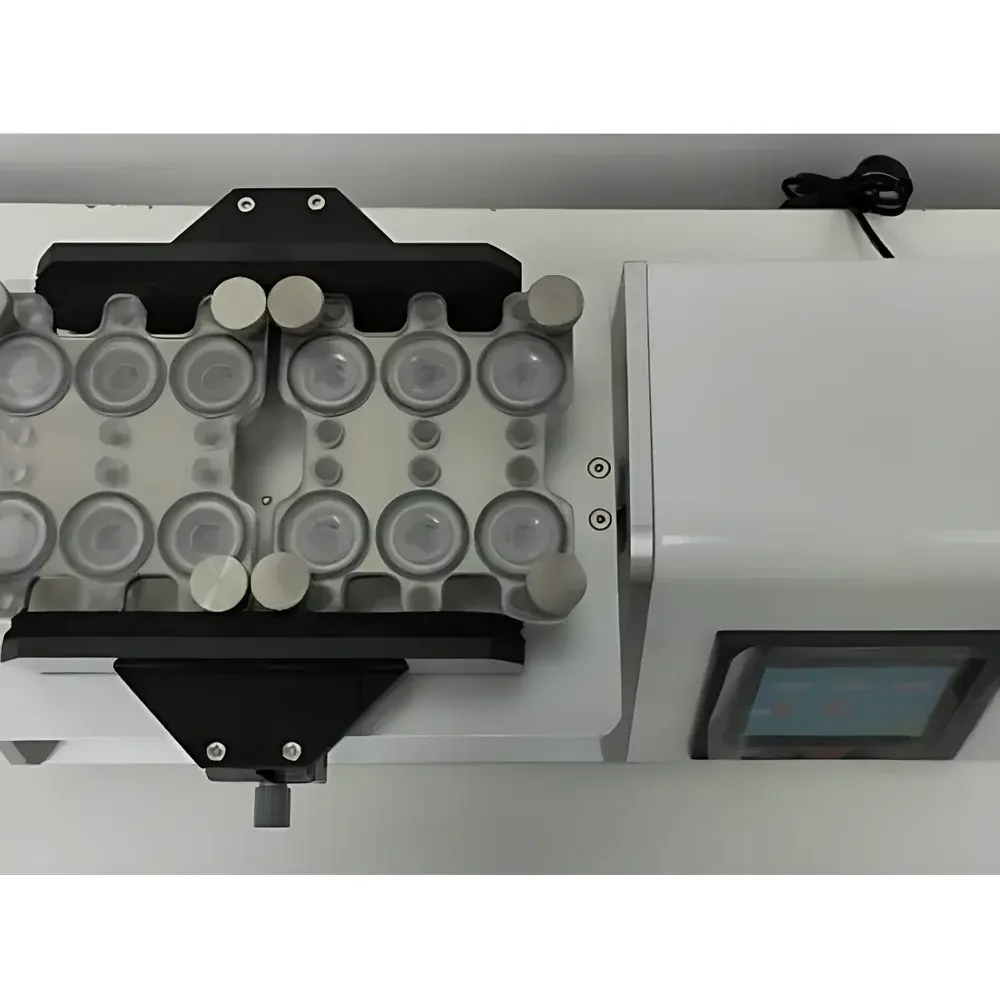
Kirkstall Kilby Precision Organoid Rocker
| Brand | Kirkstall |
|---|---|
| Origin | United Kingdom |
| Model | Kilby |
| Type | Programmable Tilt-Based Perfusion Rocker for 3D Organoid Culture |
| Compliance | Designed for ISO 13485-aligned lab environments, compatible with GLP/GMP-adjacent workflows requiring audit-trail-capable operation |
Overview
The Kirkstall Kilby Precision Organoid Rocker is an engineered platform for controlled mechanical stimulation of three-dimensional (3D) human organoids and tissue constructs under physiologically relevant hydrodynamic conditions. Unlike conventional orbital shakers or static incubation systems, the Kilby employs a precisely calibrated tilt-rocking motion—based on Couette-type fluid dynamics—to generate reproducible, laminar shear stress profiles across microphysiological systems. This principle enables sustained perfusion without bubble formation or turbulent disruption, supporting long-term culture (>14 days) of vascularized or metabolically active organoids in standard multiwell plates, glass-bottom dishes, or proprietary gravity-driven organ-on-a-chip devices. The system operates within standard CO₂ incubators (up to 95% relative humidity), maintaining thermal and gaseous stability while delivering dynamic culture parameters unattainable through diffusion-limited static models.
Key Features
- Programmable tilt angle range: 0.5° to 30°, adjustable in 0.1° increments for fine-tuned shear stress modulation (0.1–15 dyn/cm² typical range depending on medium viscosity and geometry)
- Independent control of rocking frequency (0.1–30 rpm), cycle duration, and rest intervals—enabling both continuous and pulsed perfusion protocols
- Multi-format compatibility: accommodates 6–96-well plates, 35–100 mm glass-bottom dishes, and Kirkstall’s proprietary GravityChip™ platforms without adapter modifications
- Incubator-rated construction: fully sealed electronics, stainless-steel frame, and silicone-sealed actuators certified for uninterrupted operation at 37°C / 5% CO₂ / ≥95% RH
- Modular integration capability: supports optional peristaltic pump interface for closed-loop media recirculation and waste collection—fully compatible with Kirkstall’s FlowSuite™ monitoring software
Sample Compatibility & Compliance
The Kilby rocker is validated for use with primary human-derived organoids (e.g., intestinal, hepatic, neural, and kidney), iPSC-differentiated tissue spheroids, and co-cultured stromal-epithelial models. Its low-vibration actuation preserves fragile basement membrane integrity and avoids dissociation artifacts common in rotary or orbital agitation. All hardware components comply with RoHS 2011/65/EU and meet IEC 61000-6-2 electromagnetic immunity standards. While not a medical device itself, the system is routinely deployed in preclinical research labs operating under ISO/IEC 17025 quality frameworks and supports documentation requirements aligned with FDA 21 CFR Part 11 when paired with Kirkstall’s validated software suite.
Software & Data Management
Operation is managed via the Kilby Control Console—a Windows-based application supporting protocol import/export, real-time parameter logging (angle, speed, elapsed time, temperature sync via optional probe), and automated shutdown triggers. All session data are timestamped and stored in .csv and .xlsx formats with SHA-256 hash verification for auditability. Optional integration with LabArchives ELN or Benchling allows direct metadata ingestion—including experimental annotations, user IDs, and instrument calibration logs—facilitating traceability in regulated discovery pipelines. Firmware updates are digitally signed and delivered through Kirkstall’s secure customer portal.
Applications
- Longitudinal modeling of barrier function in gut-on-a-chip systems under physiological shear
- Metabolic zonation studies in liver organoids via controlled nutrient gradient establishment
- Neurovascular unit development under flow-induced mechanotransduction cues
- Drug-induced toxicity screening across dose-response curves with improved inter-assay reproducibility (CV < 8% across n=24 wells)
- Immuno-oncology co-cultures where T-cell infiltration dynamics depend on interstitial flow patterns
- Validation of bioprinted tissue constructs prior to implantation or high-content imaging
FAQ
Can the Kilby rocker be used outside of a CO₂ incubator?
Yes—it operates independently at ambient conditions, though optimal performance for mammalian organoid culture requires environmental control (37°C, 5% CO₂, >95% RH). External incubation reduces media evaporation and pH drift during extended runs.
Is sterilization of the deck surface possible between experiments?
The aluminum alloy deck accepts standard lab-grade disinfectants (70% ethanol, 0.5% sodium hypochlorite); autoclaving is not recommended. Optional UV-C irradiation modules are available as add-ons for ISO Class 5 cleanroom integration.
Does Kirkstall provide validation reports for GxP environments?
Upon request, Kirkstall supplies IQ/OQ documentation templates and calibration certificates traceable to NPL (UK National Physical Laboratory) standards. Full PQ support is available through authorized service partners.
How does the Kilby compare to orbital shakers in terms of oxygen transfer efficiency?
Tilt-based rocking achieves up to 3.2× higher kLa (volumetric mass transfer coefficient) than 100 rpm orbital shaking in 24-well formats—confirmed by dissolved oxygen profiling using PreSens optical sensors.
Can custom waveforms (e.g., sinusoidal, asymmetric tilt profiles) be programmed?
The base firmware supports trapezoidal and square-wave profiles; advanced waveform scripting (via Python API) is available under Kirkstall’s Research Partnership Program.




