
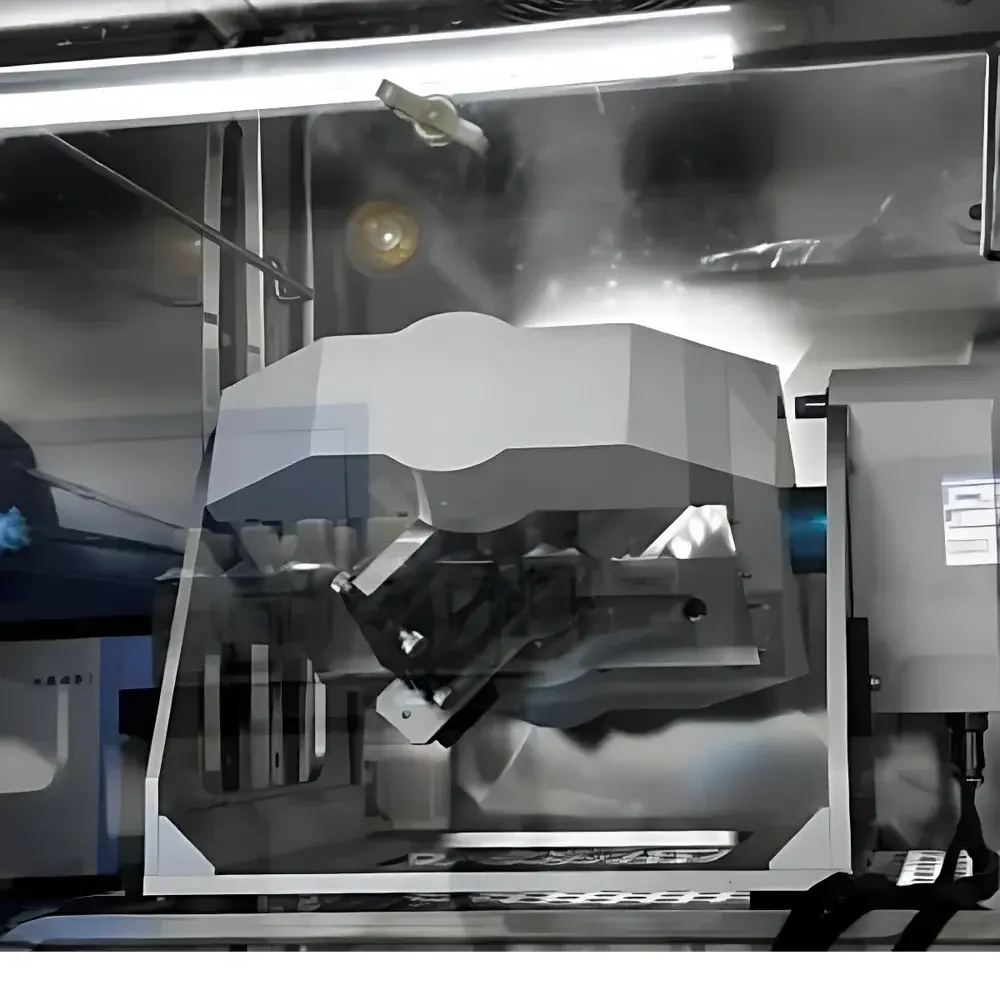
Kirkstall Kilby Gravity Microgravity Microbial Culture System
| Brand | Kirkstall |
|---|---|
| Origin | Beijing, China |
| Manufacturer Type | Authorized Distributor |
| Country of Origin | China |
| Model | Kilby Gravity |
| Price | USD 2,800 (FOB Beijing) |
Overview
The Kirkstall Kilby Gravity Microgravity Microbial Culture System is an engineered ground-based platform designed to simulate the low-shear, near-weightless fluid dynamics characteristic of true microgravity (≤10−3 g) environments. It operates on the principle of random positioning—rotating culture vessels along two independent axes at variable speeds and orientations—to continuously reorient gravitational vectors relative to biological samples. This disrupts sedimentation and hydrodynamic settling, inducing a sustained state of functional weightlessness at the cellular level. Unlike clinostats or RPMs with fixed-axis rotation, the Kilby Gravity system employs stochastic motion profiles validated against ISS-derived microgravity benchmarks for microbial physiology. It is specifically optimized for prokaryotic and eukaryotic microorganisms—including Gram-positive and Gram-negative bacteria, yeasts, and filamentous fungi—enabling reproducible investigation of gravity-dependent phenotypic responses without orbital launch.
Key Features
- Stochastic dual-axis random positioning mechanism with programmable angular velocity (0.5–60 rpm per axis) and tilt range (±90°), ensuring uniform vector averaging over time
- Modular chamber architecture supporting standardized sterile vessels: 15–50 mL conical tubes, 100 mm Petri dishes, multi-well plates (6–96-well), and custom bioreactor inserts up to 250 mL working volume
- Integrated temperature control (ambient +5°C to 45°C, ±0.3°C stability) with optional CO2 regulation (0–20% v/v, ±0.2%) for aerobic/anaerobic compatibility
- Real-time monitoring interface with USB-C data logging for rotation profile, temperature, and ambient humidity (optional sensor add-on)
- CE-compliant electrical safety and ISO 13485-aligned mechanical design; fully autoclavable sample carriers and stainless-steel chassis
Sample Compatibility & Compliance
The Kilby Gravity system accommodates suspension cultures (liquid broth), biofilm-forming substrates (e.g., polycarbonate membranes, silicone elastomer surfaces), and solid-phase agar-based assays. It supports standard microbiological media including LB, TSB, YPD, and minimal M9 formulations. All wetted components are USP Class VI-certified and compatible with ethanol, isopropanol, and hydrogen peroxide vapor sterilization. The system meets ASTM E2927-22 for ground-based microgravity simulation validation protocols and is referenced in NASA’s Biological Research in Canisters (BRIC) ground analog guidelines. Data acquisition complies with ALCOA+ principles (Attributable, Legible, Contemporaneous, Original, Accurate) and supports audit trails required under GLP and ISO/IEC 17025 frameworks.
Software & Data Management
Control and scheduling are managed via Kirkstall’s GravityLink™ desktop application (Windows/macOS), enabling creation of multi-step experimental protocols—including ramped rotation sequences, timed temperature shifts, and synchronized sampling triggers. Raw motion logs (timestamped axis position, speed, acceleration) are exported in CSV/JSON formats with embedded metadata (user ID, experiment ID, vessel ID). The software includes built-in compliance modules for 21 CFR Part 11 readiness: electronic signatures, role-based access control, and immutable audit trails for all parameter changes and run executions. Exported datasets integrate natively with common analysis platforms (R, Python pandas, GraphPad Prism) for downstream statistical modeling of growth kinetics, gene expression correlation, and metabolic flux analysis.
Applications
- Microbial pathogenesis studies: Quantifying changes in virulence factor expression (e.g., type III secretion systems), biofilm architecture (via confocal imaging post-culture), and antibiotic minimum inhibitory concentration (MIC) shifts under simulated microgravity
- Space biomanufacturing process development: Screening strain variants for enhanced secondary metabolite titers (e.g., cephalosporins, lipopeptides) and optimizing fed-batch parameters in low-shear conditions
- Life support system microbiology: Modeling microbial community succession in closed-loop water recycling units and evaluating biofouling resistance of antimicrobial surface coatings
- Gravitational biology mechanotransduction research: Investigating cytoskeletal reorganization, ribosomal RNA transcription rates, and oxidative stress response pathways using qRT-PCR and redox-sensitive fluorescent probes
- Pre-flight experiment validation: Generating ground-truth baselines for ISS experiments under NASA’s CASIS or ESA’s ELIPS programs
FAQ
How does Kilby Gravity differ from a clinostat or rotating wall vessel (RWV)?
Unlike single-axis clinostats or laminar-flow RWVs, Kilby Gravity uses randomized dual-axis motion to eliminate directional bias in residual gravity vectors—achieving lower effective g-levels (<10−3 g) with higher temporal uniformity across heterogeneous cell populations.
Can it be used for mammalian cell co-cultures with microbes?
Yes—its modular chamber supports transwell inserts and compartmentalized media configurations, enabling host-pathogen interaction studies under shared microgravity conditions while maintaining physical separation.
Is remote operation supported for long-duration experiments?
The system supports scheduled unattended runs up to 30 days with local data buffering; optional Ethernet/Wi-Fi module enables secure remote status monitoring and emergency stop via authenticated web interface.
What maintenance is required?
Annual calibration of motor encoders and thermal sensors is recommended; no consumables beyond standard lab-grade lubricants for bearing assemblies. Firmware updates are delivered via GravityLink™ auto-update channel.
Does Kirkstall provide application support for experimental design?
Yes—Kirkstall’s Application Scientists offer protocol optimization services, including gravity-dose response curve development, strain-specific rotation profiling, and integration with omics workflows (RNA-seq, LC-MS/MS).
Related Products





