
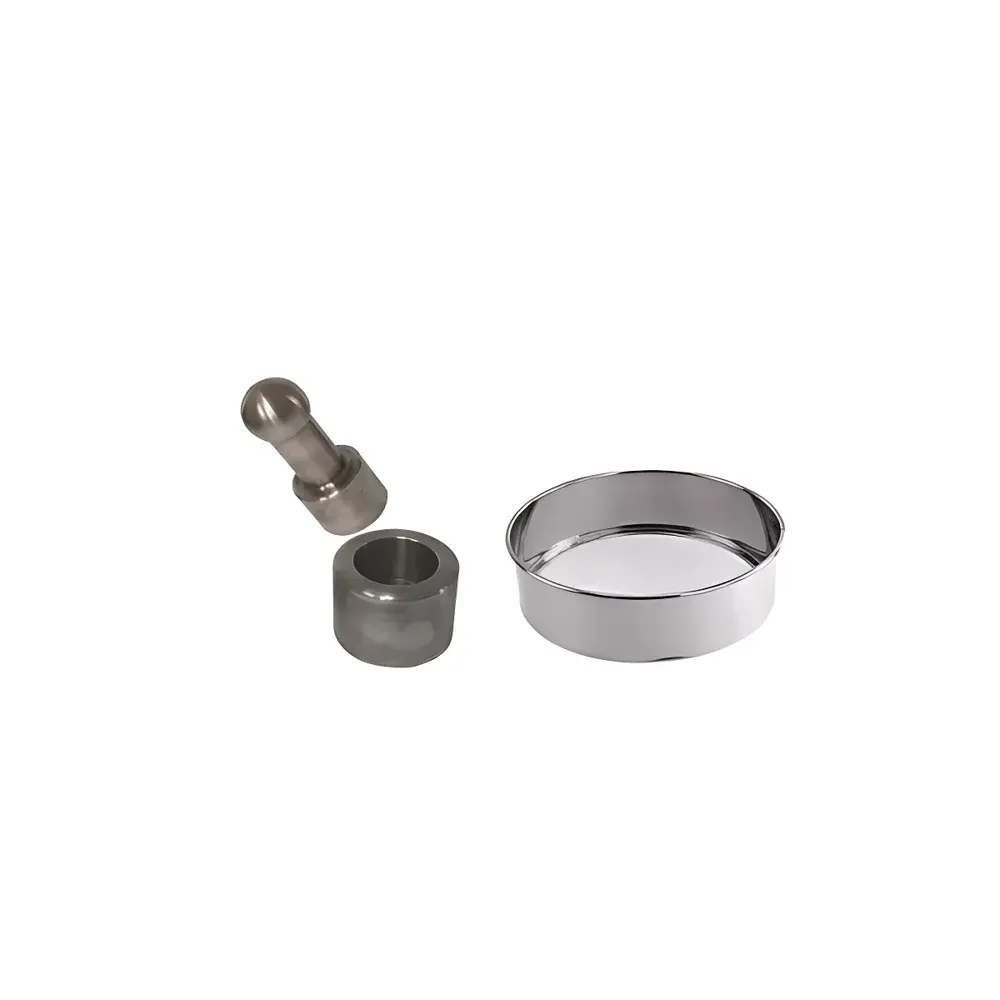
GBPI SFJ-121°C Glass Particle Water Resistance Tester
| Brand | GBPI |
|---|---|
| Origin | Guangdong, China |
| Manufacturer Type | Manufacturer |
| Origin Category | Domestic |
| Model | SFJ-121°C |
| Pricing | Upon Request |
Overview
The GBPI SFJ-121°C Glass Particle Water Resistance Tester is a precision-engineered laboratory instrument designed for the standardized assessment of hydrolytic resistance of glass containers and pharmaceutical packaging materials. It operates in strict accordance with the Chinese Pharmacopoeia (YBB00252003) method “Determination and Classification of Glass Particles’ Resistance to Water at 121°C”, as well as the parallel 98°C test protocol specified in related pharmacopeial standards. The instrument implements the controlled mechanical preparation and size-classification of glass particles—via quenched-steel mortar and pestle—and subsequent sieve fractionation using calibrated stainless-steel mesh screens. This process yields uniform, reproducible glass particle fractions (retained between 0.425 mm and 0.85 mm apertures) that are then subjected to autoclave-based extraction under defined temperature, time, and volume conditions. The resulting extract is titrated to quantify alkali leaching, enabling classification of glass types (e.g., Type I, II, III) per pharmacopeial grading criteria. Its design prioritizes metrological traceability, operator safety, and compliance-ready documentation—critical for QC laboratories serving pharmaceutical, biotech, and medical device manufacturing sectors.
Key Features
- Quenched-steel mortar and pestle set (1 pair), manufactured to YBB00252003 dimensional and hardness specifications for consistent particle generation without contamination or excessive fines.
- Four precision-stamped stainless-steel test sieves: 0.3 mm, 0.425 mm, 0.5 mm, and 0.85 mm nominal aperture sizes—certified for ISO 3310-1 compliance and supplied with traceable calibration documentation.
- Standardized 200 mm diameter sieve assembly including base plate, nested sieve stack, and cover—designed for compatibility with both manual shaking and optional electric vibratory sieve shakers (e.g., GBPI VSR series).
- Integrated sample handling workflow: single-strike crushing protocol ensures mechanical reproducibility; sieve retention geometry minimizes particle attrition during vibration.
- Corrosion-resistant construction: all wetted and contact surfaces utilize passivated austenitic stainless steel (AISI 304) or hardened tool steel meeting GMP-grade surface finish requirements (Ra ≤ 0.8 µm).
- Modular configuration supports dual-temperature validation: validated operation at both 121°C (for Type I/II glass classification) and 98°C (for supplementary evaluation per USP and EP 3.2.1).
Sample Compatibility & Compliance
The SFJ-121°C tester accommodates a broad range of glass pharmaceutical primary packaging: ampoules, vials (including lyophilized and liquid-filled), infusion bottles, dropper bottles, and bulk container glass. It is equally applicable to raw glass tubing and molded container fragments prior to final forming. All components conform to YBB00252003 physical and material requirements. The system supports full audit trail readiness when integrated into GLP/GMP environments—sieve calibration records, mortar usage logs, and particle batch IDs can be manually documented or linked to LIMS via standardized SOP templates. While the instrument itself does not perform titration, its output directly feeds into analytical workflows compliant with USP , EP 3.2.1, JP 17, and ISO 8536-1 Annex A.
Software & Data Management
This is a benchtop mechanical testing system with no embedded firmware or digital interface. Data integrity relies on procedural adherence and manual recordkeeping aligned with ALCOA+ principles (Attributable, Legible, Contemporaneous, Original, Accurate, Complete, Consistent, Enduring, Available). GBPI provides companion SOP templates—including sample log sheets, sieve calibration forms, and test report worksheets—that meet FDA 21 CFR Part 11 expectations when used with controlled document management systems. Optional integration with GBPI’s LabLink™ QC data platform (sold separately) enables electronic capture of sieve lot numbers, operator IDs, environmental conditions (lab temp/humidity), and final particle mass entries—supporting automated calculation of mean particle weight and classification logic per YBB00252003 Table 1.
Applications
- Pharmaceutical Quality Control: Routine classification of borosilicate (Type I), soda-lime (Type III), and treated soda-lime (Type II) glass containers per regulatory submission requirements.
- Supplier Qualification: Verification of incoming glass tubing or molded vial batches against contract specifications before sterilization and filling line release.
- Process Development: Evaluation of annealing cycle effects on surface hydrolysis resistance during glass container manufacturing.
- Stability Studies: Monitoring long-term chemical interaction between glass and drug product formulations under accelerated aging conditions.
- Regulatory Audits: Providing physically traceable evidence of compliance during inspections by NMPA, FDA, EMA, or PMDA.
FAQ
What standards does the SFJ-121°C tester comply with?
It is engineered specifically to fulfill the apparatus and procedural requirements of YBB00252003, and is functionally compatible with USP , EP 3.2.1, and JP 17 methods for glass particle preparation.
Can the sieve set be recalibrated or certified?
Yes—each sieve set ships with a manufacturer’s certificate of conformance to ISO 3310-1. Third-party calibration services are available upon request, with NIST-traceable verification reports.
Is the mortar and pestle set subject to wear-related performance drift?
Quenched-steel components exhibit minimal wear over typical laboratory service life (≥5,000 crush cycles); however, visual inspection for pitting or rounding of pestle tip is recommended quarterly per internal SOP.
Does GBPI offer validation support for this instrument?
Yes—IQ/OQ documentation packages, including installation checklists, operational boundary testing protocols, and blank run acceptance criteria, are provided free of charge with purchase.
Are replacement sieves available in non-standard aperture sizes?
Custom apertures (e.g., 0.25 mm, 0.6 mm) can be manufactured upon request, subject to minimum order quantity and lead time confirmation.





