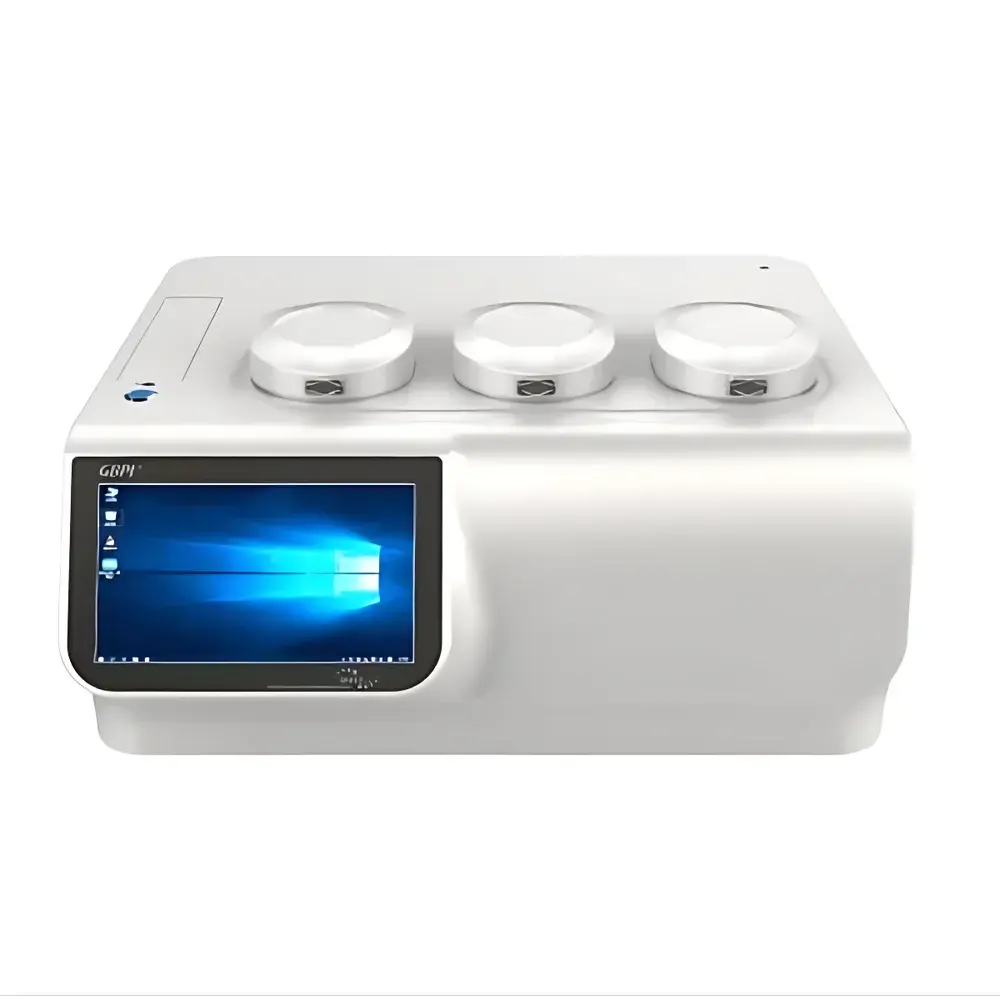
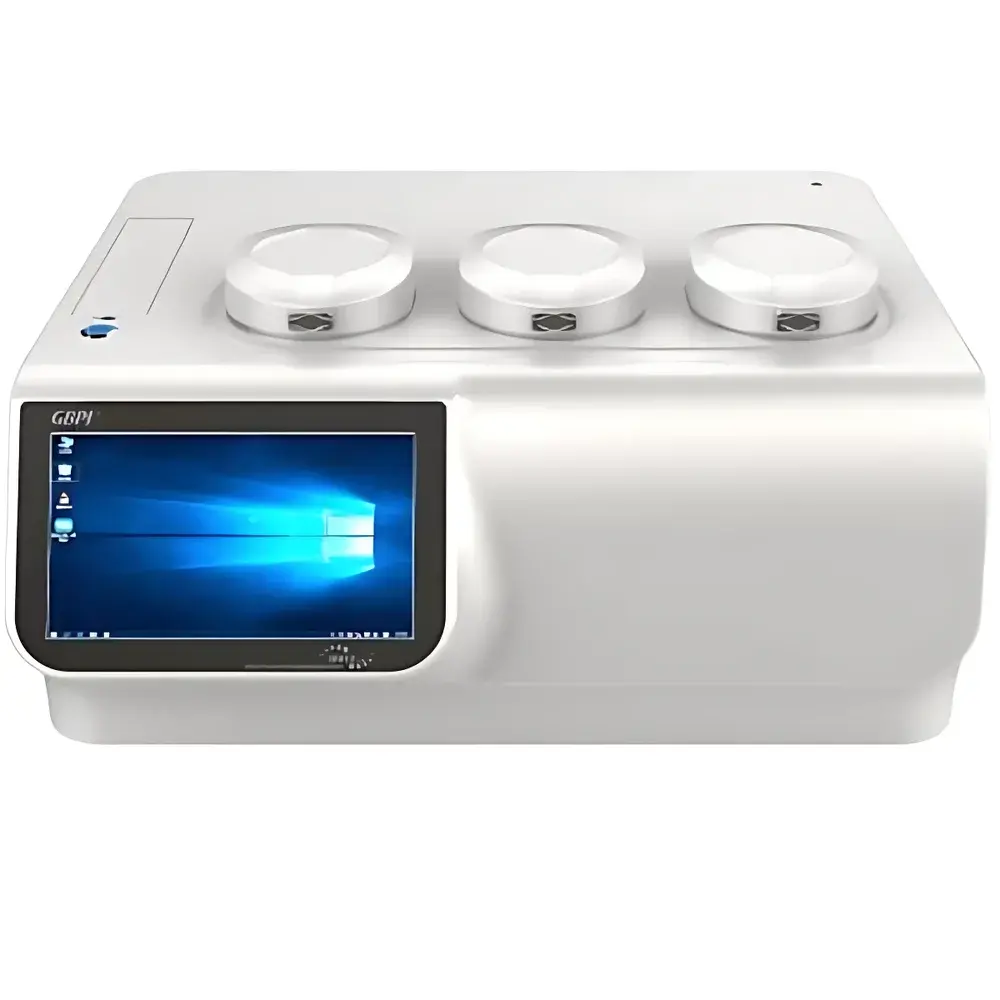
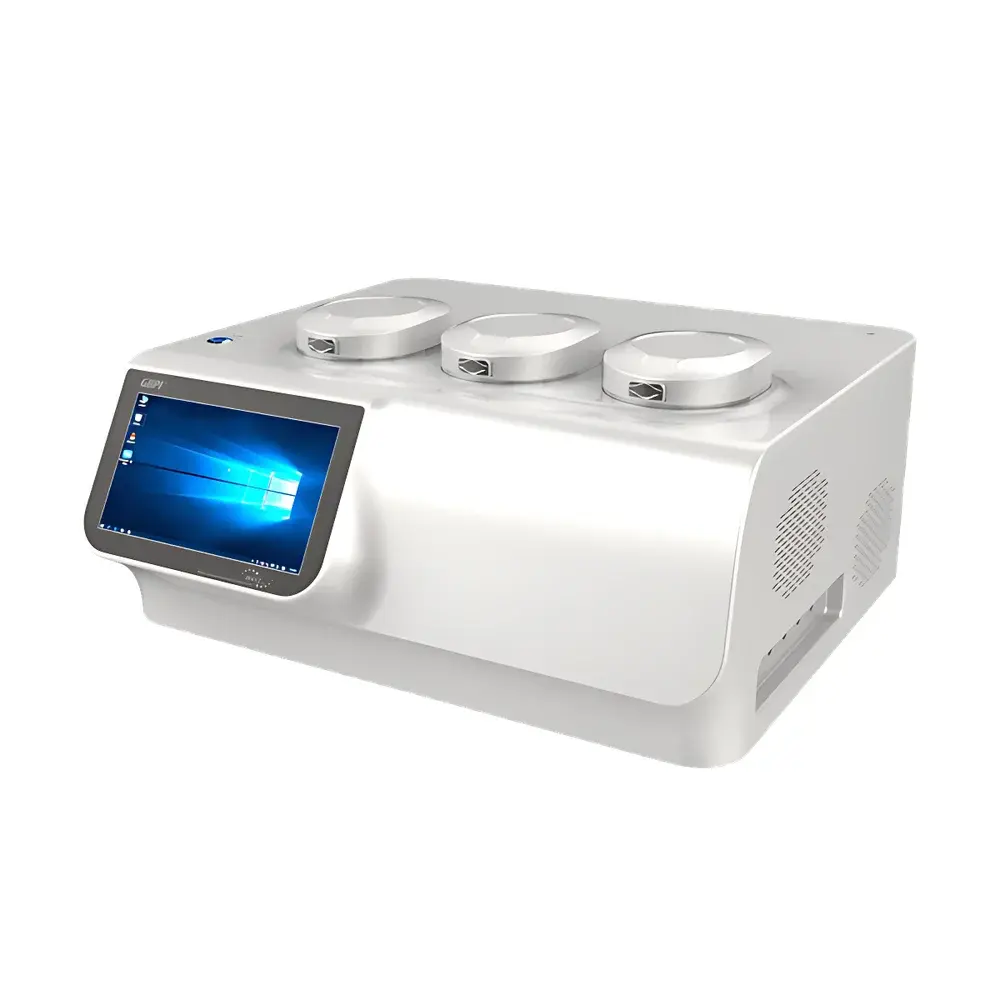
GBPI Y310 2.0 Coulometric Oxygen Transmission Rate (OTR) Analyzer
| Brand | GBPI |
|---|---|
| Origin | Guangdong, China |
| Manufacturer Type | OEM Manufacturer |
| Product Origin | Domestic (China) |
| Model | Y310 2.0 |
| Price | USD 55,000 (FOB Guangzhou) |
| Test Range | 0.01–1000 cm³/(m²·24h·0.1 MPa) |
| Repeatability | ±0.01 cm³/(m²·24h·0.1 MPa) or ±2%, whichever is greater |
| Resolution | 0.0001 cm³/(m²·24h·0.1 MPa) |
| Temperature Control Range | 15–45 °C |
| Temperature Accuracy | ±0.1 °C |
| Humidity Control Range | 0% RH, 5–90% RH, 100% RH |
| Humidity Accuracy | ±2% RH |
| Test Area | 50.24 cm² (customizable down to 0.785 cm²) |
| Specimen Diameter | Φ100 mm |
| Max Specimen Thickness | ≤3 mm |
| Test Stations | 3 independent chambers |
| Carrier Gas Pressure | ≥0.1 MPa |
| Carrier Gas Flow Rate | 5–100 mL/min |
| Pneumatic Clamping Pressure | ≥0.3 MPa |
| Dimensions | 700 × 655 × 390 mm |
| Weight | 60 kg |
| Power | 750 W |
| Supply | AC 220 V, 50 Hz |
Overview
The GBPI Y310 2.0 Coulometric Oxygen Transmission Rate (OTR) Analyzer is an engineered solution for precise, traceable, and regulatory-compliant measurement of oxygen permeation through packaging and barrier materials. It operates on the coulometric sensor principle—where oxygen molecules permeating across a conditioned specimen are carried by high-purity nitrogen (carrier gas) into a galvanic coulometric cell. The resulting electrical current, proportional to the molar flow rate of O₂, is quantified in real time and converted into standardized OTR values per ISO 15105-2, ASTM D3985, and GB/T 19789. Unlike optical or electrochemical alternatives, the coulometric method delivers absolute quantification without calibration drift, enabling long-term stability and metrological traceability to national standard reference materials (GBW(E)130497/130498). Designed for QC laboratories in regulated industries—including pharmaceuticals, medical devices, food packaging, and photovoltaics—the Y310 2.0 meets foundational requirements for method validation, instrument qualification (IQ/OQ/PQ), and data integrity under FDA 21 CFR Part 11 and EU Annex 11 frameworks.
Key Features
- Triple independent test chambers with synchronized environmental control—enabling parallel evaluation of three specimens under identical thermal and hygrometric conditions, improving throughput without compromising inter-chamber reproducibility.
- High-stability coulometric oxygen sensor with <0.0001 cm³/(m²·24h·0.1 MPa) resolution and <2% RSD repeatability—validated against NIST-traceable reference films and certified national standard substances.
- Dual-mode environmental control: semiconductor-based thermoelectric cooling/heating for ±0.1 °C temperature stability; dual-stream humidity generation for precise 0–100% RH control at ±2% RH accuracy—critical for evaluating moisture-sensitive barrier systems (e.g., PVDC-coated films or AlOx-coated PET).
- Pneumatically actuated clamping system with adjustable pressure (≥0.3 MPa) ensures uniform sealing force and eliminates operator-induced variability in specimen mounting—reducing leakage-related outliers and supporting GLP-aligned documentation.
- Integrated 11.6-inch capacitive touchscreen HMI running a purpose-built embedded OS—supporting full audit trail, role-based user permissions (admin/operator/auditor), electronic signatures, and automated report generation compliant with GMP Annex 11.
- Real-time six-channel visualization: OTR vs. time, temperature vs. time, RH vs. time, carrier gas flow vs. time, O₂ partial pressure vs. time, and sensor current vs. time—all exportable as CSV/PDF with timestamped metadata.
Sample Compatibility & Compliance
The Y310 2.0 accommodates planar and 3D specimens across diverse material classes: flat films (PET, PE, BOPP, PLA, PBAT), laminates (Alu/PET/PE, SiOx-coated PP), pharmaceutical solid dosage forms (PVC/PVDC blisters, cold-form foil), paperboard, metallized papers, solar backsheet composites, and rigid containers (via optional fixture kits for bottles, pouches, trays, and tubes). All test protocols align with internationally recognized standards—including ISO 15105-2 (plastic films), ASTM F1307 (packaged goods), ASTM F1927 (flexible barrier pouches), JIS K 7126-2, DIN 53380-3, and Chinese Pharmacopoeia 2025 Chapter 4007 “Gas Permeation Testing of Pharmaceutical Packaging Materials.” The system supports full compliance with USP , EP 2.6.19, and YBB 00082003 specifications for package integrity verification in sterile and controlled-release product development.
Software & Data Management
The embedded operating system implements ALCOA+ data governance principles: Attributable, Legible, Contemporaneous, Original, Accurate, Complete, Consistent, Enduring, and Available. Each test record includes immutable metadata: operator ID, timestamp, environmental logs, sensor diagnostics, raw current traces, and final OTR calculation parameters. Audit trails capture all configuration changes, user logins, report exports, and electronic signature events. Reports are configurable per SOP—exportable as PDF (with digital signature), Excel (CSV), or XML—and support integration with LIMS via TCP/IP or USB. Optional cloud-enabled IoT platform allows remote access to instrument status, historical datasets, firmware updates, troubleshooting guides, and video tutorials—facilitating multi-site lab coordination and CAPA-driven continuous improvement.
Applications
This analyzer serves as a primary tool for barrier performance characterization in R&D, production QA, and regulatory submission workflows. Typical use cases include: validating oxygen barrier efficacy of blister packaging for moisture-sensitive biologics; benchmarking OTR shifts in compostable films under accelerated aging (40 °C/75% RH); verifying shelf-life predictions for retort pouches containing oxygen-sensitive nutraceuticals; assessing delamination risks in multilayer PVDF/Alu foils used in lithium-ion battery packaging; and qualifying EVOH content optimization in automotive fuel tanks. Its sub-0.01 cm³/(m²·24h·0.1 MPa) detection limit enables reliable testing of ultra-high-barrier substrates such as silicon oxide–coated PET or graphene-enhanced nanocomposites—making it suitable for next-generation flexible electronics encapsulation and OLED display packaging development.
FAQ
Does the Y310 2.0 require external PC operation?
No—it operates autonomously via its onboard touch interface and embedded OS. A PC is optional for advanced data aggregation, LIMS integration, or remote monitoring via the IoT platform.
What gases are required for operation?
High-purity oxygen (≥99.999%) and nitrogen (≥99.999%), each equipped with calibrated pressure regulators delivering 0–0.4 MPa output.
Can the instrument test non-planar packages like bottles or sachets?
Yes—using GBPI’s optional container test fixtures (sold separately), which adapt the chamber geometry to accommodate rigid and semi-rigid 3D packaging formats while maintaining seal integrity and flow dynamics.
Is calibration traceable to international standards?
Yes—calibration uses GBPI-certified national standard reference materials (GBW(E)130497/130498), issued by the State Administration for Market Regulation (SAMR), China, with full uncertainty budgets and certificate of analysis.
How is data integrity ensured during regulatory audits?
Through built-in 21 CFR Part 11 compliance: electronic signatures, user-level access control, immutable audit logs, and automatic backup of all raw sensor data and processed results to internal SSD storage.
Related Products