
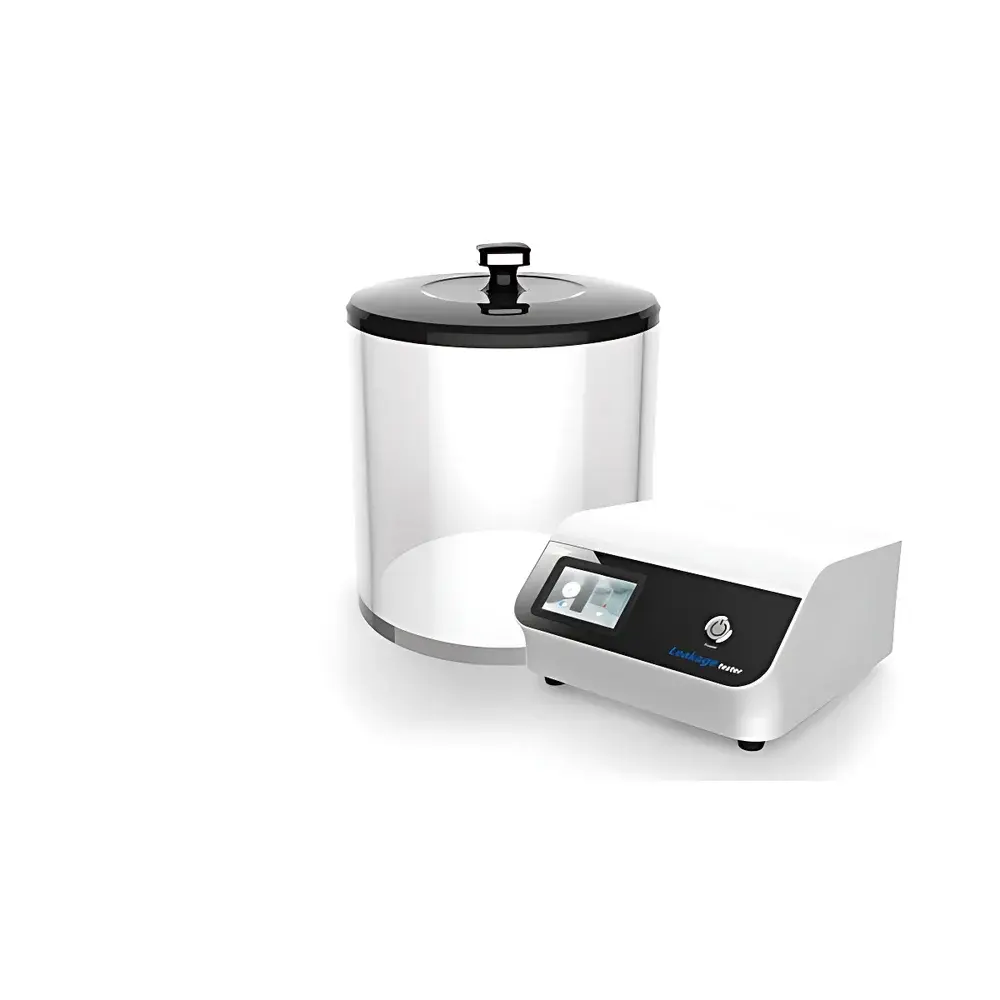
GBPI GB-M2C Vacuum Seal Integrity Tester (Negative Pressure Method)
| Brand | GBPI |
|---|---|
| Origin | Guangdong, China |
| Manufacturer Type | Direct Manufacturer |
| Origin Category | Domestic (China) |
| Model | GB-M2C |
| Price Range | USD 1,400 – 4,200 |
| Vacuum Range | 0 to −95 kPa |
| Vacuum Accuracy | ±1% of reading |
| Vacuum Hold Time | 0.1–60 min |
| Compressed Air Pressure | 0.4–0.6 MPa (4–6 kgf/cm²) |
| Air Consumption | 20 L/min |
| Power Supply | 220 V, 50 Hz |
| Instrument Dimensions | 317 × 305 × 170 mm |
| Vacuum Chamber Options | Ø300 × 300 mm (small), Ø450 × 350 mm (medium) |
| Net Weight | 12 kg |
| Operating Temperature | 10–40 °C |
Overview
The GBPI GB-M2C Vacuum Seal Integrity Tester is an engineered solution for non-destructive evaluation of seal integrity in flexible and semi-rigid packaging systems using the negative pressure (vacuum decay) method. It operates on the principle that a sealed package placed under controlled sub-atmospheric pressure will exhibit visible leakage—such as bubble emission from immersed specimens or deformation/delamination under vacuum—if seal defects exist. This methodology conforms to the physical basis of ASTM D3078–2002 (reapproved 2013) and GB/T 15171–1994, both of which define standardized procedures for detecting gross leaks in packaging intended for sterile, food-grade, or pharmaceutical applications. Unlike pressure decay or tracer gas methods, the GB-M2C leverages direct visual observation under vacuum, making it especially suitable for QC labs requiring rapid pass/fail assessment without specialized gas detection hardware.
Key Features
- Electro-pneumatic control architecture with integrated solenoid valves and high-stability vacuum regulators, enabling precise vacuum generation and hold across the full range of 0 to −95 kPa.
- ±1% vacuum accuracy (full-scale reading error), verified traceably against NIST-traceable pressure standards during factory calibration.
- Programmable vacuum hold duration from 0.1 to 60 minutes, supporting both short-duration screening and extended stability validation per regulatory guidance.
- Automated test sequence: vacuum draw → dwell → automatic venting and chamber re-pressurization — all executed without operator intervention after parameter input.
- Manual override capability including real-time pause/resume and emergency abort, ensuring procedural flexibility during qualification runs or failure investigation.
- Backlit LCD interface with intuitive menu navigation, displaying real-time vacuum level, elapsed hold time, system status, and fault codes (e.g., pressure deviation, air supply interruption).
- Dual-chamber compatibility: interchangeable vacuum chambers (Ø300 × 300 mm and Ø450 × 350 mm) accommodate diverse specimen geometries—from single sachets to multi-compartment pouches and blister cards.
Sample Compatibility & Compliance
The GB-M2C accepts a broad spectrum of soft-packaged goods, including laminated plastic pouches, aluminum foil composites, heat-sealed PE/PP bags, thermoformed trays, and peelable lidding foils. It supports post-stress evaluation of packages subjected to mechanical challenges such as drop testing (per ISTA 2A or ASTM D5276), compression (ASTM D642), or vibration exposure. All operational parameters and documentation workflows align with GLP-compliant laboratory practices. While the instrument itself does not generate electronic records meeting 21 CFR Part 11 requirements, its deterministic pneumatic logic and repeatable vacuum profiles facilitate audit-ready manual log entries and support IQ/OQ protocol execution. Test reports generated via external documentation systems may reference ASTM D3078 and GB/T 15171 as methodological foundations.
Software & Data Management
The GB-M2C operates as a standalone hardware platform with embedded firmware; no proprietary PC software is required for basic operation. However, its digital display outputs timestamped vacuum curves and cycle logs that can be manually transcribed into LIMS or Excel-based QA databases. For laboratories implementing paperless workflows, optional RS-232 or USB-to-serial interfaces (available upon request) enable ASCII-formatted data export—including start time, target vacuum, actual achieved vacuum, hold duration, and pass/fail flag—for integration with validated data acquisition platforms. Calibration certificates and maintenance logs are provided in English and Chinese, with metrological traceability documented to national standards.
Applications
- Final packaging release testing for medical device pouches prior to sterilization (ISO 11607-2 compliance support).
- Comparative seal strength assessment across different sealing temperatures, dwell times, or jaw configurations during packaging process development.
- Root cause analysis of seal failures following environmental stress testing (e.g., thermal cycling, humidity exposure).
- Supplier qualification audits where objective, standardized leak detection is mandated by contract specifications.
- Regulatory submission support for FDA 510(k) or NMPA registration dossiers requiring evidence of container-closure integrity verification.
- Internal training modules for packaging technicians on visual interpretation of leak signatures under vacuum conditions.
FAQ
Does the GB-M2C comply with ISO 11607-2 for medical packaging validation?
It supports the vacuum bubble test procedure referenced in Annex A of ISO 11607-2 as a means of gross leak detection; however, full validation requires supplementary documentation per Clause 6.4.
Can the instrument be used for rigid containers like HDPE bottles?
No — the GB-M2C is optimized for flexible and semi-rigid packaging. Rigid containers require alternative methods such as pressure decay or helium mass spectrometry.
Is calibration traceable to international standards?
Yes — factory calibration uses pressure transducers certified to ISO/IEC 17025-accredited laboratories, with certificate of calibration supplied.
What compressed air quality is required?
Clean, dry, oil-free air at 0.4–0.6 MPa is mandatory; use of a coalescing filter and refrigerated dryer is recommended to prevent valve clogging.
How often should preventive maintenance be performed?
Every 6 months under normal usage; includes O-ring inspection, vacuum line leak check, and solenoid valve function verification per the maintenance log included in the user manual.





