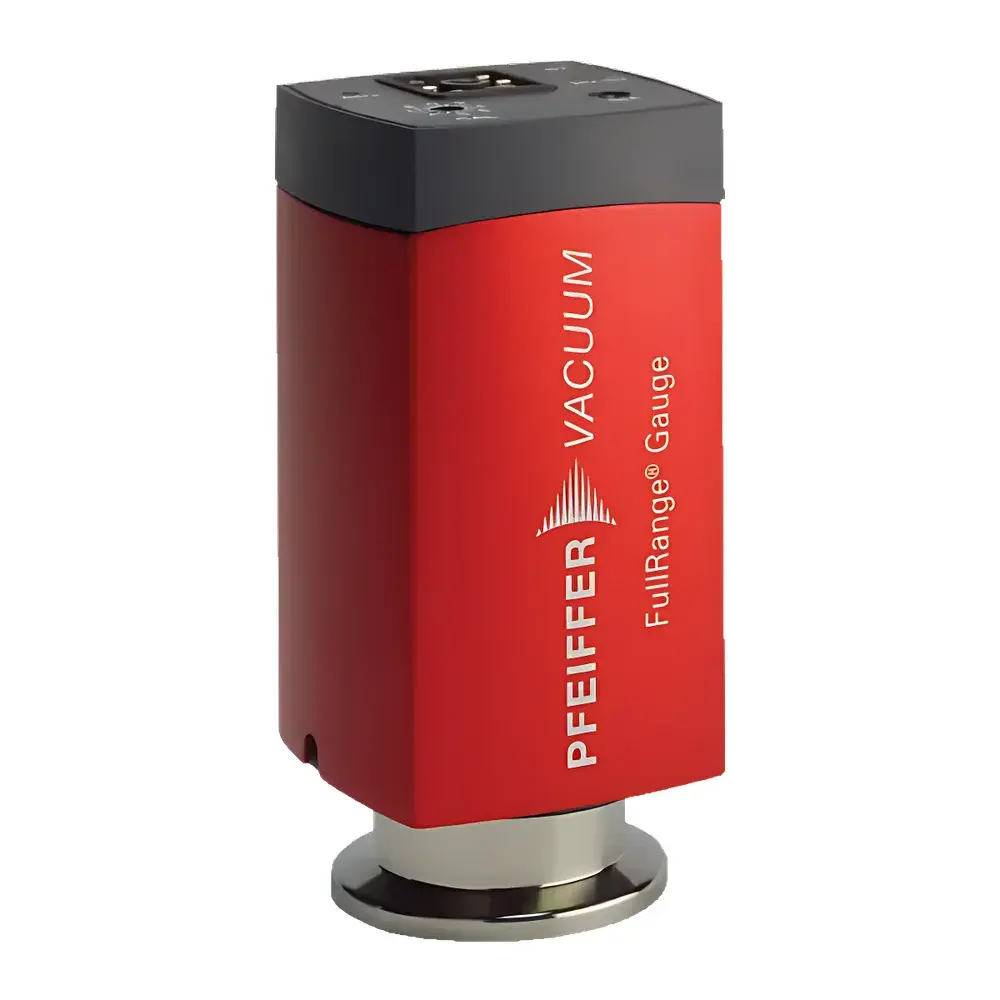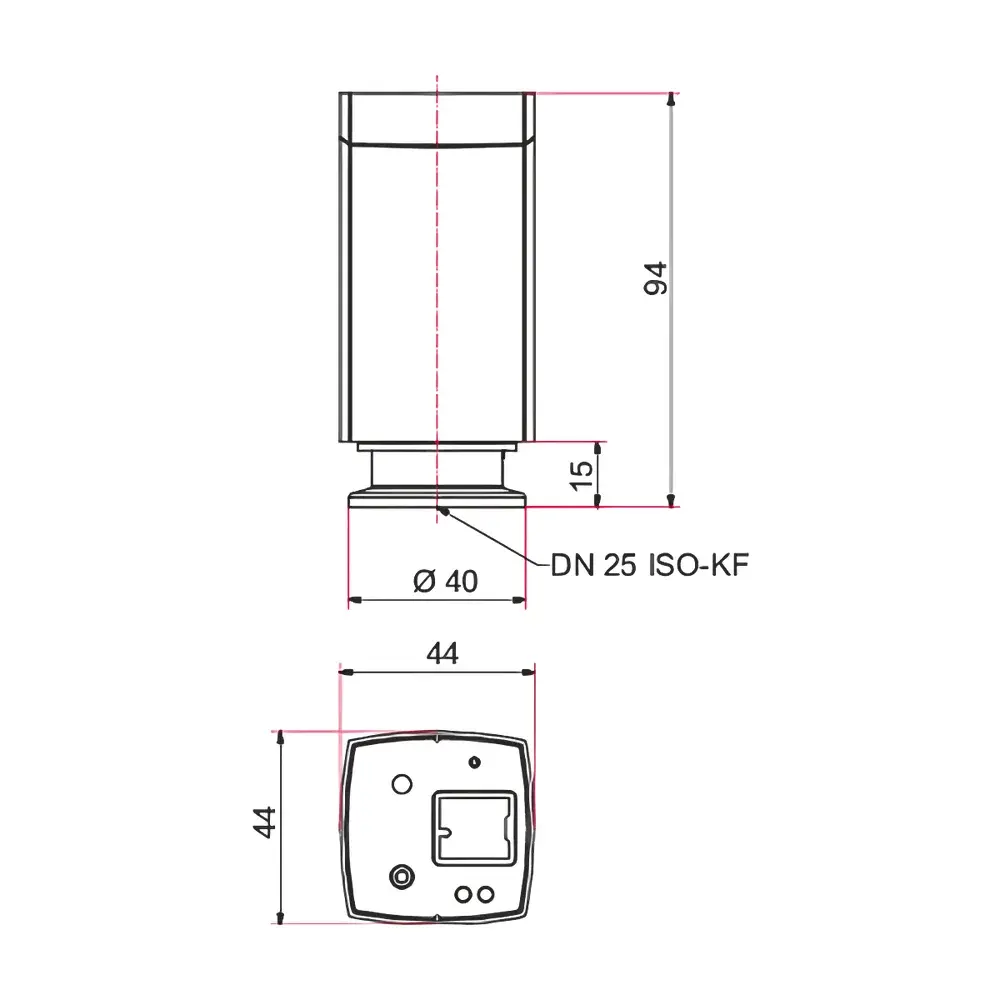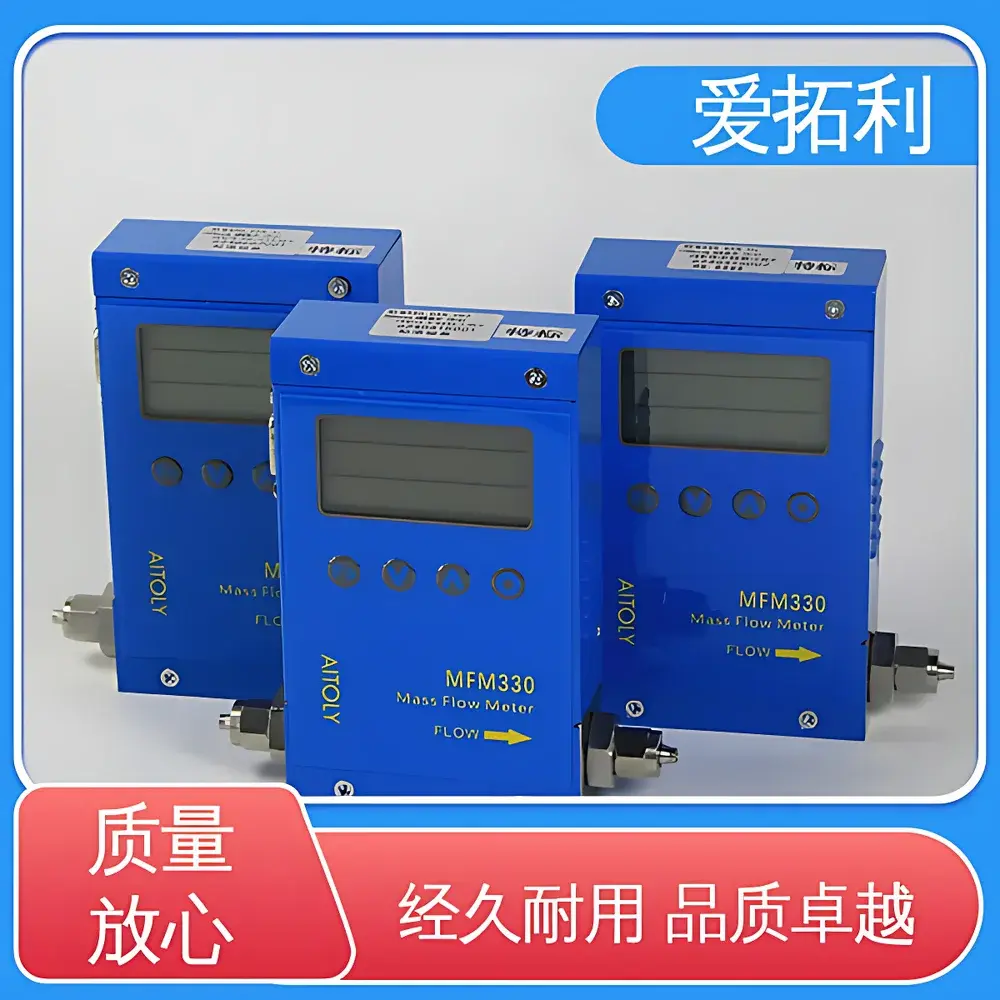
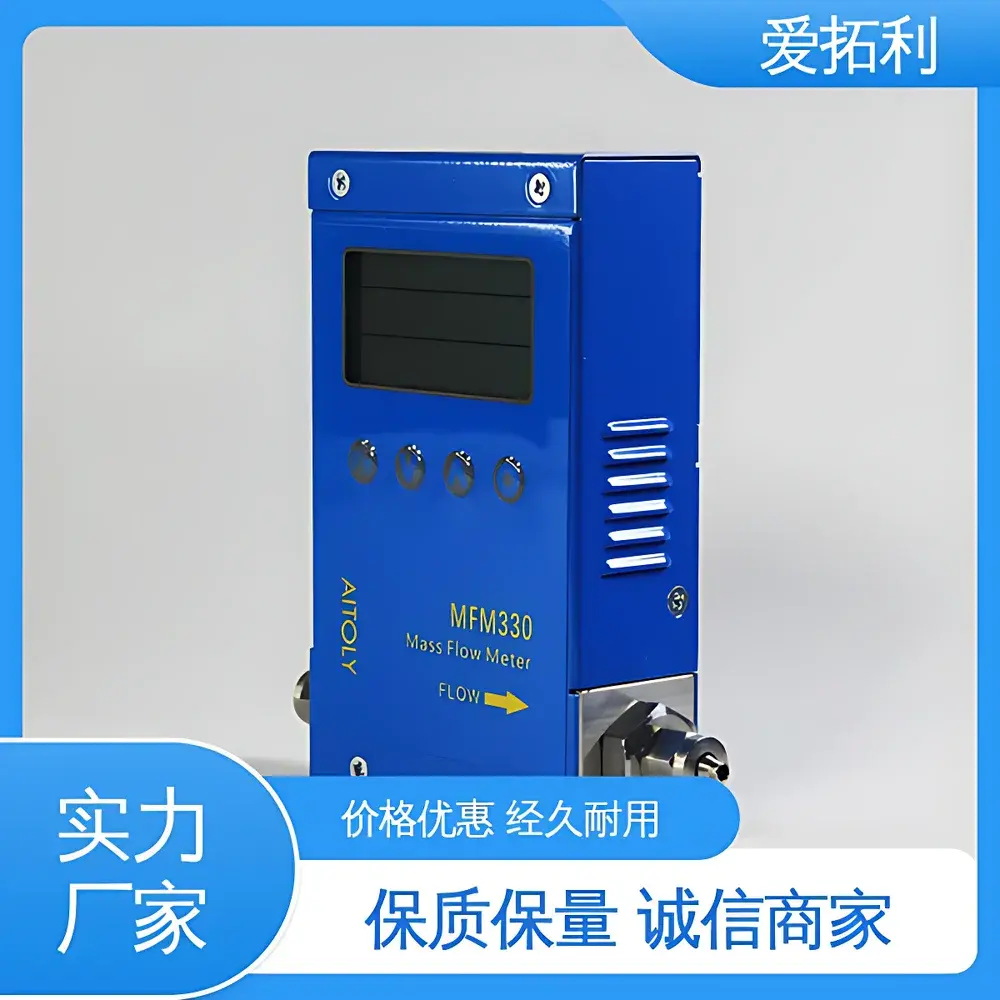
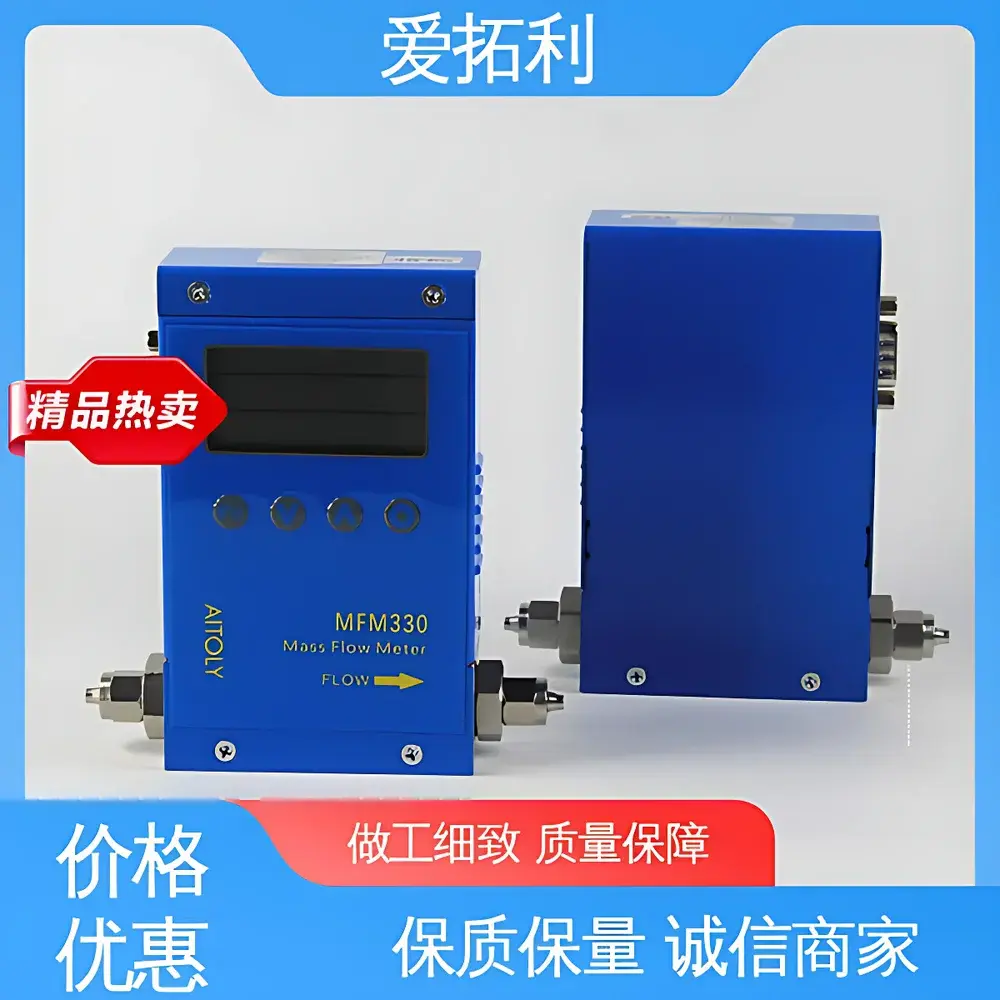
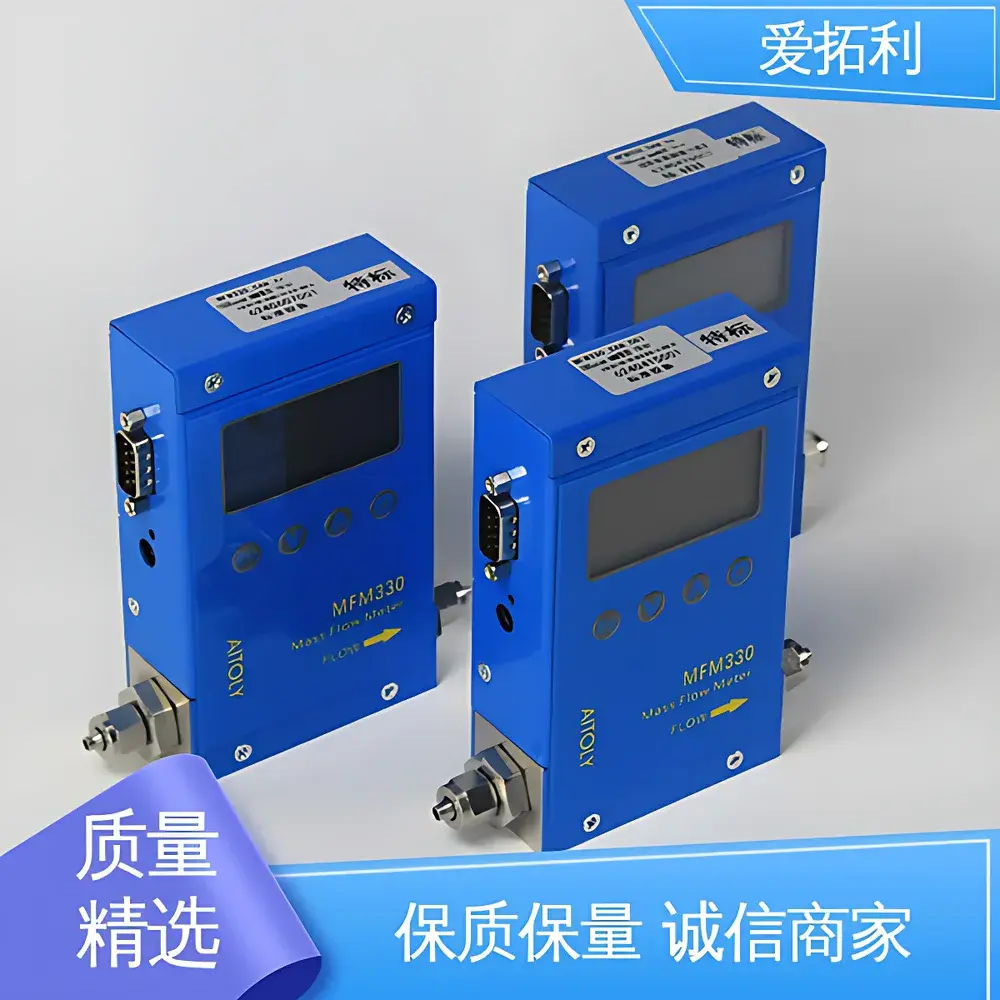

AITOLY MFM330 Thermal Mass Flow Meter
| Brand | AITOLY |
|---|---|
| Origin | Jiangsu, China |
| Manufacturer Type | Authorized Distributor |
| Product Category | Domestic |
| Model | AITOLY MFM330 |
| Price | USD 650 (FOB) |
| Type | Thermal Mass Flow Meter |
| Media | Clean, dry gases |
| Gas Compatibility | ≥98% purity (N₂, O₂, Ar, He, CO₂, air, and common gas mixtures) |
| Flow Ranges | 10–500 sccm / 0–500 slpm (selectable) |
| Measurement Range | 0.5–100% of Full Scale |
| Accuracy | ±0.5% FS |
| Repeatability | ±0.2% FS |
| Linearity | ±0.2% FS |
| Resolution | 0.001 sccm (<10 L/min), 1 sccm (10–50 L/min) |
| Sensor Response Time | <1 s |
| Warm-up Time | 5 min to T95, 30 min for optimal stability |
| Pressure Drop | <1 kPa at max flow |
| Operating Temperature | 0–50 °C |
| Output Signals | 0–5 VDC, 0–10 VDC, 4–20 mA (configurable) |
Overview
The AITOLY MFM330 is a compact, inline thermal mass flow meter engineered for direct, real-time measurement and control of mass flow rates of clean, dry gases in low-flow applications. Based on constant-temperature anemometry (CTA), the MFM330 employs a micro-machined platinum sensor element embedded within a stainless steel capillary tube. As gas flows across the heated sensor, convective heat transfer alters the temperature differential between upstream and downstream sensing points — a change linearly correlated to mass flow rate independent of gas temperature or absolute pressure. This principle eliminates the need for separate pressure and temperature compensation, delivering true mass flow output in standard cubic centimeters per minute (sccm) or standard liters per minute (slpm). Designed for integration into analytical instrumentation, semiconductor process tools, environmental monitoring systems, and laboratory gas delivery subsystems, the MFM330 operates reliably across a wide dynamic range (0.5–100% FS) with minimal pressure drop (<1 kPa), making it suitable for vacuum-compatible and low-backpressure environments.
Key Features
- True thermal mass flow measurement — no external temperature/pressure transducers required
- High-speed response (<1 s sensor time constant) enables closed-loop flow control in dynamic processes
- Excellent repeatability (±0.2% FS) and linearity (±0.2% FS) support GLP-compliant calibration traceability
- Low-pressure-drop capillary design minimizes system impact and avoids flow disturbance
- Configurable analog outputs (0–5 VDC, 0–10 VDC, 4–20 mA) compatible with PLCs, DAQ systems, and industrial controllers
- Optional integrated backlit LCD display with local readout, unit selection, and zero/span adjustment
- Stainless steel 316L wetted parts ensure chemical compatibility with inert and mildly corrosive gases (e.g., N₂, O₂, Ar, He, CO₂, synthetic air)
- Factory-calibrated for up to 10 pre-defined gas types; custom gas calibrations available upon request
Sample Compatibility & Compliance
The MFM330 is validated for use with clean, dry gases meeting ISO 8573-1 Class 4 or better (solid particle ≤15 µm, dew point ≤3 °C, oil content ≤0.1 mg/m³). It supports gas mixtures with ≥98% known composition (e.g., 95% N₂/5% H₂, 80% Ar/20% CH₄) when calibrated accordingly. The device complies with CE marking requirements under the EU Electromagnetic Compatibility Directive 2014/30/EU and Low Voltage Directive 2014/35/EU. While not intrinsically safe certified, it is rated for use in non-hazardous locations (IP65 enclosure optional). For regulated environments, the MFM330 supports audit-ready documentation packages aligned with ISO/IEC 17025 and ASTM D7213 (for gas flowmeter verification protocols).
Software & Data Management
The MFM330 does not require proprietary software for basic operation but supports configuration and diagnostics via optional USB-to-RS485 adapter and AITOLY FlowConfig Utility (Windows-based). This tool enables gas selection, zero calibration, span adjustment, output scaling, and firmware updates. All configuration changes are timestamped and stored in non-volatile memory. When integrated into larger systems, the analog outputs provide continuous data streams compatible with LabVIEW, MATLAB, or SCADA platforms. For GxP-regulated labs, optional digital communication modules (Modbus RTU over RS485) support 21 CFR Part 11-compliant electronic records when paired with validated host software — including user access control, audit trail generation, and electronic signature capability.
Applications
- Gas flow monitoring in GC carrier gas lines and detector make-up gas circuits
- Mass flow control in plasma etching and CVD reactor feed systems
- Leak testing and helium mass spectrometer calibration gas delivery
- Environmental chamber purge flow verification (ISO 16000-23)
- Calibration of secondary flow devices using gravimetric or piston-prover reference standards
- Research-scale fuel cell and electrolyzer gas stoichiometry management
- Medical device gas blending systems requiring precise O₂/N₂ ratio control
FAQ
Does the MFM330 require periodic recalibration?
Yes — annual recalibration is recommended for metrological continuity. Calibration intervals may be extended to 2 years under stable operating conditions and documented performance verification per ISO/IEC 17025 Annex A.
Can the MFM330 measure humidified or particulate-laden gases?
No — moisture condensation or particulate accumulation on the sensor surface will degrade accuracy and may cause irreversible drift. Use only with ISO 8573-1 Class 4 or cleaner gas streams.
Is gas-specific calibration necessary for mixed gases?
Yes — for mixtures deviating >2% from factory-calibrated compositions, a custom calibration certificate referencing the exact gas matrix is required to maintain ±0.5% FS accuracy.
What is the minimum measurable flow rate at full-scale range?
The lower limit is 0.5% of full scale (e.g., 0.05 sccm on a 10 sccm range), limited by resolution and signal-to-noise ratio — not by physical sensor cutoff.
Does the MFM330 support HART or Foundation Fieldbus communication?
No — only analog outputs and Modbus RTU (via optional module) are supported. HART and FF are not implemented due to power and protocol constraints inherent in low-power thermal sensor architecture.