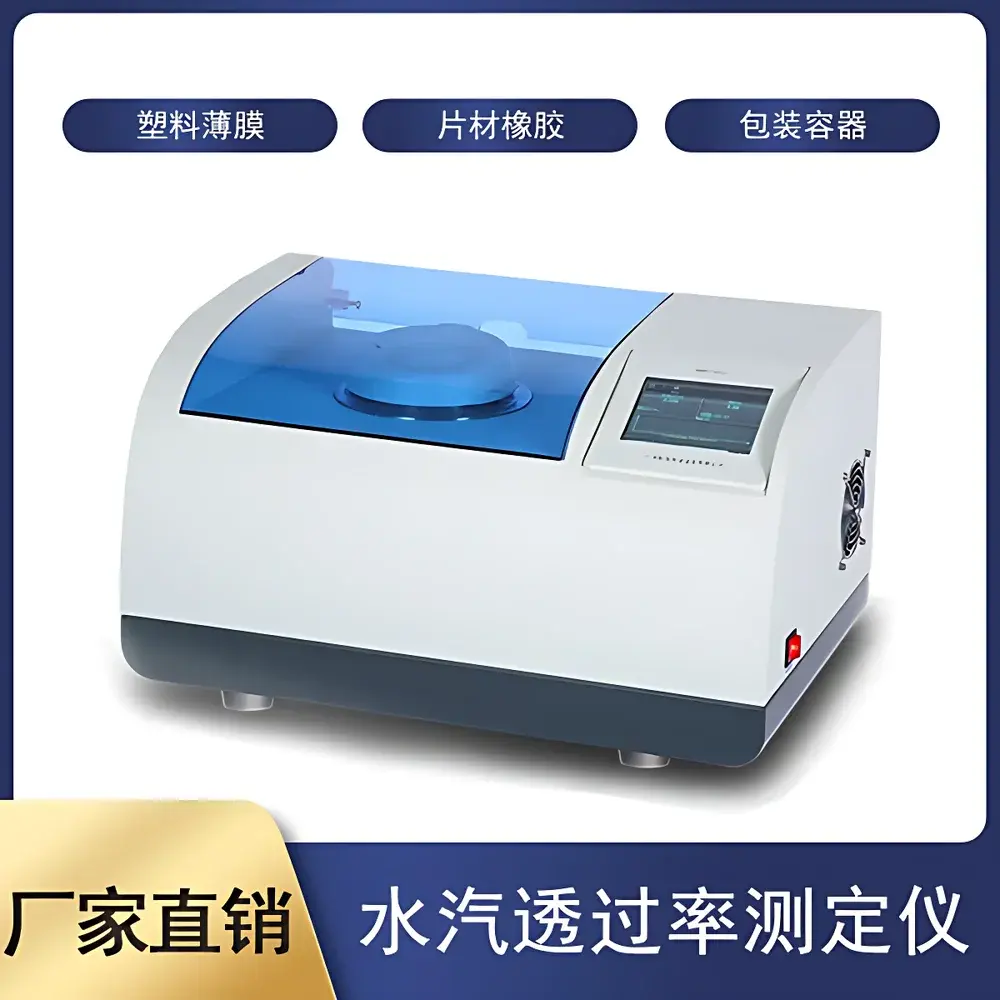
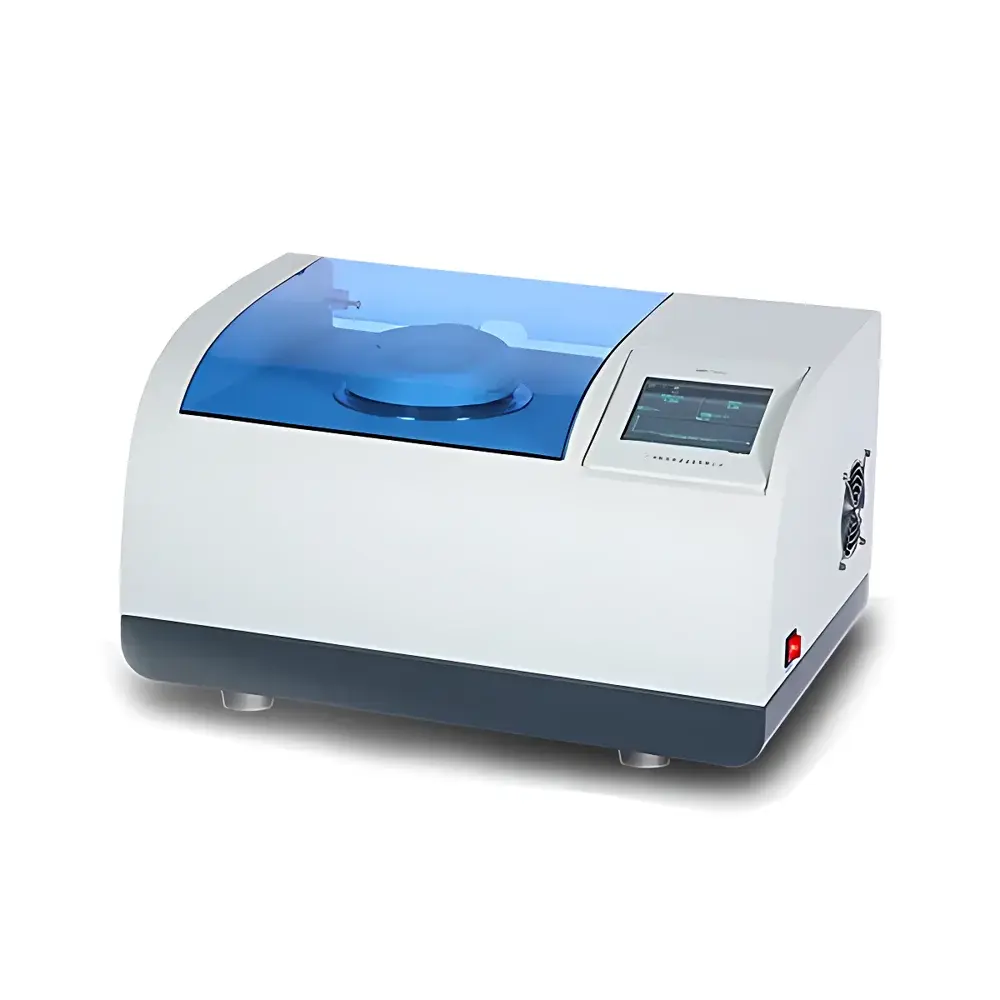
GBPI W201-G Electrolytic Water Vapor Transmission Rate (WVTR) Tester
| Brand | GBPI |
|---|---|
| Origin | Guangdong, China |
| Manufacturer Type | Direct Manufacturer |
| Country of Origin | China |
| Model | W201-G |
| Pricing | Upon Request |
| Measurement Principle | Electrolytic Sensor Detection |
| Compliance Standards | GB/T 21529, ISO 15106-3, DIN 53122-2, YBB 00092003-2015, ASTM E 398 |
| WVTR Range | 0.001–100 g/(m²·24h) |
| Resolution | 0.001 g/(m²·24h) |
| Temperature Control Range | 15–45 °C (optional up to 60 °C) |
| Temp. Accuracy | ±0.1 °C |
| Humidity Control Range | 0 %RH, 30–90 %RH |
| RH Accuracy | ±1 %RH |
| Sample Size | Ø100 mm (test area: 50.24 cm²) |
| Max. Sample Thickness | ≤2 mm |
| Carrier Gas | Ultra-high-purity N₂ (99.999 %), ≥0.1 MPa |
| Gas Flow Rate | 0–100 mL/min |
| Dual Test Chambers | Independent or cross-testing capability |
| Power Supply | 220 V, 50 Hz (110 V optional) |
| Dimensions | 610 × 550 × 400 mm |
| Weight | 80 kg |
| Power Consumption | 500 W |
Overview
The GBPI W201-G Electrolytic Water Vapor Transmission Rate (WVTR) Tester is an engineered analytical instrument designed for precise, trace-level quantification of water vapor permeation through packaging and barrier materials under controlled environmental conditions. It operates on the principle of electrolytic detection—where water vapor molecules permeating through a conditioned test specimen are carried by a dry nitrogen carrier gas stream into a proprietary dual-electrode electrolytic sensor. This sensor generates a current proportional to the water vapor concentration, enabling high-sensitivity, real-time calculation of WVTR in accordance with internationally recognized gravimetric and sensor-based methodologies. The system is purpose-built for laboratories requiring regulatory-compliant, repeatable barrier performance evaluation across flexible films, rigid sheets, coated substrates, and sealed containers—particularly where low-permeability materials (e.g., metallized PET, PVDC-coated paperboard, or solar backsheet laminates) demand sub-mg-level resolution and long-term measurement stability.
Key Features
- Electromagnetic precision temperature control with programmable stepwise ramping; achieves ±0.1 °C stability across 15–45 °C (extendable to 60 °C upon configuration), eliminating external chiller requirements.
- Dual-stream humidity regulation using mass-flow-controlled humidified and desiccated gas paths—ensuring stable, reproducible RH setpoints from 0 %RH (dry reference) to 90 %RH with ±1 %RH accuracy.
- Two-point calibration protocol: certified standard membranes (NIST-traceable) and certified reference gases enable traceable instrument validation per ISO/IEC 17025 laboratory practice.
- Automated test termination logic based on signal convergence criteria and user-defined endpoint thresholds—reducing operator dependency and inter-test variability.
- Integrated safety architecture: over-range detection, power-failure data retention (non-volatile memory), real-time error diagnostics, and tactile operational feedback for misalignment or seal failure.
- Modular software interface with independent functional modules—baseline stabilization, parameter configuration, real-time curve overlay (WVTR, RH, T, sensor current), statistical trend analysis, and GLP-compliant report generation.
- Standalone operation mode: embedded ARM-based controller allows full test execution—including data acquisition, storage, and local display—without host PC connection.
- Dual-chamber design supports concurrent testing of two dissimilar specimens (e.g., comparative study of aluminum foil vs. SiOx-coated PET) or sequential validation using identical samples for repeatability assessment.
- USB-host interface enables firmware updates, encrypted data export (CSV/PDF), and remote diagnostic logging—compatible with Windows-based LIMS integration via RS-232 or TCP/IP (optional).
Sample Compatibility & Compliance
The W201-G accommodates flat, flexible, and semi-rigid specimens up to 2 mm thick and Ø100 mm in diameter (50.24 cm² effective area), including multilayer coextrusions, vacuum-metallized films, ceramic-coated foils, and fiber-reinforced composites. For container testing, optional fixtures support bottles (PET, HDPE), pouches (stand-up, retort), blister packs, and tubs—enabling whole-package WVTR evaluation per ASTM F1249 and ISO 15106-3 Annex C. All measurement protocols align with pharmacopeial standards (YBB 00092003-2015), food-contact regulations (GB/T 21529), and medical packaging guidance (ISO 11607-1). Data audit trails comply with FDA 21 CFR Part 11 requirements when used with validated software configurations, supporting GMP/GLP audits for pharmaceutical primary packaging qualification.
Software & Data Management
GBPI’s proprietary WinWVTR software provides ISO 17025-aligned data handling: automatic timestamped metadata capture (operator ID, ambient lab conditions, calibration history), configurable pass/fail limits, statistical process control (SPC) charts, and customizable PDF reports with embedded digital signatures. Raw sensor output (nA-level current), calculated WVTR, chamber RH/T profiles, and carrier gas flow logs are stored in binary format with SHA-256 checksum integrity verification. Export options include CSV for third-party statistical analysis (e.g., JMP, Minitab) and XML for enterprise LIMS ingestion. Audit trail functionality records all user actions—including parameter edits, calibration events, and report modifications—with immutable timestamps and role-based access controls.
Applications
- Barrier film development: quantifying moisture ingress in OLED encapsulation films, lithium-ion battery separators, and agricultural mulch films.
- Pharmaceutical packaging: validating shelf-life predictions for blister cavities, sachets, and IV bags per USP and ICH Q5C guidelines.
- Food packaging R&D: benchmarking moisture transmission in snack wrappers, coffee laminates, and frozen meal trays under accelerated aging conditions.
- Renewable energy materials: assessing long-term hydrolytic stability of photovoltaic backsheet polymers (e.g., ETFE, PVF) per IEC 61215-2 MQT10.
- Automotive components: evaluating fuel vapor barrier integrity of polyethylene fuel tanks per SAE J1737.
- Medical device packaging: verifying seal integrity and material compatibility for sterile barrier systems (SBS) per ISO 11607-2.
- Consumer electronics: characterizing moisture sensitivity of flexible printed circuit board (FPCB) cover films and touch sensor overlays.
FAQ
What carrier gas is required, and why must it be ultra-high-purity nitrogen?
Ultra-high-purity nitrogen (99.999 %) is mandatory to prevent sensor poisoning from trace O₂, CO₂, or hydrocarbons that interfere with electrolytic water detection. Impurities cause baseline drift and reduce sensor lifetime.
Can the W201-G measure oxygen transmission rate (OTR)?
No—the W201-G is optimized exclusively for water vapor detection via electrolytic sensing. For OTR, GBPI offers parallel instrumentation based on coulometric or MOCON-modulated IR principles.
Is calibration traceable to national metrology institutes?
Yes—standard membranes are certified against NIST SRM 1477 (polyethylene film) and UKAS-accredited reference materials; gas-phase calibration uses gravimetrically prepared humidity standards traceable to BIPM.
How does the dual-chamber configuration improve throughput?
Independent chamber control allows simultaneous conditioning of one sample while measuring another—or running duplicate tests under identical conditions to satisfy ISO 5725 repeatability requirements.
Does the system support 21 CFR Part 11 compliance out-of-the-box?
Full Part 11 compliance requires installation of GBPI’s validated software package with electronic signature modules, audit trail encryption, and documented IQ/OQ/PQ protocols—available as an optional qualification kit.