
Teclis TRACKER H High-Temperature & High-Pressure Interfacial Rheometer (Tensiometer)
| Brand | Teclis Scientific |
|---|---|
| Origin | France |
| Model | TRACKER H |
| Measurement Range | 0.1–1000 mN/m |
| Resolution | 0.01 mN/m |
| Accuracy | ±0.01 mN/m |
| Temperature Range | 0–200 °C |
| Temperature Accuracy | ±0.5 °C |
| Measurement Method | Pendant Drop Method |
| Max Pressure | 200 bar |
| Max Temperature | 200 °C |
| Compatible Gases | Supercritical CO₂, N₂, Ar, air, CO₂ |
| Contact Angle Range | 0–180° |
| Contact Angle Accuracy | ±0.1° |
| Dynamic Contact Angle Accuracy | ±0.1° |
Overview
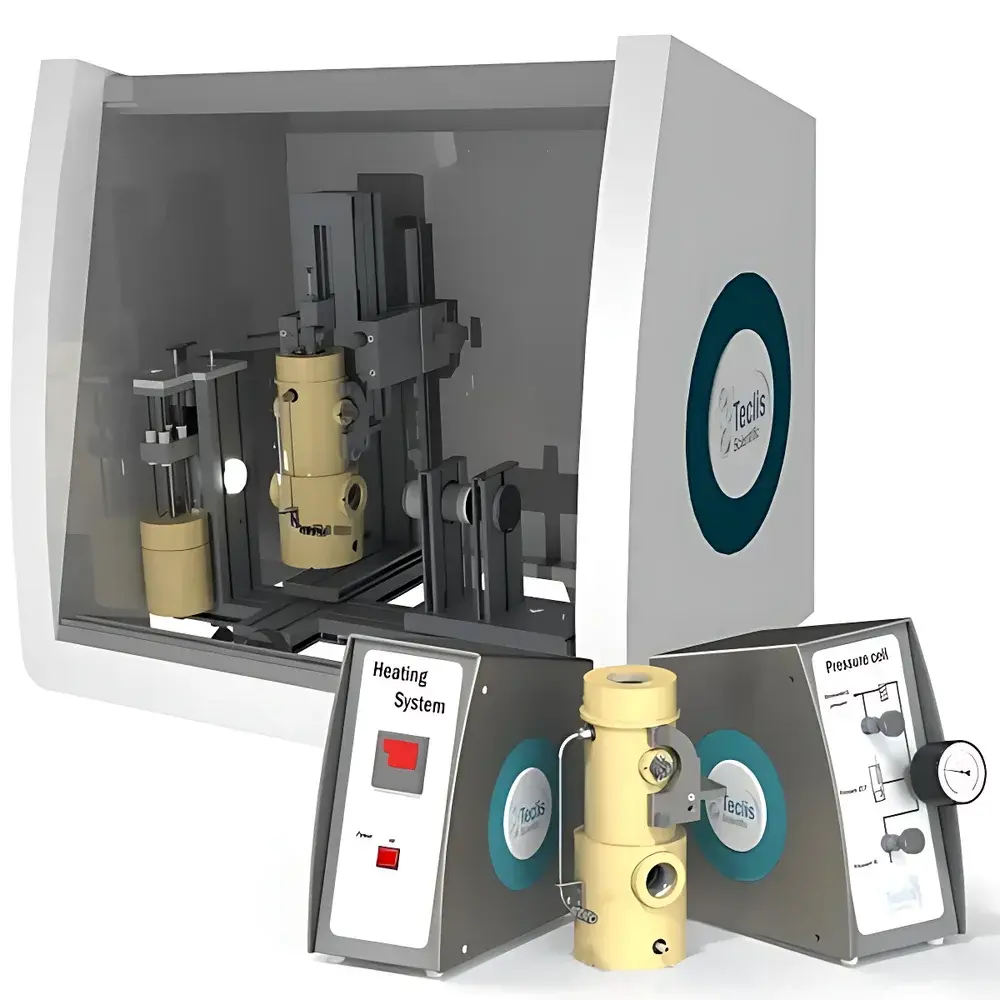
The Teclis TRACKER H High-Temperature & High-Pressure Interfacial Rheometer is an advanced, fully automated pendant drop instrument engineered for quantitative characterization of interfacial viscoelasticity and thermodynamic interfacial properties under extreme process-relevant conditions. Based on axisymmetric drop shape analysis (ADSA), the system precisely determines interfacial tension, dynamic contact angles, and interfacial rheological moduli (storage modulus G’, loss modulus G”) at liquid–liquid, gas–liquid, and solid–liquid interfaces. Its integrated pressure chamber—rated to 200 bar and 200 °C—enables direct measurement in supercritical fluids (e.g., scCO₂), high-pressure hydrocarbon systems, molten polymer environments, and elevated-temperature aqueous formulations. Unlike conventional tensiometers limited to ambient conditions, the TRACKER H maintains metrological traceability across wide P–T domains through in-situ temperature monitoring via calibrated external Pt100 probes and real-time pressure feedback from digital transducers.
Key Features
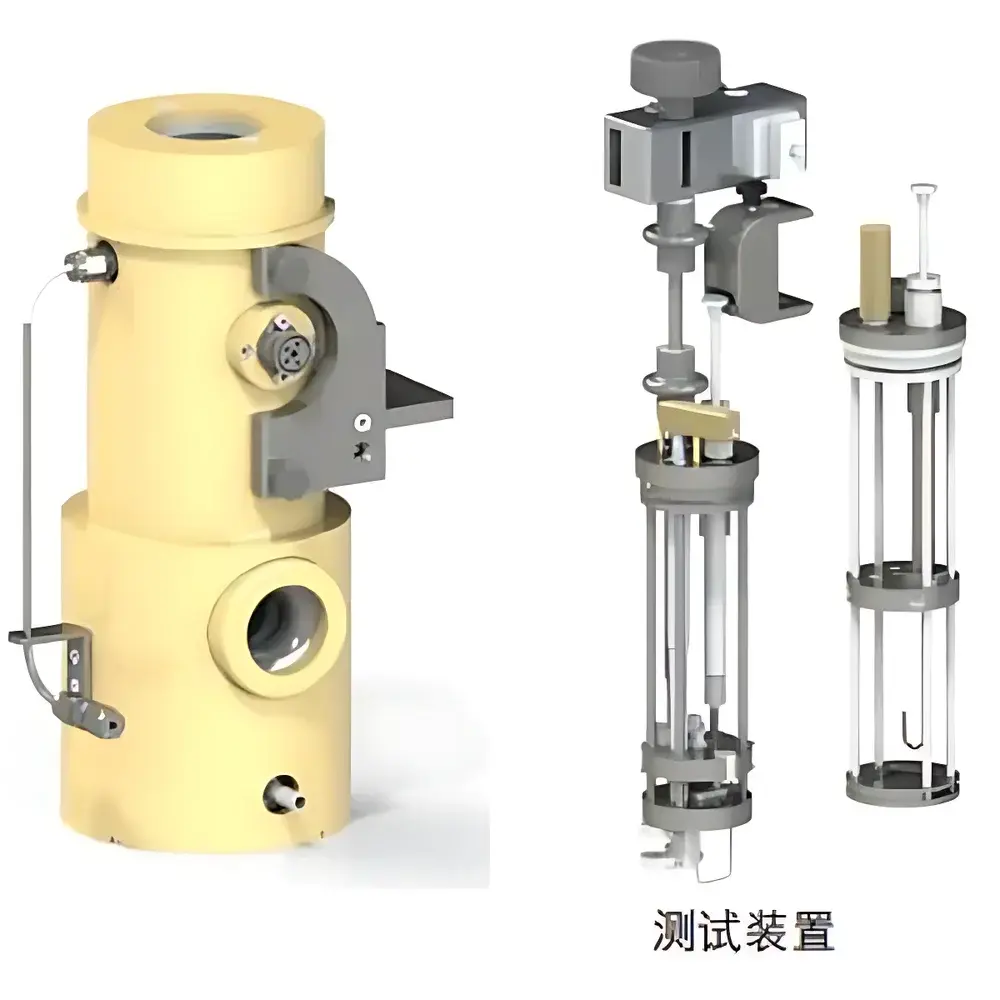
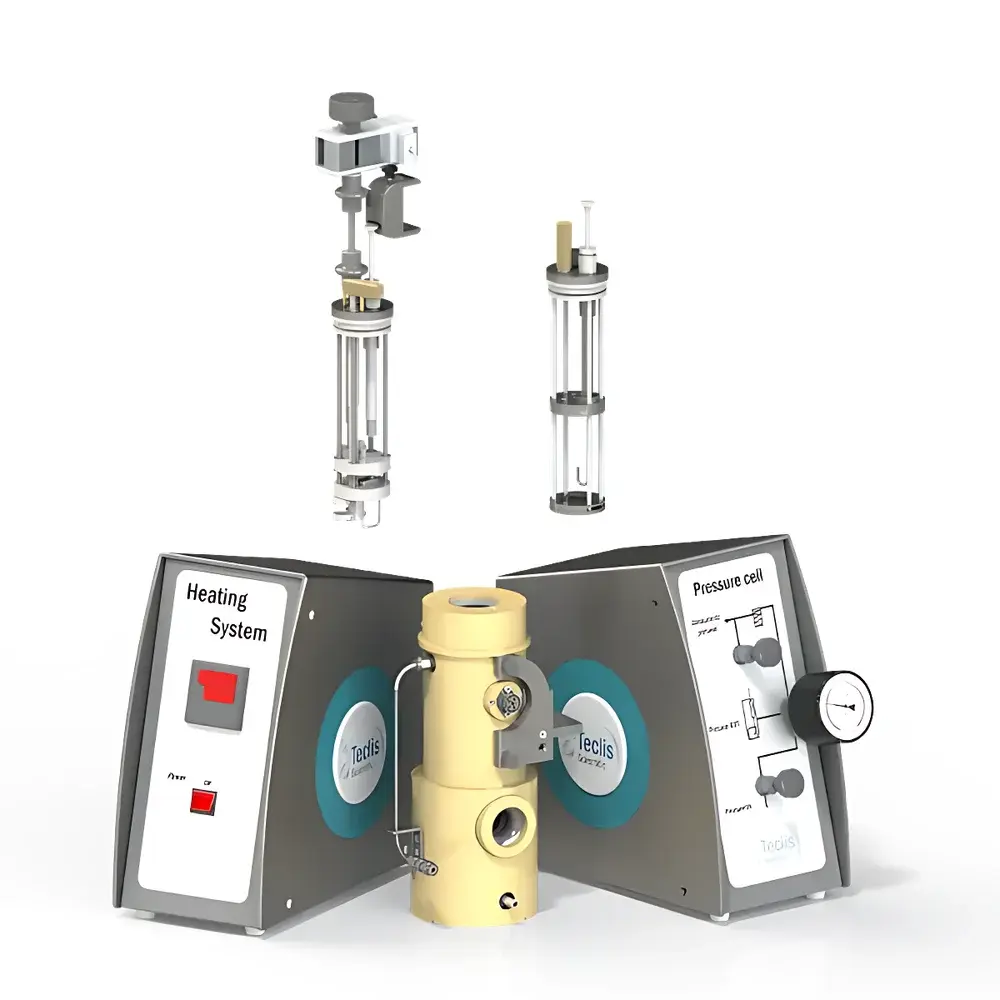
- Modular high-pressure chamber with sapphire optical viewport (diameter ≥25 mm) for unobstructed drop imaging under inert or reactive atmospheres
- Motorized syringe actuation with external piston drive—eliminates thermal drift and enables precise droplet volume control without chamber opening
- Dual-mode rotational stage for sequential pendant and sessile drop measurements within the same pressurized cycle, minimizing experimental downtime
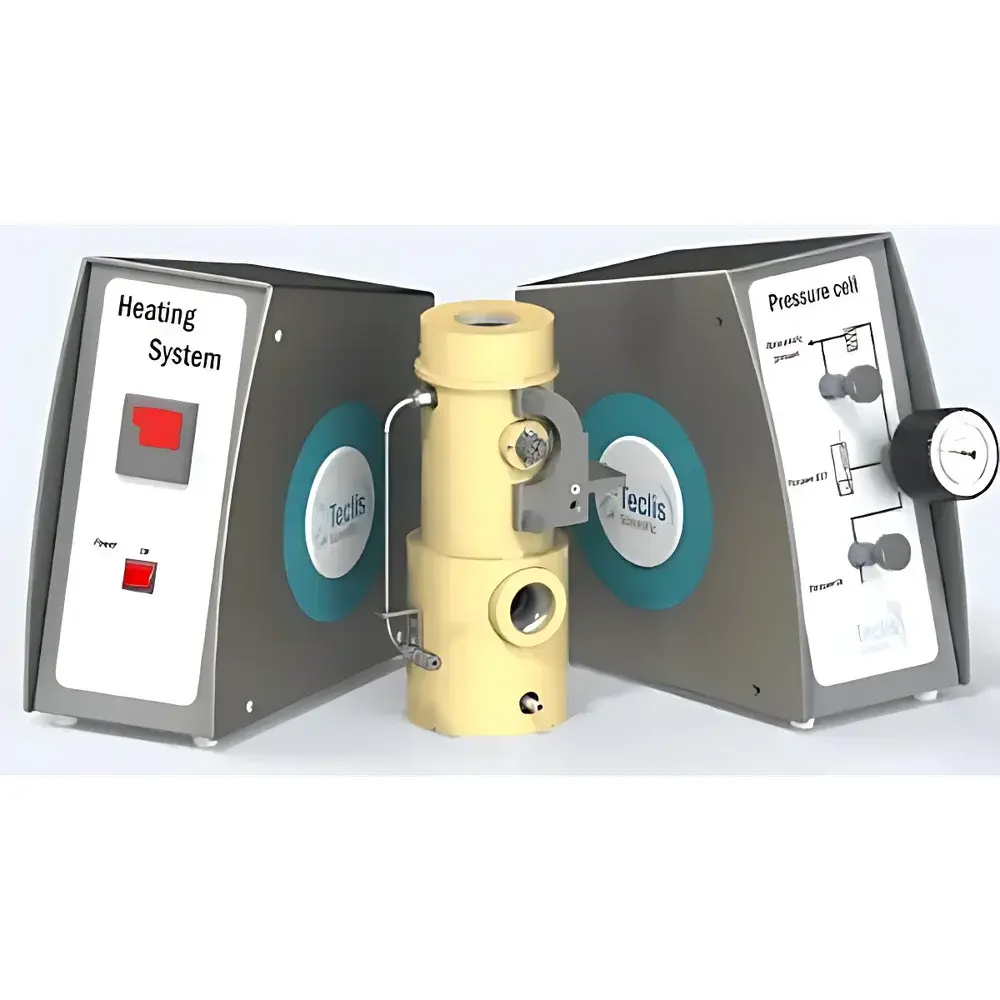
- Independent temperature regulation via electric heating module + external recirculating bath interface; temperature setpoint and chamber-internal reading displayed simultaneously
- Gas supply integration via standardized 1/8″ OD stainless steel tubing (1 m length) connected to regulated gas sources (cylinders or programmable pressure controllers)
- Real-time image acquisition at ≥30 fps with sub-pixel edge detection, enabling robust fitting of Laplace–Young equation even for highly deformed or asymmetric drops
- Rugged mechanical architecture compliant with ISO 17025 laboratory infrastructure requirements, including vibration-damped optical baseplate and EMI-shielded electronics enclosure
Sample Compatibility & Compliance
The TRACKER H supports heterogeneous interfacial systems including crude oil–brine, polymer melt–gas, surfactant-laden scCO₂–water, and functionalized solid substrates immersed in pressurized media. All wetted components are constructed from 316L stainless steel, Hastelloy C-276, or chemically inert sapphire—ensuring compatibility with corrosive hydrocarbons, acidic/basic electrolytes, and oxidizing gases. The system conforms to ASTM D971 (interfacial tension of oil against water), ISO 1409 (plastics—determination of surface tension), and USP Chapter <1058> guidelines for analytical instrument qualification. Data acquisition and audit trails comply with FDA 21 CFR Part 11 requirements when operated with validated Teclis Interfacial Suite software v5.2+.
Software & Data Management
Control, acquisition, and analysis are unified within the Teclis Interfacial Suite—a Windows-based application supporting GLP-compliant workflows. The software provides synchronized logging of pressure, temperature, time, drop volume, and interfacial parameters with timestamped metadata. All raw images, fitted contours, and intermediate calculation files are stored in vendor-neutral HDF5 format. Batch processing enables automated evaluation of time-resolved interfacial rheology (e.g., oscillatory drop deformation at fixed frequency/amplitude), adsorption kinetics, and hysteresis loops during advancing/receding contact angle sweeps. Export options include CSV, MATLAB .mat, and PDF reports with embedded calibration certificates and uncertainty budgets per ISO/IEC 17025 Annex A.3.
Applications
- Interfacial rheology of asphaltenes and resins at reservoir conditions (up to 200 °C / 200 bar)
- Surfactant adsorption dynamics and film stability in enhanced oil recovery (EOR) formulations under scCO₂
- Wettability assessment of shale rock cores in methane-saturated brine at geological pressures
- Interfacial relaxation behavior of biopolymer emulsifiers in high-temperature food processing analogs
- Surface tension gradients and Marangoni flow quantification in microfluidic droplet generation systems
- Thermal stability screening of ionic liquid–hydrocarbon interfaces for battery electrolyte development
FAQ
What pressure and temperature ranges are certified for interfacial rheology measurements?
Interfacial rheology (G′/G″) is validated up to 200 bar and 200 °C for liquid–liquid and gas–liquid systems. Contact angle measurements are validated up to 100 bar and 200 °C due to substrate mechanical constraints.
Is the system compatible with aggressive solvents such as chlorinated hydrocarbons or strong acids?
Yes—provided wetted materials (O-rings, seals, chamber gaskets) are selected per chemical resistance charts provided in the User Manual Appendix B. Standard configuration includes FFKM elastomers rated for >95% of organic solvents.
How is temperature uniformity ensured across the pressure chamber volume?
A dual-zone heating strategy is employed: resistive heating bands maintain outer wall temperature, while internal fluid convection—enhanced by low-speed magnetic stirring—ensures radial and axial homogeneity ≤±0.8 °C over 50 mL sample volume.
Can the system perform automated long-term aging studies?
Yes—scheduled measurement sequences (e.g., hourly interfacial tension + contact angle) can be programmed for durations exceeding 72 hours, with automatic data archiving and email alerts upon deviation thresholds.



