
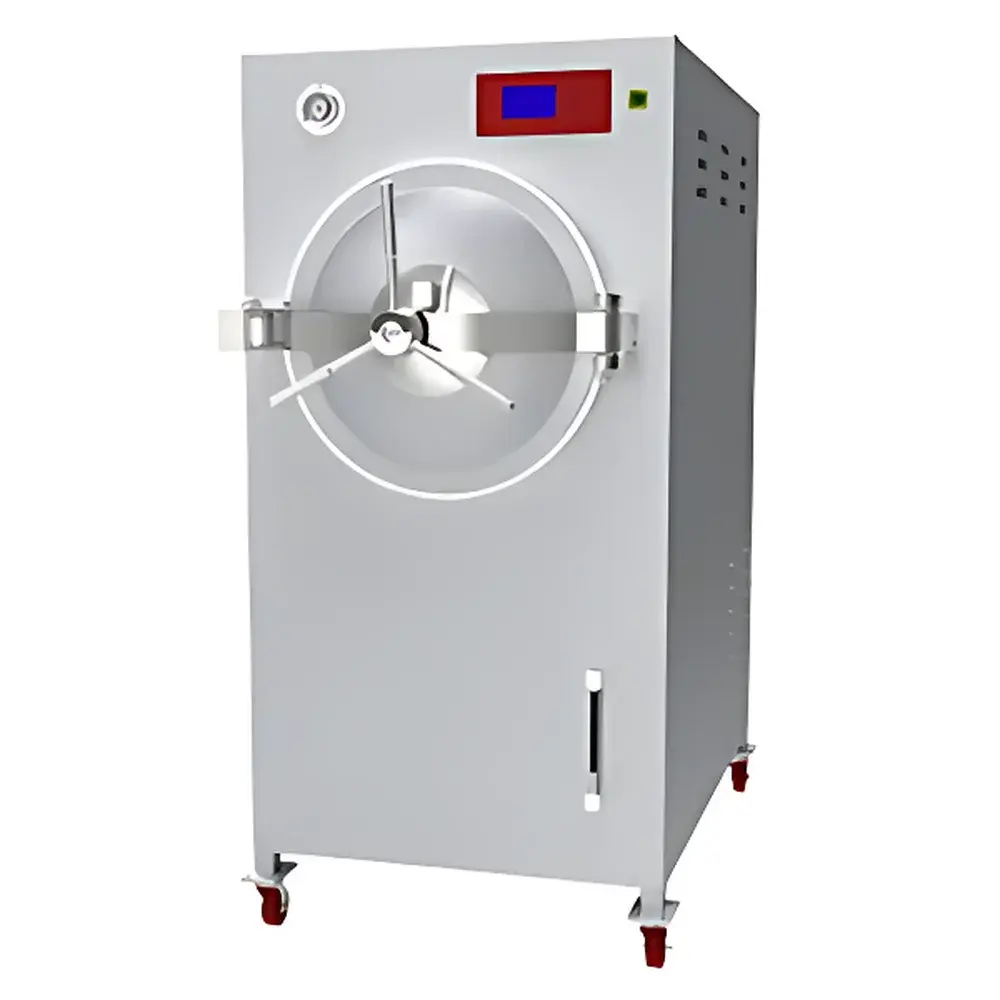
Brookfield BXW-SD Horizontal Cylindrical Steam Sterilizer (Cross-Beam Structure)
| Brand | Brookfield (BOXUN) |
|---|---|
| Origin | Shanghai, China |
| Manufacturer Type | Authorized Distributor |
| Product Category | Domestic |
| Model | BXW-SD |
| Instrument Type | Horizontal |
| Max Temperature | 131 °C |
| Max Pressure | 0.2 MPa |
| Chamber Dimensions | Ø472 mm × 1025 mm |
| External Dimensions | 764 mm × 1460 mm × 1590 mm |
| Chamber Volume | 150 L |
Overview
The Brookfield BXW-SD Horizontal Cylindrical Steam Sterilizer (Cross-Beam Structure) is a Class B vacuum-assisted steam sterilization system engineered for reliable, repeatable terminal sterilization of heat- and moisture-stable laboratory and healthcare materials. Designed in accordance with ISO 17665-1:2017 (Sterilization of health care products — Moist heat — Part 1: Requirements for the development, validation and routine control of a sterilization process for medical devices), it employs saturated steam under controlled pressure and temperature to achieve a minimum sterility assurance level (SAL) of 10−6. Its horizontal cylindrical chamber—fabricated from high-grade austenitic stainless steel (AISI 304) and precision argon arc welded—ensures structural integrity, corrosion resistance, and long-term dimensional stability under repeated thermal cycling. The cross-beam structural design enhances mechanical rigidity during pressurization and facilitates uniform load distribution across the chamber floor and door assembly.
Key Features
- Microprocessor-based control system with real-time display of sterilization phase, chamber temperature, elapsed time, and pressure—enabling full operational transparency and traceability;
- Integrated electric steam generator with automatic water feed pump: maintains optimal water level via float-sensor feedback; cuts off heating element power when water level falls below safe threshold during cycle execution;
- Dual-stage safety interlock system compliant with EN 61010-1 and EN 61000-6-3: (1) sterilization cycle cannot initiate unless door is fully closed and mechanically locked; (2) internal pressure > 0.01 MPa automatically engages lock mechanism, preventing accidental door rotation;
- Self-expanding silicone door gasket ensures hermetic sealing over extended service life (>5,000 cycles) and eliminates need for manual torque adjustment;
- Programmable exhaust mode selection (gravity displacement, slow exhaust, or fast exhaust) to accommodate diverse load types—including wrapped instruments, porous loads, liquids, and hollow devices;
- PID temperature regulation algorithm with adaptive parameter tuning minimizes thermal overshoot and stabilizes chamber temperature within ±0.5 °C of setpoint during hold phase;
- Pressure-controlled steam generation: pressure transducer regulates electric heating elements; redundant mechanical safety valve (set at 0.22 MPa) provides fail-safe overpressure protection.
Sample Compatibility & Compliance
The BXW-SD accommodates standard autoclave-compatible loads including stainless-steel instrument sets, glassware, textile packs, culture media (in vented containers), and polymer-based labware rated for repeated steam exposure. It supports sterilization cycles conforming to ISO 11134 (validation of moist heat sterilization processes), ISO 11140 (chemical indicators), and USP (Sterility Assurance). Optional G-version configuration integrates a water-ring vacuum pump and dedicated drying heater to meet ISO 15883-1 requirements for post-sterilization drying of wrapped items. All models are CE-marked per Medical Device Regulation (MDR 2017/745) Annex II, and documentation packages support GLP/GMP audit readiness—including IQ/OQ protocols, calibration records, and electronic logbook export (via optional RS-232/USB interface).
Software & Data Management
The embedded controller logs all critical process parameters (temperature, pressure, time, phase status) with timestamp resolution of 1 second. Cycle data is stored internally for ≥1,000 runs and can be exported in CSV format for archival or regulatory review. Optional thermal printer (model PT-200) provides hard-copy cycle reports compliant with FDA 21 CFR Part 11 requirements when paired with user-accessible audit trail settings. Firmware supports password-protected user levels (Operator, Technician, Administrator) with configurable access rights to cycle editing, parameter modification, and data export functions.
Applications
This sterilizer serves core functions across academic research laboratories, pharmaceutical QC facilities, clinical diagnostics centers, and veterinary hospitals. Typical use cases include: terminal sterilization of reusable surgical instruments prior to packaging; depyrogenation of glass vials and stoppers; preparation of sterile microbiological growth media; inactivation of biohazardous waste (Biosafety Level 1–2); and validation of sterilization protocols for ISO 13485-certified device manufacturing. Its 150 L chamber volume enables batch processing of up to 12 standard instrument trays (600 mm × 400 mm × 150 mm) per cycle without compromising steam penetration or condensate drainage efficiency.
FAQ
What is the maximum allowable working pressure and corresponding temperature range?
The chamber is rated for a maximum working pressure of 0.2 MPa (2 bar), enabling operation across the validated temperature range of 109 °C to 131 °C.
Does the system comply with international sterilization standards for medical devices?
Yes—the BXW-SD meets essential requirements of ISO 17665-1, EN 285, and AAMI ST79:2017 for steam sterilizers used in healthcare settings.
Can the sterilizer be validated for GMP environments?
Absolutely. Documentation kits—including FAT/SAT templates, calibration certificates for integrated PT100 sensors and pressure transducers, and IQ/OQ checklists—are available upon request.
Is remote monitoring or network integration supported?
Standard configuration includes RS-232 serial output; Ethernet or Wi-Fi modules are available as factory-installed options for integration into centralized facility management systems.
What maintenance intervals are recommended for the steam generator and safety valves?
Steam generator descaling is advised every 200 cycles or quarterly (whichever occurs first); safety valves require annual functional testing and recalibration by an accredited third-party service provider.



