
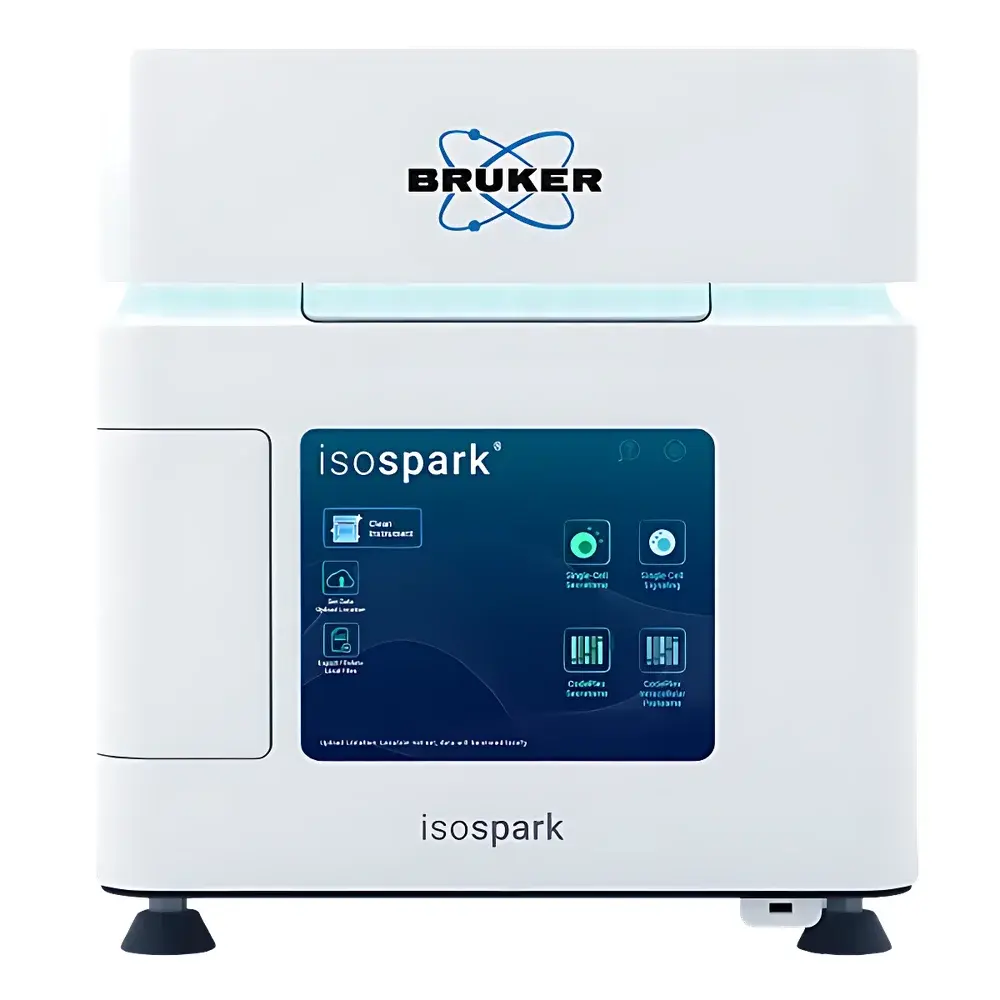
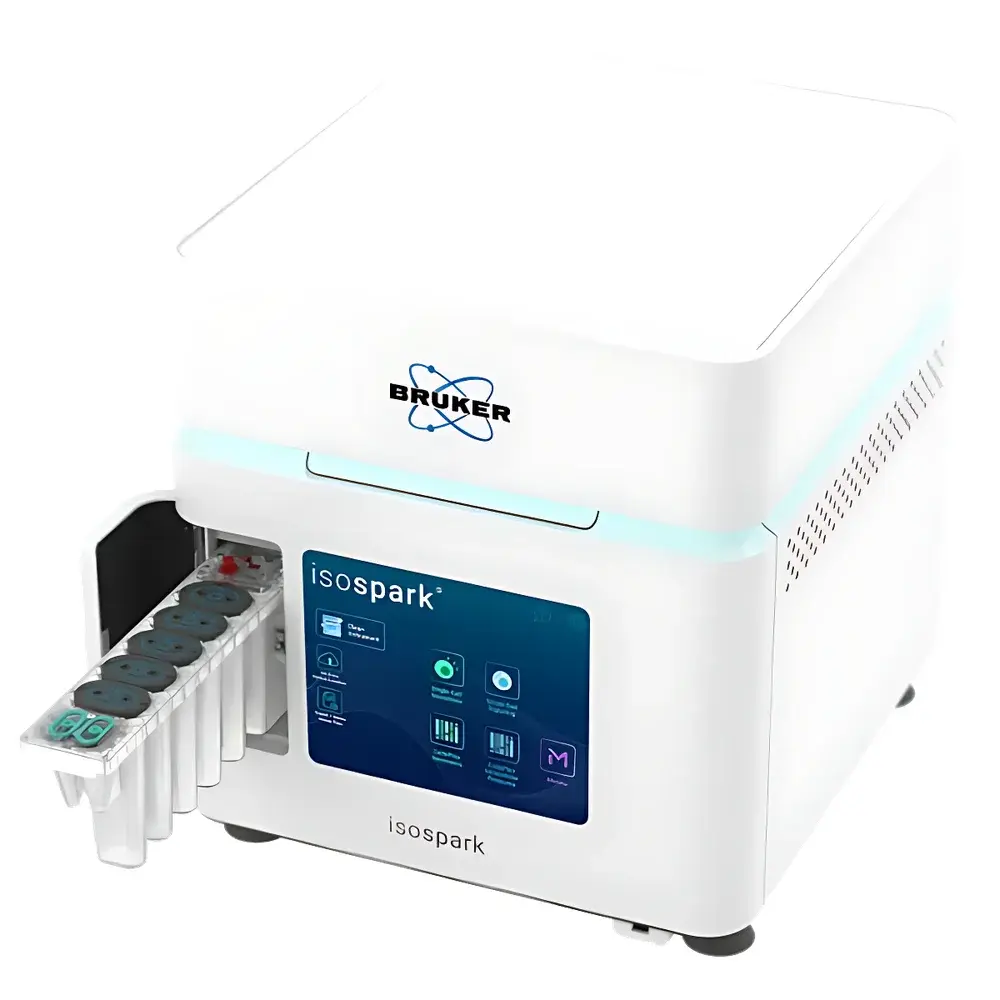
IsoSpark™ Automated Single-Cell Functional Proteomics System
| Brand | Bruker |
|---|---|
| Origin | USA |
| Manufacturer Type | Authorized Distributor |
| Origin Category | Imported |
| Model | IsoSpark |
| Pricing | Available Upon Request |
Overview
The IsoSpark™ Automated Single-Cell Functional Proteomics System is a purpose-built platform engineered for high-parameter, functional protein profiling at single-cell resolution. Unlike conventional bulk or transcriptomic assays, the IsoSpark system leverages microfluidic-based cellular barcoding and proximity extension assay (PEA) principles—implemented via proprietary IsoCode™ antibody barcode chips—to quantitatively measure secreted cytokines and intracellular phosphoproteins from live, unlysed cells. This enables true functional phenotyping: capturing dynamic, real-time effector outputs (e.g., IFN-γ, TNF-α, IL-2, Granzyme B, perforin) while preserving cell viability and native signaling context. Designed for translational immunology labs, the system bridges preclinical mechanistic studies in murine models and human primary cell systems with clinical-grade longitudinal monitoring of immune cell functionality in trials.
Key Features
- Automated end-to-end workflow—from cell loading and chip priming to data export—reducing hands-on time by >70% versus manual ELISA or flow cytometry-based intracellular staining.
- IsoCode™ single-cell barcode chips support simultaneous detection of ≥32 functional proteins per cell, with validated panels for T-cell exhaustion, NK cell cytotoxicity, macrophage polarization, and dendritic cell maturation.
- CodePlex™ and Meteor™ multiplexed assay chips enable rapid (<4 hr), low-volume (≤5 µL per sample) quantification of up to 96 analytes across serum, plasma, CSF, BALF, urine, and cell culture supernatants—without sample pre-concentration or dilution series.
- Integrated temperature-controlled microfluidic cartridge handling ensures consistent cell viability (>95% post-assay recovery) and minimizes batch-to-batch variability (CV <8% across technical replicates).
- Modular hardware architecture supports seamless scalability: single instrument configuration for core discovery; dual-module setup for parallel sample processing under GLP-aligned operational protocols.
Sample Compatibility & Compliance
The IsoSpark system accepts primary human PBMCs, mouse splenocytes, tumor-infiltrating lymphocytes (TILs), CAR-T products, and adherent/non-adherent cell lines without enzymatic dissociation or fixation. Sample input ranges from 10,000 to 500,000 viable cells per run. All reagent kits are manufactured under ISO 13485-certified conditions and supplied with full CoA documentation. The platform complies with analytical method validation requirements per ICH Q2(R2) and supports audit-ready workflows aligned with FDA 21 CFR Part 11 (electronic records/signatures), including role-based user access control, immutable audit trails, and electronic signature capture for instrument operation logs and analysis reports.
Software & Data Management
IsoSpeak™ software provides a unified interface for experimental design, real-time QC monitoring, and multi-dimensional functional clustering. It implements unsupervised UMAP and t-SNE embeddings optimized for functional protein space—not transcriptomic or surface marker space—enabling identification of polyfunctional cell states (e.g., triple-cytokine-secreting CD8+ T cells). Batch correction algorithms support cross-study integration of datasets generated over months or across sites. Export options include MIAME-compliant MAGE-TAB, Cytobank-compatible FCS files, and publication-ready SVG/PDF visualizations. Raw data archives are stored in vendor-neutral HDF5 format with embedded metadata tags compliant with ISA-Tab standards.
Applications
- Preclinical immuno-oncology: mapping functional heterogeneity of adoptive cell therapies (CAR-T, TCR-T, NK) in syngeneic and PDX models.
- Clinical trial biomarker discovery: longitudinal tracking of antigen-specific T-cell functionality in peripheral blood during checkpoint inhibitor or bispecific antibody therapy.
- Vaccine development: assessing breadth and durability of antigen-driven polyfunctionality in memory T and B cell compartments.
- Autoimmunity research: identifying pathogenic cytokine co-secretion signatures in synovial fluid or CSF-derived immune subsets.
- Cell therapy QC: release testing of potency based on functional protein secretion profiles rather than surface marker expression alone.
FAQ
What types of cells can be analyzed on the IsoSpark system?
Primary human and murine immune cells—including PBMCs, TILs, DCs, NK cells, and macrophages—as well as immortalized lines (e.g., Jurkat, THP-1) and primary neurons or epithelial cells when adapted for secretion profiling.
Does the system require prior cell sorting or enrichment?
No. The IsoCode chip design accommodates heterogeneous populations; optional on-instrument depletion modules (e.g., CD45+ removal) are available for complex samples like whole blood or tumor digests.
How is data normalization handled across runs?
IsoSpeak applies internal reference standards embedded in each chip, coupled with spike-in controls for absolute quantification; inter-run alignment uses median centering of housekeeping functional markers (e.g., constitutive IL-10 secretion in regulatory T cells).
Can raw data be exported for third-party statistical analysis?
Yes. Full matrix exports (cells × proteins × intensities) are supported in CSV, HDF5, and Seurat-compatible RDS formats, retaining all metadata and QC metrics.
Is the system compatible with GMP environments?
The IsoSpark platform supports 21 CFR Part 11 compliance via optional IQ/OQ/PQ documentation packages, electronic logbook integration, and configurable user permission tiers—validated for use in Phase I–III clinical biomarker laboratories.






