
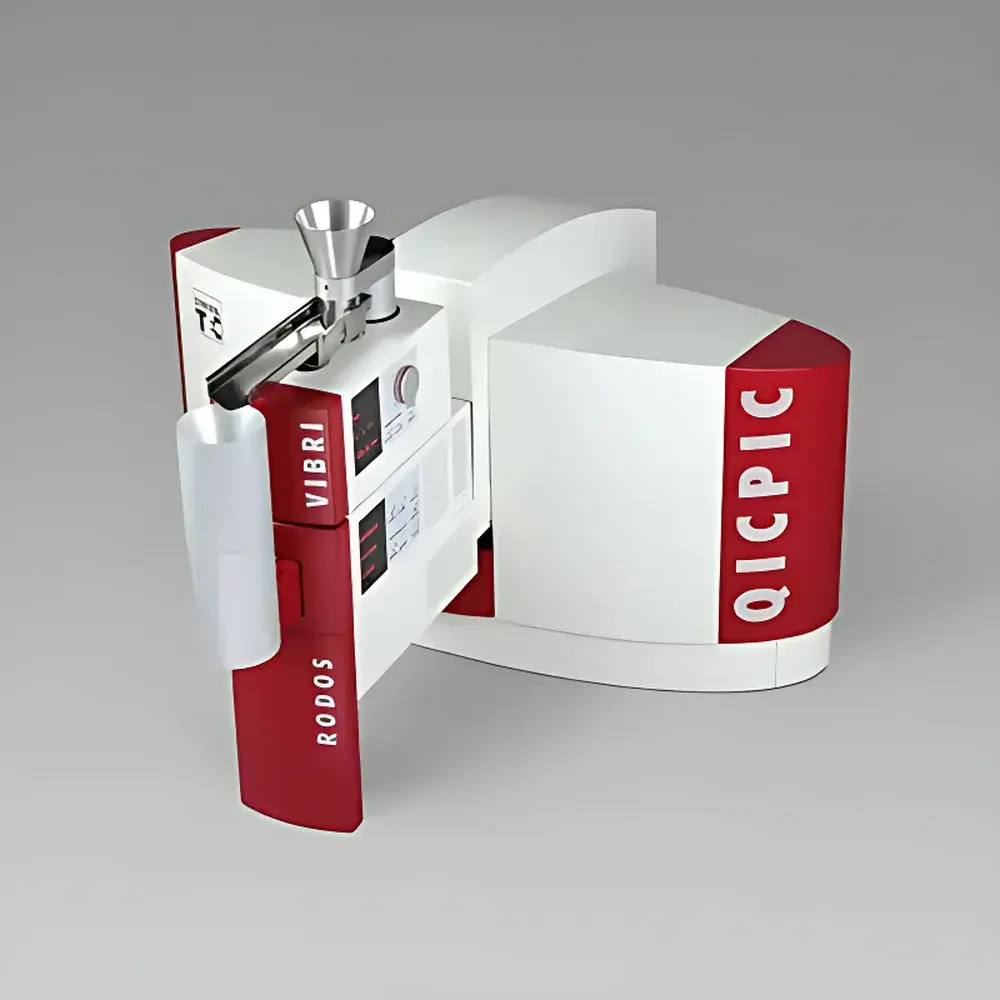
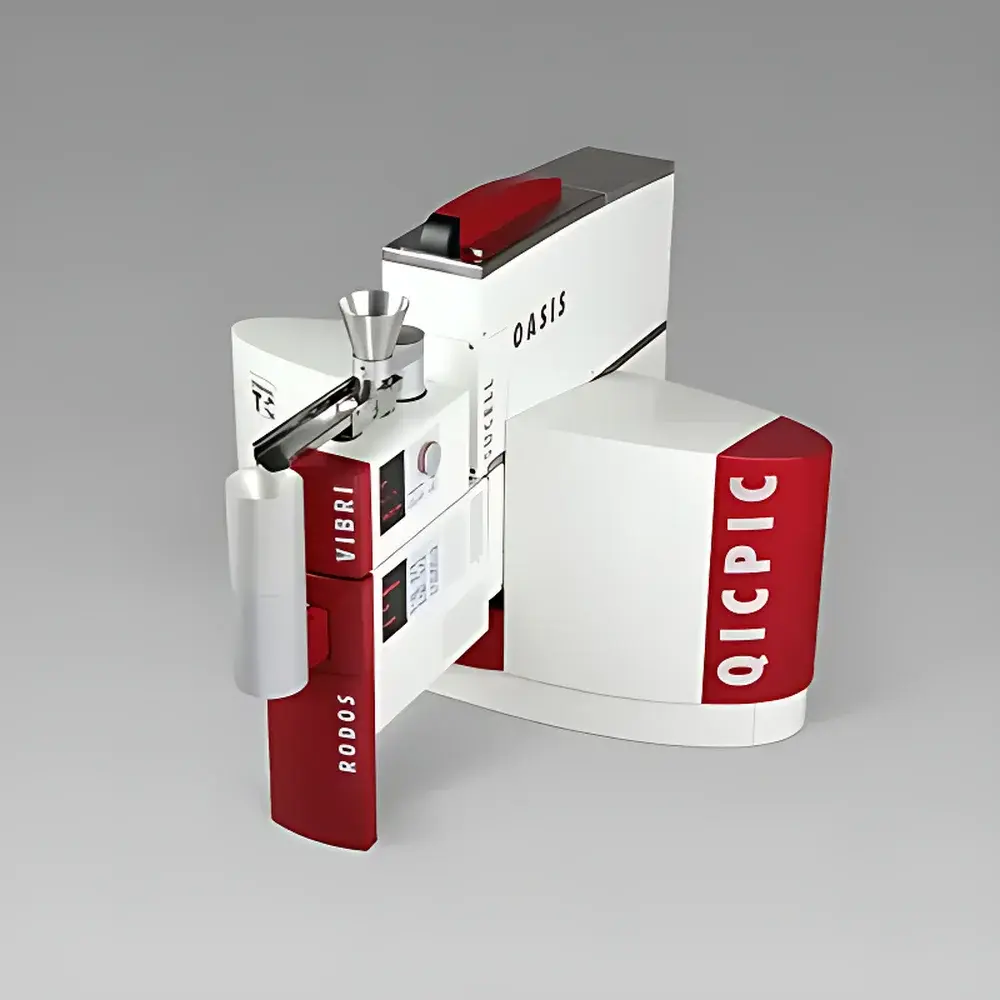
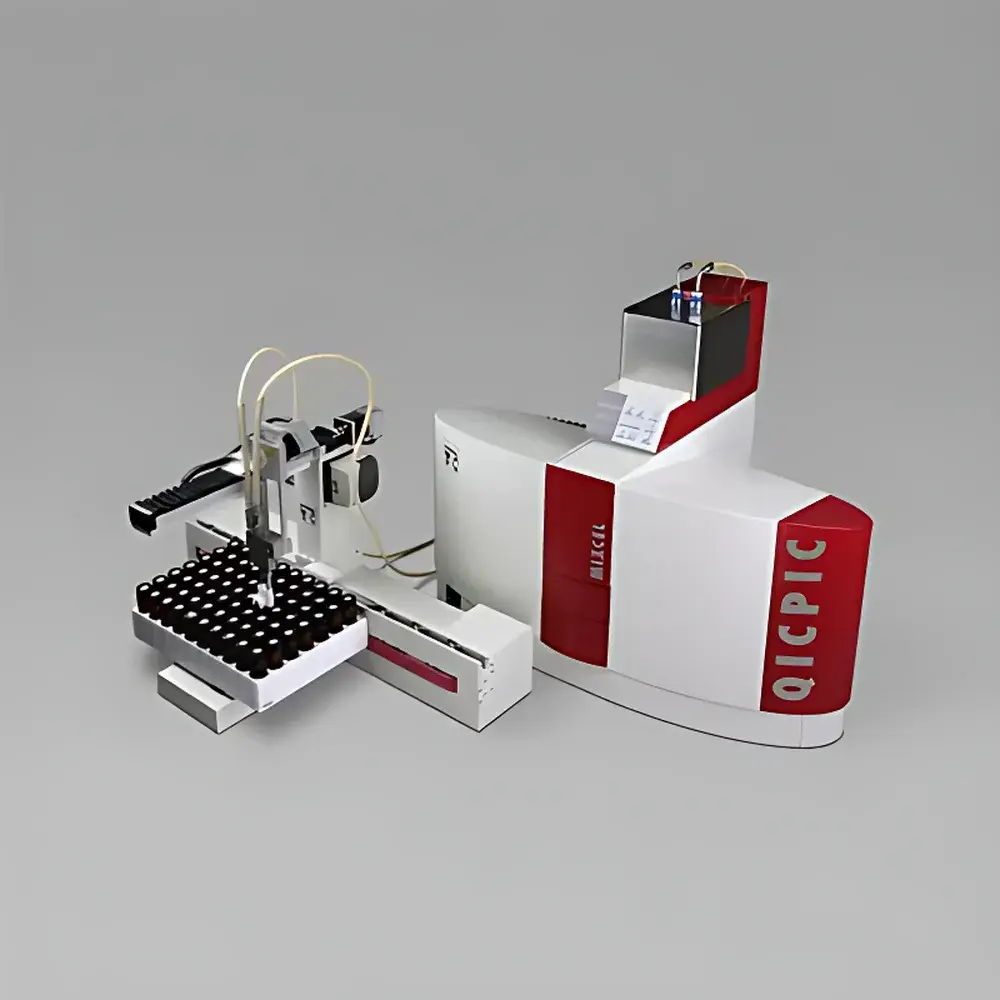
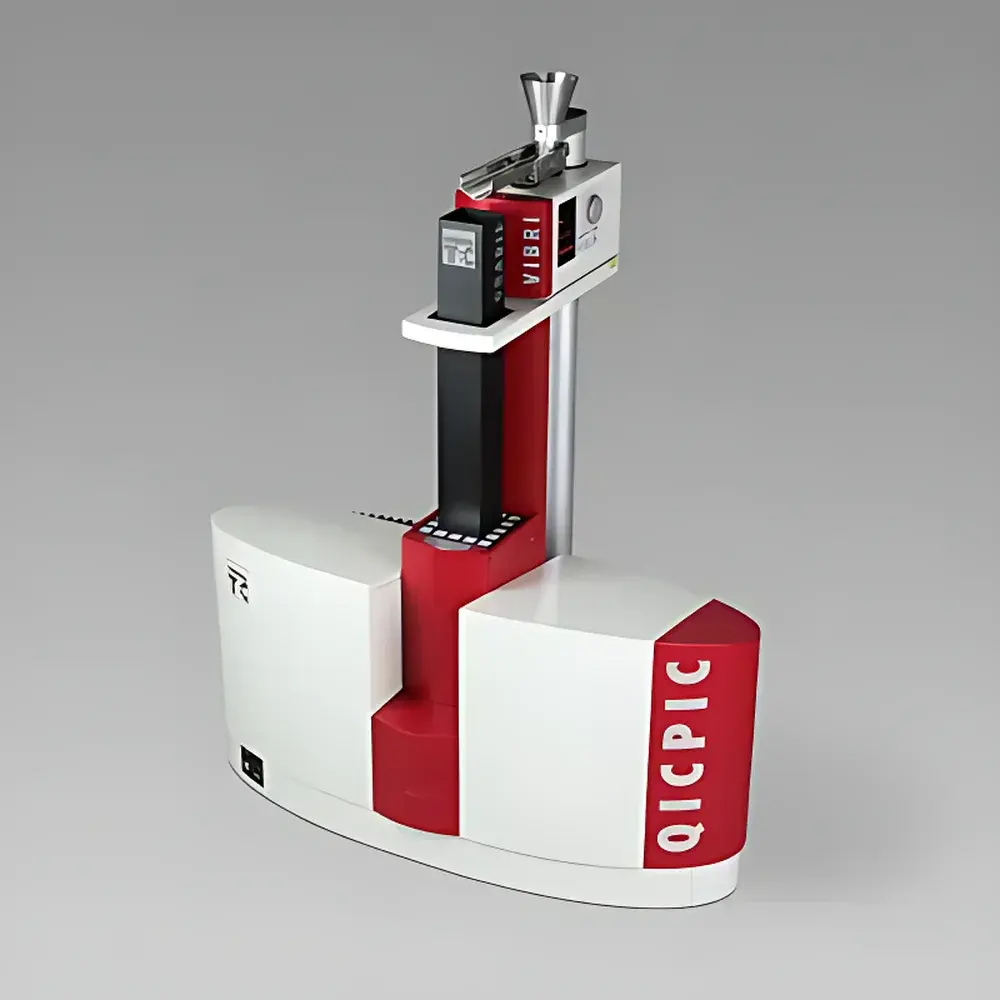
SYMPATEC QICPIC Dynamic Image Analysis System
| Brand | SYMPATEC |
|---|---|
| Origin | Germany |
| Manufacturer Type | Original Equipment Manufacturer (OEM) |
| Product Origin | Imported |
| Model | QICPIC |
| Instrument Type | Dynamic |
| Measurement Range | 0.55–33,792 µm |
| Number of Lenses | 7 |
| Dispersion Method | Dry or Wet |
| Image Resolution | 4 Megapixels |
| Measured Parameters | Chord Length, Feret Diameter, Martin Diameter, Equivalent Spherical Diameter, Sphericity, Aspect Ratio |
Overview
The SYMPATEC QICPIC Dynamic Image Analysis System is a high-speed, modular particle characterization platform engineered for precision measurement of size and shape distributions in flowing particulate streams. Unlike static image analysis systems—where particles are immobilized on a substrate—the QICPIC operates on the principle of in-flight dynamic imaging: particles pass through a precisely defined optical measurement zone at controlled velocities, and are captured mid-motion using ultra-short exposure (<1 ns) high-frame-rate cameras. This approach eliminates sedimentation bias, minimizes agglomeration artifacts, and ensures statistically robust sampling by analyzing thousands to millions of particles per second. The system is built around SYMPATEC’s proprietary optical design, integrating seven interchangeable lenses to cover an exceptionally broad dynamic range—from submicron aerosols (0.55 µm) to coarse granules (33,792 µm)—without hardware reconfiguration.
Key Features
- High-throughput dynamic imaging: Up to 500 frames per second at full 2048 × 2048 pixel resolution (4 MP), enabling real-time capture of transient particle orientations and motion states.
- Multi-lens optical architecture: Seven lens modules provide seamless coverage across the full 0.55–33,792 µm range; each lens is calibrated traceably to NIST-traceable reference standards.
- Flexible dispersion integration: Compatible with SYMPATEC’s dry dispersers (e.g., RODOS-L, GIMAT) and wet dispersion units (e.g., HYDRO LM, HYDRO CH), supporting ISO 13322-2 compliant sample presentation.
- Ultra-low latency data pipeline: Real-time image transfer via high-bandwidth interfaces—R02 (5 Gbit/s), R06 (10 Gbit/s), or R16 (25 Gbit/s)—ensuring zero frame loss during continuous acquisition.
- Modular hardware scalability: Field-upgradable processing units, lens carriers, and illumination modules allow adaptation to evolving application requirements without system replacement.
- Sub-nanosecond exposure control: Eliminates motion blur even for particles traveling at >20 m/s, preserving edge fidelity critical for shape parameter derivation.
Sample Compatibility & Compliance
The QICPIC accommodates diverse material classes—including metal powders, pharmaceutical granules, catalysts, toners, food ingredients, and mineral slurries—via standardized dry or wet dispersion protocols. Its measurement methodology conforms to ISO 13322-2:2013 (Particle size analysis — Image analysis methods — Part 2: Dynamic image analysis) and supports validation under FDA 21 CFR Part 11 when deployed with optional audit trail and electronic signature modules. All shape parameters—including sphericity, aspect ratio, convexity, and elongation—are calculated from binary particle masks generated using adaptive thresholding and sub-pixel edge detection algorithms. Calibration verification follows SYMPATEC’s internal SOPs aligned with ISO/IEC 17025 requirements for accredited testing laboratories.
Software & Data Management
Controlled by WINDOX 7 software, the QICPIC provides comprehensive workflow management—from method setup and instrument calibration to statistical reporting and raw data archiving. The software supports multi-parameter export (CSV, HDF5, XML) and integrates with LIMS platforms via OPC UA and RESTful APIs. Critical features include batch-wise statistical comparison (ANOVA, t-test), customizable report templates compliant with GLP/GMP documentation standards, and automated drift compensation using reference particle tracking. All processing steps—including segmentation, feature extraction, and classification—are fully traceable, with version-controlled algorithm libraries and time-stamped audit logs meeting ALCOA+ data integrity principles.
Applications
- Pharmaceutical development: Quantification of blend uniformity, granule morphology evolution during fluid bed drying, and API crystallinity impact on dissolution behavior.
- Additive manufacturing: In-process monitoring of metal and polymer powder sphericity, satellite count, and surface roughness as predictors of laser powder bed fusion performance.
- Chemical catalysis: Correlation of pore structure-derived shape descriptors (e.g., convexity loss) with deactivation kinetics in supported heterogeneous catalysts.
- Food & agriculture: Classification of starch granule aspect ratios and surface erosion indices linked to enzymatic hydrolysis rates.
- Environmental monitoring: Morphological fingerprinting of airborne particulate matter (PM10, PM2.5) for source apportionment modeling.
FAQ
How does QICPIC differ from static image analyzers in terms of statistical reliability?
Static systems rely on sparse, surface-bound sampling that introduces orientation and packing bias; QICPIC analyzes >10⁶ particles per minute in free-fall or suspension, delivering Poisson-distributed population statistics with <±0.5% relative standard deviation for Dv50 in repeat runs.
Can QICPIC measure transparent or low-contrast particles?
Yes—via configurable coaxial LED illumination, dark-field backlighting, and polarization contrast modes optimized for glass, polymers, and biological cells.
Is the system suitable for regulated environments such as pharmaceutical QC labs?
Fully—when configured with WINDOX 7 GxP Edition, it provides 21 CFR Part 11 compliance, including role-based access control, electronic signatures, and immutable audit trails.
What level of operator training is required for routine operation?
Basic operation requires <4 hours of hands-on instruction; advanced morphological modeling and method development are supported by SYMPATEC’s certified application engineers and online knowledge base.
How is traceability maintained across lens changes and software updates?
Each lens carries a unique digital calibration certificate embedded in firmware; software updates undergo regression testing against a master validation dataset, with version history logged in the system metadata archive.



