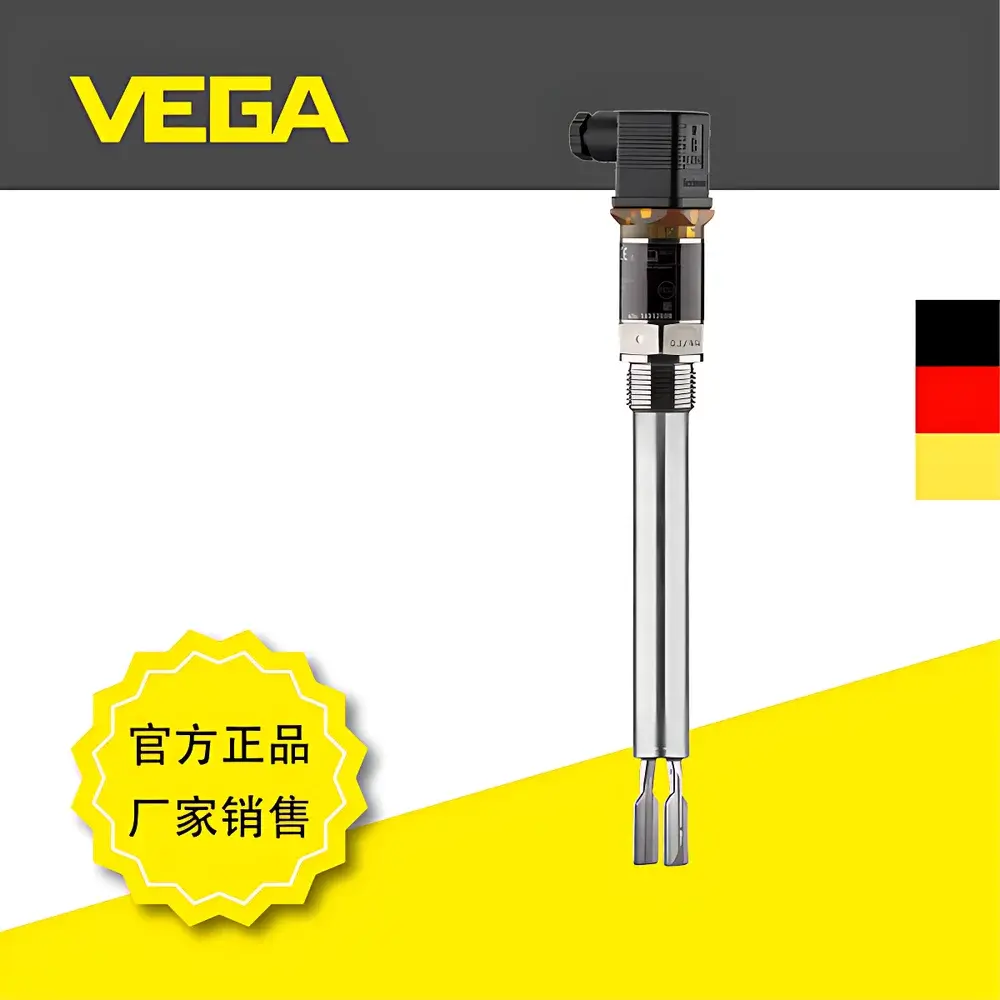
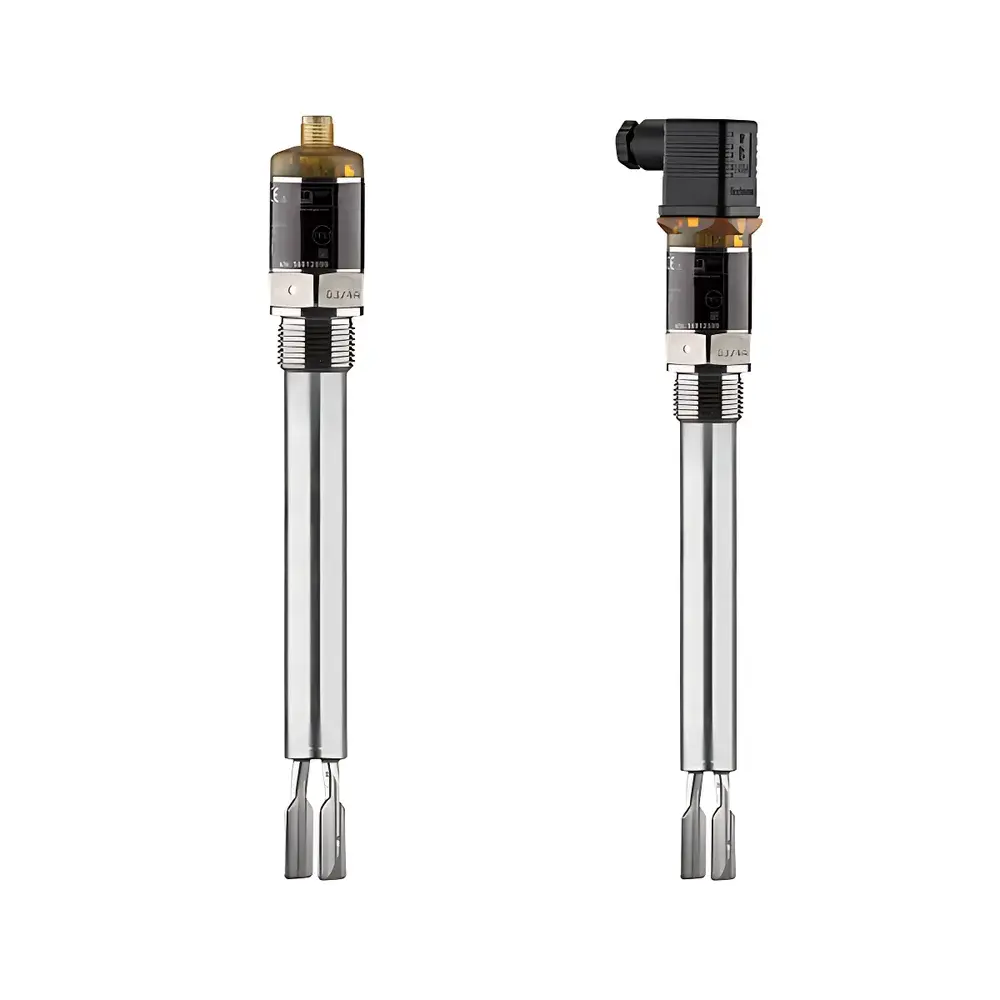
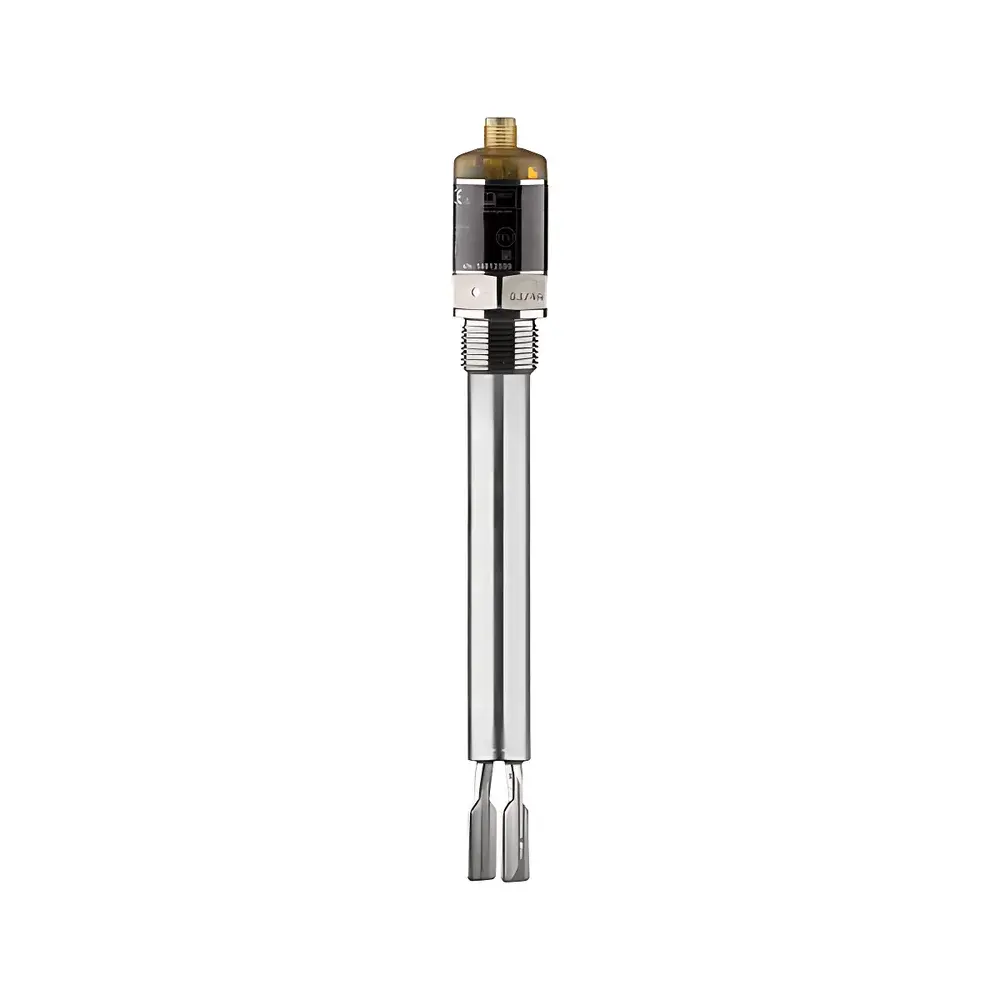
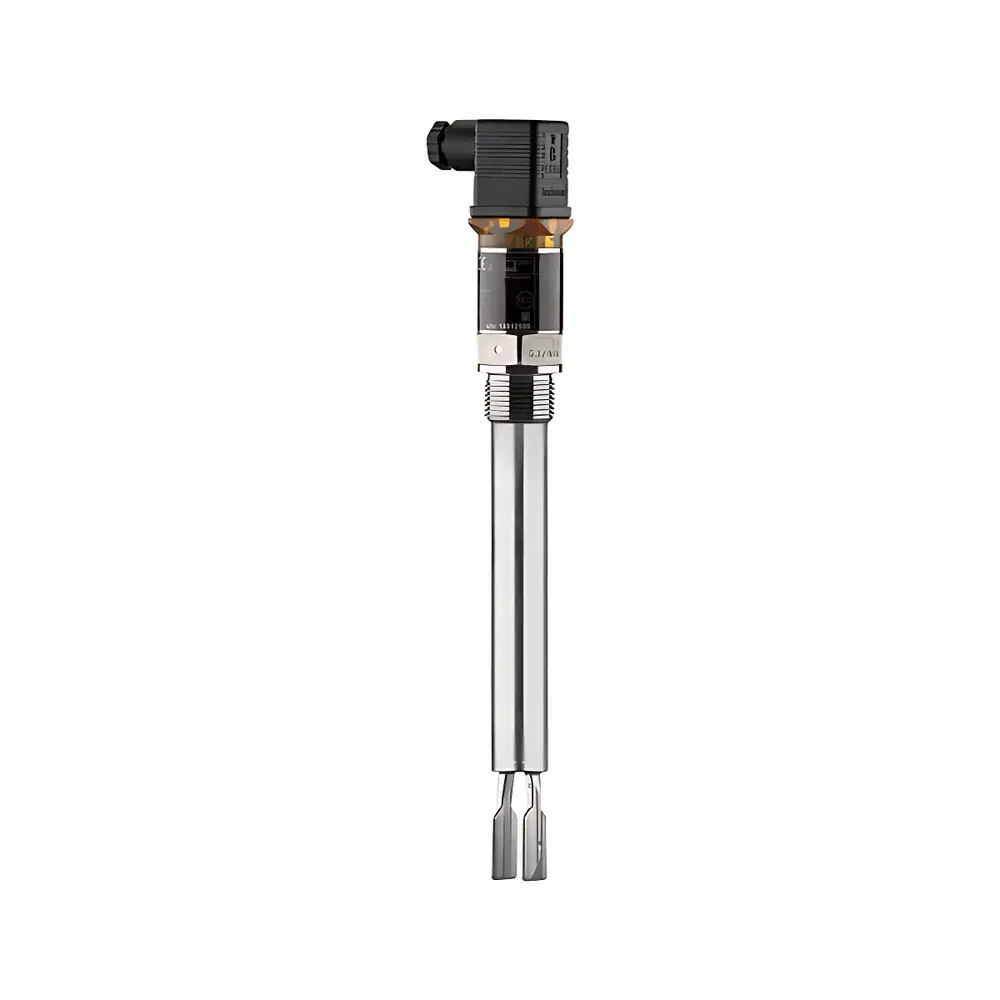
VEGA VEGASWING 53 Tuning Fork Level Switch with Extension Tube
| Brand | VEGA |
|---|---|
| Origin | Germany |
| Manufacturer | VEGA Grieshaber KG |
| Product Type | Level Switch |
| Model | VEGASWING 53 |
| Application | Liquid level limit detection (density range: 0.5–2.5 g/cm³) |
| Maximum extension tube length | 1 m |
| Mounting flexibility | Top, side, or bottom |
| Certification | Overflow protection, dry-run protection, pump protection compliant with IEC/EN 61508 SIL 2 and ATEX/IECEx for hazardous areas |
| Enclosure rating | IP66/IP67/IP69K |
| Process connection | G1½", NPT 1½", or flange options |
| Operating temperature | –40 °C to +80 °C (extended range up to +150 °C with optional high-temp fork) |
| Electrical output | PNP/NPN, relay, or 4–20 mA with HART |
Overview
The VEGA VEGASWING 53 is a compact, intrinsically robust tuning fork level switch engineered for precise, maintenance-free point-level detection of liquids in demanding industrial process environments. Based on piezoelectric-driven resonant frequency monitoring, the device operates on the principle that the natural vibration frequency of the fork changes measurably when immersed in liquid—triggering a reliable, binary switching signal at a predefined level. Its design eliminates dependence on medium-specific properties such as conductivity, dielectric constant, or optical clarity, making it universally applicable across chemically diverse liquids within a density range of 0.5 to 2.5 g/cm³. The integrated extension tube option enables remote sensing up to 1 meter from the mounting flange—ideal for insulated, jacketed, or hard-to-access vessels where direct installation is impractical. As a SIL 2-certified device per IEC/EN 61508 and certified for use in Zone 0/1 (ATEX) and Div. 1 (UL/cUL), the VEGASWING 53 meets functional safety requirements for critical overfill prevention, pump dry-run protection, and high/low alarm applications in regulated industries including chemical processing, pharmaceutical manufacturing, water/wastewater treatment, and food & beverage production.
Key Features
- True universal detection—immune to foam, coating, turbulence, pressure, or temperature fluctuations within specified operating limits
- Compact housing (Ø 42 mm × 120 mm) with modular extension tube assembly (stainless steel 1.4404/316L) supporting up to 1 m linear offset
- Factory-calibrated fork with no field recalibration required; zero-point verification possible without media contact via built-in diagnostic mode
- Dual-output configuration options: discrete switch (PNP/NPN/relay) plus analog 4–20 mA with HART 7 protocol for diagnostics and parameterization
- Robust mechanical architecture: IP66/IP67/IP69K-rated housing; resistant to aggressive cleaning agents, steam sterilization (CIP/SIP), and mechanical shock
- Compliant with electromagnetic compatibility standards EN 61326-1 and surge immunity per EN 61000-4-5 (4 kV)
Sample Compatibility & Compliance
The VEGASWING 53 is validated for continuous operation with liquids exhibiting densities between 0.5 g/cm³ (e.g., hydrocarbon solvents, light oils) and 2.5 g/cm³ (e.g., concentrated acids, brines, slurries with fine suspended solids). It is not intended for gases, vapors, or bulk solids. Fork material variants include standard 316L stainless steel and optional Hastelloy C-4 for highly corrosive media. All configurations comply with global regulatory frameworks: ATEX Directive 2014/34/EU (II 1G Ex ia IIC T6 Ga), IECEx (Ex ia IIC T6 Ga), UL/cUL Class I Div. 1 Groups A–D, and PED 2014/68/EU for pressure equipment integration. For pharmaceutical applications, the device supports 21 CFR Part 11-compliant audit trails when used with VEGA’s SmartSensor software suite and qualifies for GMP-aligned validation protocols (IQ/OQ/PQ documentation available upon request).
Software & Data Management
Configuration, diagnostics, and firmware updates are performed via VEGA Tools—a Windows-based engineering software platform supporting FDT/DTM and EDDL standards. The device integrates natively into DCS/SCADA systems via HART multiplexers or native Modbus RTU (optional). Real-time diagnostics include fork contamination status, amplitude decay trend analysis, and self-test logs timestamped with UTC synchronization. All configuration changes generate immutable event records traceable to user ID and timestamp—ensuring full compliance with GLP, GMP, and ISO 9001 quality management system requirements. Remote access is supported through secure VPN-tunneled connections with role-based authentication.
Applications
- Overflow prevention in storage tanks, reactors, and intermediate buffer vessels
- Dry-run protection for centrifugal and progressive cavity pumps in water supply and wastewater lift stations
- High-level alarm in chemical dosing tanks and API intermediate reactors
- Low-level detection for feed tank interlocks in batch pharmaceutical manufacturing
- Interface level monitoring in decanters and phase separators (with density differential ≥0.2 g/cm³)
- Sanitary applications in dairy and beverage lines meeting EHEDG and 3-A standards (with appropriate hygienic process connection)
FAQ
Can the VEGASWING 53 detect interface levels between two immiscible liquids?
Yes—provided the density difference between phases exceeds 0.2 g/cm³ and the upper layer does not form a stable, non-draining film on the fork surface.
Is calibration required after installation?
No. The device is factory calibrated and remains stable over time. Functional verification can be executed offline using the integrated test mode without process interruption.
What is the maximum allowable process temperature with the standard fork?
+80 °C continuously; extended-range forks rated to +150 °C are available for high-temperature thermal oil or steam tracing applications.
Does the extension tube affect measurement accuracy or response time?
No. The extension tube is mechanically rigid and acoustically decoupled; switching response remains ≤1 second regardless of tube length up to 1 m.
How is explosion protection implemented in hazardous area installations?
Through intrinsic safety (Ex ia) certification—limiting energy input to levels incapable of igniting explosive atmospheres—even under fault conditions.