
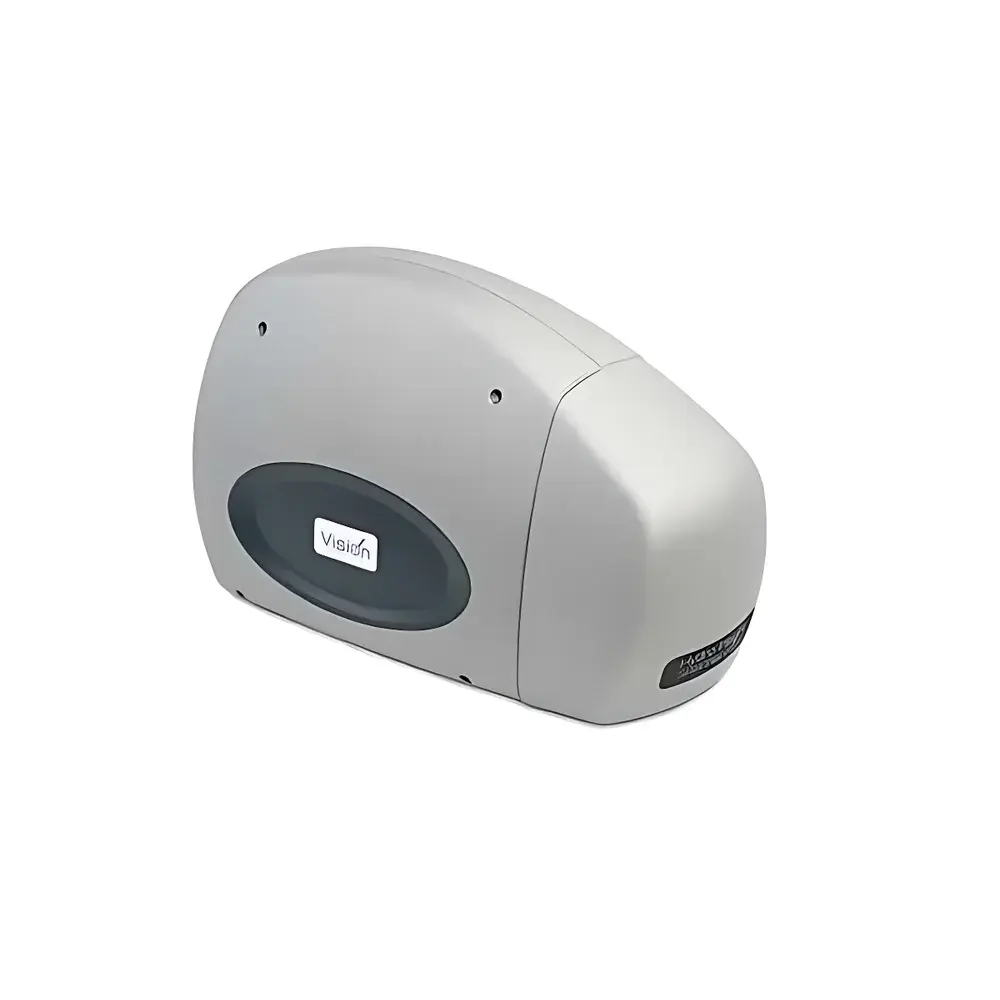
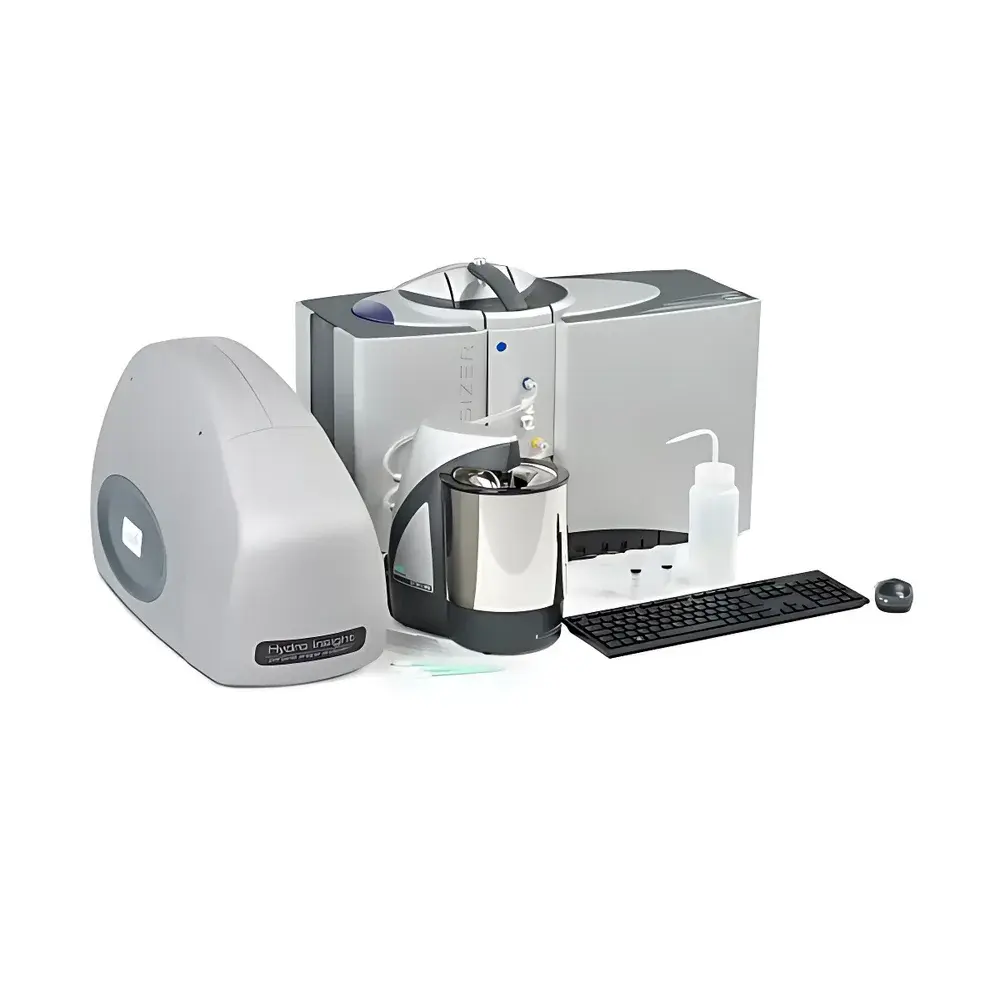
Malvern Panalytical Hydro Insight Real-Time Dynamic Imaging Accessory for Mastersizer 3000
| Brand | Malvern Panalytical |
|---|---|
| Origin | USA |
| Manufacturer Type | Original Equipment Manufacturer (OEM) |
| Import Status | Imported |
| Model | Hydro Insight |
| Instrument Type | Dynamic Imaging System |
| Measurement Range (Standard Magnification) | 1–300 µm |
| Measurement Range (Low Magnification) | 10–800 µm |
| Dispersion Method | Wet Dispersion |
| Camera Resolution | 5 MP (2592 × 1944 pixels, 2.2 µm pixel size) |
| Measured Parameters | Particle Images, Shape Metrics (31 shape descriptors), Width, Elongation, Aspect Ratio, Circularity, Convexity, Solidity, etc. |
Overview
The Malvern Panalytical Hydro Insight Real-Time Dynamic Imaging Accessory is a purpose-engineered optical module designed exclusively for integration with the Mastersizer 3000 laser diffraction particle size analyzer. It extends the analytical capability of the system beyond ensemble-average size distribution by delivering real-time, high-fidelity digital images of individual particles in suspension. Operating on the principle of dynamic image analysis—where particles flow through an illuminated observation zone and are captured frame-by-frame by a high-speed CMOS sensor—the Hydro Insight enables simultaneous acquisition of morphological data alongside laser diffraction results. This dual-mode measurement architecture supports root-cause analysis of material behavior, particularly where particle shape critically influences bulk properties such as flowability, compressibility, dissolution kinetics, and packing density. The accessory leverages the Mastersizer 3000’s proven wet dispersion infrastructure, ensuring consistent sample presentation across both modalities without requiring method revalidation or hardware modification.
Key Features
- Real-time dynamic imaging at up to 127 frames per second, synchronized with Mastersizer 3000 measurement cycles
- 5-megapixel CMOS sensor (2592 × 1944 pixels) with 2.2 µm pixel pitch, optimized for high signal-to-noise ratio in dispersed aqueous and organic media
- Dual magnification optics: standard lens (1–300 µm) and low-magnification lens (10–800 µm), enabling broad coverage across fine powders and coarse granules
- Xenon flash illumination providing uniform, non-thermal, strobed lighting ideal for capturing sharp edge definition of moving particles
- Integrated flow cell constructed from chemically resistant materials: Tygon® SE-200 FEP-lined tubing, 316 stainless steel housing, n-BK7 quartz observation window, and Perlast® G60A FFKM seals
- On-the-fly image thumbnail generation and full-frame archival for post-acquisition reanalysis using Malvern’s Morphologi software engine
- Automated extraction of 31 standardized shape descriptors—including width, elongation, circularity, convexity, solidity, and aspect ratio—traceable to ISO 9276-6 and ASTM E2457
Sample Compatibility & Compliance
The Hydro Insight is validated for use with liquid-dispersed samples only, compatible with water, alcohols, hydrocarbons, and other low-viscosity solvents commonly employed in laser diffraction workflows. Sample introduction is fully automated via the Mastersizer 3000’s integrated SCF (Small Volume Cell) or Hydro LV dispersion units. All wetted materials comply with USP Class VI biocompatibility standards and are suitable for GMP-regulated environments. Data integrity is maintained through audit-trail-enabled software compliant with FDA 21 CFR Part 11 requirements. Shape parameter calculations adhere to definitions specified in ISO 9276-6:2015 (“Representation of results of particle size analysis — Part 6: Descriptions and quantitative analysis of particles and particle systems”) and support GLP/GMP documentation workflows.
Software & Data Management
Hydro Insight operates under Malvern Panalytical’s unified Mastersizer software platform (v3.90+), which provides synchronized display of laser diffraction size distributions and corresponding particle images. Each measurement run generates a structured dataset containing: (i) raw TIFF image sequences, (ii) annotated particle thumbnails, (iii) tabular export of all 31 shape metrics per particle, and (iv) statistical summaries (e.g., mean width vs. Dv50, elongation distribution histograms). Data exports conform to ASTM E2457-compliant CSV and XML formats, supporting traceable integration into LIMS and ELN systems. Batch processing, custom filter scripting (via Python API), and comparative overlay of shape trends across multiple lots or process steps are natively supported.
Applications
- Method development and transfer: Correlating sieve-based width measurements with laser diffraction Dv50 to rationalize discrepancies during regulatory submissions
- Root-cause investigation of anomalous diffraction results—e.g., detecting agglomerates, fibrils, or broken crystals invisible to ensemble techniques
- Formulation optimization for inhalation powders, injectables, and oral solid dosage forms where aspect ratio and surface roughness govern aerosolization or tablet compaction
- Monitoring crystal habit changes during cooling crystallization or anti-solvent precipitation processes
- QC release testing of excipients and APIs where shape-driven functionality (e.g., flow, blend uniformity) must be verified alongside size specifications
- Supporting ICH Q5a/Q5c comparability assessments by quantifying morphological stability across manufacturing scales
FAQ
Is Hydro Insight compatible with instruments other than Mastersizer 3000?
No. Hydro Insight is a proprietary accessory engineered specifically for mechanical, optical, and software-level integration with the Mastersizer 3000 platform. It is not interoperable with legacy Mastersizer models or third-party analyzers.
Can dry powder samples be analyzed using Hydro Insight?
No. Hydro Insight requires stable liquid dispersion and is not designed for dry powder or aerosolized particle imaging. Dry dispersion compatibility is limited to the Mastersizer 3000’s Aero S or Scirocco modules, which do not interface with Hydro Insight.
What shape parameters are calculated, and are they traceable to international standards?
Hydro Insight computes 31 morphology descriptors, including Feret diameter, Martin diameter, convex perimeter, and Hu moments. Definitions align with ISO 9276-6:2015 and ASTM E2457-22; all algorithms are documented in the instrument’s validation package.
How is image focus maintained across varying particle sizes and flow rates?
Focus is fixed via precision-machined optical path geometry and depth-of-field optimization. The system uses a shallow depth of field (~15 µm) combined with laminar flow control to ensure >95% of imaged particles reside within the focal plane during acquisition.
Does Hydro Insight require additional calibration standards?
No routine user calibration is required. The system undergoes factory calibration using NIST-traceable stage micrometers and certified shape reference materials (e.g., spherical polystyrene latex, rod-shaped silica). Calibration certificates are supplied with each unit.
Related Products



