
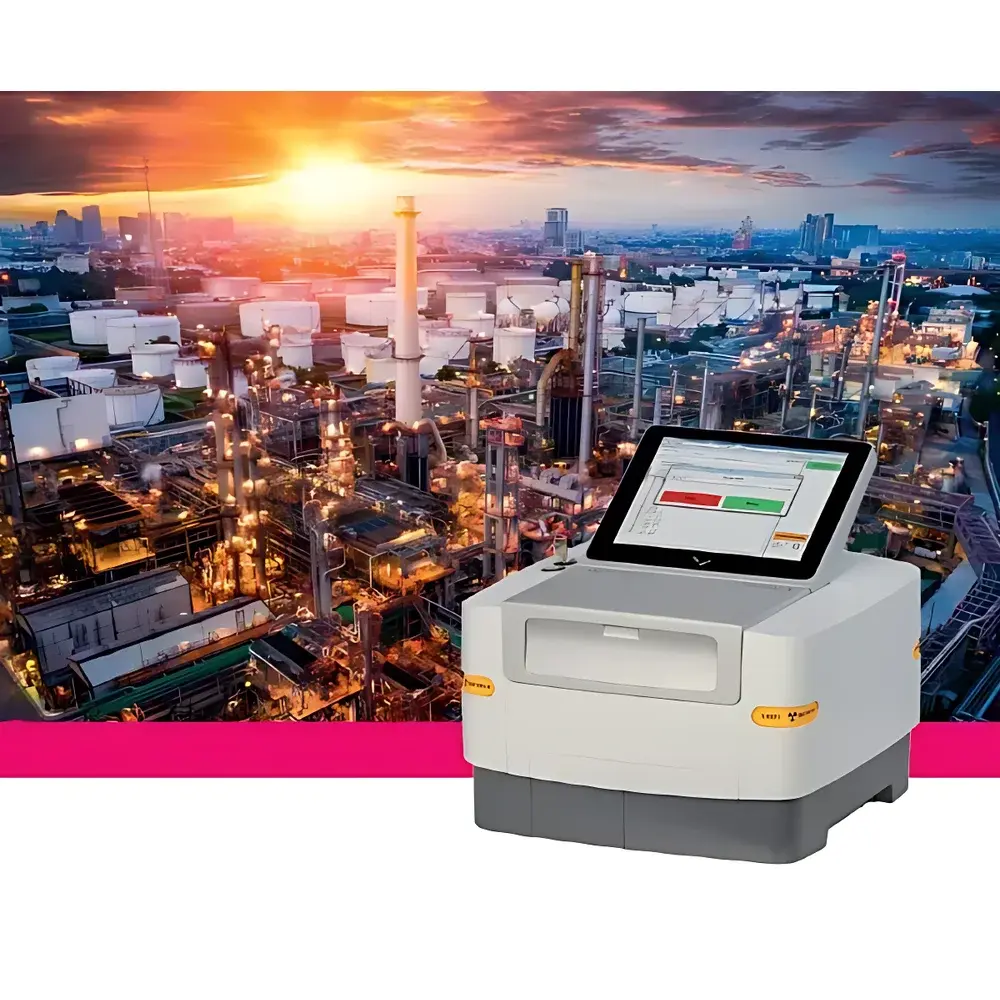
Malvern Panalytical Epsilon 1 ISO 13032 Energy Dispersive X-Ray Fluorescence Spectrometer
| Brand | Malvern Panalytical |
|---|---|
| Origin | Netherlands |
| Manufacturer Type | Original Equipment Manufacturer (OEM) |
| Import Status | Imported |
| Model | Epsilon 1 ISO 13032 |
| Configuration | Benchtop |
| Industry Application | Energy & Petrochemicals |
| Elemental Range | Na to Am |
| Quantification Range | ppm to % |
| Energy Resolution | 135 eV |
| Repeatability | High |
| Detector | High-Resolution Silicon Drift Detector (SDD) |
Overview
The Malvern Panalytical Epsilon 1 ISO 13032 is a benchtop energy dispersive X-ray fluorescence (ED-XRF) spectrometer engineered for trace-level sulfur and chlorine quantification in liquid hydrocarbon matrices—specifically designed and factory-precalibrated to comply with ISO 13032:2021, “Petroleum products — Determination of sulfur in automotive fuels — Wavelength dispersive X-ray fluorescence spectrometry.” Unlike conventional ED-XRF systems requiring helium purge or vacuum environments for light-element analysis, the Epsilon 1 achieves sub-ppm sulfur detection limits in gasoline, diesel, and biofuels under ambient air conditions. This performance is enabled by a proprietary vanadium-anode X-ray tube with a 50 µm beryllium exit window, optimized to excite sulfur Kα (2.307 keV) and chlorine Kα (2.622 keV) while minimizing spectral interference from adjacent elements. Integrated environmental sensors (temperature and barometric pressure) feed real-time corrections into the quantification algorithm, ensuring measurement stability across laboratory fluctuations without recalibration.
Key Features
- Vanadium-anode X-ray source: Specifically engineered for high-flux excitation of S and Cl; eliminates overlapping L-line contributions common with Rh or Mo anodes, improving peak-to-background ratio and reducing matrix correction uncertainty.
- Air-mode operation: Eliminates dependency on helium gas supply or vacuum pumps—reducing consumable costs, footprint, and operational complexity while maintaining ISO 13032 compliance.
- High-resolution silicon drift detector (SDD): Delivers ≤135 eV Mn Kα resolution at 0°C, enabling baseline separation of S, Cl, Ca, and Ti peaks in complex refinery streams.
- Robust sample handling: Includes spill-resistant sample cup design with disposable Be-window protection film; accommodates standard 5 mL liquid vials with ceramic side-window positioning for consistent geometry.
- Embedded computing platform: Integrated Windows 10 system with quad-core CPU, 8 GB RAM, and 120 GB SSD supports local data storage (>10,000 spectra), real-time spectrum processing, and secure user access control.
- Touch-enabled interface: 10.4-inch resistive LCD (1024 × 768) with large-button operator mode for routine QA/QC workflows; advanced mode provides full spectral deconvolution, matrix correction libraries, and method development tools.
Sample Compatibility & Compliance
The Epsilon 1 is validated for direct analysis of transparent, low-viscosity liquid fuels—including gasoline, ultra-low-sulfur diesel (ULSD), jet fuel (Jet A-1), and biodiesel blends—without digestion or dilution. It meets the precision requirements of ISO 13032 (repeatability ≤0.7 ppm + 0.025 × sulfur concentration) and is also preconfigured for ASTM D4294 (sulfur in petroleum products), ISO 8754 (sulfur in crude oil), ISO 20847 (sulfur in gasoline), IP 336, IP 496, and JIS K 2541-4. For chlorine analysis in crude oil, the instrument satisfies ISO 8754 Annex B specifications with detection limits <100 ppb. All calibrations are traceable to NIST SRM 2721 (sulfur in diesel) and certified reference materials compliant with ISO/IEC 17025 accreditation requirements. The system architecture supports audit trails, electronic signatures, and 21 CFR Part 11–compliant data integrity features when deployed in GLP/GMP-regulated environments.
Software & Data Management
OmniScan™ software (v5.3 or later) provides method-driven operation with built-in ISO 13032 workflow templates, including automatic background subtraction, inter-element correction (e.g., Si, Ca, Zn interference), and statistical validation per ISO 5725-2. Raw spectra are stored in standardized .rtd format; processed results export to CSV, PDF, or LIMS-compatible XML. The software enforces role-based access control (operator, supervisor, administrator), maintains full audit logs of all calibration changes and result modifications, and supports automated report generation with embedded metadata (sample ID, analyst, date/time, instrument status). Optional connectivity modules enable OPC UA integration with DCS/SCADA systems for real-time process monitoring in refinery labs.
Applications
- Quality control of finished transportation fuels for regulatory compliance (e.g., Euro 5/6, EPA Tier 3, China VI)
- Monitoring sulfur breakthrough in hydrotreater effluents and feedstocks
- Trace chlorine screening in crude oil to prevent corrosion in distillation units and catalyst poisoning
- Blending optimization of low-sulfur components in refinery tank farms
- Verification of desulfurization efficiency in biodesulfurization R&D programs
- Supporting ASTM D7042 and ISO 20847 round-robin testing protocols
FAQ
Does the Epsilon 1 require helium or vacuum for sulfur analysis?
No. Its high-efficiency vanadium anode and thin-be window SDD enable air-mode operation with full ISO 13032 compliance.
What is the minimum detectable sulfur level in diesel fuel?
Typical MDL is 0.3 ppm (3σ) for 300-second live-time measurements under routine lab conditions.
Can the system analyze solid samples such as catalysts or particulates?
Not natively—Epsilon 1 is optimized for liquids. Solid analysis requires optional accessories (e.g., pellet press, sample spinner) and method revalidation per ISO 20847 Annex C.
Is method transfer possible between Epsilon 1 and other Malvern Panalytical XRF platforms?
Yes. OmniScan methods are portable across the Epsilon series (Epsilon 1, 3, 4) via standardized calibration file exchange (.calx), subject to hardware compatibility checks.
How is temperature drift compensated during extended runs?
Real-time thermal feedback from onboard sensors adjusts gain and offset parameters dynamically, preserving peak centroid stability within ±0.1 eV over 8-hour sessions.




