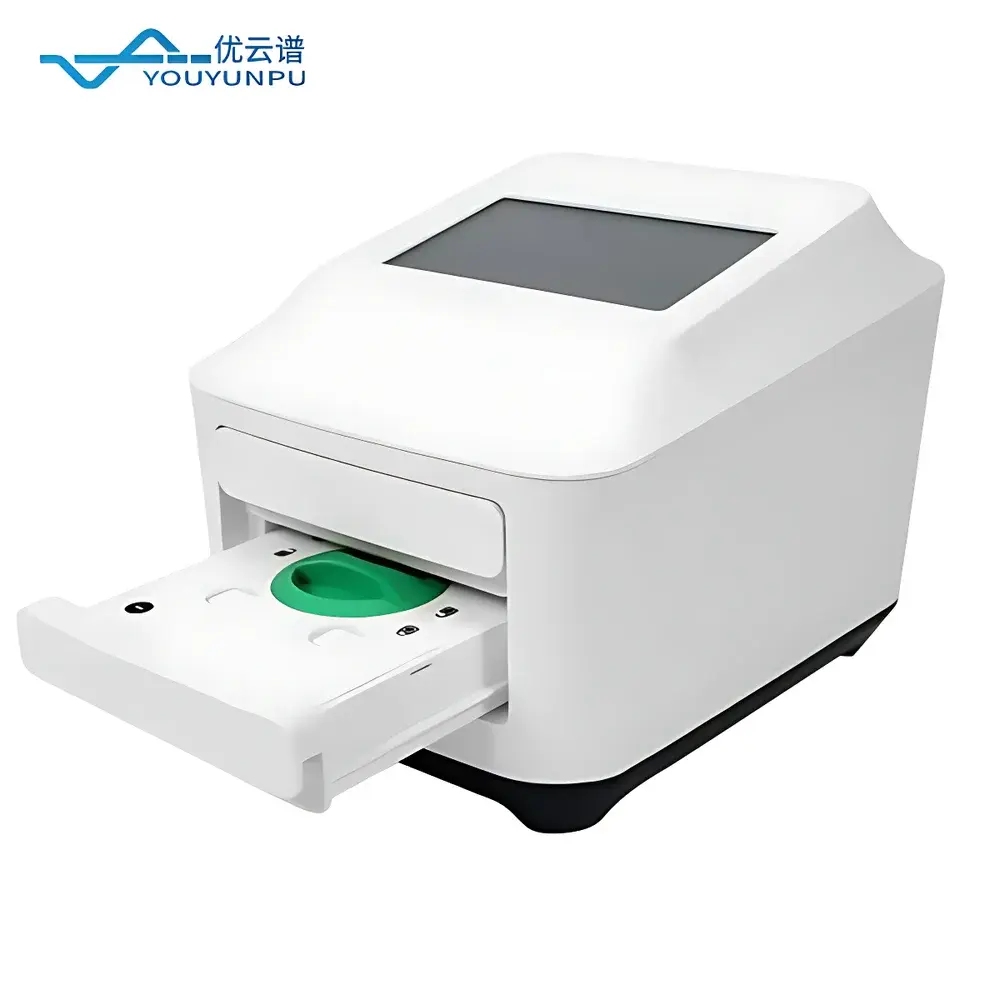
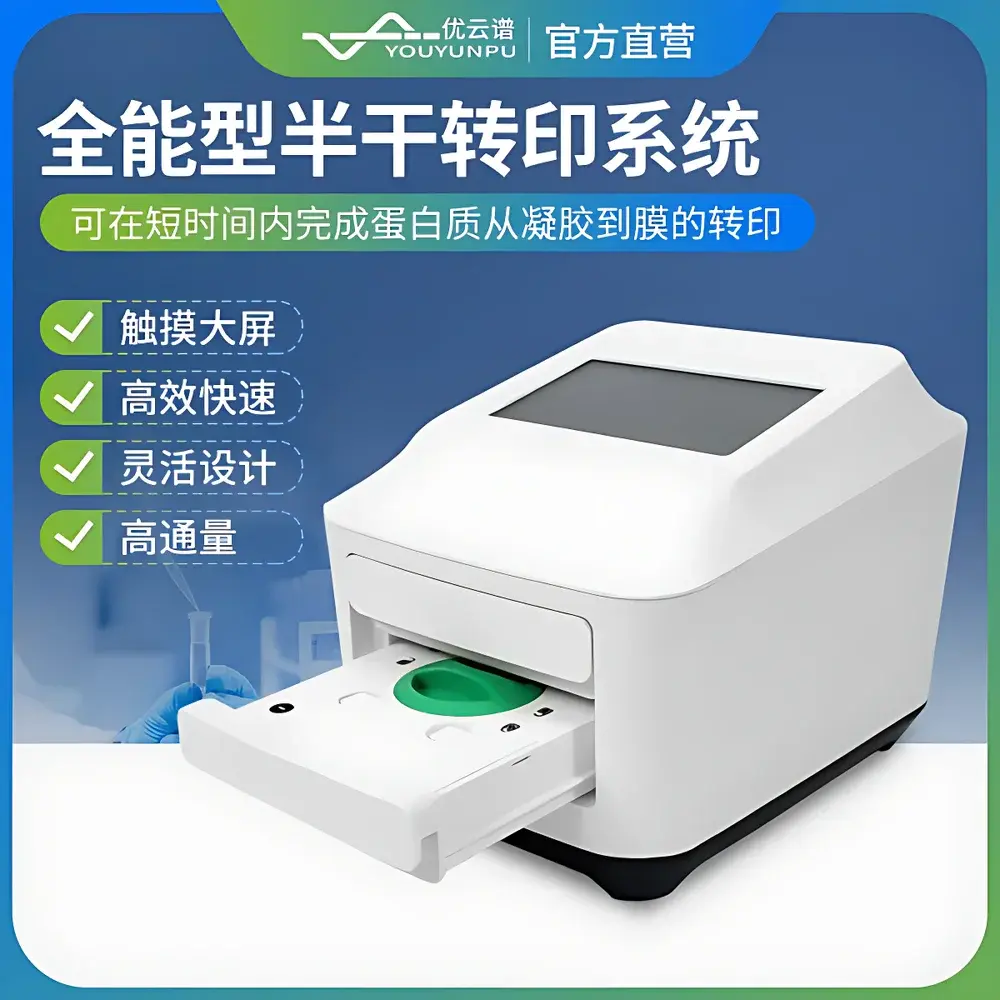
Youyunpu YP-ZM Fully Automated Semi-Dry Western Blot Transfer System
| Brand | Youyunpu |
|---|---|
| Origin | Shandong, China |
| Manufacturer Type | OEM Manufacturer |
| Instrument Type | Protein Transfer System |
| Automation Level | Fully Automated |
| Transfer Method | Semi-Dry Electrophoretic Transfer |
| Max Output Voltage | 0–25 V (1 V increments) |
| Max Output Current | 0–2.5 A (0.1 A increments) |
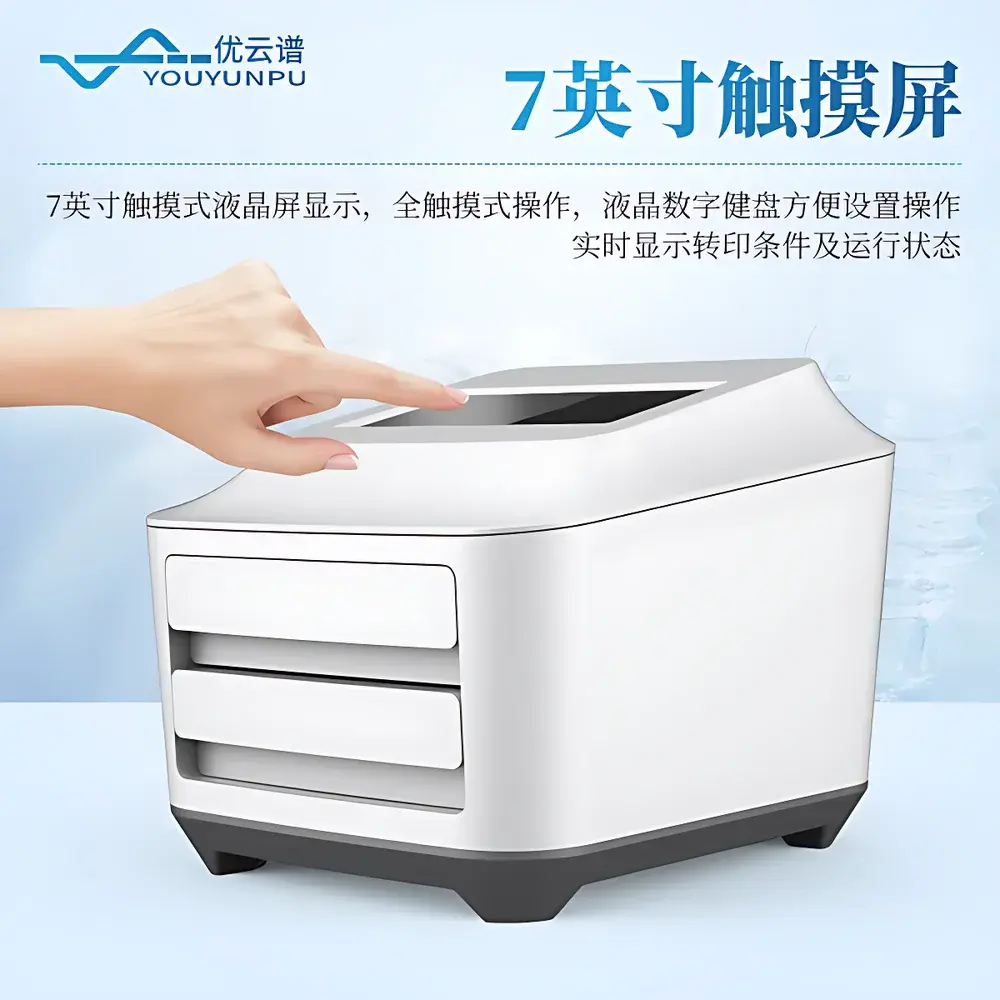
| Display | 7-inch capacitive touchscreen with real-time parameter monitoring |
| Programmable Methods | 25 user-defined protocols |
| Transfer Plate Dimensions | 18.0 × 14.5 cm |
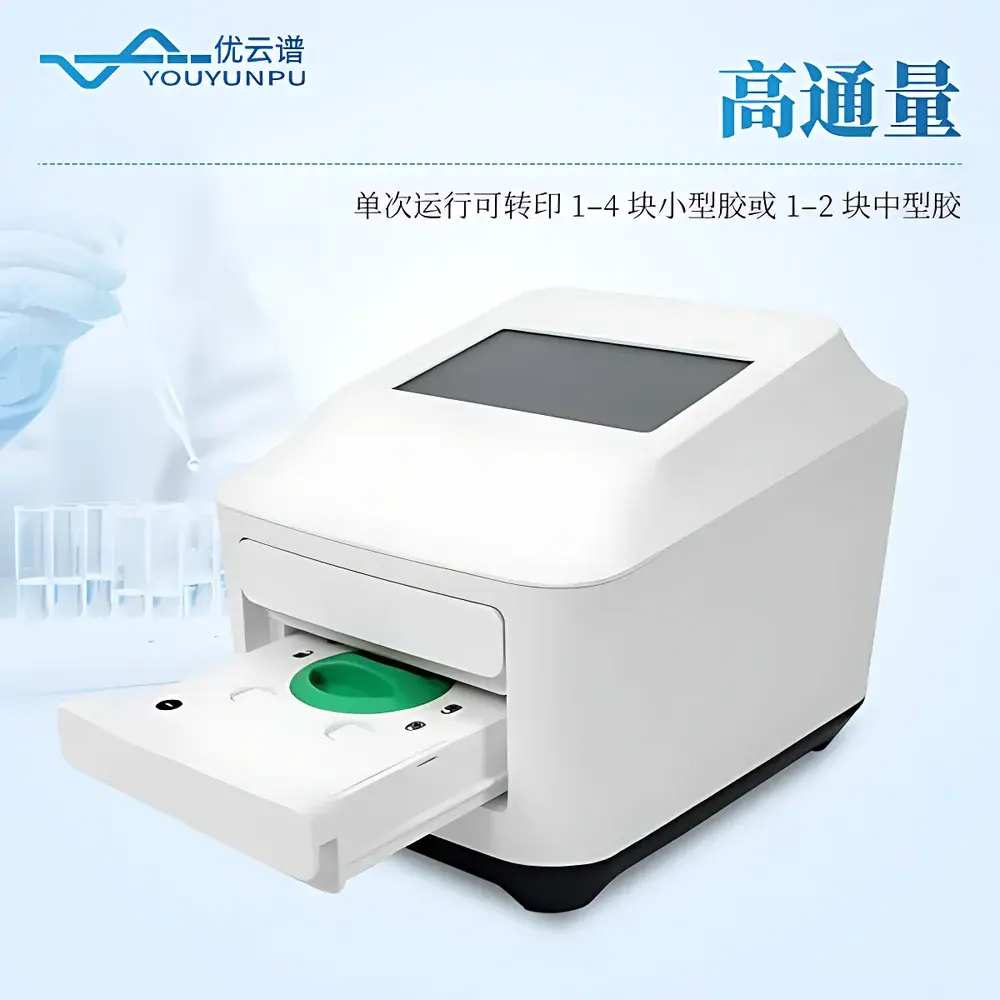
| Throughput | 1–4 mini gels or 1–2 midi gels per run |
| Compatible Buffers | Optimized semi-dry transfer buffer concentrate (supplied) |
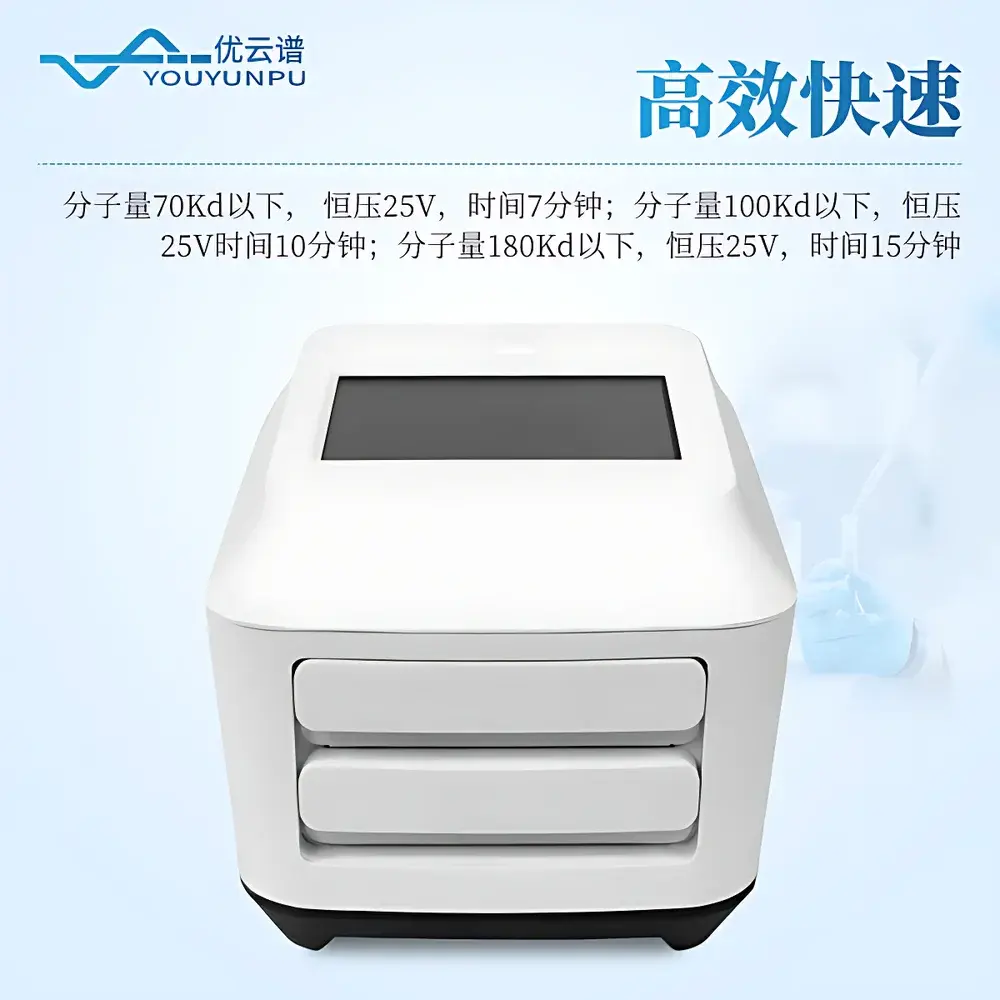
| Recommended Applications | Proteins ≤180 kDa (transfer time: 7–15 min at 25 V constant voltage) |
Overview
The Youyunpu YP-ZM Fully Automated Semi-Dry Western Blot Transfer System is an engineered solution for rapid, reproducible electrophoretic protein transfer from polyacrylamide gels to solid supports—including nitrocellulose and PVDF membranes—using the semi-dry principle. Unlike traditional wet or tank-based transfer systems, the YP-ZM employs direct electrode contact and optimized buffer conductivity to achieve high-efficiency translocation of proteins under controlled constant-voltage conditions. Its core architecture integrates a precision DC power supply, thermally stable electrode plates (titanium anode and stainless-steel cathode), and a rigid, low-resistance transfer cassette designed to minimize Joule heating and ensure uniform field distribution across the gel-membrane stack. The system is calibrated for routine use in academic, pharmaceutical, and clinical research laboratories where throughput, protocol consistency, and minimal hands-on intervention are critical to downstream immunodetection workflows.
Key Features
- Fully automated operation with intuitive 7-inch capacitive touchscreen interface—supports real-time display of voltage, current, elapsed time, and active protocol parameters
- Precision programmable power control: 0–25 V output (1 V resolution) and 0–2.5 A current limit (0.1 A resolution), enabling fine-tuned optimization for diverse protein molecular weights
- High-throughput capability: accommodates up to four standard mini gels (e.g., 8.0 × 7.0 cm) or two midi gels (e.g., 13.0 × 14.0 cm) simultaneously within a single 18.0 × 14.5 cm transfer plate
- Pre-validated semi-dry transfer buffer concentrate included—formulated to maintain ion mobility and pH stability during short-duration transfers (7–15 min)
- 25 programmable method slots for storing and recalling custom transfer protocols—supporting GLP-compliant documentation via timestamped execution logs
- Robust mechanical design with corrosion-resistant electrodes and pressure-adjustable clamping mechanism to ensure consistent gel-membrane contact and eliminate air gaps
Sample Compatibility & Compliance
The YP-ZM is compatible with standard SDS-PAGE gels (acrylamide concentrations 8–15%), common blotting membranes (nitrocellulose, PVDF, and supported nylon), and widely used transfer buffers (including Tris-Glycine-Methanol and proprietary low-conductivity formulations). It supports transfer of proteins ranging from <10 kDa up to 180 kDa, with empirically validated time–voltage profiles for common molecular weight ranges: 7 min at 25 V for ≤70 kDa; 10 min at 25 V for ≤100 kDa; and 15 min at 25 V for ≤180 kDa. While not certified to IEC 61010-1 or ISO/IEC 17025 as a standalone analytical instrument, the system conforms to general electrical safety standards applicable to laboratory benchtop electrophoresis equipment. Its programmable memory and real-time parameter logging support audit-ready workflows aligned with internal QA/QC requirements and basic GLP documentation practices.
Software & Data Management
The YP-ZM operates without external PC dependency—the embedded firmware handles all protocol execution, timing, and status reporting locally. Each transfer cycle generates a timestamped log entry including start time, selected method ID, final voltage/current values, and total runtime. These logs are retained in non-volatile memory and can be reviewed directly on-screen or exported via USB flash drive (optional accessory) in CSV format for integration into LIMS or electronic lab notebooks (ELN). No proprietary software installation is required. The system does not implement FDA 21 CFR Part 11-compliant electronic signatures or audit trails; however, its deterministic behavior, repeatable output, and method recall functionality facilitate traceability in regulated environments when paired with manual SOP documentation.
Applications
- Routine Western blotting for validation of recombinant protein expression, post-translational modifications, and antibody specificity
- High-volume screening in proteomics core facilities requiring consistent transfer efficiency across multiple samples per day
- Teaching laboratories where ease of use, safety, and reduced procedural variability are prioritized over ultra-high-resolution applications
- Preparative transfer prior to mass spectrometry analysis, where minimal protein loss and low background are essential
- Compatibility testing of novel membrane substrates or buffer additives under controlled semi-dry conditions
FAQ
What types of gels and membranes are compatible with the YP-ZM?
Standard SDS-PAGE gels (8–15% acrylamide) and commercially available nitrocellulose, PVDF, or supported nylon membranes are fully supported.
Can the YP-ZM perform wet or tank-based transfers?
No—the YP-ZM is specifically engineered for semi-dry electrophoretic transfer and lacks the reservoir, cooling, and pump infrastructure required for wet transfer methods.
Is the system suitable for transferring large proteins (>180 kDa)?
While transfer of proteins >180 kDa is technically possible, efficiency declines significantly; users should consider optimizing buffer composition, reducing voltage, or extending time beyond the default recommendations—and verify transfer completeness via Ponceau S staining.
Does the YP-ZM support temperature monitoring or active cooling?
The system does not include integrated temperature sensors or Peltier cooling; however, its semi-dry architecture inherently limits heat accumulation during short-duration runs (≤15 min), and ambient lab conditions (18–25°C) are sufficient for stable operation.
How is data integrity ensured during method recall and execution?
Each stored protocol retains exact voltage, current limit, and duration settings; execution logs record actual measured parameters at completion—enabling retrospective verification of operational fidelity across batches.