
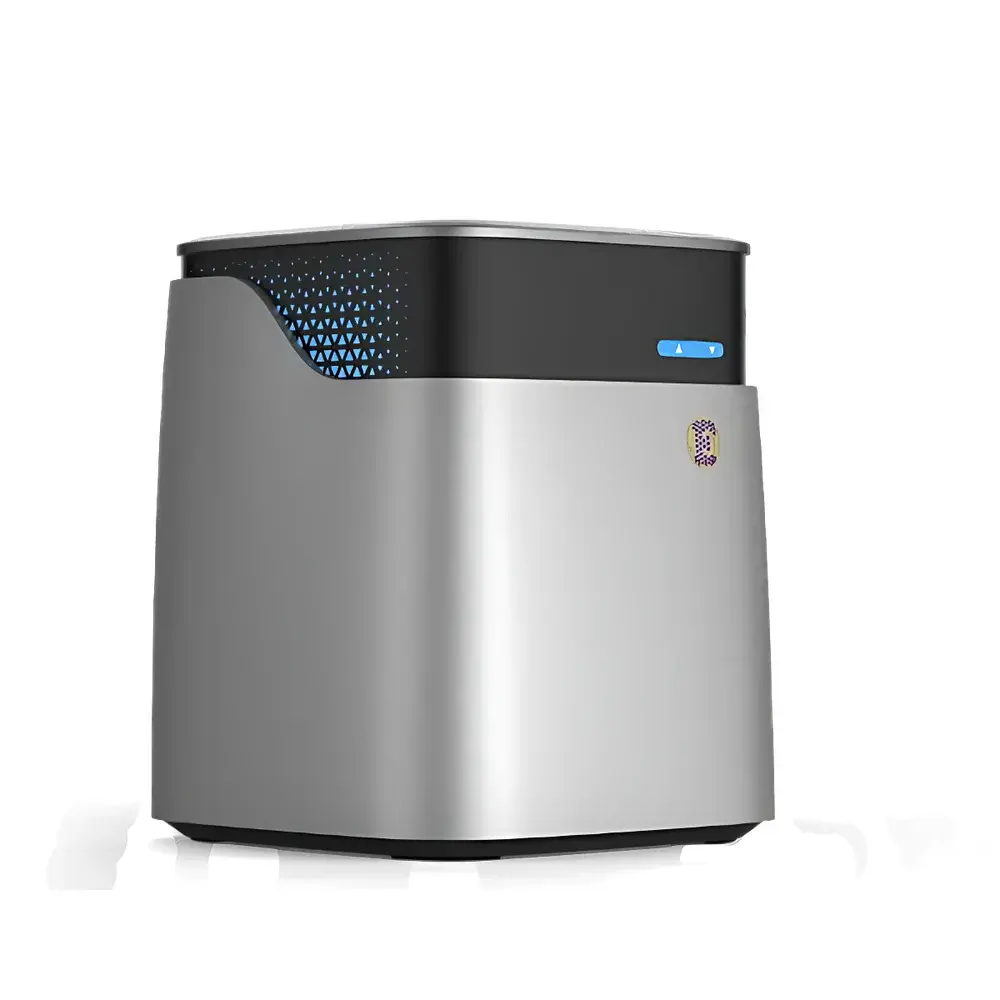
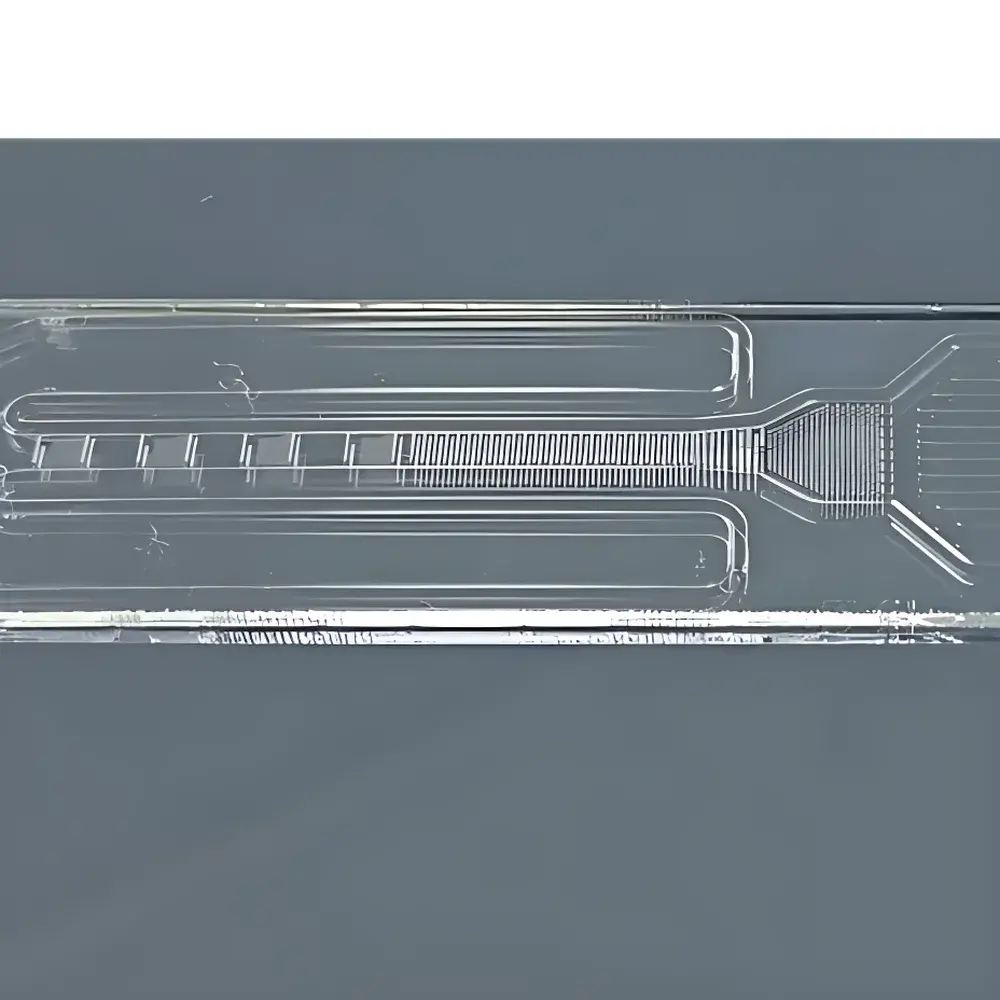
Bo-Semitech Digital Fluorescent Immunochromatographic Chip System for Single-Molecule Protein Detection
| Brand | Bo-Semitech |
|---|---|
| Origin | Guangdong, China |
| Chip Material | Organic Polymer |
| Chip Type | Continuous-Flow Microfluidic Chip |
| Target Analytes | Proteins |
| Detection Sensitivity | 1–10 pg/mL (e.g., IL-6) |
| Dynamic Range | 1–1000 pg/mL (R² > 0.99) |
| Readout Format | Portable Fluorescence Reader or Smartphone-Coupled Imaging Module |
| Multiplex Capacity | Up to 16 Analytes per Chip |
| Regulatory Classification | In Vitro Diagnostic (IVD) Microfluidic Platform |
| Compliance Context | Designed for CLIA-waived and point-of-care use under ISO 13485-aligned manufacturing practices |
Overview
The Bo-Semitech Digital Fluorescent Immunochromatographic Chip System represents a paradigm shift in rapid immunoassay architecture—merging the operational simplicity of lateral flow with the quantitative rigor of single-molecule fluorescence detection. Unlike conventional colloidal gold-based strips or bulk-phase chemiluminescent platforms, this system employs a continuous-flow microfluidic chip fabricated from biocompatible organic polymer substrates, enabling precise capillary-driven transport, controlled antibody immobilization, and spatially resolved digital fluorescence counting at the single-molecule level. The core measurement principle relies on fluorophore-labeled immunocomplex formation within defined test zones, followed by high-contrast epifluorescence imaging using a compact, battery-powered reader equipped with a 488 nm excitation source and sCMOS detection. This architecture delivers true digital quantification—each fluorescent event corresponds to an individual analyte molecule bound to a capture probe—thereby eliminating analog signal drift and enabling absolute concentration determination without calibration curves in certain configurations. Engineered for decentralized testing environments, the platform satisfies critical requirements for near-patient diagnostics: sub-15-minute turnaround time, minimal hands-on steps (<60 seconds user intervention), and full integration from sample application to result display.
Key Features
- Digital fluorescence readout with single-molecule resolution—enabling detection limits as low as 1 pg/mL for key cardiac and inflammatory biomarkers (e.g., IL-6, hs-cTnT)
- Continuous-flow microfluidic chip design ensures consistent laminar transport, reduced nonspecific binding, and improved reproducibility (intra-assay CV < 8%, inter-assay CV < 12%)
- Organic polymer chip substrate offers superior batch-to-batch consistency, thermal stability up to 60°C, and compatibility with lyophilized reagent storage
- Modular reader architecture supports both standalone operation and smartphone-integrated data acquisition via Bluetooth 5.0 and encrypted local storage
- On-chip multiplexing capability: up to 16 distinct capture lines per chip, each addressable via spectral unmixing or spatial encoding
- No external wash steps or secondary incubation—sample-to-answer workflow requires only pipetting or direct capillary loading
Sample Compatibility & Compliance
The system accepts native human whole blood (with integrated erythrocyte lysis), serum, plasma (EDTA/K₂EDTA), and saliva—without pre-dilution or centrifugation. Sample volume requirement is 15–30 µL. All chips are manufactured under ISO 13485-certified conditions and comply with IVD regulatory frameworks for non-instrumented, low-risk rapid tests. While not FDA 510(k)-cleared or CE-IVDR certified at time of launch, the platform’s design incorporates traceability controls aligned with GLP/GMP documentation standards—including lot-specific QC reports, reagent stability logs, and reader firmware versioning. Each chip batch undergoes analytical validation per CLSI EP17-A2 guidelines for limit of detection (LoD), linearity, and hook effect evaluation.
Software & Data Management
The companion software suite (v2.3+) runs on Windows 10/11 and Android 11+ devices. It provides real-time image acquisition, auto-thresholding for spot segmentation, background subtraction using rolling-ball algorithm, and concentration interpolation via four-parameter logistic (4PL) or linear regression models. Audit trails record operator ID, timestamp, chip lot number, reader serial ID, and raw pixel intensity matrices—supporting 21 CFR Part 11-compliant electronic signatures when deployed in regulated clinical labs. Export formats include CSV, PDF summary reports, and HL7 v2.5-compatible messages for LIS/HIS integration. Firmware updates are delivered over-the-air with cryptographic signature verification.
Applications
This platform is validated for quantitative detection of clinically relevant protein biomarkers across multiple domains: cardiovascular risk assessment (hs-cTnT, NT-proBNP), infectious disease triage (CRP, PCT, SARS-CoV-2 nucleocapsid IgG), coagulation monitoring (D-dimer, fibrinogen), metabolic screening (HbA1c surrogates), and early oncology surveillance (CA125, AFP, IL-6). Its sensitivity profile makes it particularly suitable for longitudinal monitoring of low-abundance cytokines in sepsis management or post-immunotherapy response evaluation. Field deployments have demonstrated robust performance in primary care clinics, mobile health units, and resource-constrained settings where access to central laboratories is limited.
FAQ
What sample types are compatible with the chip?
Whole blood (with built-in lysis), serum, plasma (EDTA/K₂EDTA), and oral fluid—no preprocessing required.
Is calibration required before each test?
No. Each chip includes internal reference zones and factory-calibrated response curves; optional user calibration is supported via supplied standards.
Can results be exported to hospital information systems?
Yes—HL7 v2.5 message generation and configurable DICOM-SR templates are available in enterprise license tiers.
How is temperature variation managed during field use?
The reader integrates a thermistor-controlled Peltier element maintaining detector temperature within ±0.5°C across 10–40°C ambient range.
What is the shelf life of unopened chips?
24 months when stored at 2–8°C; 6 months at room temperature (≤25°C) with desiccant.




