
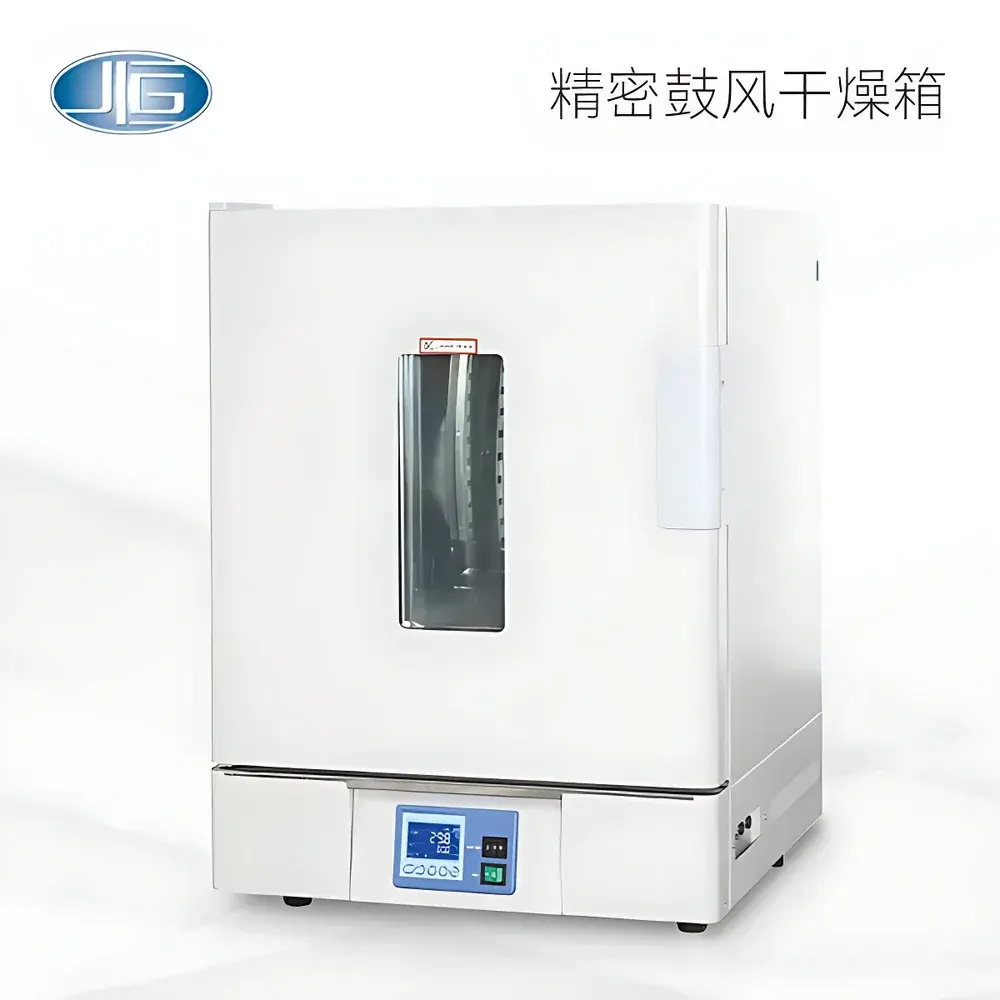
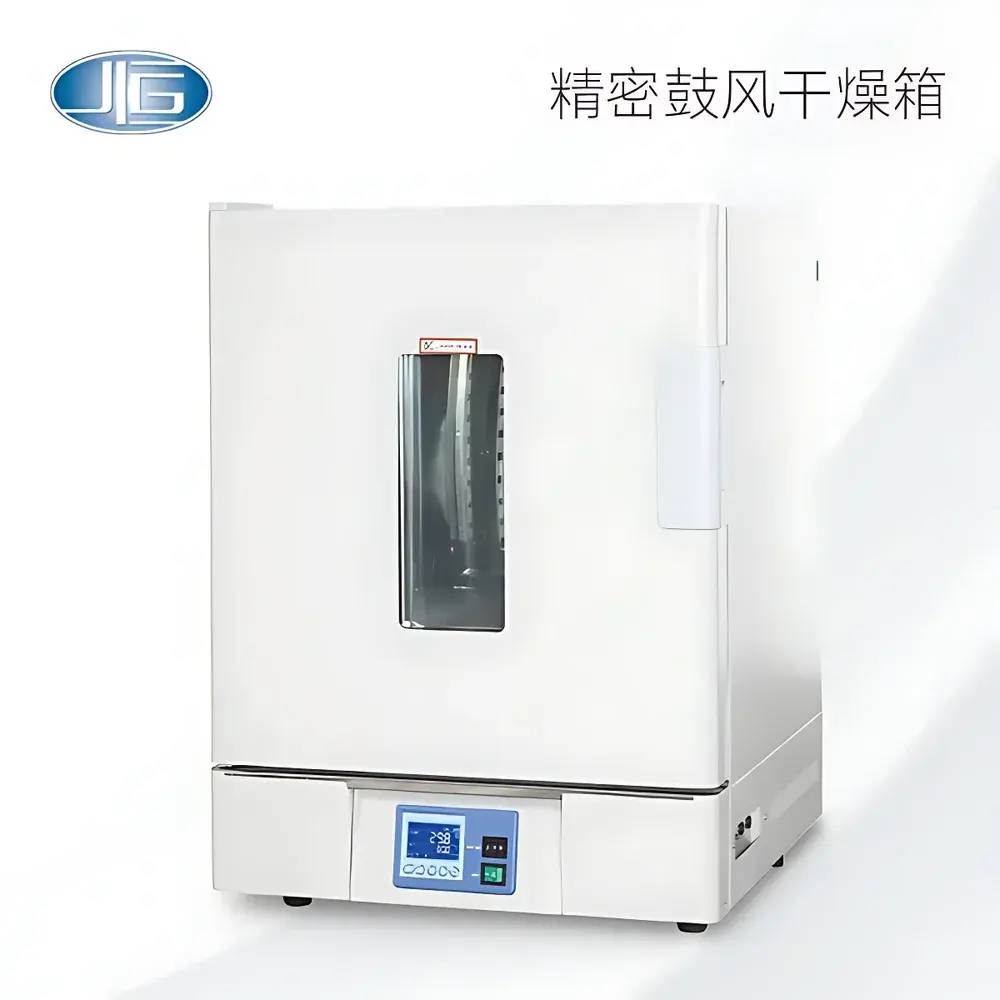
Yiheng BPG-9006 Series Precision Forced-Air Drying Oven with Multi-Stage Programmable LCD Controller
| Brand | Yiheng |
|---|---|
| Origin | Shanghai, China |
| Manufacturer Type | Direct Manufacturer |
| Product Category | Domestic |
| Model | BPG-9006 Series |
| Temperature Range | RT+10°C to 200°C (optional RT+10°C to 250°C) |
| Temperature Uniformity | ±2.5% (at 100°C), ±1.5% (at 100°C, high-uniformity configuration) |
| Temperature Fluctuation | ±1°C |
| Temperature Resolution | 0.1°C |
| Interior Material | AISI 304 Stainless Steel |
| Heating Method | Forced Convection (Hot Air Circulation) |
| Programmability | 7 programs × 9 steps each (63 total programmable steps), time range per step: 0–5999 min |
Overview
The Yiheng BPG-9006 Series Precision Forced-Air Drying Oven is engineered for laboratories requiring stable, repeatable thermal processing across research, quality control, and routine sample preparation workflows. Based on the principle of forced convection heating—where a precisely regulated fan circulates heated air uniformly throughout the chamber—the oven ensures rapid thermal response and minimized spatial temperature gradients. Its dual-range capability (standard RT+10°C to 200°C; optional extension to 250°C) supports applications ranging from moisture loss determination and polymer curing to pre-drying of analytical samples prior to gravimetric or chromatographic analysis. The unit complies with fundamental design expectations outlined in ISO 17025 for laboratory equipment validation and aligns with general thermal stability requirements referenced in ASTM E145 (Standard Specification for Gravity-Convection and Forced-Ventilation Ovens), though it is classified as a non-GMP-grade instrument unless validated per site-specific protocols.
Key Features
- Multi-stage programmable LCD controller enabling up to 7 independent programs, each containing up to 9 sequential steps—totaling 63 programmable segments—with customizable setpoints for temperature, dwell time, ramp rate, and fan speed.
- AISI 304 stainless steel interior chamber featuring seamless, radius-corner construction and removable shelf supports for simplified cleaning and contamination control—critical for GLP-aligned sample handling environments.
- High-efficiency forced-air circulation system with adjustable airflow velocity, contributing to measured temperature uniformity of ±1.5% at 100°C (high-uniformity variant) and ±2.5% at 100°C (standard configuration), verified per internal calibration procedures.
- Independent overtemperature protection circuit with audible and visual alarm activation, decoupled from the main PID controller to ensure fail-safe operation during extended unattended runs.
- Energy-optimized design incorporating high-density mineral fiber insulation and a proprietary silicone-based door gasket, reducing standby heat loss by >25% compared to legacy convection ovens with equivalent chamber volume.
- 0.1°C temperature resolution and ±1°C stability under steady-state conditions, supporting reproducible drying kinetics for comparative studies and method development.
Sample Compatibility & Compliance
The BPG-9006 series accommodates standard laboratory glassware (e.g., weighing dishes, Petri dishes, crucibles) and metal trays up to the maximum internal dimensions specified in the product manual. It is suitable for non-hazardous, non-volatile, and non-explosive materials only. While not certified for Class I/II explosion-proof use or UL/CSA hazardous location compliance, its construction meets general electrical safety requirements per GB 4793.1 (equivalent to IEC 61010-1). For regulatory environments, users must perform IQ/OQ/PQ validation using documented procedures aligned with their internal SOPs and applicable standards such as ISO/IEC 17025 or FDA 21 CFR Part 11 when integrated with optional data logging accessories.
Software & Data Management
The oven supports optional digital interface modules including RS-485 (Modbus RTU protocol), USB host port for direct U-disk data export, and parallel printer output. When connected to a validated PC-based acquisition system, time-stamped temperature logs can be exported in CSV format for audit trails, trend analysis, and deviation reporting. All recorded data retain traceability to operator ID, program name, and execution timestamp—enabling alignment with ALCOA+ data integrity principles when deployed in regulated QC labs. Firmware updates are delivered via secure USB media; no cloud connectivity or remote access functionality is implemented.
Applications
- Moisture content determination per AOAC 950.46 and USP <731> Loss on Drying methods.
- Pre-conditioning of filter membranes, chromatography columns, and reference standards prior to analytical use.
- Curing of epoxy resins, adhesives, and coating substrates in materials science labs.
- Drying of biological tissue sections, botanical specimens, and soil samples without oxidative degradation.
- Stabilization of hygroscopic reagents and desiccation of calibration weights in metrology support areas.
- Accelerated aging studies under controlled thermal profiles for packaging and polymer stability assessment.
FAQ
Is the BPG-9006 oven compliant with FDA 21 CFR Part 11?
No—out-of-the-box compliance is not provided. However, when paired with validated third-party data acquisition software and electronic signature controls, it may be incorporated into Part 11–compliant workflows following site-specific risk assessment and documentation.
What is the maximum allowable load weight per shelf?
Maximum distributed load is 15 kg per standard shelf; loading beyond this may affect airflow distribution and temperature uniformity.
Can the oven operate continuously at 250°C?
Only models explicitly ordered with the high-temperature option (BPG-9006A-H) are rated for continuous operation at 250°C; standard units are limited to 200°C.
Does the unit include NIST-traceable calibration documentation?
Factory calibration certificates are available upon request (additional charge); full NIST-traceable calibration requires external service provider engagement.
How often should preventive maintenance be performed?
Biannual inspection of door seal integrity, fan motor lubrication, and thermistor verification is recommended for sustained performance in high-utilization environments.



