
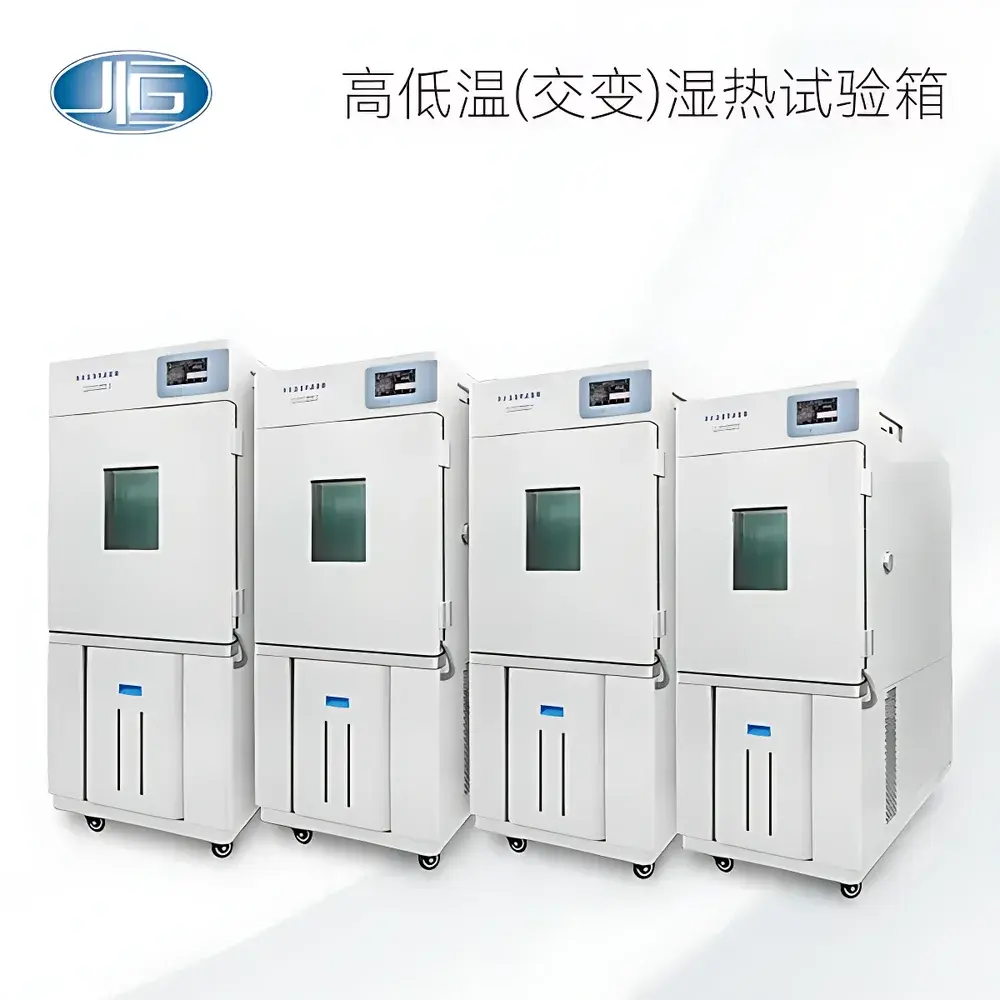
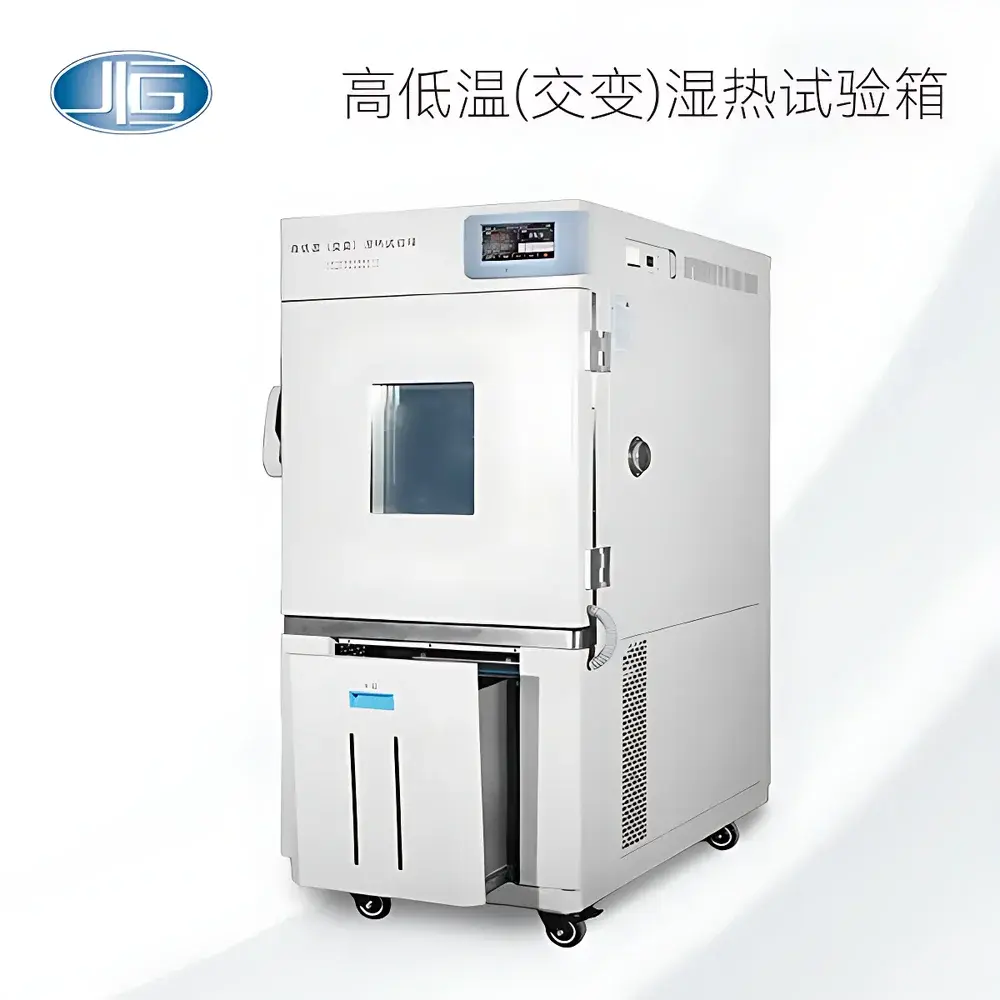
YIHENG BPHS/BPHJS Series High-Low Temperature & Humidity Environmental Test Chamber
| Brand | YIHENG |
|---|---|
| Origin | Shanghai, China |
| Manufacturer Type | Direct Manufacturer |
| Product Origin | Domestic (China) |
| Model | BPHS / BPHJS |
| Price Range | USD 5,000 – 25,000 (FOB Shanghai) |
| Temperature Range | Option A: −20°C to +150°C |
| Option B | −40°C to +150°C |
| Option C | −60°C to +150°C |
| Refrigeration Method | Compressor-based cooling |
| Explosion-Proof Design | Standard (non-explosion-proof) |
| Temperature Fluctuation | ±0.5°C |
| Temperature Uniformity | ±2.0°C |
| Chamber Dimensions | Customizable — refer to technical catalog for standard internal dimensions (W×D×H in mm) |
Overview
The YIHENG BPHS/BPHJS Series High-Low Temperature & Humidity Environmental Test Chamber is an engineered solution for accelerated environmental stress testing of materials, components, and finished products under precisely controlled thermal and hygrothermal conditions. Designed in accordance with international test standards—including IEC 60068-2-1 (cold), IEC 60068-2-2 (dry heat), IEC 60068-2-30 (damp heat, cyclic), and GB/T 2423.1–2423.4 (Chinese national equivalents)—this chamber enables reproducible simulation of real-world climatic exposure scenarios. Its core architecture integrates a dual-stage compressor refrigeration system with R134a refrigerant, a high-efficiency air-circulation duct design, and a fully insulated double-wall chamber structure with vacuum-sealed insulation. The system operates on the principle of forced-air convection combined with precision dew-point control via dry-bulb/wet-bulb or capacitive humidity sensing, ensuring stable and traceable thermodynamic profiles across the full operational envelope.
Key Features
- Environmentally compliant refrigeration using R134a—a zero-ozone-depletion-potential (ODP = 0), low-global-warming-potential (GWP ≈ 1430) refrigerant—meeting EU F-Gas Regulation Annex I requirements.
- Advanced programmable controller: BPHJS models feature a 7-inch color TFT LCD touchscreen interface with bilingual (English/Chinese) menu navigation, real-time graphical display of temperature/humidity curves, and password-protected parameter locking.
- High-stability control algorithm: Built-in fuzzy PID logic with auto-tuning capability dynamically adjusts heating/cooling/humidification outputs to maintain setpoint accuracy within ±0.5°C temperature fluctuation and ±2.0°C spatial uniformity (per IEC 60068-3-5).
- Robust mechanical construction: Interior chamber fabricated from electropolished AISI 304 stainless steel with radius-rounded corners (R ≥ 25 mm) and removable adjustable shelves; exterior housing with powder-coated cold-rolled steel.
- Integrated safety architecture: Independent over-temperature cut-off (dual-limit thermostat), compressor thermal overload protection, fan motor overheat detection, low-water-level alarm, and phase-failure monitoring.
- Standard 25 mm or optional 50 mm left-side port (with EPDM sealing gasket) for sensor feedthrough, power cabling, or real-time external measurement integration.
Sample Compatibility & Compliance
The chamber accommodates a broad range of sample types—including electronic assemblies, automotive ECUs, polymer packaging, aerospace composites, and pharmaceutical primary packaging—without compromising thermal or humidity fidelity. Internal volume options scale from 100 L to 1000 L (custom configurations available), supporting both static load and dynamic airflow-sensitive test specimens. All BPHS/BPHJS units are CE-marked per Machinery Directive 2006/42/EC and EMC Directive 2014/30/EU. Optional calibration certificates (traceable to NIM or CNAS-accredited labs) support ISO/IEC 17025-compliant validation protocols. The system meets functional requirements for ISTA 3A, MIL-STD-810H Method 502.7 (low temperature), Method 503.7 (temperature shock), and Method 507.6 (humidity), as well as JIS Z 8701 and ASTM D4332 conditioning procedures.
Software & Data Management
An optional PC-based control suite supports centralized management of up to 30 chambers simultaneously via RS-485 Modbus RTU or TCP/IP Ethernet (with optional gateway). The software provides full audit-trail functionality compliant with FDA 21 CFR Part 11 (electronic signatures, user role permissions, immutable event logs), GLP/GMP-aligned data archiving, and automated report generation in Excel (.xlsx) or Word (.docx) format. Real-time data streaming enables live trend analysis, deviation alerts, and export of time-stamped CSV datasets. USB-host SD card slot allows offline data backup without PC dependency; RS-232/485 interfaces enable integration with SCADA systems or PLC-based factory networks.
Applications
- Accelerated aging studies for lithium-ion battery modules under thermal cycling (−40°C ↔ +85°C) and humidity soak (85% RH at 85°C).
- Qualification testing of printed circuit boards (PCBs) per IPC-J-STD-004 and JEDEC JESD22-A104.
- Stability assessment of medical device housings (ISO 10993-12) and sterile barrier systems (ISO 11607-1).
- Material compatibility screening for adhesives, sealants, and conformal coatings under combined thermal-hygric stress.
- Environmental stress screening (ESS) and burn-in verification in semiconductor manufacturing and automotive Tier-1 supply chains.
FAQ
What temperature and humidity ranges are supported?
The BPHS/BPHJS series offers three standard low-temperature options: −20°C, −40°C, or −60°C minimum, all extending to +150°C maximum; relative humidity range is 20–98% RH (at temperatures ≥ +10°C).
Is the chamber suitable for GMP-regulated environments?
Yes—when equipped with the optional validation package (IQ/OQ/PQ documentation, calibration certificate, and 21 CFR Part 11-compliant software), it fulfills requirements for pharmaceutical stability chambers per ICH Q1A(R2) and USP .
Can the controller be configured for multi-step cyclic tests?
Yes—the BPHJS touchscreen controller supports up to 120 programs, each with 99 segments; total cycle count up to 999 repetitions; segment duration configurable to 999 h 59 min 59 s.
What maintenance intervals are recommended?
Compressor oil and refrigerant levels should be verified annually; condenser coils require cleaning every 3 months in standard lab environments; humidity sensor recalibration is advised every 6 months or after 500 operational hours.
Is remote monitoring possible without proprietary software?
Yes—Modbus RTU over RS-485 allows integration with third-party SCADA platforms (e.g., Ignition, Siemens Desigo, or Wonderware) using standard register mapping provided in the communication protocol manual.



