
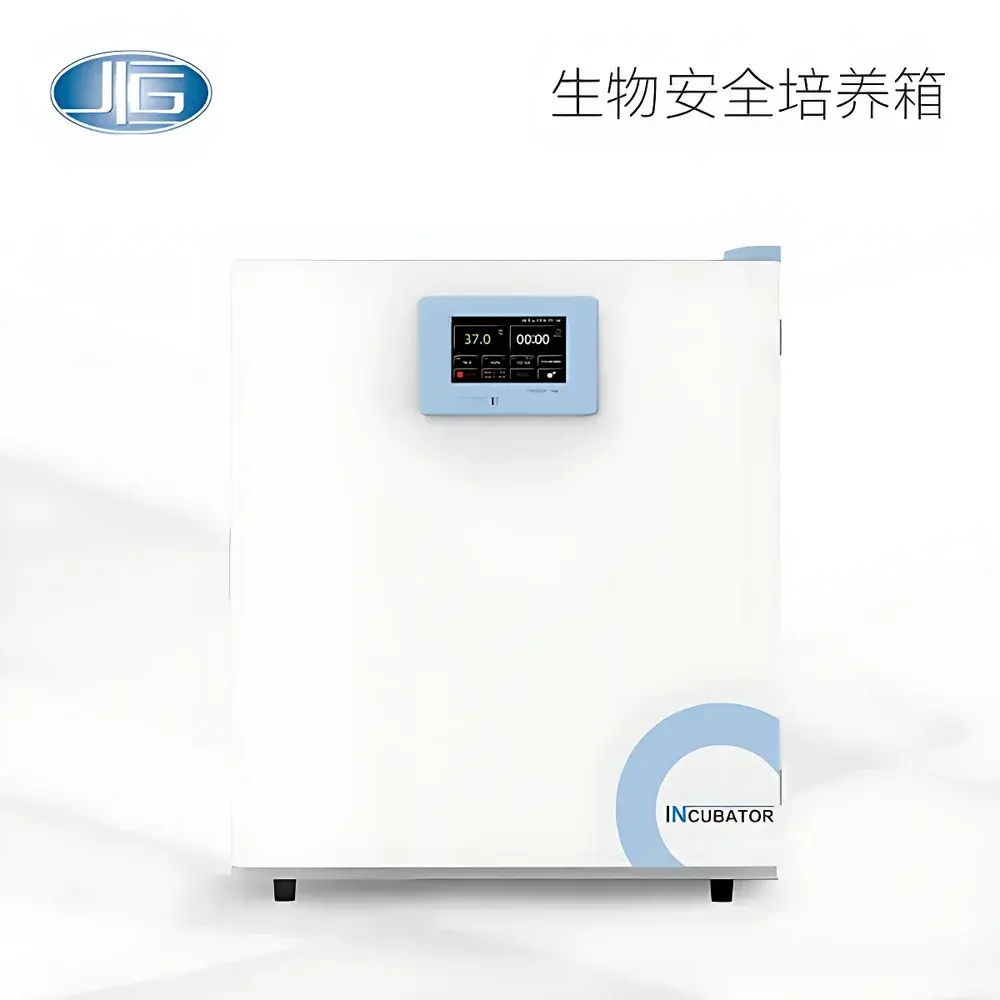
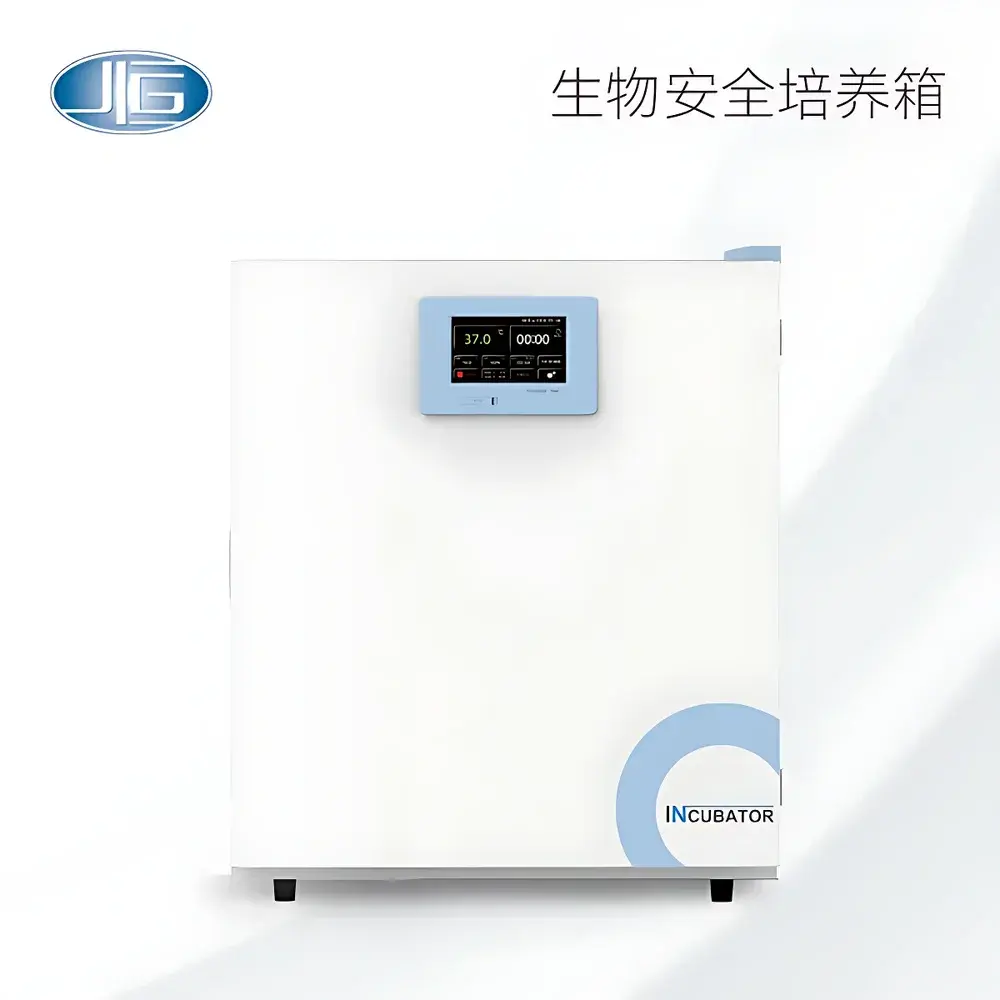
Yiheng BISF-Series Biological Safety Incubators with HEPA Filtration
| Brand | Yiheng |
|---|---|
| Model(s) | BISF-80, BISF-150, BISF-190, BISF-240 |
| Origin | Jiangsu, China |
| Manufacturer Type | Direct Manufacturer |
| Temperature Range | RT+5°C to 50°C |
| Temperature Uniformity | ±0.5°C at 37°C |
| Chamber Volume | Configurable (80 L / 150 L / 190 L / 240 L) |
| Heating Configuration | Six-Surface Independent Heating |
| Standard Filtration | Integrated HEPA Filter (H14, ≥99.995% @ 0.3 µm) |
| Optional Sterilization | 90°C High-Humidity Thermal Sterilization Cycle |
| Control Interface | 7-inch Capacitive Touchscreen with Screen Lock |
| Sensor | Pt100 Class A Precision Temperature Sensor |
| Data Export | USB 2.0 Port (CSV Log Export) |
| Compliance Support | GLP/GMP-ready architecture with optional electronic signature and user-level access control (Admin/Operator/Visitor) |
Overview
The Yiheng BISF-Series Biological Safety Incubators are engineered for precision cell culture, microbial maintenance, and sensitive biological assays requiring continuous airborne particulate and microbial containment. Unlike standard CO₂ or general-purpose incubators, the BISF-Series integrates a certified H14 HEPA filtration system (EN 1822-1:2022 compliant, ≥99.995% efficiency at 0.3 µm) into a thermally stable, six-surface heated chamber—ensuring both environmental sterility and thermal integrity. The system operates on convective air circulation with laminar airflow management, minimizing turbulence-induced cross-contamination while maintaining uniform temperature distribution (±0.5°C at 37°C). Designed for ISO Class 5 (Class 100) clean-air environments within laboratory enclosures, it serves as a critical secondary barrier in biosafety workflows—particularly where open-flask or non-CO₂-dependent cultures demand consistent particulate-free conditions without reliance on external laminar flow hoods.
Key Features
- Six-surface independent heating system eliminates cold spots and suppresses condensation on inner walls—reducing microbial adhesion risk and enhancing long-term chamber hygiene.
- Integrated H14 HEPA filter with real-time service-life monitoring displayed directly on the 7-inch capacitive touchscreen; filter status updates dynamically based on cumulative runtime and airflow resistance calibration.
- Pt100 Class A temperature sensor (IEC 60751) mounted at chamber center ensures traceable, NIST-traceable thermal feedback with ≤0.15°C measurement uncertainty at 37°C.
- Optional 90°C high-humidity sterilization cycle (95% RH, 60 min duration) validated per ISO 14644-3 Annex B for in-situ decontamination of all internal surfaces—including sensor housings, fan assemblies, and stainless-steel shelving supports.
- Multi-level alarm architecture: dual independent temperature sensors (control + overtemperature cutoff), door-open duration monitoring (>30 sec configurable threshold), sensor fault detection, and audible/visual sterilization status indicators.
- GLP/GMP-aligned controller firmware with optional electronic signature module compliant with FDA 21 CFR Part 11 requirements—supporting role-based authentication (Admin/Operator/Visitor), audit trail logging, and timestamped CSV data export via USB 2.0 port.
Sample Compatibility & Compliance
The BISF-Series accommodates standard tissue culture flasks (T25–T225), Petri dishes (35–150 mm), multi-well plates (6–96-well), and cryovial racks without airflow obstruction. All interior surfaces are electropolished 304 stainless steel (Ra ≤ 0.8 µm), passivated per ASTM A967, and compatible with common disinfectants (e.g., 70% ethanol, hydrogen peroxide vapor, quaternary ammonium compounds). The unit meets IEC 61010-1:2010 safety standards for laboratory equipment and is designed to support compliance with ISO 13485 (medical device manufacturing), USP (compounding sterile preparations), and EU GMP Annex 1 (grade A/B background environments) when deployed within controlled cleanroom infrastructure.
Software & Data Management
The embedded controller runs deterministic real-time firmware with millisecond-level sampling of temperature, humidity (if equipped), and filter differential pressure. Event logs—including setpoint changes, alarm triggers, sterilization cycles, and user login/logout—are stored internally (≥12 months at 1-min intervals) and exportable as time-stamped, comma-delimited CSV files. Optional Yiheng SmartLink App enables remote monitoring via encrypted TLS 1.2 communication, push notifications for critical alarms, and historical trend visualization (temperature deviation, door events, filter life decay). Audit trails include operator ID, timestamp, action type, and device serial number—fully compatible with laboratory quality management systems (QMS) such as LabWare LIMS or Veeva Vault QMS.
Applications
- Stem cell expansion under low-bioburden conditions without CO₂ supplementation
- Maintenance of primary neuronal cultures sensitive to airborne endotoxin exposure
- Long-term storage of hybridoma lines prior to monoclonal antibody production
- Microbiological assay incubation for sterility testing (USP ) and antimicrobial efficacy studies (ISO 20743)
- Pre-incubation of diagnostic reagent kits requiring particle-free thermal stabilization
- Support incubation for CRISPR-Cas9 editing workflows where off-target nuclease activation may be influenced by ambient microbial metabolites
FAQ
Does the HEPA filter require replacement after each sterilization cycle?
No—the H14 filter is rated for continuous operation during 90°C sterilization cycles; its service life is determined by cumulative operational hours and pressure-drop thresholds, not thermal exposure frequency.
Can the incubator be integrated into a centralized building management system (BMS)?
Yes—optional RS485 Modbus RTU interface enables integration with third-party BMS platforms for remote status polling and alarm forwarding.
Is validation documentation (IQ/OQ/PQ protocols) available?
Yiheng provides standardized IQ/OQ templates aligned with ASTM E2500 and ISO 14644-3; PQ execution requires site-specific sensor mapping and is typically performed by qualified third-party vendors.
What is the maximum allowable ambient temperature for stable operation?
The unit maintains specified performance within ambient conditions of 15–30°C and relative humidity ≤80% non-condensing, per IEC 60068-2-1/2.
Are shelf load ratings provided for each model?
Yes—BISF-80 supports up to 15 kg distributed load; BISF-150: 25 kg; BISF-190: 30 kg; BISF-240: 35 kg—all verified under worst-case thermal gradient conditions at 37°C.



