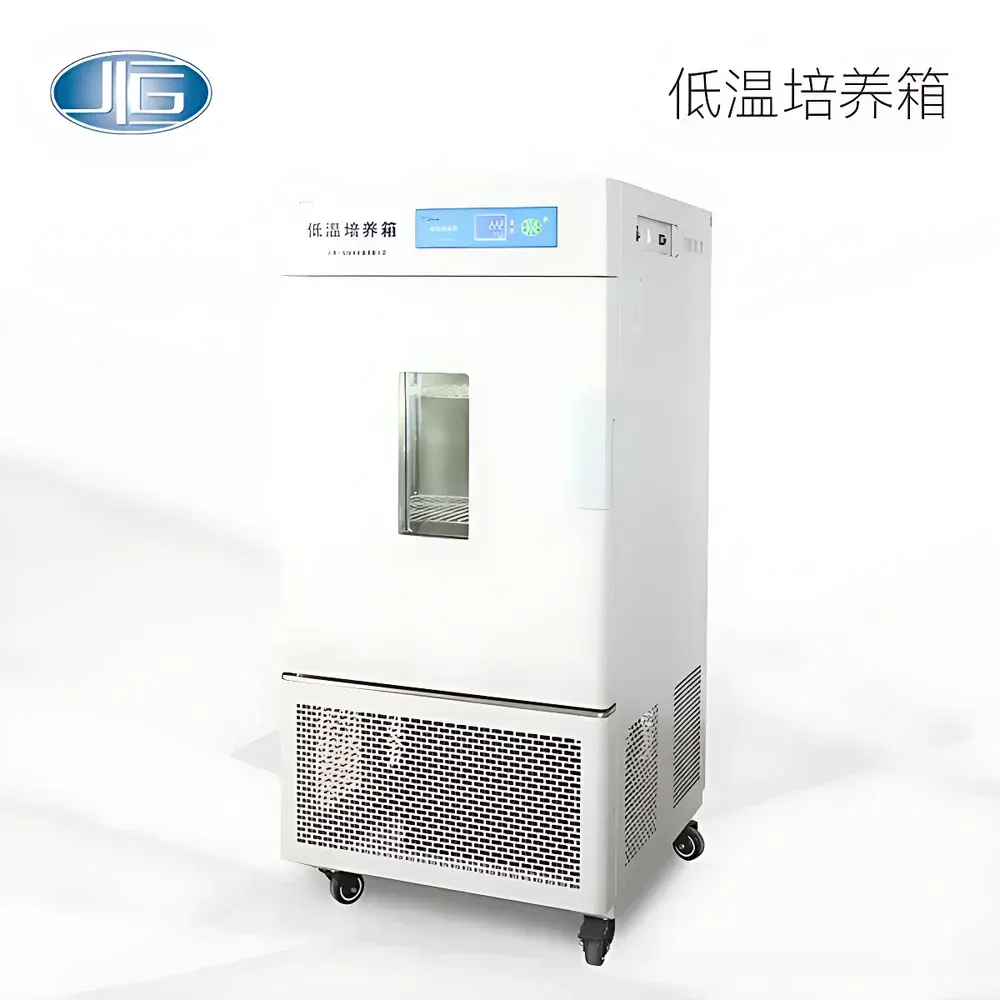
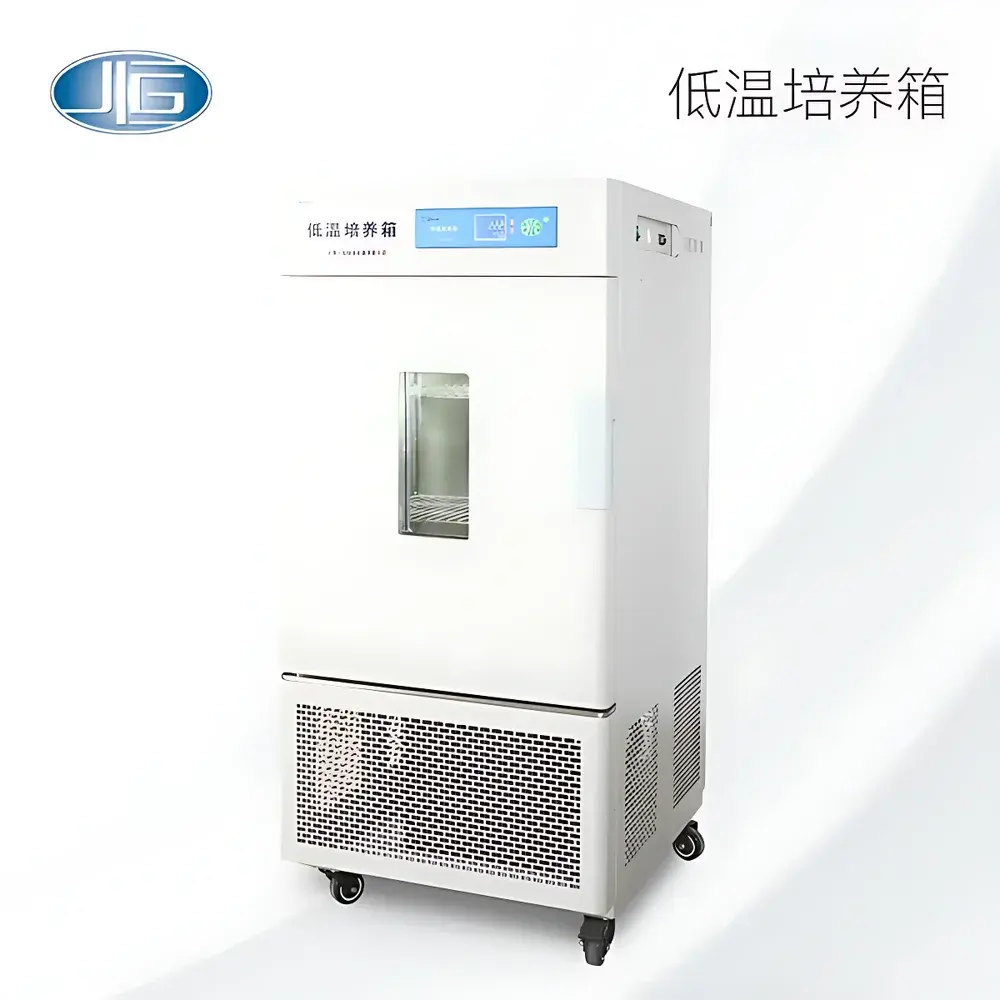
YIHENG LRH-100CL Low-Temperature Biochemical Incubator
| Brand | YIHENG |
|---|---|
| Origin | Shanghai, China |
| Manufacturer Type | Direct Manufacturer |
| Heating Method | Air-Jacketed |
| Cooling Method | Compressor-Based Refrigeration |
| Convection Mode | Natural Convection |
| Temperature Range | −10 °C to +65 °C |
| Temperature Uniformity | ±0.5 °C (at ≥25 °C), ±1.0 °C (at ≤0 °C) |
| Interior Dimensions (W×D×H) | 500 mm × 400 mm × 600 mm |
| External Dimensions (W×D×H) | 650 mm × 770 mm × 1320 mm |
| Optional Features | RS485 Interface, Thermal Printer Output, Multi-Stage Programmable Controller (up to 30 segments, 1–5999 min/segment) |
Overview
The YIHENG LRH-100CL is a precision-engineered low-temperature biochemical incubator designed for stable, long-term storage and controlled environmental conditioning of biological reagents, cell culture media, sera, pharmaceuticals, and microbial cultures. It operates on a dual-mode thermal management principle: air-jacketed heating ensures uniform heat distribution without direct contact, while a sealed compressor-based refrigeration system—charged with environmentally compliant R134a refrigerant—enables reliable sub-zero operation down to −10 °C. Unlike forced-air units, its natural convection architecture eliminates mechanical vibration and airflow-induced desiccation, preserving sample integrity in sensitive applications such as serum stability testing or cryopreserved cell stock maintenance. The chamber’s temperature control architecture is built around a high-resolution microprocessor controller with real-time PID regulation, delivering repeatable setpoint accuracy across the full operating range.
Key Features
- Mirror-finish stainless steel interior with radius-rounded corners and removable adjustable shelving—designed for ISO 14644-compliant cleaning protocols and residue-free decontamination.
- Dual independent temperature monitoring: primary control sensor plus redundant over-temperature cut-off circuitry—compliant with IEC 61000-4-2 ESD immunity and EN 60335-1 safety requirements.
- Integrated 25 mm diameter access port on left side wall—positioned to allow non-invasive thermocouple insertion or external probe routing without compromising chamber seal integrity.
- Energy-optimized design featuring high-efficiency rotary compressor and low-noise centrifugal fan—meets GB/T 21551.2–2010 energy consumption standards for laboratory equipment.
- Optional RS485 serial interface (Modbus RTU protocol) enables integration into centralized lab monitoring systems; optional thermal printer supports GLP-compliant hardcopy logging of temperature history.
Sample Compatibility & Compliance
The LRH-100CL accommodates standard laboratory containers including 500 mL glass serum bottles, stacked Petri dish racks (up to 120 mm height), and multi-well plate stacks. Its internal volume (120 L net capacity) and vertical clearance support upright storage of cryovial boxes and laminar flow-compatible reagent trays. The unit complies with GB/T 14710–2009 Environmental Testing Standards for Medical Electrical Equipment and conforms to key elements of ISO 13485:2016 for in-house device manufacturing environments. While not certified for Class II biosafety containment, it meets ambient-conditioning requirements specified in USP for storage of temperature-sensitive biologics and ASTM E2500-13 Annex A3 for qualification of non-sterile storage equipment.
Software & Data Management
The standard microcontroller firmware supports real-time display of chamber temperature, setpoint, and elapsed time. Optional multi-stage programmable controller (model LRH-PC100) adds advanced scheduling capability: up to 30 user-defined segments with independent temperature targets, dwell durations (1–5999 minutes), and ramp rates (0.1–10.0 °C/min). All parameter changes—including manual overrides—are timestamped and stored in non-volatile memory with audit trail functionality. When paired with YIHENG’s LabLink™ PC software (v3.2+), users can export CSV-formatted logs compliant with FDA 21 CFR Part 11 requirements—including electronic signatures, change history, and role-based access controls.
Applications
- Long-term storage of fetal bovine serum (FBS), antibiotics, and enzyme solutions at −5 °C to +4 °C per manufacturer stability guidelines.
- Low-temperature acclimatization studies for psychrophilic microorganisms and cold-adapted recombinant protein expression systems.
- Accelerated stability testing of pharmaceutical excipients under ICH Q1A(R3) intermediate storage conditions (e.g., 30 °C/65% RH simulated via controlled ambient cycling).
- Pre-incubation conditioning of tissue culture flasks prior to CO₂ incubation—minimizing thermal shock during transfer.
- Environmental simulation for quality control of diagnostic reagent kits requiring defined cold-chain validation per CLIA and CAP accreditation criteria.
FAQ
Does the LRH-100CL support humidity control?
No—this model is configured exclusively for temperature-controlled dry storage. Humidity regulation requires the separate YIHENG HLR series humidified incubators.
Can the unit maintain −10 °C continuously in a 35 °C ambient room?
Yes—its compressor cooling system is rated for continuous operation at full capacity under ISO 13732-1 ambient class B2 (up to 35 °C, 65% RH). Performance validation data available upon request.
Is the RS485 interface compatible with LabVIEW or Python-based SCADA systems?
Yes—the Modbus RTU implementation supports standard function codes 03h (read holding registers) and 06h (write single register); register map documentation provided with OEM driver package.
What calibration documentation is supplied with the unit?
Each unit ships with factory calibration certificate traceable to NIM (National Institute of Metrology, China) standards, covering temperature uniformity and stability at three points (−10 °C, 25 °C, 65 °C) per JJF 1101–2019 verification protocol.
Is the interior lighting UV-resistant and suitable for photobiological assays?
No—the standard LED illumination is non-UV and intended solely for visual inspection; UV-transparent or wavelength-specific lighting must be added externally per experimental requirements.
Related Products