
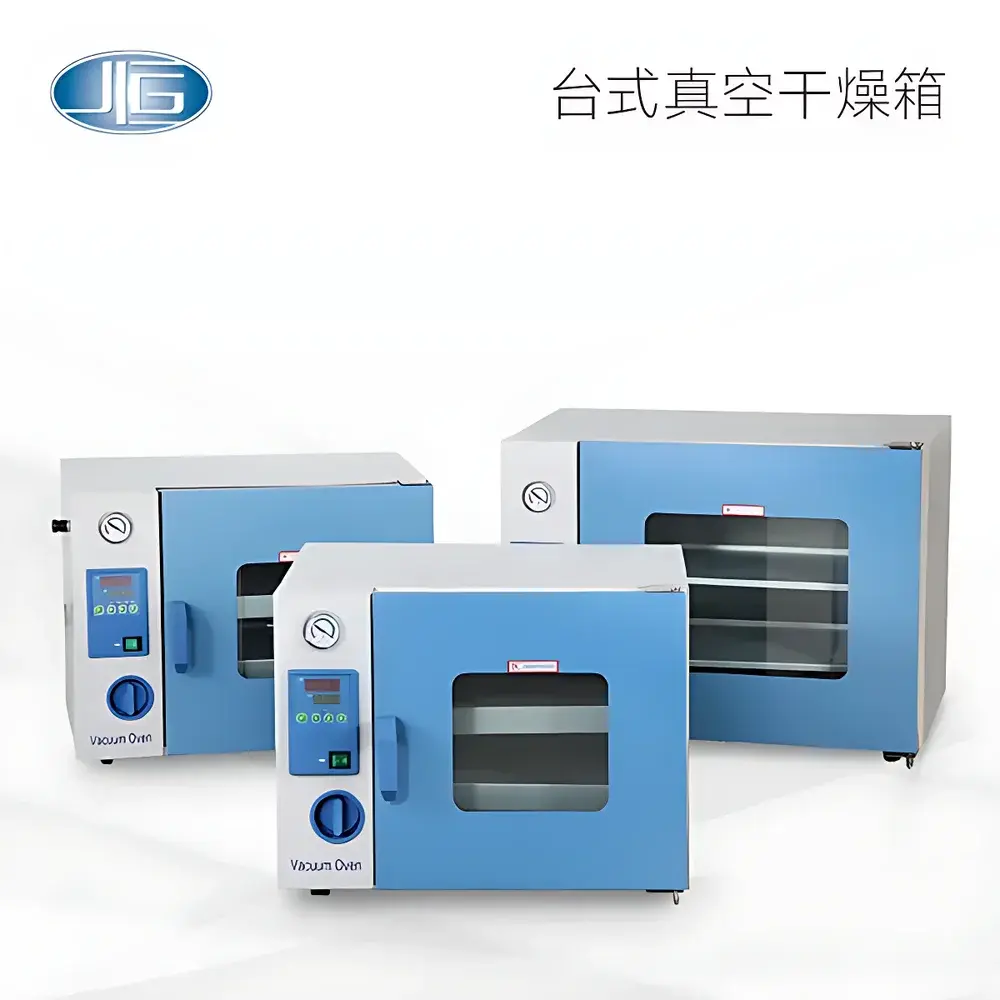
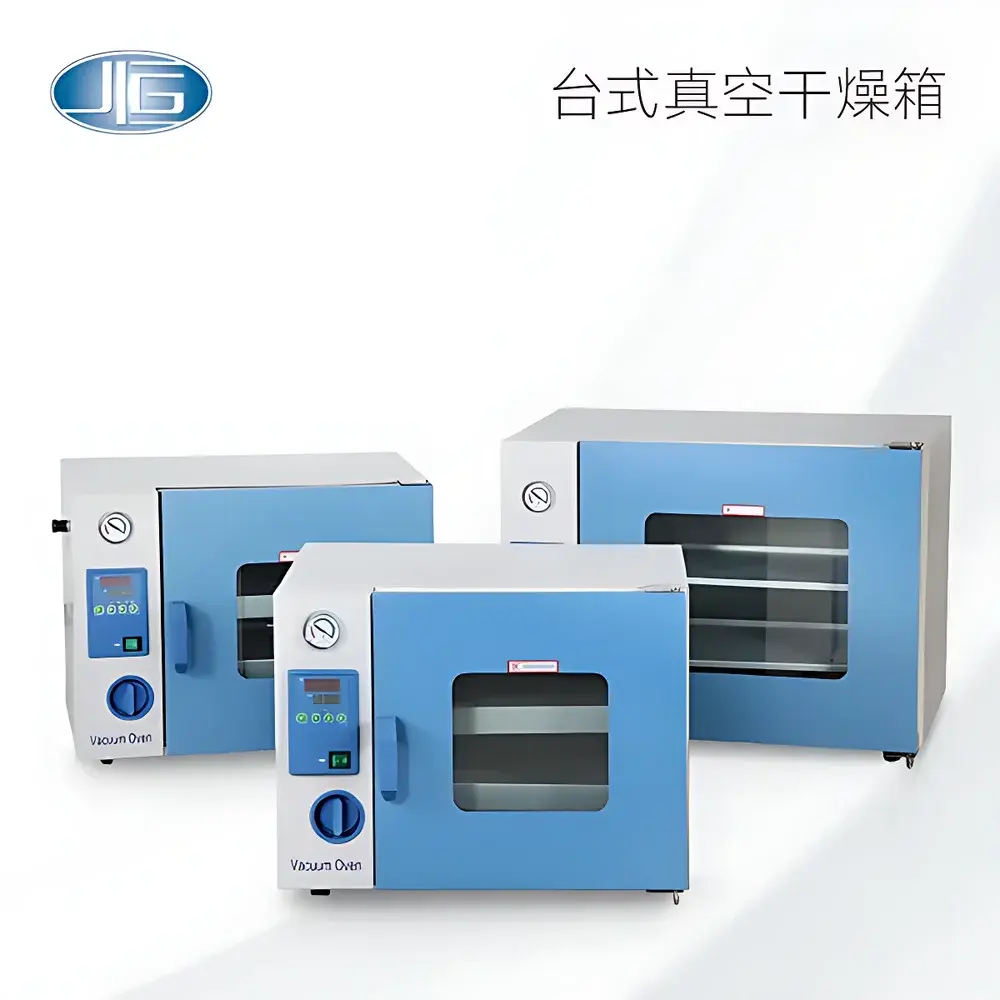
YiHeng DZF-6050 Benchtop Vacuum Drying Oven
| Brand | YiHeng |
|---|---|
| Origin | Shanghai, China |
| Manufacturer Type | Direct Manufacturer |
| Product Category | Domestic (China-made) |
| Model | DZF-6050 |
| Instrument Type | Vacuum Oven |
| Temperature Range | RT+10 °C to 200 °C |
| Temperature Uniformity | ±1 °C |
| External Dimensions | 730 × 560 × 550 mm |
| Internal Chamber Dimensions | 415 × 370 × 345 mm |
| Temperature Resolution | 0.1 °C |
| Chamber Material | Stainless Steel (SUS304) |
| Heating Method | Forced Air Circulation with Vacuum Compatibility |
| Ultimate Vacuum Level | ≤133 Pa |
Overview
The YiHeng DZF-6050 Benchtop Vacuum Drying Oven is an engineered solution for controlled thermal processing under reduced pressure environments. It operates on the principle of vacuum-assisted drying—lowering the ambient pressure inside the chamber to reduce the boiling point of solvents and moisture, thereby enabling gentle, low-temperature removal of volatile components from thermally sensitive, oxygen-sensitive, or chemically unstable samples. Unlike conventional forced-air ovens, this system maintains process integrity during dehydration, polymerization, solvent recovery, or pre-conditioning of hygroscopic materials—without thermal degradation or oxidative side reactions. Designed for laboratories requiring reproducible, inert-atmosphere thermal treatment, it supports both vacuum-only and inert-gas-purged operation (e.g., N₂ or Ar), meeting fundamental requirements for GLP-compliant sample preparation in pharmaceutical, materials science, and analytical chemistry workflows.
Key Features
- Stainless steel (SUS304) interior chamber with seamless welded construction—resistant to corrosion, easy to clean, and compatible with repeated sterilization cycles;
- Microprocessor-based PID temperature controller with 0.1 °C resolution and ±1 °C uniformity across the working volume;
- Double-layer tempered glass observation door with silicone gasket sealing—enabling real-time visual monitoring without compromising vacuum integrity;
- Adjustable door-latching mechanism and integrally molded silicone door seal—ensuring consistent vacuum retention down to ≤133 Pa;
- Benchtop footprint (730 × 560 × 550 mm) optimized for space-constrained labs while delivering 53.5 L usable chamber volume (415 × 370 × 345 mm);
- Forced air circulation system integrated with vacuum-compatible heating elements—enhancing heat transfer efficiency even at sub-atmospheric pressures;
- Dual-mode operation: vacuum-only drying or inert gas backfilling (via optional inlet valve)—preventing oxidation during cooling or storage phases.
Sample Compatibility & Compliance
The DZF-6050 accommodates a broad range of sample formats including petri dishes, weighing boats, glass vials, ceramic crucibles, and polymer films—provided they are vacuum-stable and non-volatile above 200 °C. It is routinely deployed in applications aligned with ASTM D2243 (moisture content in plastics), ISO 1183-1 (density determination of solid plastics), and USP (drying procedures for reference standards). While not certified to IEC 61010-1 or CE for standalone safety compliance, its design adheres to standard electrical insulation, overtemperature protection (mechanical backup thermostat), and grounding provisions required for Class II laboratory equipment. Users implementing this oven in regulated environments should validate vacuum decay rates, temperature mapping, and inert gas purge efficacy per internal SOPs and 21 CFR Part 11 data integrity guidelines where electronic logging is employed.
Software & Data Management
The DZF-6050 operates via a standalone microcontroller interface with no embedded software stack or network connectivity. All parameters—including setpoint, actual temperature, elapsed time, and vacuum status—are displayed on a high-contrast LED screen. For traceability, users may integrate external data loggers (e.g., Omega OM-DAQPRO or Testo 176 T4) via analog output (0–5 V or 4–20 mA) or RS485 Modbus RTU (optional upgrade). When paired with validated third-party acquisition systems, the unit supports audit-trail-capable recording for GMP/GLP documentation—particularly relevant for stability studies, extractables/leachables testing, and raw material qualification protocols.
Applications
- Drying of heat-labile biological specimens (e.g., enzymes, antibodies, lyophilized intermediates) without denaturation;
- Removal of residual solvents from synthesized organic compounds or pharmaceutical actives prior to crystallization;
- Conditioning of desiccants, molecular sieves, and humidity-sensitive sensors;
- Pre-treatment of electrode materials (e.g., Li-ion cathodes) before electrochemical cell assembly;
- Accelerated aging studies under inert atmosphere to isolate thermal effects from oxidative pathways;
- Weight-loss-on-drying (LOD) analysis per pharmacopeial methods (EP 2.2.32, JP 6.05).
FAQ
What is the maximum operating temperature under vacuum?
The DZF-6050 is rated for continuous operation from ambient +10 °C up to 200 °C under vacuum conditions; however, sustained use above 150 °C requires verification of sample compatibility and chamber outgassing behavior.
Can the chamber be backfilled with nitrogen automatically?
No—the standard configuration includes only a manual inert gas inlet valve; automated pressure control and gas dosing require external regulators and solenoid valves.
Is calibration documentation provided with the unit?
Factory calibration certificates are not included by default; users must perform initial and periodic temperature and vacuum sensor calibration using NIST-traceable references per ISO/IEC 17025 requirements.
How often should the silicone door seal be replaced?
Under normal use (≤5 cycles/day), the seal typically remains effective for 12–18 months; replacement is recommended if vacuum hold time drops below 30 minutes at 133 Pa.
Does the unit comply with UL or CSA safety standards?
It is not UL-listed or CSA-certified; laboratories in North America must conduct site-specific risk assessment and install appropriate circuit protection per local electrical codes.



