
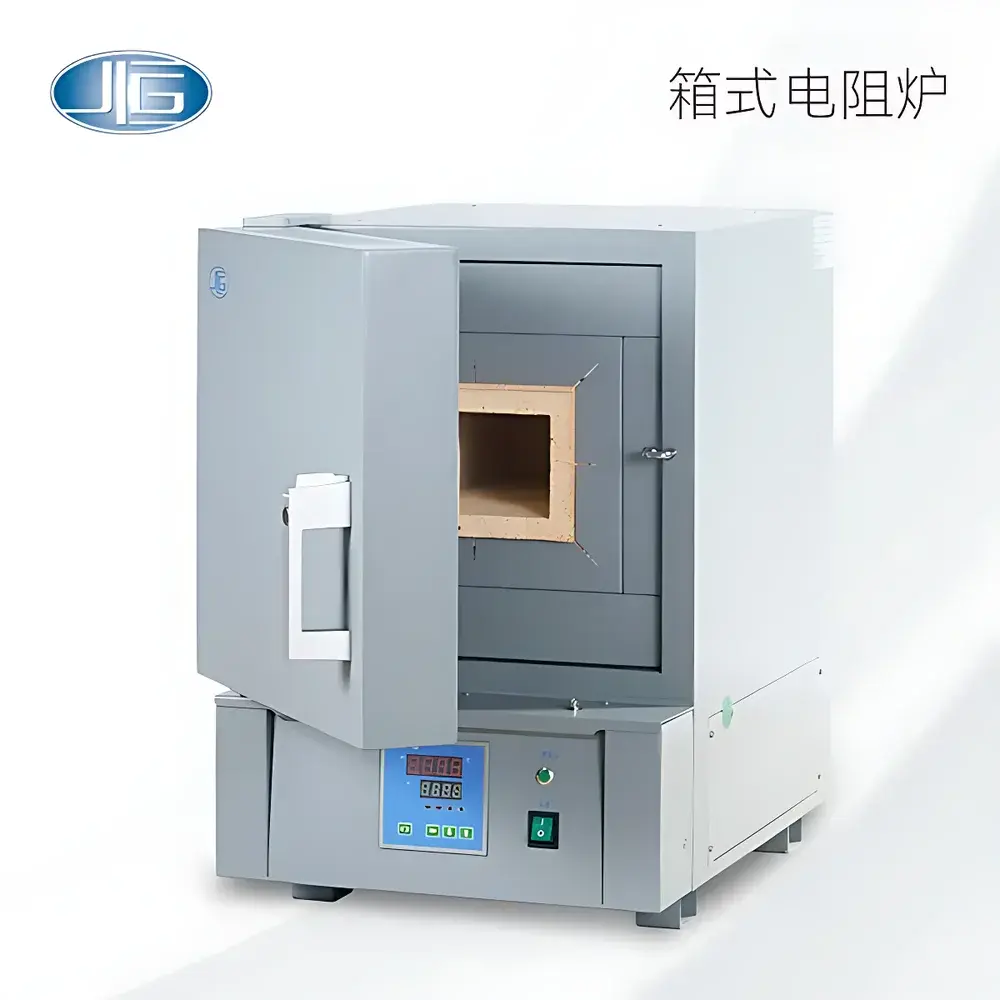
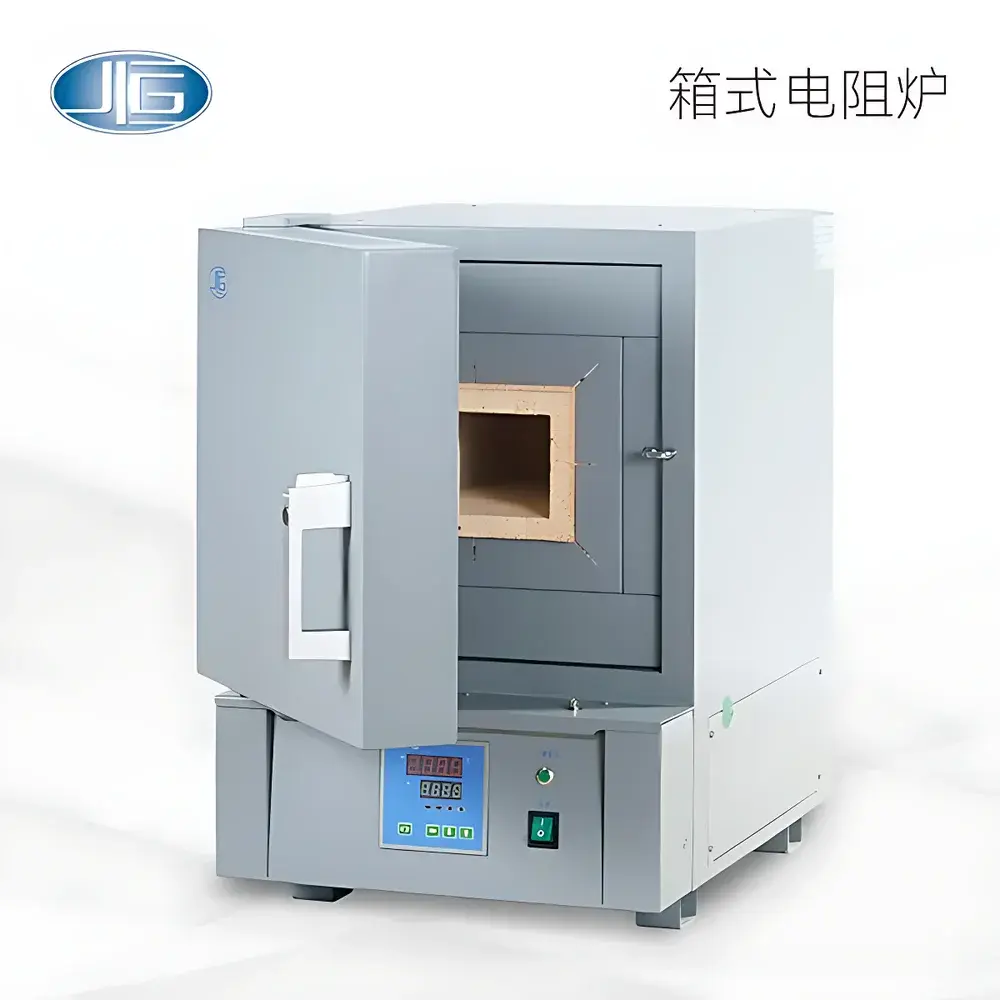
Yiheng SX2-5-12N Benchtop Muffle Furnace
| Brand | Yiheng |
|---|---|
| Origin | Shanghai, China |
| Manufacturer Type | Direct Manufacturer |
| Region | Domestic (China) |
| Model | SX2-5-12N |
| Instrument Type | Box-Type Muffle Furnace |
| Max Temperature | 1200 °C |
| Temperature Control Accuracy | ±1 °C |
| Rated Power | 5000 W |
| Heating Rate to Max Temp | ≤60 min (typical, from ambient to 1200 °C) |
| Heating Element | High-Resistance Kanthal A1 Wire |
| Internal Chamber Dimensions | 200 mm × 300 mm × 120 mm |
| Nominal Volume | 7 L |
| Insulation Material | Ceramic Fiber Board |
| Chamber Liner Options | Refractory Brick (Standard N-Series) |
| Controller | Microprocessor-Based PID with Digital Display |
| Safety Features | Door-Interlocked Power Cut-off, Over-Temperature Protection, Over-Current & Over-Voltage Protection |
Overview
The Yiheng SX2-5-12N is a benchtop box-type muffle furnace engineered for precision high-temperature thermal processing in research laboratories, quality control environments, and academic institutions. It operates on the principle of resistive heating via embedded high-alloy resistance wire (Kanthal A1), enclosed within a thermally insulated chamber to isolate samples from combustion byproducts and external atmosphere—ensuring true muffle conditions. With a maximum operating temperature of 1200 °C and a nominal chamber volume of 7 liters, this furnace supports routine applications including ashing, calcination, heat treatment (annealing, tempering, quenching), sintering of ceramics and metal oxides, and elemental analysis sample preparation per ASTM E135, ISO 1171, and USP . Its robust construction, combined with ceramic fiber insulation and refractory brick lining (N-series standard), delivers rapid thermal response, low external surface temperature (<50 °C at 1200 °C operation), and long-term dimensional stability under cyclic thermal loading.
Key Features
- Microprocessor-based PID temperature controller with digital LED display, enabling setpoint programming, ramp/soak profiles, and real-time temperature monitoring with ±1 °C accuracy across the full 0–1200 °C range.
- Interlocked furnace door mechanism: automatic disconnection of heating power upon door opening, eliminating risk of accidental exposure to radiant heat or electrical hazard.
- High-density ceramic fiber board insulation (density ≥128 kg/m³) minimizes thermal mass and conductive losses, resulting in energy efficiency and improved temperature uniformity (±5 °C within working zone at 1200 °C).
- Refractory brick-lined chamber (N-series standard) provides chemical inertness, mechanical resilience against thermal shock, and extended service life exceeding 5,000 hours at 1200 °C under GLP-compliant usage protocols.
- Integrated multi-layer safety architecture: independent over-temperature cut-off (OTC) sensor, dual redundant current-limiting circuitry, voltage surge suppression, and ground-fault detection compliant with IEC 61000-4-5 and EN 61010-1 safety standards.
Sample Compatibility & Compliance
The SX2-5-12N accommodates crucibles, boats, and trays made from alumina, silicon carbide, quartz, or stainless steel (up to Grade 310S), supporting solid-state reactions involving metals, alloys, geological samples, polymers, and pharmaceutical excipients. Its muffle design ensures atmospheric isolation—critical for oxidation-sensitive processes and residue-free ash determination. The furnace meets general laboratory equipment requirements under ISO/IEC 17025 for method validation, supports audit-ready documentation for GMP/GLP environments, and aligns with FDA 21 CFR Part 11 data integrity expectations when paired with optional RS485-modbus logging interfaces (available upon request). CE marking is applicable for export configurations meeting EU Machinery Directive 2006/42/EC and Low Voltage Directive 2014/35/EU.
Software & Data Management
While the standard configuration features a standalone PID controller, optional communication modules enable integration into centralized lab management systems. An RS485 port (Modbus RTU protocol) allows bidirectional parameter transfer—including setpoint, actual temperature, alarm status, and runtime—to SCADA platforms or LIMS via industrial gateways. Optional PC software (Yiheng FurnaceLink™ v3.2) provides graphical trend logging, CSV export, user-access-level management (admin/operator), and electronic signature support for 21 CFR Part 11 compliance. All temperature records include timestamp, operator ID, and event annotations (e.g., “door opened”, “over-temp alarm triggered”), fulfilling traceability requirements for ISO 9001 and ISO 13485 quality systems.
Applications
- Thermal gravimetric analysis (TGA) sample conditioning and pre-ashing prior to ICP-OES/MS quantification.
- Heat treatment of small-scale ferrous and non-ferrous components (e.g., tool steels, Ni-based superalloys) per ASTM A108 and AMS 2750E pyrometry requirements.
- Sintering of advanced ceramics (Al₂O₃, ZrO₂), battery cathode precursors (LiCoO₂, NMC), and dental porcelain substrates.
- Residue-on-ignition (ROI) testing in environmental soil analysis (EPA Method 9081) and wastewater sludge characterization (APHA 2540E).
- Calibration of thermocouples (Type K, S, R) and reference materials using fixed-point cells (e.g., Al, Zn, Ag) within defined soak zones.
FAQ
What is the recommended maintenance interval for the SX2-5-12N?
Visual inspection of heating elements and insulation integrity is advised every 200 operational hours; thermocouple calibration verification should occur quarterly or per SOP-defined frequency in regulated labs.
Can the furnace be used under inert or reducing atmospheres?
No—the standard SX2-5-12N is designed for air atmosphere only. For controlled-atmosphere operation, consult Yiheng’s SX2-G series with flanged gas inlet/outlet ports and integrated flow controllers.
Is the refractory brick liner replaceable in the field?
Yes. The N-series brick assembly is modular and can be replaced without specialized tools; replacement kits include alignment spacers and high-temp mortar (refractory grade, Al₂O₃ >70%).
Does the unit comply with electromagnetic compatibility (EMC) directives?
All production units undergo conducted and radiated emission testing per EN 61326-1 and are supplied with CE DoC documentation verifying conformity to EU EMC Directive 2014/30/EU.



