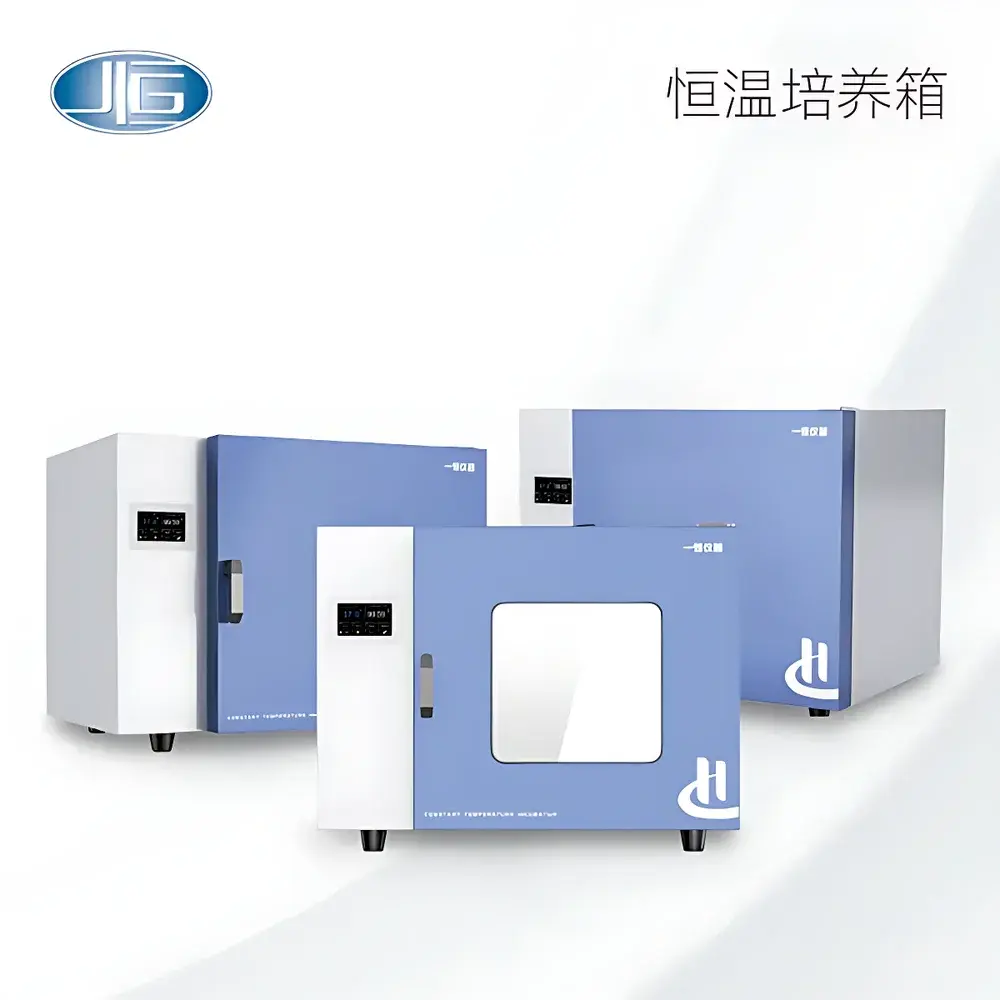
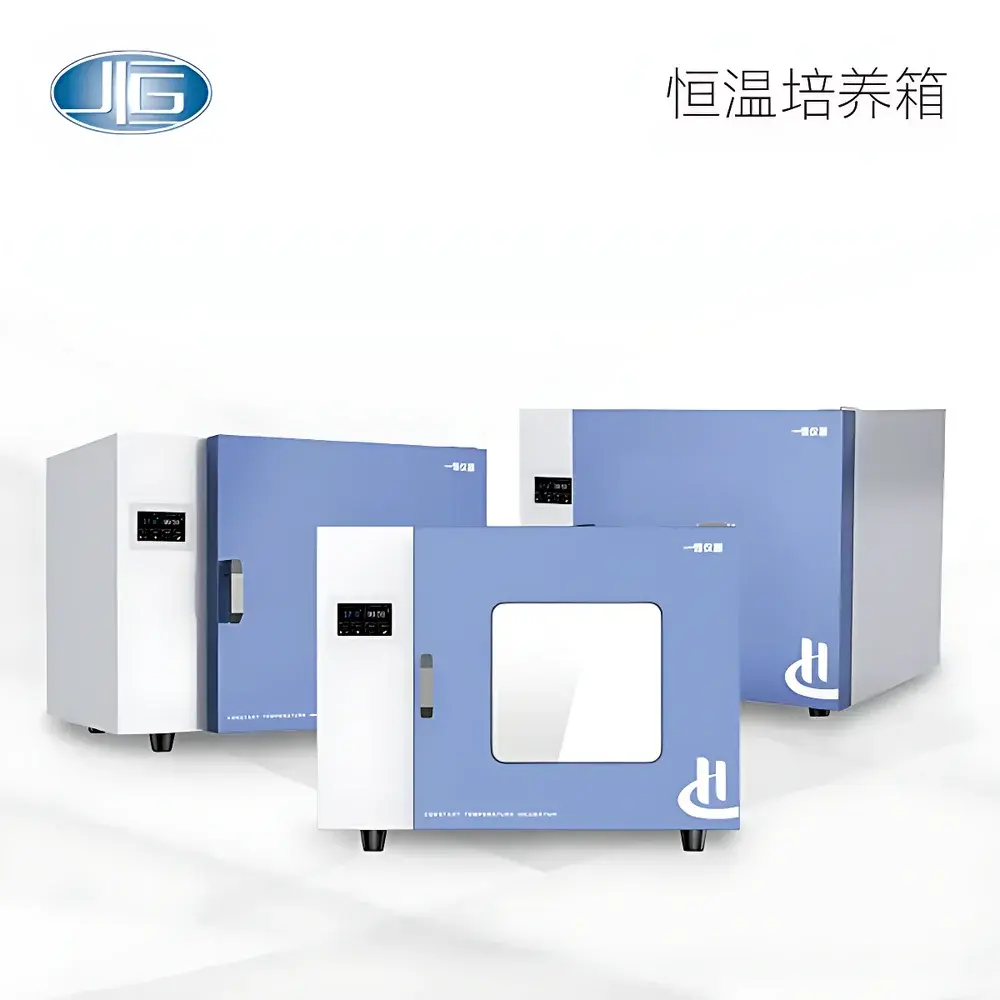
Yiheng DHP-9032T / DHP-9052T / DHP-9082T / DHP-9162T / DHP-9272T Intelligent Electric Constant Temperature Incubator
| Brand | Yiheng |
|---|---|
| Origin | Jiangsu, China |
| Manufacturer Type | Direct Manufacturer |
| Heating Method | Air-jacketed |
| Convection Mode | Forced-air convection |
| Control System | Digital PID temperature controller with fuzzy logic algorithm |
| Temperature Range | RT + 5°C to 65°C |
| Temperature Fluctuation | ±0.5°C |
| Temperature Uniformity | ±1.5°C (at 37°C) |
| Internal Dimensions (W×D×H) | 600 × 500 × 750 mm |
| External Dimensions (W×D×H) | 880 × 630 × 930 mm |
| Display Interface | 4.3-inch capacitive touch screen |
| Programmable Stages | Up to 8 programs, each with 8 steps |
| step duration | 0–5999 min |
| Timer Range | 0–99 h 59 min |
| Safety Features | Independent over-temperature cutoff with audible/visual alarm |
| Optional | RS485 communication interface, thermal printer output, adjustable 3-speed circulation fan, UV germicidal lamp (254 nm) |
Overview
The Yiheng DHP-Series Intelligent Electric Constant Temperature Incubators are precision-engineered benchtop incubation systems designed for reliable, reproducible cell culture, microbiological growth, and biochemical incubation under tightly controlled thermal conditions. Utilizing an air-jacketed heating architecture combined with forced-air convection and a high-stability digital PID control system enhanced by fuzzy logic algorithms, these incubators deliver rapid thermal response, exceptional temperature stability (±0.5°C fluctuation), and uniform internal distribution (±1.5°C at 37°C)—a critical performance benchmark for ISO 13408-1 compliant aseptic processing environments and GLP-aligned life science workflows. The units operate across a biologically relevant range of RT + 5°C to 65°C, supporting standard mammalian cell culture (37°C), bacterial propagation (30–37°C), fungal incubation (25–30°C), and enzyme activity assays requiring precise thermal staging.
Key Features
- Intelligent 4.3-inch capacitive touch interface enabling real-time monitoring and intuitive parameter entry—including simultaneous multi-stage programming (up to 8 programs × 8 steps), gradient ramping, delayed start, standby, and auto-shutdown functions
- Air-jacketed thermal design with embedded stainless-steel sheathed heating elements and mirror-finish 304 stainless steel interior chamber—corrosion-resistant, non-porous, and easy to decontaminate
- Three-speed adjustable axial circulation fan ensures optimal airflow management: low speed minimizes evaporation from culture vessels; medium/high speeds accelerate equilibration without disturbing sensitive monolayers
- Dual-safety thermal protection: primary PID-controlled regulation backed by an independent mechanical over-temperature cut-off circuit with audible/visual alarm—compliant with IEC 61010-1 safety requirements for laboratory equipment
- Double-layer door structure featuring tempered glass inner window for continuous visual observation; interlocked safety circuit automatically suspends heating and fan operation upon door opening to prevent thermal overshoot and maintain chamber integrity
- Optional integrated 254 nm UV-C germicidal lamp enables scheduled sterilization of recirculated air—reducing airborne microbial load between runs per USP environmental control recommendations
Sample Compatibility & Compliance
The DHP-Series accommodates standard SBS-format multiwell plates (6–96-well), Petri dishes (up to 150 mm), T-flasks (up to T225), roller bottles, and custom-sized culture vessels within its 600 × 500 × 750 mm working volume. Chamber geometry and airflow dynamics have been validated to minimize thermal stratification and edge effects—ensuring consistent growth kinetics across all positions. Units conform to key regulatory expectations for laboratory incubators: temperature mapping protocols align with ASTM E2874-22 guidelines; data logging capabilities (via optional RS485) support 21 CFR Part 11-compliant audit trails when paired with validated third-party software; UV lamp irradiance output meets IEC 62471 photobiological safety classification for Class 1 devices.
Software & Data Management
While the incubator operates autonomously via its embedded microcontroller, optional RS485 serial interface enables integration into centralized lab infrastructure. When connected to a host PC running compliant data acquisition software, users can export timestamped temperature logs (min/max/mean), program execution status, alarm events, and door-open duration—supporting retrospective analysis and quality documentation per ISO/IEC 17025 Clause 7.7. Thermal printer output provides hard-copy verification for batch records or QC sign-offs. All programmable parameters—including ramp rates, dwell times, and setpoint sequences—are stored in non-volatile memory with battery-backed retention (>10 years), eliminating configuration loss during power interruption.
Applications
- Mammalian and insect cell line maintenance (e.g., HEK293, CHO, Sf9) at 37°C with 5% CO₂-ready compatibility (when used with external gas mixing modules)
- Bacterial culture (E. coli, Bacillus spp.) and yeast fermentation (S. cerevisiae) across mesophilic temperature ranges
- Enzyme kinetics studies requiring precise thermal gradients or multi-step incubation protocols
- Seed germination assays, plant tissue culture, and entomological rearing where stable ambient warmth is required
- Stability testing of pharmaceutical intermediates and diagnostic reagents per ICH Q1A(R2) long-term storage conditions
FAQ
What is the difference between air-jacketed and water-jacketed incubation systems?
Air-jacketed designs use insulated chambers with perimeter heating elements and forced convection—offering faster warm-up times, lower energy consumption, and reduced contamination risk compared to water-jacketed units. They are preferred for routine cell culture where rapid recovery after door openings is essential.
Can this incubator be validated for GMP environments?
Yes—its stable thermal performance, programmable logging capability (with RS485), and dual independent temperature safeguards meet foundational requirements for IQ/OQ/PQ protocols. Full validation requires site-specific mapping per Annex 15 and documented traceability to NIST-traceable standards.
Is UV sterilization effective against mycoplasma?
UV-C at 254 nm damages nucleic acids and is effective against planktonic bacteria and viruses; however, mycoplasma’s small size and lack of cell wall reduce susceptibility. UV should complement—not replace—chemical decontamination and strict aseptic technique.
How often should temperature uniformity mapping be performed?
Per FDA guidance and EU GMP Annex 15, initial qualification requires 3 consecutive successful mappings; thereafter, annual requalification is recommended—or after any major maintenance, relocation, or process change affecting thermal performance.
Does the incubator support remote monitoring via Ethernet or Wi-Fi?
No native Ethernet or Wi-Fi interface is included; connectivity is limited to RS485 serial communication. Integration with building management systems or cloud platforms requires an external protocol converter (e.g., Modbus TCP gateway).