
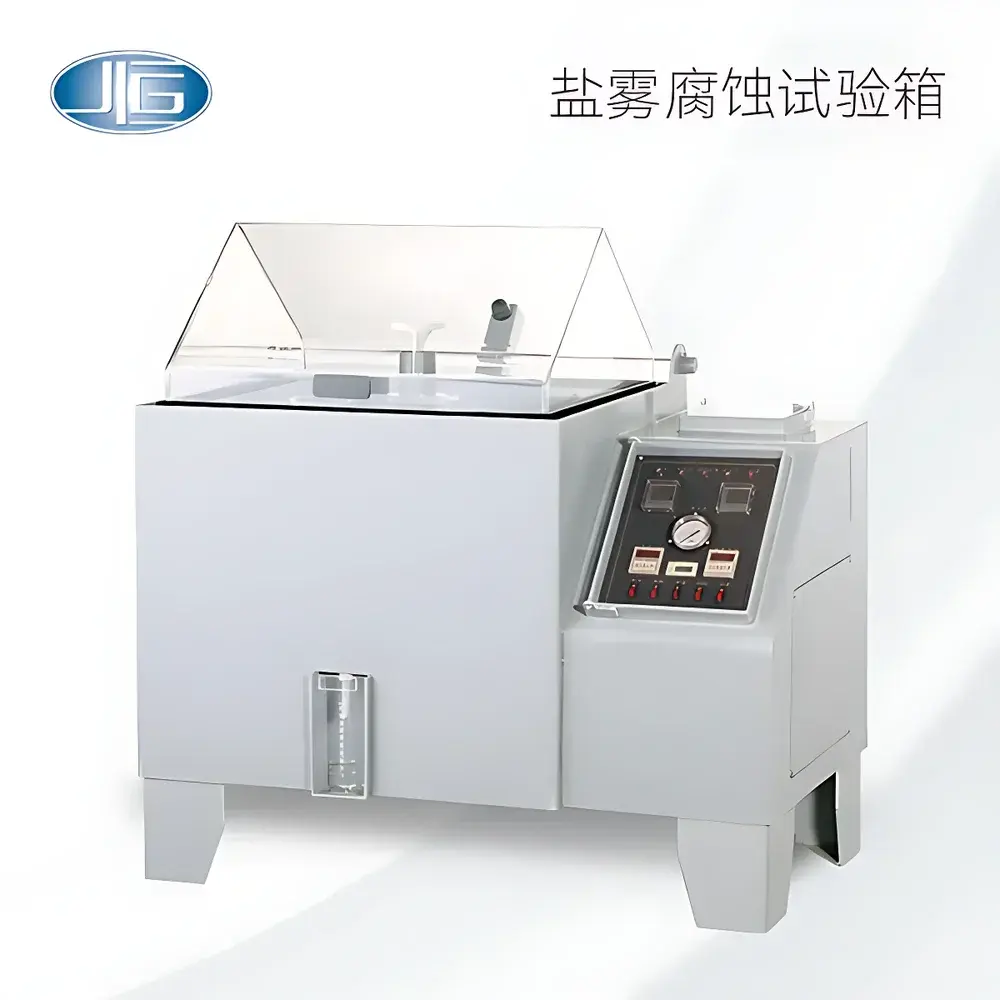
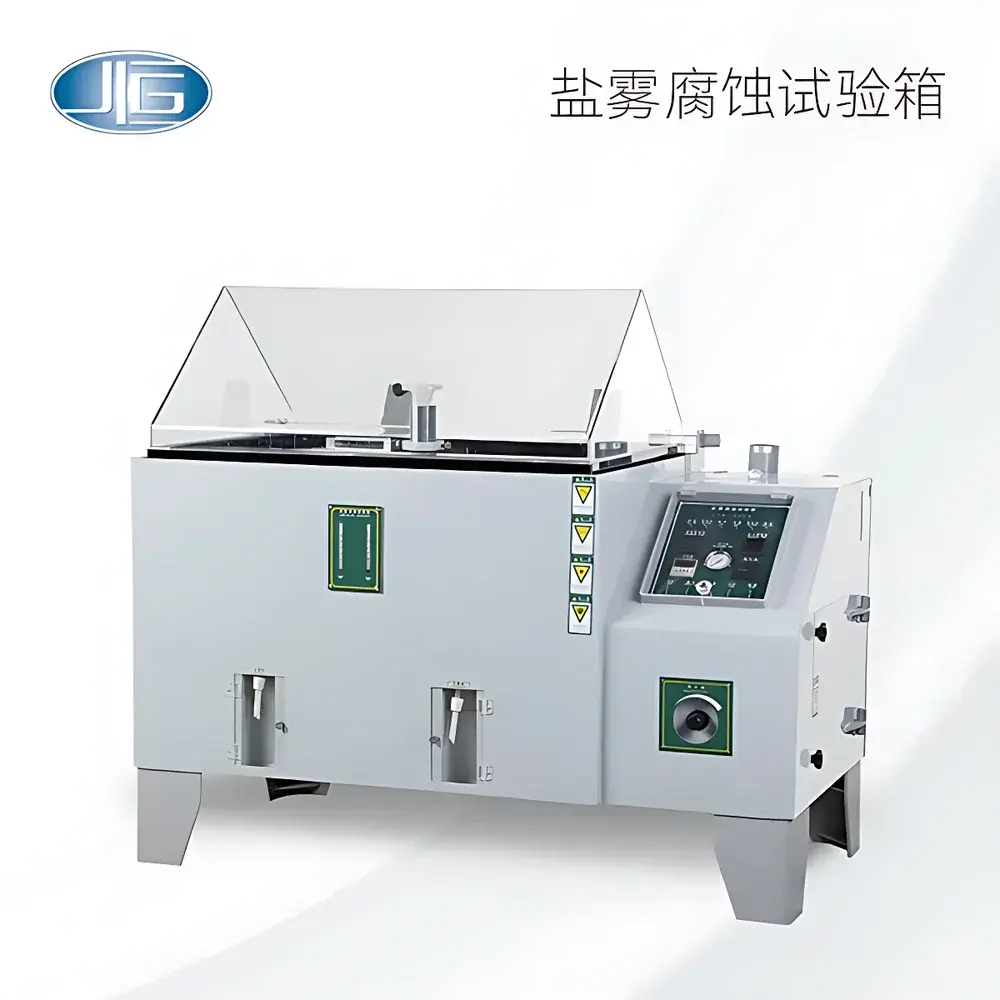
YIHENG LYW-015 Series Salt Spray Test Chamber
| Brand | YIHENG |
|---|---|
| Origin | Shanghai, China |
| Manufacturer Type | Direct Manufacturer |
| Model | LYW-015 Series |
| Salt Fog Deposition Rate | 1.0–2.0 mL/80 cm²/h |
| Temperature Range | RT+5°C to 50°C |
| Control System | Microcomputer P.I.D. Temperature Controller (±0.1°C resolution) |
| Safety Features | Dual Over-Temperature Protection, Leakage Current Protection, Dry-Run & Short-Circuit Detection, Fire-Retardant Resin Electrical Enclosure |
| Construction | One-Piece Molded FRP/PVC Body |
| Spray System | Tower-Type Adjustable Nozzle Array |
| Viewing Option | Transparent PVC or Fiberglass Lid |
| Sealing Method | Water-Seal Design (Zero Salt Fog Leakage) |
Overview
The YIHENG LYW-015 Series Salt Spray Test Chamber is a precision-engineered environmental test system designed to evaluate the corrosion resistance of metallic materials, coated surfaces, and electroplated components under accelerated saline atmospheric conditions. Based on the standardized salt fog (salt spray) exposure methodology defined in ISO 9227, ASTM B117, JIS Z2371, and GB/T 2423.17, this chamber generates a continuous or cyclic corrosive environment by atomizing a 5% NaCl (sodium chloride) solution into fine droplets using a tower-type pneumatic nozzle system. The chamber’s fully sealed, one-piece molded construction—available in corrosion-resistant fiberglass-reinforced plastic (FRP) or rigid PVC—ensures structural integrity, long-term chemical inertness, and zero leakage during extended testing cycles. Its operating temperature range (RT+5°C to 50°C) supports both ambient-accelerated and elevated-temperature salt fog protocols, enabling compliance with variant test standards including PROHIBITED-TEMPERATURE-CONTROLLED variants per ASTM G85 Annex A5.
Key Features
- Monolithic molded chamber body eliminates seam-induced corrosion pathways and ensures mechanical stability under thermal cycling and high-humidity operation.
- Tower-type spray system delivers uniform aerosol distribution across the test zone, with adjustable deposition rate (1.0–2.0 mL/80 cm²/h), verified per ISO 9227 calibration requirements.
- Water-seal lid interface prevents salt fog egress and maintains chamber integrity without gasket degradation—critical for long-duration (>96 h) tests.
- Dual-lid configuration: optically transparent PVC lid for real-time visual monitoring; reinforced fiberglass lid for enhanced UV and thermal stability in extended exposures.
- Microprocessor-based P.I.D. temperature controller with ±0.1°C resolution and programmable timer function ensures repeatable thermal conditioning prior to and during fog generation.
- Modular electrical architecture: all circuit breakers, thermal cut-offs, and overheat protection devices are accessible via side-mounted service doors with keyed locks—designed for GLP-compliant maintenance logging.
- Fire-retardant resin enclosure for main distribution panel meets IEC 60950-1 Class 2 insulation and flame propagation resistance requirements.
Sample Compatibility & Compliance
The LYW-015 accommodates standard test specimens up to 600 mm × 450 mm × 400 mm (W×D×H), with adjustable sample racks supporting vertical or angled mounting per ISO 9227 orientation guidelines. It is validated for use with ferrous and non-ferrous metals, organic coatings (epoxy, polyurethane), conversion coatings (chromate, phosphate), and galvanized/zinc-nickel plated substrates. All operational parameters—including fog density, chamber temperature, and pH of collected solution—are traceable to NIST-traceable reference instruments. The system supports audit-ready documentation when integrated with external data loggers compliant with FDA 21 CFR Part 11 requirements (electronic signature, audit trail, user access control).
Software & Data Management
While the base LYW-015 operates via standalone microcontroller interface, optional RS-485/Modbus RTU output enables integration with centralized lab management systems (LIMS) or SCADA platforms. Real-time temperature and cycle status can be logged externally at configurable intervals (1–60 min). For regulated environments, YIHENG provides optional validation documentation packages—including IQ/OQ protocols aligned with ISO/IEC 17025 and GMP Annex 15—supporting installation, operational, and performance qualification under quality assurance oversight.
Applications
- Corrosion screening of automotive fasteners, brake calipers, and under-hood components per SAE J2334.
- Quality conformance testing of marine-grade stainless steels and aluminum alloys per ASTM G44.
- Coating adhesion and blistering assessment on aerospace primer/topcoat systems (MIL-STD-810H Method 509.6).
- Supplier qualification audits for electroplated connectors in telecom and medical device assemblies.
- R&D-stage evaluation of novel anti-corrosion inhibitors and self-healing polymer coatings.
FAQ
What international standards does the LYW-015 comply with?
It is engineered to meet the core operational requirements of ISO 9227, ASTM B117, JIS Z2371, and GB/T 2423.17—including fog collection geometry, temperature uniformity (±2°C), and pH control of condensed solution.
Is the chamber suitable for cyclic corrosion testing (CCT)?
Yes—the system supports manual or semi-automated cycling between salt spray, drying, and humidity phases when paired with external environmental controllers; full CCT automation requires optional upgrade modules.
How is salt fog deposition calibrated and verified?
Deposition rate is measured using four standardized funnels placed across the working volume per ISO 9227 Annex A; YIHENG supplies calibration certificates and funnel placement templates with each unit.
Can the chamber be used with alternative test solutions beyond 5% NaCl?
Yes—compatible with CuCl₂-accelerated solutions (ASTM G85 Annex A3) and acidic salt mists (pH 3.1–3.3); chemical compatibility verification for non-standard solutions must be conducted prior to use.
What maintenance intervals are recommended for long-term reliability?
Daily: drain and clean salt solution reservoir; weekly: inspect nozzle orifices and water seal integrity; quarterly: verify temperature sensor calibration and electrical ground continuity per IEC 61000-4-5.



