
Kechuang GC2010(AD) Portable On-Site Gas Chromatograph for Dissolved Gas Analysis in Power Transformer Oil
| Brand | Kechuang |
|---|---|
| Origin | Shanghai, China |
| Manufacturer Type | Direct Manufacturer |
| Instrument Type | Portable Gas Chromatograph |
| Application Field | Power Industry–Specific DGA (Dissolved Gas Analysis) |
| Oven Temperature Range | Ambient + 3°C to 450°C |
| Maximum Ramp Rate | 0–120 °C/min (adjustable in 0.1 °C/min increments) |
| Cooling Rate | ≤5 min (from 350°C to 50°C with motorized back door) |
| Carrier Gas Flow Range & Control | 0–1200 mL/min (EFC, precision ±0.001 mL/min) |
| Carrier Gas Pressure Range & Control | 0–970 kPa (EPC, precision ±0.001 psi ≈ ±0.0069 kPa) |
| Injector Max Temp | 400°C |
| Injector Pressure Set Range | 0–970 kPa |
| Injector Total Flow Set Range | 0–1200 mL/min |
Overview
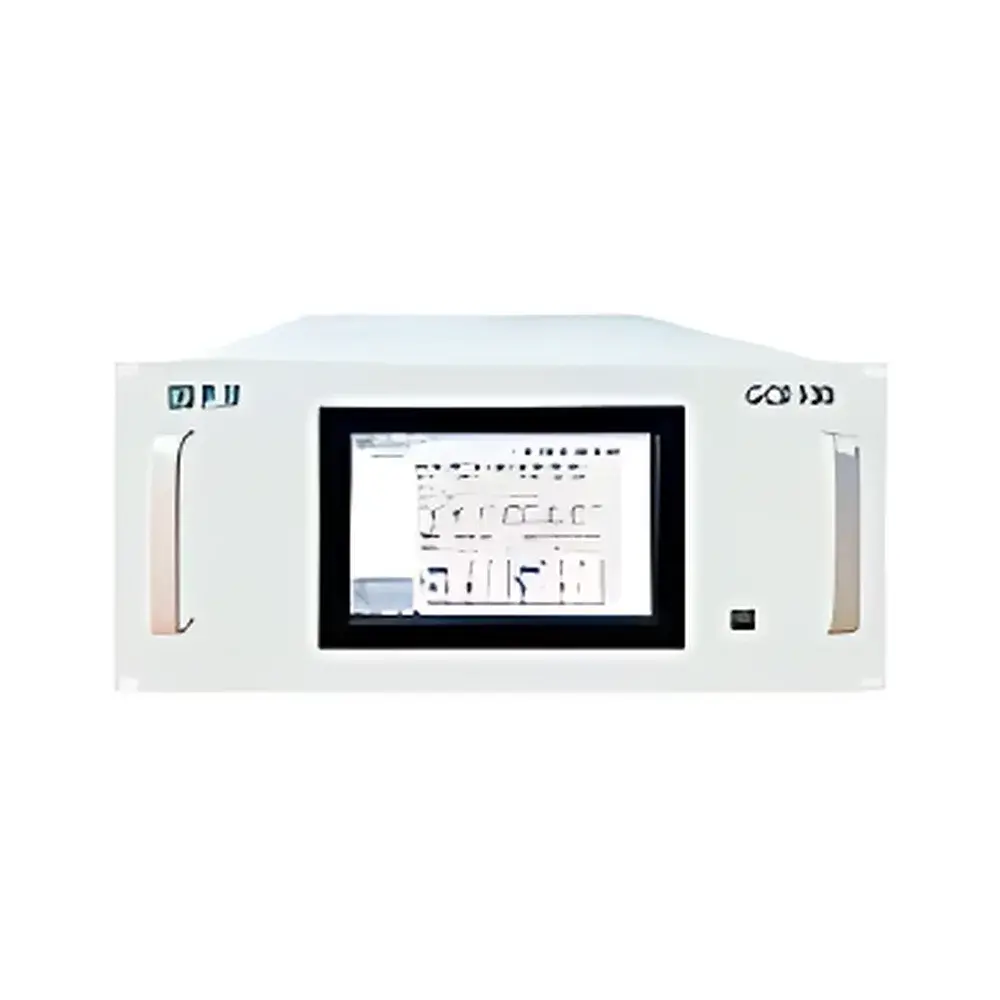
The Kechuang GC2010(AD) is a purpose-built, portable gas chromatograph engineered for on-site dissolved gas analysis (DGA) in power transformer insulating oil. Designed to meet the stringent operational and regulatory demands of utility maintenance teams and substation laboratories, it employs capillary column separation coupled with high-stability thermal conductivity (TCD) and flame ionization (FID) detection—optimized for quantifying key fault gases including H₂, CH₄, C₂H₂, C₂H₄, C₂H₆, CO, and CO₂. Its compact chassis (482 × 450/600 × 222 mm), low mass (≤20 kg), and integrated shock-dampened column oven enable reliable deployment inside mobile diagnostic vans or directly at energized substations. The system operates on standard 220 V AC power and maintains thermal stability across ambient temperatures of 5–35°C, with column oven temperature control precision of ±0.1% and display resolution of 0.01°C—critical for reproducible retention time alignment in field-based DGA workflows per IEC 60599 and ASTM D3612.
Key Features
- Double-oven architecture with independent programmable temperature control for primary and auxiliary columns—enabling simultaneous multi-gas elution profiling and method flexibility.
- Electronic Pressure Control (EPC) and Electronic Flow Control (EFC) across up to 24 independent channels, supporting N₂, H₂, He, and Ar carrier gases with pressure resolution of 0.001 psi and flow resolution of 0.001 mL/min.
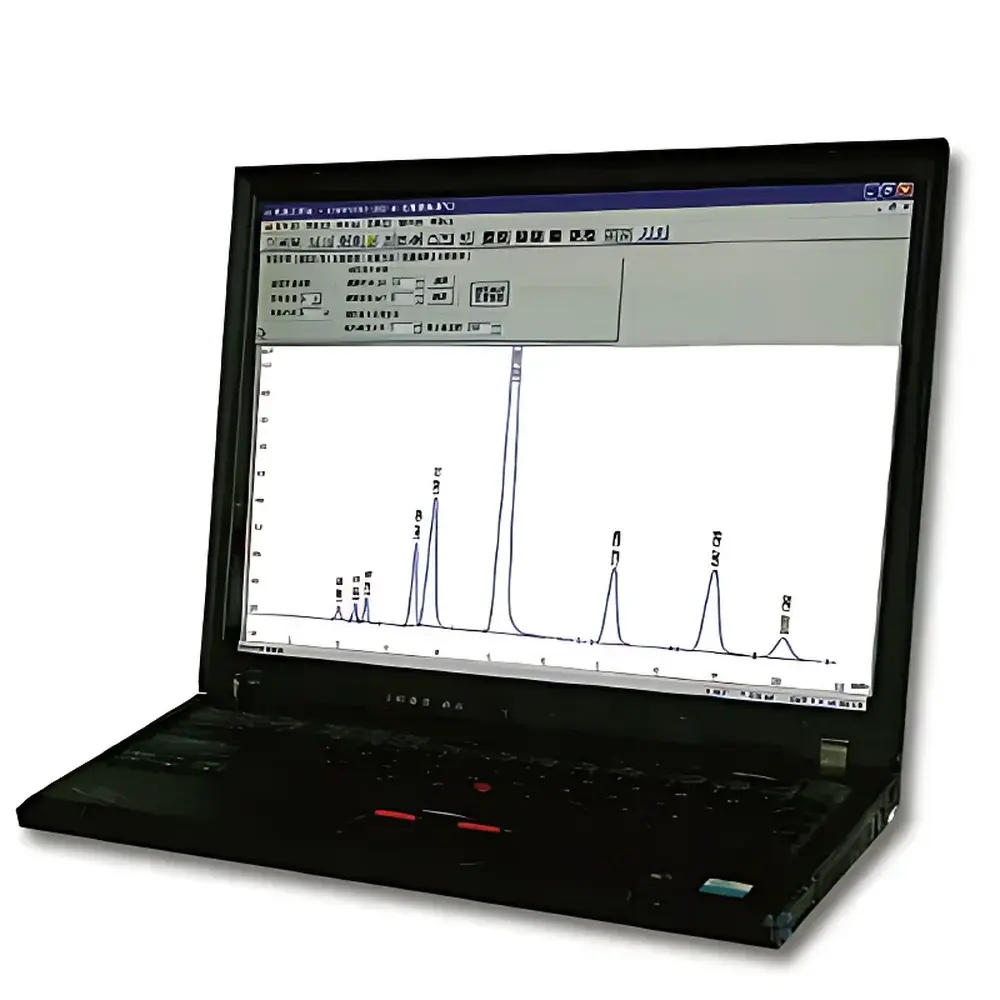
- 8-inch industrial-grade touchscreen interface with embedded chromatography workstation—providing real-time baseline monitoring, spectral visualization, and full instrument reverse control without external PC dependency.
- RJ45 Ethernet interface enabling networked operation; one host PC can manage up to 253 units via TCP/IP, facilitating centralized fleet monitoring, remote firmware updates, and audit-ready data routing to supervisory SCADA or CMMS platforms.
- Automated post-run cooling: column oven cools from 350°C to 50°C in ≤3.5 minutes using motorized back-door actuation—reducing cycle time between consecutive oil samples.
- Self-diagnostic firmware with real-time fault logging, overtemperature cutoff (per channel), and hardware-level event timing (8 programmable external triggers) for synchronized valve actuation or auto-sampling integration.
Sample Compatibility & Compliance
The GC2010(AD) accepts standard 1–10 mL oil samples pre-processed via vacuum headspace extraction or mechanical oscillation per IEC 60567. It supports both stainless steel and fused silica capillary columns (e.g., PLOT Al₂O₃, Porapak Q, or custom DGA-phase columns) with internal diameters from 0.25 to 0.53 mm. Detector configurations comply with IEEE C57.104–2019 requirements for DGA sensitivity and linearity: TCD achieves ≥6000 mV·mL/mg (H₂), FID reaches ≤3.0×10⁻¹² g/s (n-hexadecane), and ECD offers ≤10 fg/mL (γ-HCH) for trace halogenated contaminant screening. All temperature and pressure control modules are calibrated traceable to NIST standards; system validation protocols align with ISO/IEC 17025 documentation requirements for in-field testing laboratories.
Software & Data Management
The embedded chromatography software provides GLP-compliant data acquisition with electronic signatures, 21 CFR Part 11–ready audit trails, and user-role access control (administrator, analyst, reviewer). Raw chromatograms and processed reports (including Duval Triangle, Rogers Ratio, and Doernenburg interpretation) are stored in vendor-neutral .CDF format. Data export supports CSV, PDF, and XML for integration into enterprise asset management (EAM) systems. Remote diagnostics include live parameter streaming, historical calibration logs, and predictive maintenance alerts triggered by EPC drift or detector baseline deviation exceeding configurable thresholds.
Applications
- On-site condition assessment of power transformers, reactors, and bushings via routine DGA trending.
- Emergency fault diagnosis following electrical disturbances (e.g., lightning strikes, short circuits) to differentiate thermal faults (1000°C), and partial discharge activity.
- Verification of oil reclamation efficacy post-vacuum dehydration or adsorption treatment.
- Baseline characterization of new or reclaimed insulating oil prior to commissioning.
- Support for ISO 55001–aligned asset health monitoring programs through automated report generation and KPI dashboards (e.g., gas generation rate, C₂H₂/C₂H₄ ratio).
FAQ
Is the GC2010(AD) certified for use in explosive atmospheres (e.g., Zone 1/2)?
No—this unit is rated for general indoor/outdoor substation environments (IP20 enclosure). For hazardous area deployment, external explosion-proof enclosures compliant with ATEX/IECEx must be used.
Can the system perform unattended overnight analysis?
Yes—programmable 64-stage temperature ramps, automated injector timing, and watchdog-triggered shutdown ensure robust unattended operation for extended sampling campaigns.
What maintenance intervals are recommended for field use?
Carrier gas filters every 3 months; detector cleaning and column trimming every 6 months; full EPC/EFC recalibration annually or after 500 runs—documented in onboard service log.
Does the instrument support ASTM D3612 Method B (headspace extraction)?
Yes—integrated pressure-tight sample vial heating module and compatible with standard 22-mL headspace vials; method parameters fully programmable within the software.
How is data integrity ensured during wireless or cellular transmission?
All network-transmitted data packets are SHA-256 hashed and encrypted via TLS 1.2; local storage retains immutable raw files with write-once metadata tagging.





