
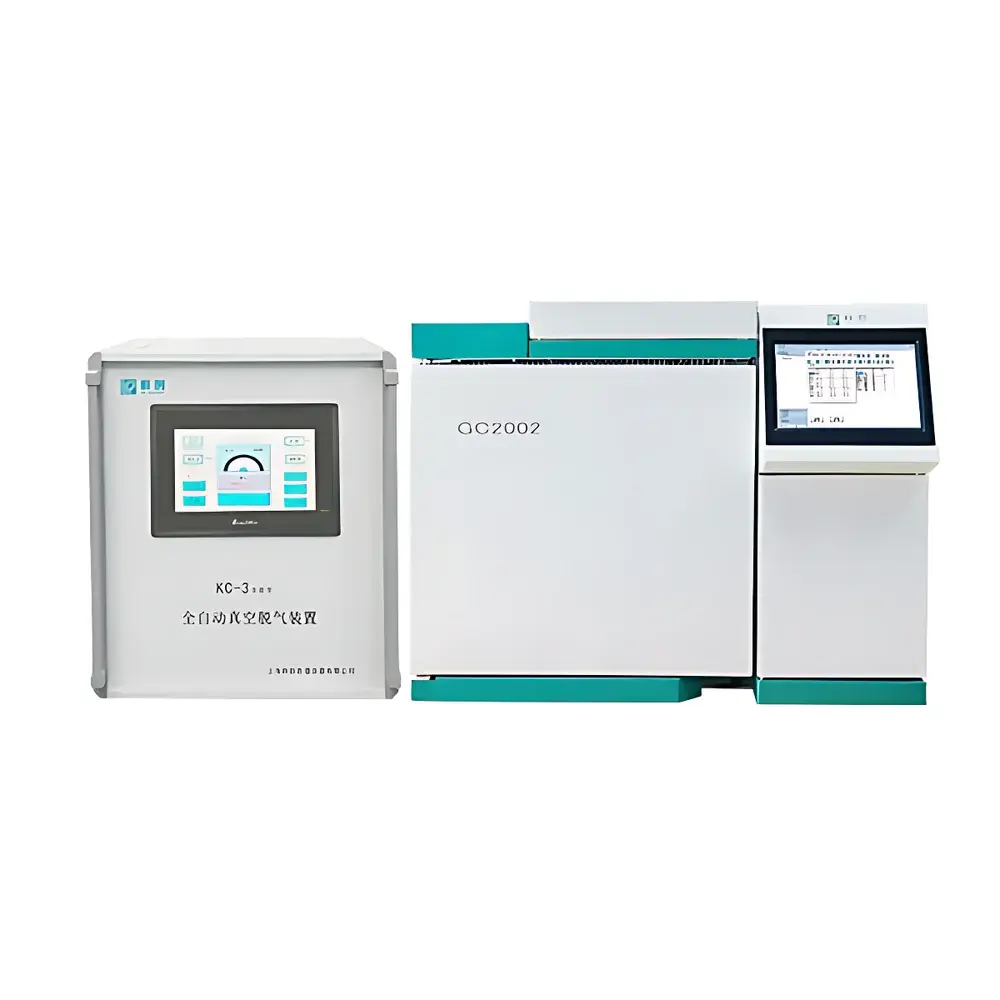
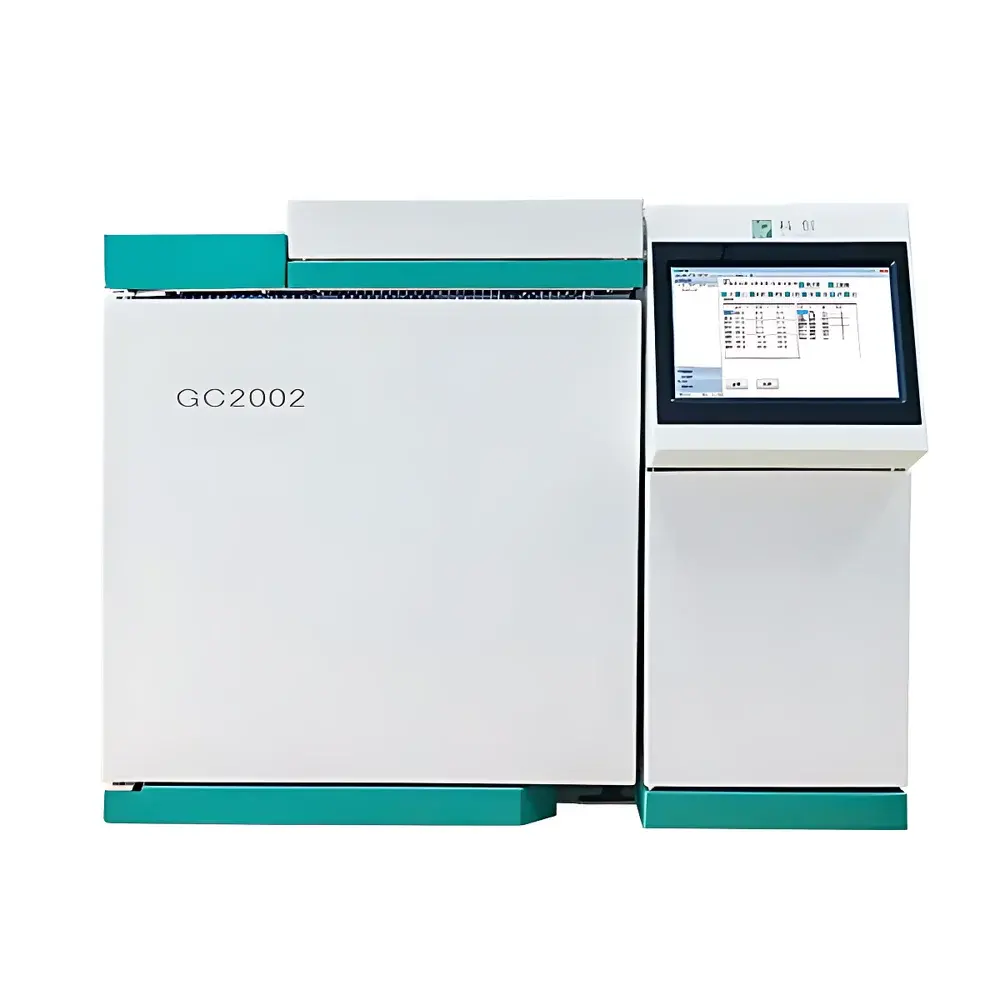
SciTech GC2002AD Transformer Oil Dissolved Gas Analysis (DGA) Gas Chromatograph
| Brand | SciTech |
|---|---|
| Origin | Shanghai, China |
| Manufacturer Type | Direct Manufacturer |
| Instrument Type | Laboratory Gas Chromatograph |
| Application Field | Power Industry–Specific DGA |
| Temperature Control Range | +5 °C to 400 °C |
| Oven Ramp Rate | 0.1–40 °C/min |
| Cooling Rate | 300 °C → 50 °C in ≤4 min |
| Carrier Gas Flow Range & Control | 0–350 mL/min |
| Carrier Gas Pressure Range & Control | 0–970 kPa |
| Injector Max Operating Temperature | 400 °C |
| Injector Pressure Setting Range | 0–970 kPa |
| Injector Total Flow Setting Range | 0–300 mL/min |
Overview
The SciTech GC2002AD is a dedicated laboratory gas chromatograph engineered for dissolved gas analysis (DGA) in transformer insulating oil—critical for predictive maintenance and fault diagnostics in high-voltage power equipment. It implements a validated dual-column, parallel-flow configuration with three detectors (TCD, FID, and optional methanizer-coupled FID) to simultaneously quantify the seven key fault gases: H₂, CO, CO₂, CH₄, C₂H₄, C₂H₆, and C₂H₂—per DL/T 703–2015, GB/T 7252–2001, DL/T 722–2014, and GB/T 17623–1998. The system operates on proven gas-phase separation principles: hydrocarbons and permanent gases are resolved via packed and capillary columns with selective stationary phases, while catalytic conversion (e.g., Ni-methanizer) enables trace acetylene (C₂H₂) detection at sub-ppb (µL/L) levels. Its architecture integrates thermal stability, pressure/flow precision, and valve-switching logic to meet IEC 60599–2015 interpretive requirements for ratio-based fault classification.
Key Features
- 8-inch capacitive touchscreen interface with intuitive, icon-driven navigation—designed for routine operation by field technicians and lab analysts without advanced chromatography training.
- Full microprocessor-based instrument control with 7 independent temperature zones and 8 programmable external event inputs—enabling precise synchronization of valve actuation, detector switching, and column backflush sequences.
- Dedicated DGA software module compliant with IEEE C57.104 and IEC 60599: pre-configured calibration curves, automatic peak integration, multi-channel spectral alignment, and time-series trending for longitudinal monitoring of gas evolution at fixed sampling points.
- Integrated tri-ratio coding engine that computes Duval Triangle, Rogers Ratios, and IEC 60599 codes—outputting fault type (e.g., partial discharge, low-energy arcing, thermal faults >700 °C), severity assessment, and reference case examples aligned with utility maintenance protocols.
- RJ45 Ethernet interface supporting remote instrument control, real-time data streaming, and audit-compliant data archiving—compatible with centralized SCADA or asset health management platforms across regional grid operators.
- Patented anti-contamination composite column set optimized for transformer oil matrix robustness—resists oxidation byproducts and sludge-derived heavy hydrocarbons, extending column lifetime beyond 2,000 injections under routine DGA workflows.
- Column oven with auto-adjusting rear door, 8-step programmable ramping, and near-ambient operation (as low as +5 °C above ambient)—ensuring reproducible retention times across seasonal lab environments.
- Comprehensive self-diagnostic suite: real-time sensor validation, heater circuit integrity checks, pressure/flow deviation alerts, and cascade thermal shutdown (individual zone overtemperature cutoff without system-wide halt).
Sample Compatibility & Compliance
The GC2002AD accepts standard 10 mL glass vials prepared via ASTM D3612 Method A (headspace equilibration) or IEC 60567-compliant oscillation extraction. It supports both 7-component and extended 9-component configurations (adding O₂ and N₂ via TCD with inorganic silica gel pre-column and valve-mediated backflush). All hardware and firmware conform to electromagnetic compatibility (EMC) standards per GB/T 18268.1–2010 and safety requirements per GB 4793.1–2007. Data acquisition and reporting modules support ALCOA+ principles (Attributable, Legible, Contemporaneous, Original, Accurate) and provide full audit trails required for ISO/IEC 17025–2017 accredited laboratories. Optional 21 CFR Part 11–compliant electronic signature and user-role access control packages are available upon request.
Software & Data Management
The embedded DGA workstation runs on Windows Embedded OS and features dual-mode operation: standalone acquisition or networked deployment via TCP/IP. Raw chromatograms are stored in vendor-neutral .cdf format (compatible with OpenChrom and Chromeleon). Calibration files include multi-point weighted linear regression with forced zero-intercept for low-concentration gases (e.g., C₂H₂). Trend reports generate CSV exports for integration into enterprise CMMS (Computerized Maintenance Management Systems) such as SAP PM or IBM Maximo. All processing steps—including baseline correction, retention time locking, and ratio computation—are timestamped and logged with operator ID, method version, and instrument state metadata—meeting GLP/GMP traceability expectations for regulated utilities.
Applications
- Preventive maintenance screening of power transformers, reactors, and bushings in substations and generating stations.
- Root-cause analysis of incipient faults: identifying thermal degradation (CH₄, C₂H₄), partial discharge (H₂), or arcing (C₂H₂) prior to catastrophic failure.
- Commissioning verification and post-repair gas profiling to validate dielectric restoration efficacy.
- Long-term fleet health analytics—correlating DGA trends with load history, ambient temperature, and moisture content from complementary sensors.
- Supporting condition-based maintenance (CBM) strategies aligned with IEEE Std 1470 and CIGRÉ Technical Brochures.
FAQ
What standards does the GC2002AD comply with for transformer oil DGA?
It fully implements DL/T 703–2015, GB/T 7252–2001, DL/T 722–2014, and GB/T 17623–1998—and its output formats align with IEC 60599 for ratio-based fault interpretation.
Can the system analyze O₂ and N₂ in addition to the standard 7 gases?
Yes—via optional 9-component configuration using a high-sensitivity TCD, silica gel pre-column, and automated valve-switching sequence for permanent gas separation.
Is remote monitoring and data export supported?
Yes—the RJ45 interface enables secure remote access, live chromatogram viewing, scheduled report generation, and direct CSV/Excel export to central databases.
How is column contamination mitigated during long-term operation?
The proprietary composite column uses thermally stable, deactivatable surface chemistry and is paired with a dedicated guard column and backflush protocol to minimize carryover from polar oil residues.
What is the minimum detectable concentration for acetylene (C₂H₂)?
The system achieves ≤0.05 µL/L (ppb v/v) for C₂H₂ under standard DGA conditions—verified per DL/T 722–2014 sensitivity requirements.





