
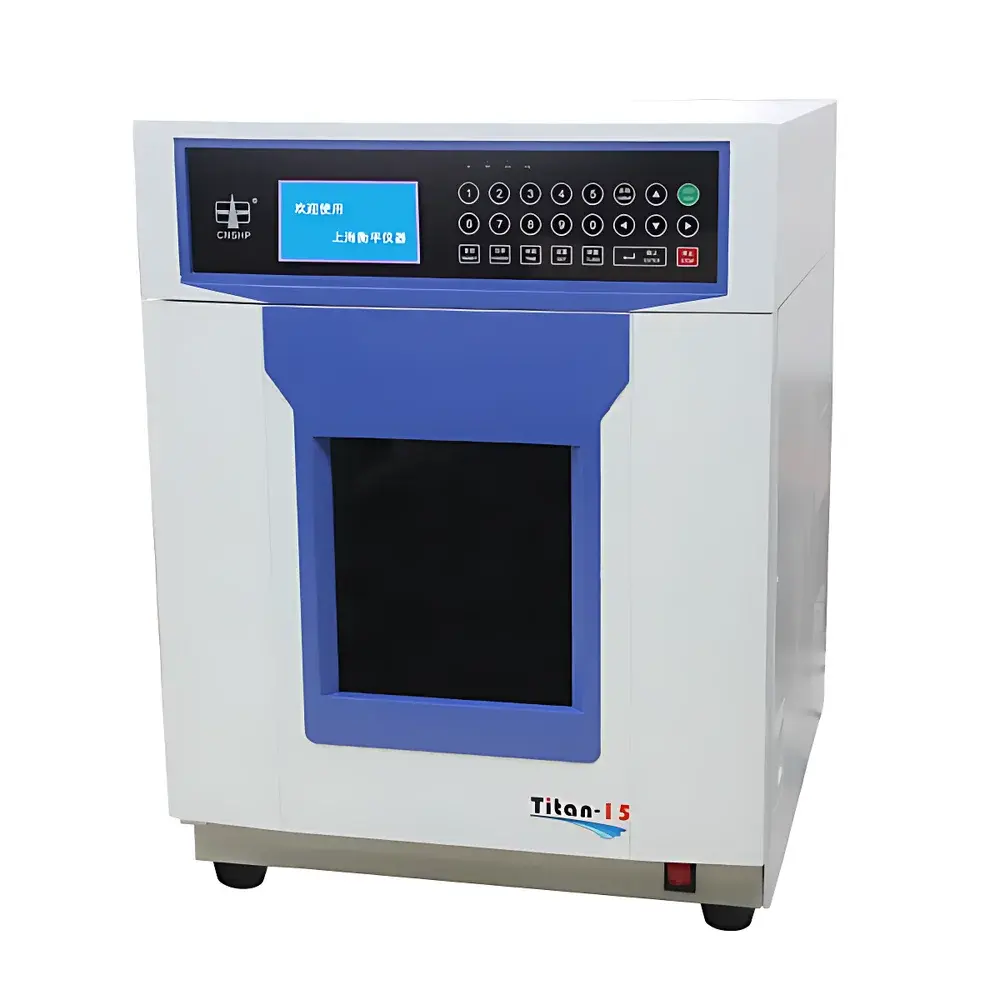
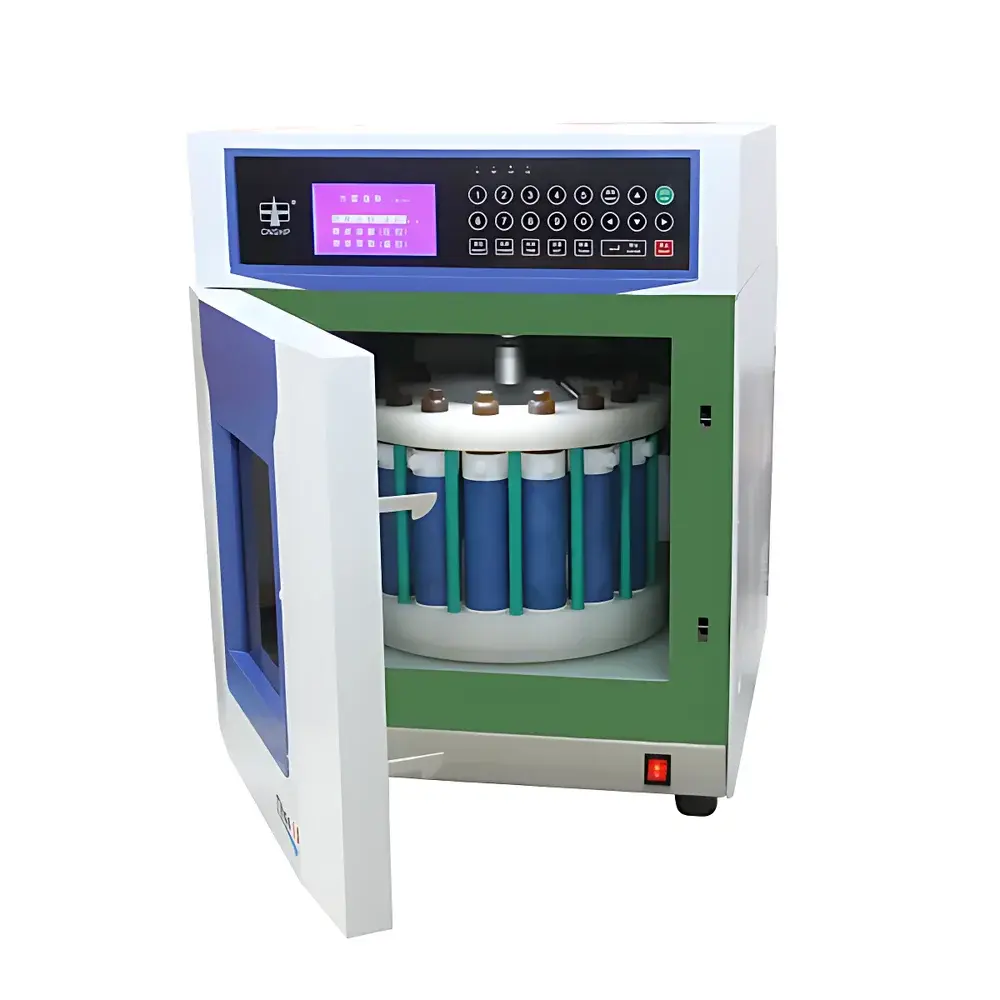
Hengping Titan-15 Sealed Microwave Digestion and Extraction Platform
| Brand | Hengping |
|---|---|
| Origin | Shanghai, China |
| Manufacturer Type | Authorized Distributor |
| Country of Origin | China |
| Model | Titan-15 |
| Price | USD 23,000 (FOB Shanghai) |
| Cavity Class | Industrial-Grade |
| Sample Capacity | 15 vessels |
| Microwave Source | Dual Magnetron |
| Max Operating Temperature | 300 °C |
| Max Working Pressure | 15 MPa |
Overview
The Hengping Titan-15 Sealed Microwave Digestion and Extraction Platform is an industrial-grade sample preparation system engineered for high-throughput, reproducible closed-vessel microwave-assisted digestion and solvent extraction of solid and semi-solid matrices. It operates on the principle of controlled microwave energy absorption by polar molecules—primarily water and acids—within sealed quartz or high-strength PTFE-TFM digestion vessels, enabling rapid, uniform heating under elevated pressure. This thermodynamic environment accelerates acid oxidation reactions (e.g., HNO₃/HF/HCl mixtures), facilitating complete decomposition of refractory inorganic lattices (e.g., silicates, oxides, alloys) and organic macromolecules (e.g., polymers, biomass, tissues) while minimizing volatile element loss and cross-contamination. Designed for routine compliance with ISO 17294-2, EPA Method 3051A/3052, and ASTM D5511–22, the Titan-15 supports trace elemental analysis workflows in ICP-OES, ICP-MS, and AAS laboratories.
Key Features
- Industrial-class stainless-steel cavity with reinforced waveguide shielding and forced-air cooling—rated for continuous operation at full power without thermal drift.
- Dual 1000 W magnetron system delivering symmetrical 2.45 GHz microwave distribution, ensuring consistent energy coupling across all 15 positions.
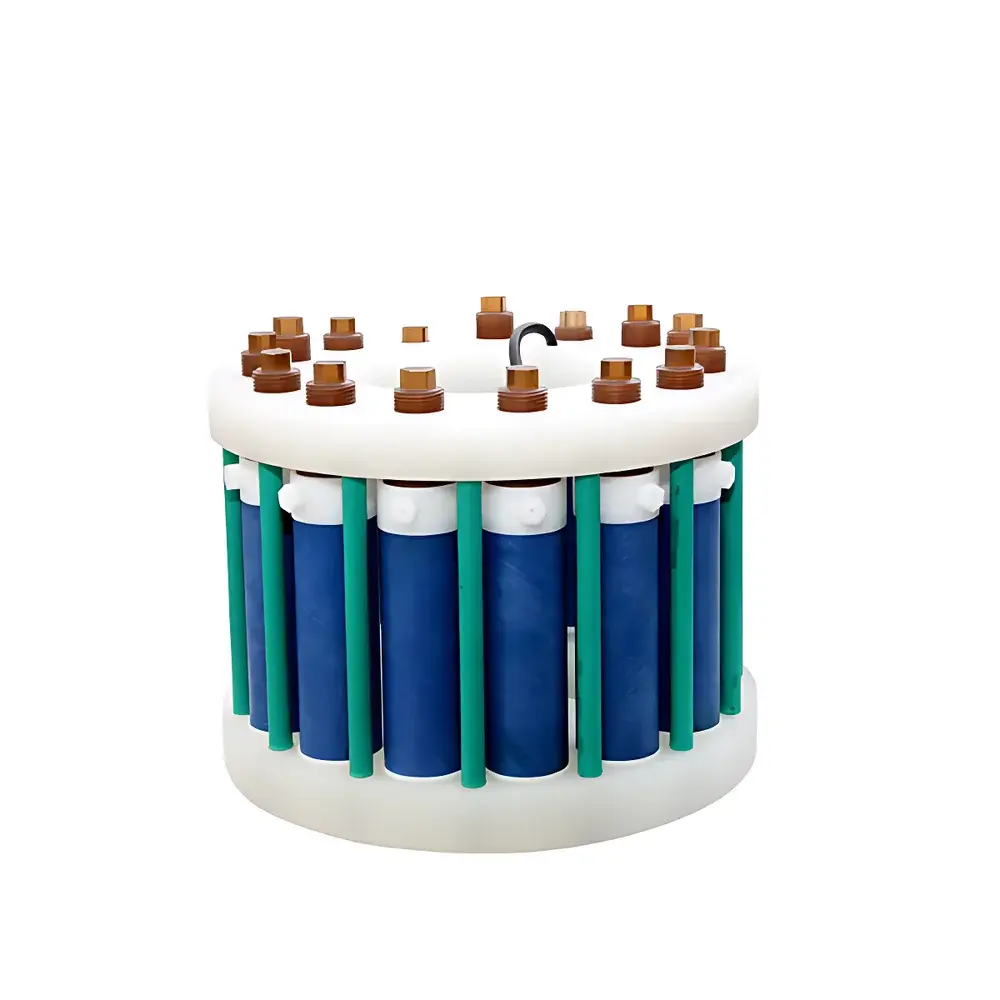
- High-pressure rotor assembly constructed from aerospace-grade aluminum alloy with ceramic-reinforced sealing interfaces; compatible with 15 × 55 mL high-pressure vessels rated to 15 MPa and 300 °C.
- Real-time, non-contact infrared temperature monitoring per vessel (±2 °C accuracy) coupled with dynamic pressure feedback control (0–15 MPa range, ±0.2 MPa resolution).
- Programmable method library supporting up to 10 multi-step protocols with independent ramp-hold-cool profiles; auto-recall of last-used parameters for GLP-compliant audit trails.
- Integrated safety architecture including dual redundant pressure relief valves, cavity door interlock with torque-sensing mechanism, and automatic microwave cutoff upon vessel deformation detection.
Sample Compatibility & Compliance
The Titan-15 accommodates a broad spectrum of sample types—including geological digests (soils, sediments, ores), biological tissues (liver, muscle, plant matter), environmental solids (sludge, filters, fly ash), and polymer composites—when paired with appropriate vessel chemistries (e.g., quartz for HF-based digestions, TFM-lined vessels for high-acid applications). All digestion methods are validated against international regulatory frameworks: EPA SW-846 Methods 3051A (microwave-assisted acid digestion for metals) and 3052 (silica-containing matrices); ISO 17294-2 (water quality—determination of elements by ICP techniques); and ASTM D5511 (anaerobic biodegradation of plastic materials). The platform meets CE electromagnetic compatibility (EMC) Directive 2014/30/EU and conforms to IEC 61000-6-3 emission standards. Full documentation supports FDA 21 CFR Part 11 readiness when integrated with compliant LIMS or ELN systems.
Software & Data Management
The Titan-15 is operated via a dedicated Windows-based control interface (v3.2) featuring intuitive graphical protocol builder, real-time parameter visualization (temperature/pressure/power vs. time), and automated report generation in PDF and CSV formats. All method executions are timestamped and logged with operator ID, vessel IDs, and raw sensor data—enabling full traceability for GLP/GMP audits. Data export supports direct integration with laboratory informatics platforms via OPC UA or secure FTP. Audit trail functionality includes user login history, parameter modification logs, and electronic signature capability (role-based access control with administrator, technician, and reviewer permissions).
Applications
- Preparation of certified reference materials (CRMs) for calibration of ICP-MS instruments in geochemical and metallurgical labs.
- Routine digestion of food and feed samples prior to Cd, Pb, As, and Hg quantification per EU Commission Regulation (EU) No 2023/2042.
- Extraction of persistent organic pollutants (POPs) such as PCBs and PAHs from sediment cores using microwave-assisted Soxhlet-like protocols.
- Accelerated leaching tests (e.g., TCLP, SPLP) for hazardous waste characterization in environmental compliance laboratories.
- Development of novel digestion matrices for emerging contaminants (e.g., microplastics, nanomaterials) requiring controlled oxidative degradation without analyte degradation.
FAQ
What vessel types are supported by the Titan-15 platform?
The system accepts standardized 55 mL high-pressure digestion vessels made of quartz, PTFE-TFM, or quartz-lined configurations—each certified to 15 MPa and 300 °C.
Is the Titan-15 compatible with HF-based digestions?
Yes—quartz vessels are recommended for hydrofluoric acid applications; TFM-lined vessels support most nitric/hydrochloric/perchloric acid mixtures but are not HF-compatible.
Does the system provide electronic records suitable for FDA 21 CFR Part 11 compliance?
When deployed with configured user authentication, audit trail logging, and secure data export, the Titan-15’s software meets foundational requirements for Part 11 compliance—final validation remains the responsibility of the end-user laboratory.
Can the Titan-15 be integrated into an automated sample prep line?
It features RS-232 and Ethernet ports for external triggering and status reporting, enabling synchronization with robotic autosamplers and upstream/downstream instrumentation via custom API or LabVIEW drivers.
What maintenance intervals are recommended for the dual magnetron system?
Magnetron output is monitored continuously; preventive maintenance—including waveguide inspection, cooling fan cleaning, and cavity seal verification—is advised every 1,000 operational hours or annually, whichever occurs first.
Related Products



