
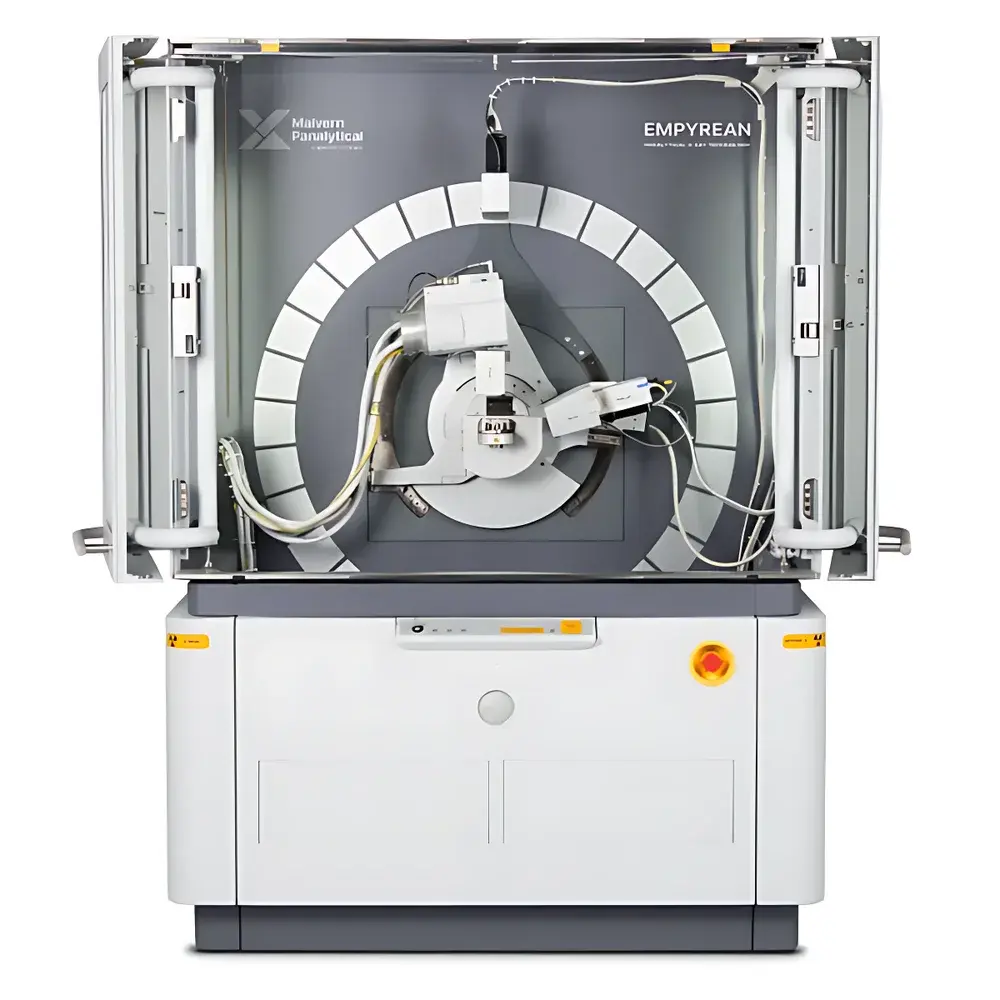
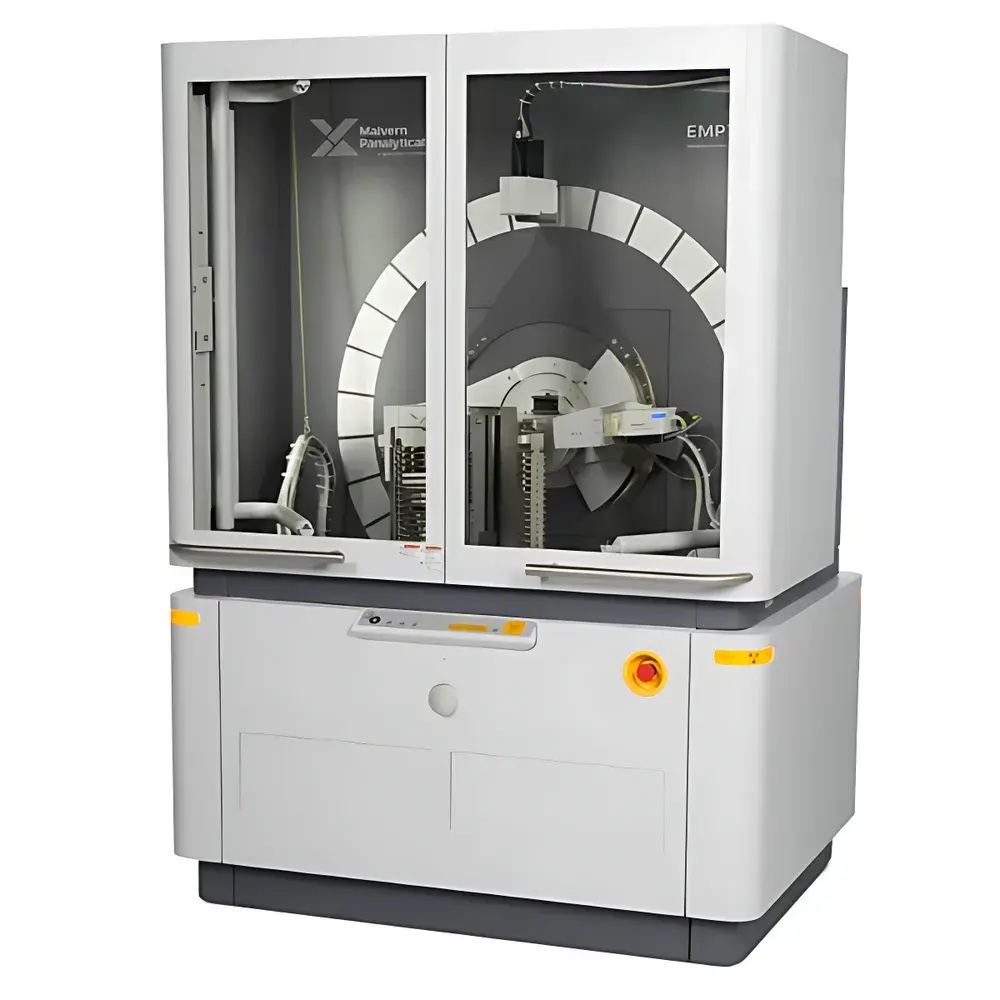
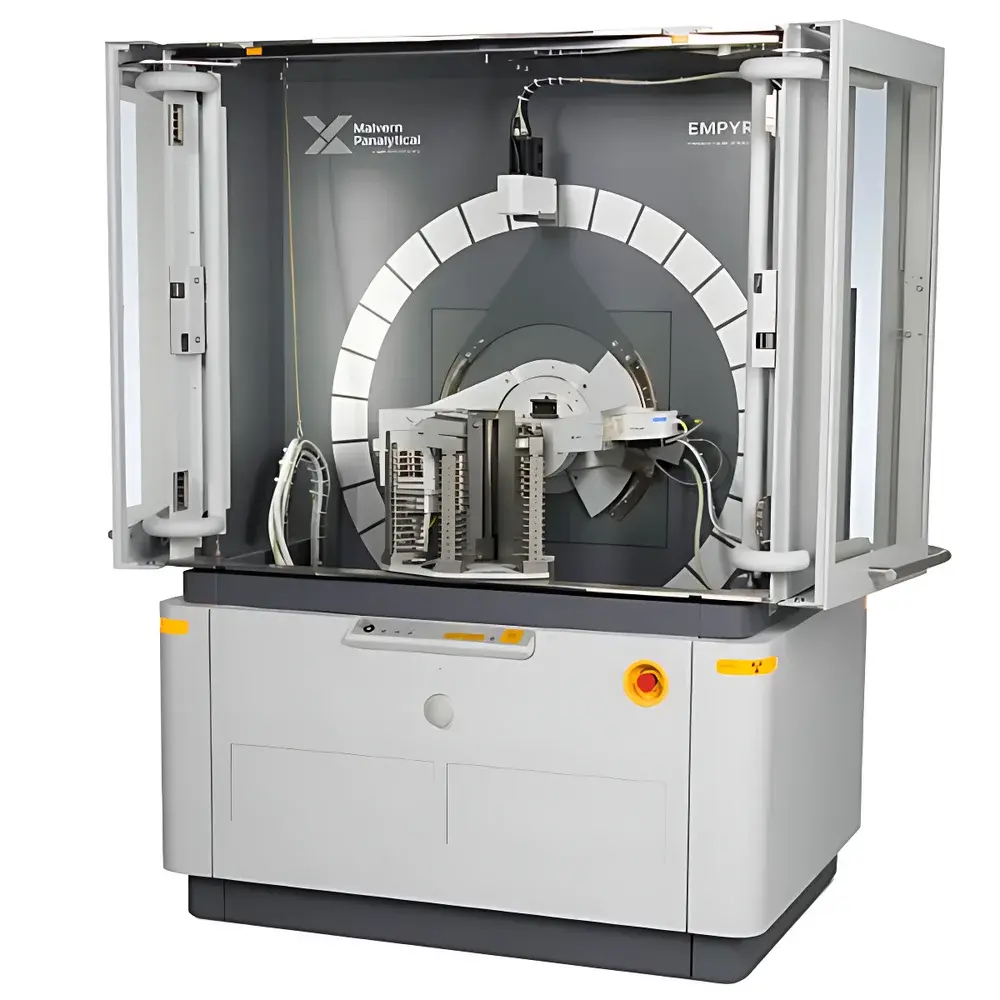
Malvern Panalytical Empyrean X-ray Diffractometer
| Brand | Malvern Panalytical |
|---|---|
| Origin | Netherlands |
| Model | Empyrean |
| Instrument Type | Powder X-ray Diffractometer |
| Configuration | Floor-standing |
| Power Consumption | 0.0001 kW |
| Core Technology | MultiCore Optics (iCore/dCore) |
| Detector Technology | Hybrid Pixel Array (PIXcel3D / GaliPIX3D) |
| Sample Flexibility | Powder, Thin Film, Nanomaterials, Bulk Solids |
| Compliance Framework | GLP-ready, PreFIX modular architecture, ISO/IEC 17025-compatible workflow support |
Overview
The Malvern Panalytical Empyrean is a third-generation, floor-standing X-ray diffractometer engineered for high-precision phase identification, crystallite size analysis, strain quantification, and structural refinement across diverse material classes. Based on Bragg’s law and utilizing monochromatic Cu Kα radiation (λ = 1.5418 Å), the Empyrean delivers quantitative diffraction data with exceptional angular accuracy and intensity reproducibility. Its defining architectural innovation—the MultiCore Optics platform—integrates independent incident-beam (iCore) and diffracted-beam (dCore) optical modules, enabling fully automated, software-driven reconfiguration between measurement geometries without manual realignment or hardware intervention. This architecture supports both conventional Bragg–Brentano θ–2θ scanning and advanced configurations including parallel-beam optics, grazing-incidence XRD (GIXRD), and texture analysis—making it suitable for academic research, pharmaceutical development, battery materials characterization, and industrial quality control laboratories operating under GLP or ISO/IEC 17025 frameworks.
Key Features
- MultiCore Optics System: Dual-core optical architecture (iCore for beam conditioning, dCore for detection path optimization) ensures repeatable, traceable switching between powder, thin-film, and bulk sample modes in under 90 seconds.
- Hybrid Pixel Array Detectors: Integrated PIXcel3D and GaliPIX3D detectors offer zero-background operation, >10⁶ dynamic range, and sub-micron pixel resolution—enabling high-speed, low-dose data collection with minimal peak overlap artifacts.
- PreFIX Modular Platform: Micron-level reproducible positioning of optical components and sample stages allows tool-free reconfiguration; all modules are mechanically registered and software-validated per ISO 17892-12 metrology guidelines.
- Automated Workflow Integration: Fully scriptable acquisition via PANalytical’s HighScore Plus and X’Pert Epitaxy software suites, supporting ASTM E1422, ISO 17873, and USP compliant reporting templates.
- GLP-Ready Architecture: Built-in audit trail logging, electronic signature support (21 CFR Part 11 ready), and calibration-free module recognition eliminate manual documentation steps during routine operation.
Sample Compatibility & Compliance
The Empyrean accommodates a broad spectrum of sample forms—including free-flowing powders, pressed pellets, epitaxial thin films (down to ~2 nm thickness), nanocrystalline dispersions, and irregular solid objects—without requiring geometry-specific recalibration. Its modular goniometer accepts standard sample holders (e.g., zero-background Si single-crystal plates, capillary mounts, humidity-controlled cells) and custom fixtures validated against ISO 18115-2 for surface-sensitive measurements. All factory-installed optical paths comply with IEC 61000-6-3 electromagnetic compatibility standards and EN 61000-6-2 immunity requirements. Instrument firmware and software updates follow Malvern Panalytical’s formal change control process aligned with ISO 9001:2015 and FDA QSR (21 CFR Part 820) design transfer protocols.
Software & Data Management
Data acquisition, processing, and reporting are unified within PANalytical’s X’Pert Acquisition and HighScore Plus platforms. These applications support batch processing of Rietveld refinements (using TOPAS or GSAS-II export), crystallite size distribution modeling (Scherrer, Williamson–Hall, Warren–Averbach), and quantitative phase analysis (QPA) with internal standard or reference intensity ratio (RIR) methods. Raw data files (.raw, .xrdml) are stored in vendor-neutral XML-based formats compliant with the ICDD Powder Diffraction File™ metadata schema. Audit trails record operator ID, timestamp, parameter settings, detector gain values, and environmental sensor logs (temperature, humidity)—all exportable as PDF or CSV for regulatory submission. Optional integration with LabWare LIMS or Thermo Fisher SampleManager enables automated result routing and instrument utilization analytics.
Applications
- Pharmaceutical solid-state characterization: polymorph screening, hydrate/solvate identification, amorphous content quantification per ICH Q5A and Q6A guidelines.
- Battery electrode materials: cathode crystallinity mapping, lattice parameter drift monitoring during cycling simulations.
- Thin-film semiconductor analysis: epitaxial quality assessment, interfacial strain evaluation in III–V heterostructures.
- Geological and metallurgical QC: mineral phase quantification in ores, residual stress profiling in weld zones per ASTM E915.
- Nanomaterial synthesis validation: crystallite size distribution, defect density estimation via Williamson–Hall deconvolution.
FAQ
Is the Empyrean compatible with synchrotron beamtime preparation workflows?
Yes—its high-intensity, low-divergence beam paths and hybrid pixel detectors produce datasets directly comparable to synchrotron-derived references, facilitating pre-screening and experimental planning.
Can existing X’Pert Pro users migrate software licenses and methods to the Empyrean platform?
All HighScore Plus method files (.hsp) and X’Pert Acquisition scripts (.xas) are forward-compatible; legacy calibration tables and phase libraries import natively.
What safety certifications does the Empyrean meet for installation in regulated laboratory environments?
It carries CE marking per Directive 2014/35/EU (Low Voltage Directive) and 2014/30/EU (EMC Directive), and complies with IEC 62471 for LED-based alignment systems and IEC 61000-4-2 for electrostatic discharge immunity.
Does Malvern Panalytical provide application-specific training for new Empyrean operators?
Yes—comprehensive on-site and virtual training packages include GLP-compliant SOP development, Rietveld refinement workshops, and detector optimization seminars delivered by certified XRD application scientists.
How frequently are firmware and software updates released, and what is the support lifecycle?
Major software releases occur biannually; critical firmware patches are issued quarterly. Hardware support extends for 10 years post-manufacture date, with extended service agreements available through authorized Malvern Panalytical service centers globally.
Related Products






